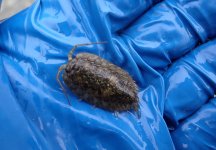
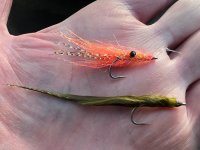
This is a sand shrimp / also called bay shrimp in the genus Crangon. They can quickly disappear in sandy and muddy bottoms as their pleopods (limbs under the abdomen) excavate a hole in the sediment.
View attachment 137823
This is a great image of a polychaete worm that will soon split between the green non-reproductive section (atoke) and reddish reproductive section (epitoke) (see
here). The epitokes have paddle-like parapodia (lateral appendages) that allow them to swim better in the water column. After the split, the atoke may continue to feed. But epitoke swims up in the water column typically under the influence of lunar cues at night (often full moon). Its segments are filled with either eggs or sperm. They appear to be able to detect other individuals chemically and often form swarms. When epitokes of the opposite sex sense each other chemically, their segments rupture releasing a cloud of eggs and sperm. The cloud of motile sperm fertilize the eggs. This synchronous release of eggs and sperm increase the likelihood of fertilization.
View attachment 137824