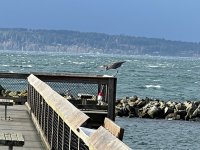
Tokeland & Westport, 2024 November 27. It is a tricky time of year for birding, even if you are retired. I’m reluctant to take my nice cameras out in the rain and the light sucks anyway. And this time of year, even a “clear” morning can be foggy and the days are short. So, this dictates later departures and limiting the number of stops. With my wife on Thanksgiving break, we wanted to share an adventure and we decided to head to the coast. We headed to Tokeland first. In spite of there being no rain in the Westport forecast, we hit showers on the drive to Tokeland and a steady drizzle had settled in as we left Tokeland for Westport. Hitting a fortunate dry window, we arrived at the Tokeland Marina just after high tide; water was rushing out of Willapa Bay and into the open ocean. The marina was busy with boats going to / returning from crabbing and salmon fishing (I assume) before Thanksgiving.
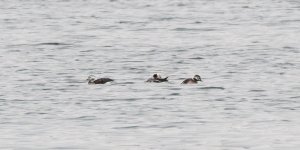
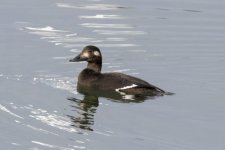
A solitary white-winged scoter hen
and two Western grebes
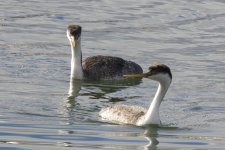
were diving for their own seafood meals (and dozing) within the marina.
From the elevated fixed platform and the outer floating dock, folks were busy tossing and retrieving snares and crab traps to enhance their own holiday meals. The recent storms had ripped up the eel grass beds in Willapa Bay; their dislodged blades were piled into thick green windrows along the shoreline and littered the docks.
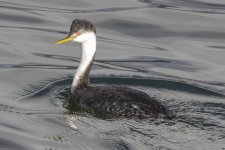
In the bay itself, several Western grebes dove for lunch, some close enough to the shore for nice pictures.
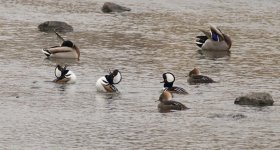
Off in the distance, loons and ducks (scoters?) were diving for lunch.
Before we headed to Westport, we stopped in at the empty campground. Several killdeers were searching the grass for food.
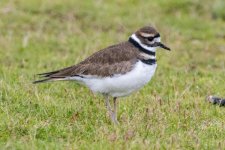
One pulled up a massive earthworm but was harassed by the others before it could gulp it down.
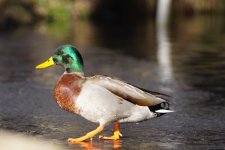
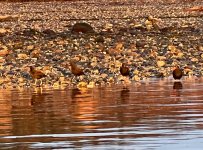
From the campground, we spied a flock of shorebirds chilling out at the edge of the marsh outside the breakwater. We decided to get out for a closer view. Even at a fair distance, we spooked some very nervous mallards and American wigeons into flight deeper into the bay. A flock of willets with a few intermingled black-bellied plovers snooze on the edge of the salt marsh perhaps 100’ away. A lone marbled godwit flew in to join them (often there are hundreds here), but it headed off when it noticed us.
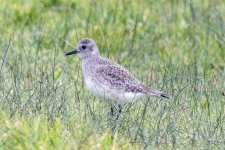
On our drive out of Tokeland, we cruised by the grassy field to have another look at killdeer. A black-bellied plover had joined the killdeer; its non-breeding plumage is so bland, but it has the same saltatory search pattern for food as a killdeer.
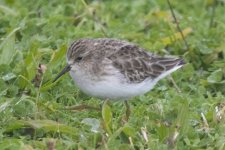
We also encountered a flock of least sandpipers that were also searching through the short grass and mud for a snack.
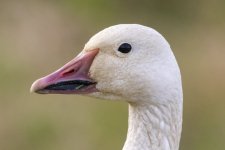
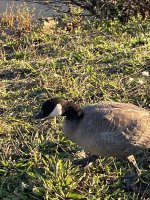
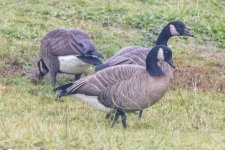
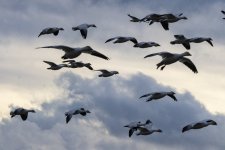
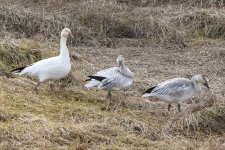
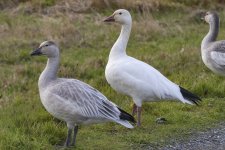
As we headed out of the marina area, we passed a flock of cackling geese and a single juvenile snow goose in a large fenced grassy area There were at least two sizes of cackling geese in the flock, indicating the presence of two different cackling goose subspecies. This appears to be the minima subspecies.
It was partially sunny when we arrived at Westport. Only a few folks were crabbing from the outer dock (float 20) and the wooden walkway atop of the outer breakwater. While the human fishing activity was light, the fishing action by the common loons was intense inside and outside the marina.
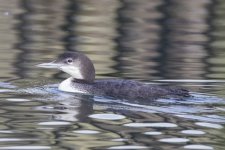
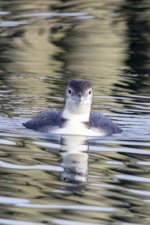
And because they “don’t need no stinking WDFW license”, loons were harvesting crabs and swallowing the evidence.
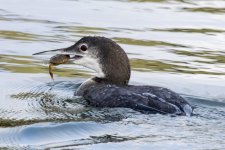
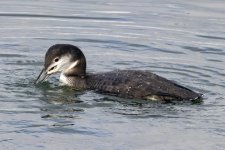
The loons were joined by horned grebes
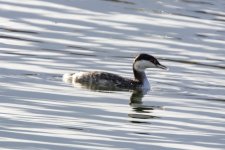
and red-necked grebes.
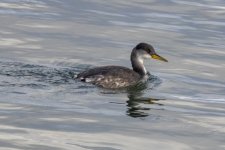
I have a 40+ year history of birding in Western Washington and in that time, the numbers of pelagic cormorants appear to have increased markedly in the Salish Sea. They have really exploited the Washington Ferry System’s new-style protective barriers as nesting sites. Westport has always been a reliable place to find pelagic cormorants.
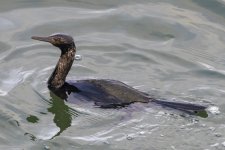
In the right light, their feathers glow with a green sheen.
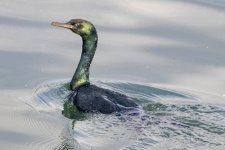
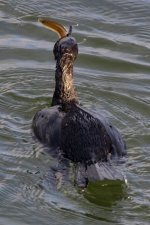
They have a characteristic “hop” as they dive. While the loons may have had crabs on the menu, the pelagic cormorant had a fishier diet in mind, specifically a black prickleback (identified by the white line on the caudal peduncle).
Steve


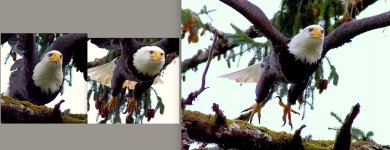

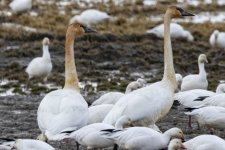
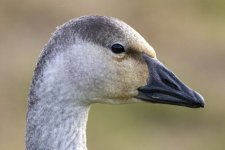 The otherwise white feathers can be stained by iron oxides in the sediment as you can see in this head-shot of the adult (see also the trumpeter swans above).