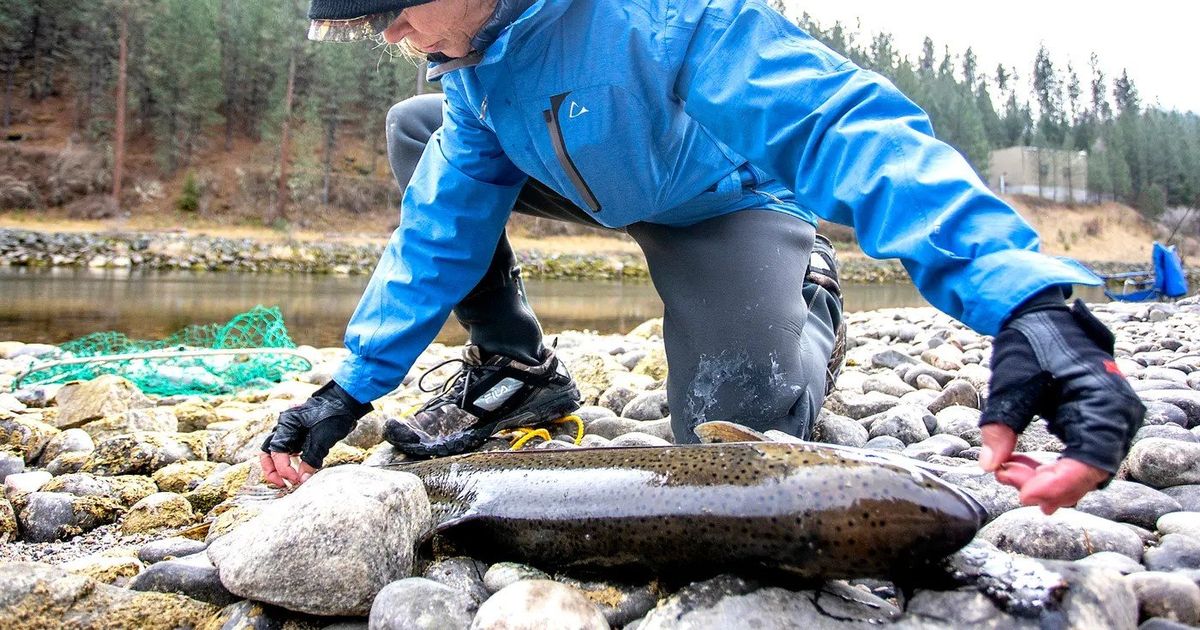
Have you watched the film ? Are you calling all the folks involved Liars ?
Because i watched the film and the success these people testify to is real. Just like the part about the Snider creek program on the Sol Duc.
Or maybe you’re just another anti hatchery person.
And is this a banking/ money investment argument or is it a fishing, hunting and outdoor recreational argument ? Cause yes it costs money to have fishing, hunting etc. and what a sorry place to live it will be when its all shut down.
But then again I don’t hear a peep about what it costs for trout, bass , warm water fisheries or salmon fisheries. Cause the same people bitching about steelhead are out there fishing for these other fish . What is it with steelhead? They are just a fish crap sakes not some Holy and precious thing to be worshiped.
And some rivers might be in such a bad way that it’s not worth the time and money right now. But we must get to work on those systems that can have success.
You never know until you try !
Doing nothing has proved to be Failure. And way too many are just that happy with Failure !
My my. Yes, I did watch the film. No, I am not calling anyone a liar. The success these people testify to is what we already know from wild steelhead broodstock programs. That is that we can take wild broodstock and produce subsequent returning adults. Unfortunately, none of the programs, as far as I can tell, have bothered to, or been able to collect the critical data for program evaluation that Smalma referenced in his post above. This was true with regard to the very well liked Snider Creek program on the Sol Duc as well. I am one of the least anti-hatchery fish biologists you will meet. If I am anti anything it is anti pissing money down a rat hole. I am pro fish and pro science. I want the best fish programs that deliver not only the greatest success, but also the most cost-effective success so that the people who are paying the freight feel good about the investment in fish programs that they are making.
You don't hear a peep about the costs for trout, bass, and warm water fish programs because they are extremely cost effective, meaning they produce a lot of fish per dollar expended. If you read some of my posts about hatchery salmon, you would encounter more criticism because I have plenty. WDFW invests WA tax dollars in many hatchery salmon programs that deliver a reasonable return of harvestable salmon to Canadian sport and commercial fisheries, some Alaskan sport and commercial fisheries, a modest harvest to WA commercial fisheries and treaty Indian fisheries, and a paltry contribution to WA recreational fisheries. I argued that for the amount of money spent, a far better return to WA taxpayers would result if, instead of raising hatchery salmon, those hatcheries instead raised trout and stocked them in lakes so that the people who paid for them would be most likely to realize a return on the investment. If fish managers invested in hatchery production the way they invested in their personal 401(k) plans, you would see very different hatchery practices in WA state.
Getting back to "what is it with steelhead?" As best as I can tell, since about 1990, factors favoring steelhead survival in marine waters have experienced a declining trend. Early marine survival is way down. The driving factor looks to be predation by marine mammals, mainly harbor seals, but including sea lions and occasionally some porpoise species. The Puget Sound harbor seal population looks to have increased from 6 or 7,000 in the 1970s and 80s to currently about 60,000. That's a lot of hungry mouths to feed, and while juvenile salmon and steelhead make up a small proportion of their diet, that small % really adds up when there are so many of them. Increased avian predation may also be a factor, at least as described for certain Puget Sound rivers as common cormorant populations have increased in parts of Puget Sound. This early marine predation appears to be much lower on coastal rivers. Then oceanographic factors come into play. Either there is less stability with the spring coastal upwelling - that is largely responsible for the density of the food supply - or we have just been in an unlucky cycle during the most recent 30 or so years. Open ocean productivity was once thought to be extremely stable; at least that was the assumption because we just flat out didn't know. Now we understand that productivity is also variable, and we have come to understand that the large scale hatchery production of pink and chum salmon in SE Alaska and chum salmon production from Japan is massive enough to influence the supply of forage in the north-western Pacific Ocean. And that happens to be the place where steelhead from north of Oregon's Umpqua River all the way up to SE Alaska go for their ocean feeding and growing. These are the factors I have learned about that the scientific community has come to understand are limiting the overall survival success of steelhead. It explains to me why hatchery steelhead programs that once returned smolt to adult surivval rates as high as 10% now struggle to return one or two percent, and some years even less than one percent. At that less than one percent return rate, hatchery programs not only cannot provide harvestable steelhead for recreational and treaty fishing, they begin to fail to support themselves even with zero fishing. This is why I posted that "No amount of bravery, or willingness to work hard, or unlimited deep pockets can reverse these smolt to adult survival statistics."