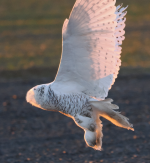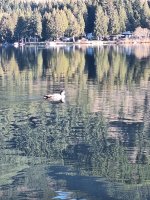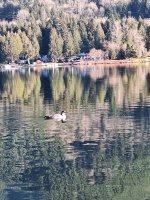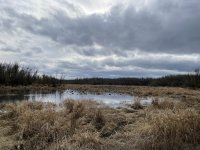
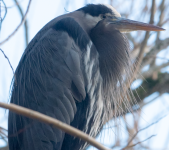
Got any bird pics?

Neighborhood Heron

1737415481021.png
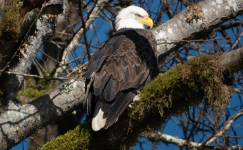
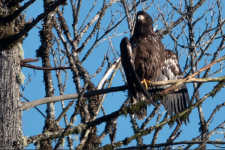
Went on a Skagit eagle float, saw around 80 eagles, Marblemount to Howard Miller- most on the South shore so shooting into the sun was a little hard. Banner day for it, Will from Skagit Eagle tours- good guide, solid dude...
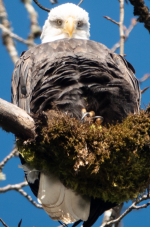
1737415576527.png1737415605960.png1737415648688.png
 
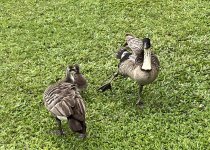
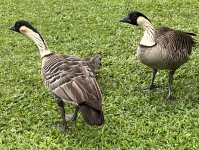
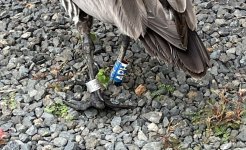
We just returned from a trip to Kauai to celebrate my wife Diana's retirement. We have never been to Kauai and Hawaiian geese (Nene) were everywhere around the part of the island we hung out at. I even spotted and reported a leg band on one of the birds. Having banded several thousand ducks and geese during my working days, I couldn't help myself. I've already heard back from the bird banding lab and that particular bird is a male and was born on or before 2014. The bird was captured and marked at Hanalei National Wildlife Refuge on February 2nd, 2015 and band permit holder was a Hawaii Division of Forestry and Wildlife employee.

The Nene are another endangered species success story. They are thought to have evolved from Canada geese around 500,000 years ago, shortly after the Big Island was formed. Early human settlement led to the extinction of Hawaii's two other endemic goose species (also evolved from Canada geese) but following the introduction of the mongoose, pigs and feral cats, the Nene population plummeted to just 30 birds by 1952. A robust captive breeding program along with predator control has led to a recovery of the species (now thought to be around 4,000 birds).

Nene's are uniquely adaptive to upland life, their feet are only partially webbed to help with getting around the rocky lava flows found in many parts of the Hawaiian Islands. The birds we saw were foraging with their broods in a grassy beach access buffer strip near the town on Lihu'e. Enough with the verbiage - here's a few cell phone pics!

IMG_6718.jpg

IMG_6719.jpg

IMG_6722.jpg
 
Last edited:
Surprised to see a half dozen Swallows flying around a nearby pond at this time of year, and in this cold weather. Not many flying bugs around for them to catch and eat. Apologies for the inferior phone pics.

View attachment 139338View attachment 139339

I also saw this single swallow in January while snowshoeing a few years ago at about the 3,000’ elevation. It was a warm day, and it must have been feeding on a midge hatch unseen by me because it kept swooping low over this small creek over and over. Nature’s full of surprises.


View attachment 139340

I am seeing swallows flying daily over a lake in western WA low lands. I see lots of midges and a few small mayflies too.

Definitely not normal, for sure.
 
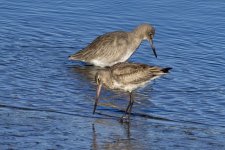
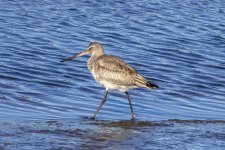
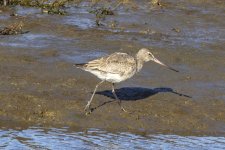
Tokeland Marina, 25 January 2025. I saw a lifer yesterday at Tokeland. I noticed a godwit mixed in with a flock of 20ish willets at the edge of the salt marsh just beyond the campground.
A01HudsonianGodwitWillet0634.jpg
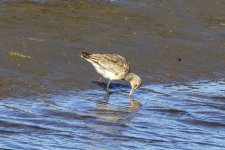
The godwit was using its long bill to probe in the mud for invertebrates.
A02HudsonianGodwit0628.jpg
A03HudsonianGodwit0651.jpg
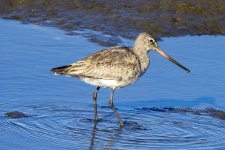
The bird didn’t have the usual cinnamon wash of the marbled godwits that overwinter in the area. Instead, it was the same gray color and size as the willets.
A04HudsonianGodwit0639.jpg
A05HudsonianGodwit0623.jpg
So, I knew that it had to be new species for me. At the time, I was torn between calling it a bar-tailed godwit or a Hudsonian godwit. Neither commonly overwinter in the PNW. A detailed look at my pictures tilted my decision to Hudsonian godwit, probably a juvenile. Other birders on ebird had identified and posted pictures of a Hudsonian godwit mixed in with a large flock of marbled godwits in the fall. This might be the same individual.
Hudsonian godwits normally migrate from their breeding grounds among the tundra bogs and tidal mudflats of Alaska and Northern Canada to the coasts of Argentina and Southern Chile. This makes for a 16,000-mile round trip. During this migration, they may fly night and day non-stop for 6,000 miles. During these long flights, one half of of their brain may slip into sleep mode, while the other half maintains flight (called unihemispheric slow-wave sleep, seen also in dolphins and whales). Then the sides switch roles. So, this Tokeland bird has saved itself from substantial wear-and-tear by detouring to the Willapa Bay area for the winter. Interestingly, the adult Hudsonian godwits migrate to the Southern hemisphere before the juveniles who migrate apparently by instinct.
Steve
 
one half of of their brain may slip into sleep mode, while the other half maintains flight (called unihemispheric slow-wave sleep, seen also in dolphins and whales). Then the sides switch roles.
Bird brains are so awesome. No layered cortex, just straight brain cells... Humans, well we can put one hemisphere to sleep with sodium amytal injected unilaterally into the internal carotid artery. One hemisphere asleep, one awake. We use this to test memory prior to temporal lobe surgery. It's called the Wada test Though, importantly, and for the kids, you should not try this at home nor should you try and fly while doing this.

Personally, it would be super interesting to know how the switch occurs from one side to the other and what controls that switch and furthermore, if it is lateralized/lopsided in timing preference or if one side is responsible for some kind of REM like or deep sleep phase vs the other. Love that lateralization stuff, super fascinating to think about...
 
Bird brains are so awesome. No layered cortex, just straight brain cells... Humans, well we can put one hemisphere to sleep with sodium amytal injected unilaterally into the internal carotid artery. One hemisphere asleep, one awake. We use this to test memory prior to temporal lobe surgery. It's called the Wada test Though, importantly, and for the kids, you should not try this at home nor should you try and fly while doing this.
Personally, it would be super interesting to know how the switch occurs from one side to the other and what controls that switch and furthermore, if it is lateralized/lopsided in timing preference or if one side is responsible for some kind of REM like or deep sleep phase vs the other. Love that lateralization stuff, super fascinating to think about...
The next full length release by the made up band Bird Brains should 100% be called No Layered Cortex, Just Straight Brain Cells.
 
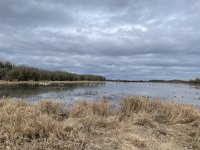
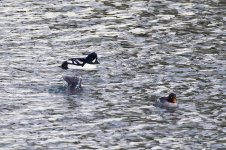
Poor bird pics, but a great day at the wildlife refuge. Northern Pintail, Bufflehead, Northern Shovelers, Mallards, Coots, American Wigeon, Green Winged Teal, Hooded Merganser, Tundra Swan, Cackling Geese…Bald Eagles, Red Tails, Merlin, Kestrel, Harriers, and a pair of Prairie Falcons…Ruby and Golden Crowned Kinglets, White Breasted Nuthatch, Flickers, Egrets, Great Blue Heron…
IMG_4178.jpeg

IMG_4179.jpeg
 
Poor bird pics, but a great day at the wildlife refuge. Northern Pintail, Bufflehead, Northern Shovelers, Mallards, Coots, American Wigeon, Green Winged Teal, Hooded Merganser, Tundra Swan, Cackling Geese…Bald Eagles, Red Tails, Merlin, Kestrel, Harriers, and a pair of Prairie Falcons…Ruby and Golden Crowned Kinglets, White Breasted Nuthatch, Flickers, Egrets, Great Blue Heron…
View attachment 140291

View attachment 140292
Grey ghost is the name of a fly pattern, and a nickname for an adult male northern harrier w grey coloring.
 
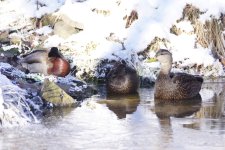
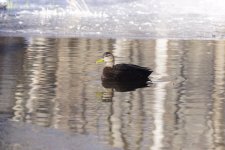
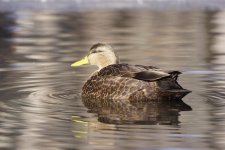
Apologies for posting the same guys and gals over again, but I am taken by them. They do appear to be residents in our pond and they cheer my day.

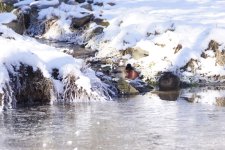
Suffering through the cold snap, we got to -3 F, the warmest spot, where the spring empties into the pond:

1738508299038.jpeg


1738508046968.jpeg

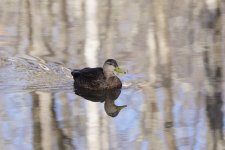
Out for a brisk morning swim:

1738508373413.jpeg


1738508144669.jpeg

1738508495408.jpeg

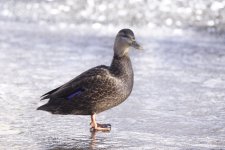
And walkabout on the ice:

1738508633699.jpeg


Cheers
 
Apologies for posting the same guys and gals over again, but I am taken by them.
No apologies necessary and I'd be taken with and thankful for photogenic neighbors like those.
 
Apologies for posting the same guys and gals over again, but I am taken by them. They do appear to be residents in our pond and they cheer my day.

Suffering through the cold snap, we got to -3 F, the warmest spot, where the spring empties into the pond:

View attachment 140516


View attachment 140514

Out for a brisk morning swim:

View attachment 140517


View attachment 140515

View attachment 140518

And walkabout on the ice:

View attachment 140519


Cheers
no worries….these days I’ll take cheer where ever it can be found 👍
 
Back
Top