Got any bird pics?

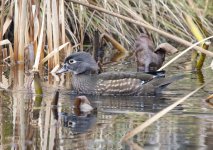
McLane Creek, November 8 & 15, 2024. While the primary focus of these two visits to McLane Creek has been to observe the amazing chum salmon spawning orgy in the creek, there is so much more to see. The main pond can be a great place to see ducks, especially wood ducks and mallards, but also buffleheads and gadwalls. In these two visits, the woodies were more skittish. This hen hugged the far shoreline.
A01WoodDuckHen2084.jpg
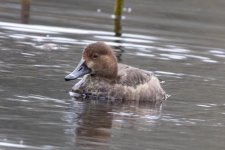
A solitary ring-necked hen was diving for food off one of observation decks. I was surprised to not see others as they tend to be gregarious
A02RingNeckedHen2092.jpg
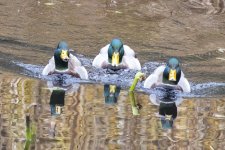
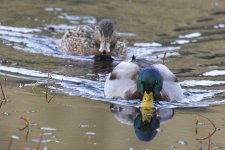
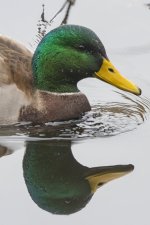
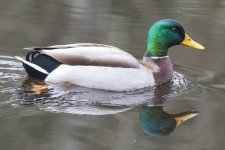
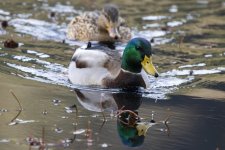
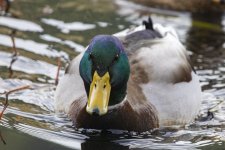
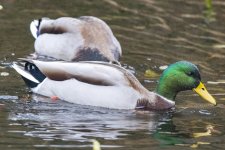
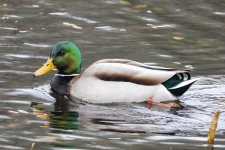
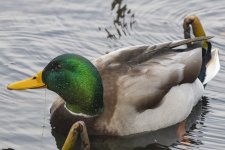
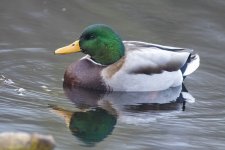
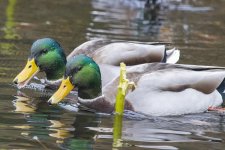
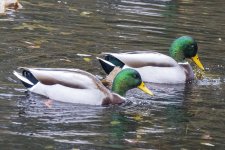
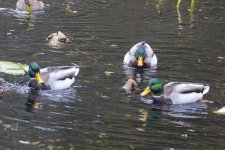
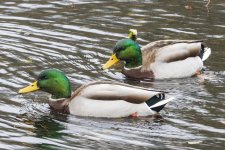
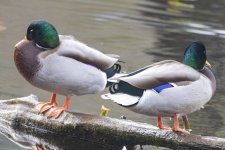
But the stars of the show were over a dozen mallards. I suspect that someone may be feeding them as they swam near to the observation deck when I walked out. This is NOT typical behavior during hunting season. When I didn’t deliver any food, they went back to harvesting submerged aquatic vegetation. I managed to shoot so many great pictures that I am having a hard time limiting it to just one or two. So, here are some of the best. Yes, they are common, but they are also striking.
MallardDrakesThreeAmigos2098.jpg
MallardPair1790.jpg
MallardDrake&Reflection2077.jpg
MallardDrake&Reflection2081.jpg
MallardDrake1792.jpg
MallardDrake1796.jpg
MallardDrake2102.jpg
MallardDrake2120.jpg
MallardDrake2180.jpg
MallardDrake2186.jpgMallardDrakes2106.jpgMallardDrakes2111.jpgMallardDrakes2113.jpgMallardDrakes2117.jpgMallardDrakes2184.jpgSteve
 
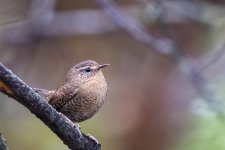
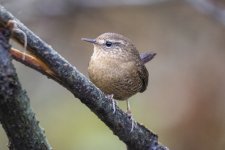
As the calendar rolls to fall, cryptic, tiny Pacific wren migrate into coastal Washington. We often have one that winters in our front yard where we hear its sharp call from deep cover as we exit the door. Like most wrens, it is very secretive, but you sometimes get lucky, as during a recent visit to McLane Creek Nature Trail.
PacificWren2131.jpg
PacificWren2136.jpg
When I first started birding, this species was called the winter wren. But scientists noted differences in vocalizations between birds in the PNW and the rest of the country. These differences were also accompanied by DNA differences that indicate that the PNW birds have been reproductively isolated from the rest of the country for at least a million years. Hence, the PNW birds were designated a new species, the Pacific wren, separate from the winter wren.
Steve
 
As the calendar rolls to fall, cryptic, tiny Pacific wren migrate into coastal Washington. We often have one that winters in our front yard where we hear its sharp call from deep cover as we exit the door. Like most wrens, it is very secretive, but you sometimes get lucky, as during a recent visit to McLane Creek Nature Trail.
View attachment 133285
View attachment 133286
When I first started birding, this species was called the winter wren. But scientists noted differences in vocalizations between birds in the PNW and the rest of the country. These differences were also accompanied by DNA differences that indicate that the PNW birds have been reproductively isolated from the rest of the country for at least a million years. Hence, the PNW birds were designated a new species, the Pacific wren, separate from the winter wren.
Steve
One of my favorites, I have been fortunate enough to see one disappear into its nest in Douglas Fir bark. I have never looked the bark of a fir tree in the same way since,
 
Big fan of the Pacific wren as well @Cabezon ! Poor Mallards get overlooked for their amazing beauty. If they were a rarity people would lose their minds chasing them. Excellent gallery !

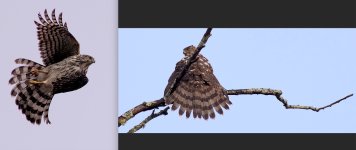
My Cooper's hawks are still zipping around. I have two large juvenile females that seem to constantly be in and out of view last few weeks. I am guessing siblings.

coopershawk2024nov14thldkd.jpg
 
Nisqually Wildlife Refuge, 2024 November 18. My usual strategy when I am birding is more like active hunting. I try to walk quietly along the trail looking for any signs of motion in my peripheral vision and listening to any light bird call or rustle in the undergrowth – intense focus. Another option, a favorite of Australian bird guide Mike Jarvis, is to find a great location (such as a waterhole in the dry season in the Northern Territory) and just stake it out. The birds come to you. And with the falling temperatures, the birds’ first priority is keeping the furnaces stoked – eat, eat, eat.
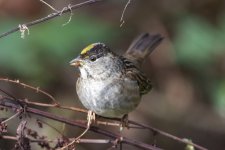
Along the Twin Barns Trail at Nisqually NWR, I stopped at gravel spur that crosses the main walking trail. I was anticipating that there would be a flock of golden-crowned sparrows here; there usually are. They graze on the fresh grass blades at the edge of the gravel. And they were there nibbling on grass.
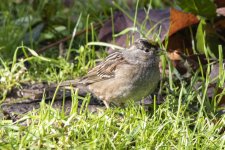
A01GoldenCrownedSparrow2241.jpg
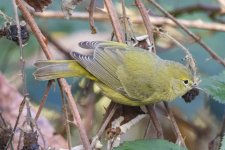
But I also sighted a yellowish bird in the blackberry thicket adjacent to the sparrows. My first thought was that this would be a ruby-crowned kinglet, but when I put my binocs on it, it proved to be a warbler, specifically a female/immature orange-crowned warbler.
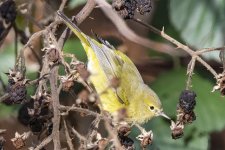
B02OrangeCrownedWarblerFemale2274.jpg
Outside of the occasional yellow-rumped warbler, very few warblers overwinter in Western Washington; most head south to warmer climes as the local temperatures drop. This orange-crowned warbler was carefully probing the old fruits of Himalayan blackberries.
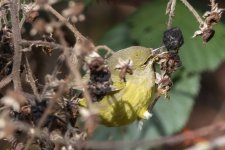
B03OrangeCrownedWarblerFemale2276.jpg
B04OrangeCrownedWarblerFemale2300.jpg
While these warblers are reported to consume fruit and nectar in winter, I suspect that this bird was looking for insects that were either hiding in the clumps of desiccated berries or that were feeding on the rotting fruit. Later in my walk, I encountered another female/immature orange-crowned warbler.
This was the start of a 45-minute stretch where I didn’t move more than 20 feet and snapped 315 pictures (out of 513 pictures for the visit). New species appeared every few minutes and I’ld move a step or two to get a better angle or clearer view. As most individuals were actively feeding, capturing a bird in focus and in good light was a challenge – quantity was the name of the game.
Something (me?) spooked the flock of golden-crowned sparrows into the blackberry thicket. When the sparrows felt safe, they flew onto the stems of the perennial plant dock and began harvesting dried seeds.
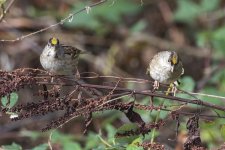
A05GoldenCrownedSparrowsOnDock2426.jpg
A06GoldenCrownedSparrowOnDock2422.jpg
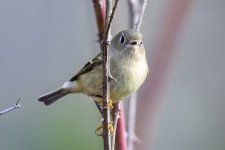
I had been hearing the contact calls of ruby-crowned kinglets from deeper in the alders and several moved to the edge of the clearing. They searched the leaves of the blackberry shrubs for a meal. Typically a difficult species to photograph because of their erratic activity, a few kinglets posed long enough for a few good images.
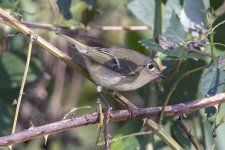
C07RubyCrownedKinglet2349.jpg
C08RubyCrownedKinglet2404.jpg
I had been hearing the distinctive raspy scolding of a Bewick’s wren. It popped into view and I managed to snap a few pictures before it disappeared deeper into the shrubs.
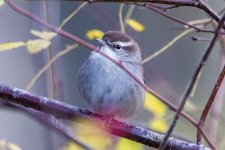
D09BewicksWren2385.jpg
A Pacific wren popped into view so close that I had to take a step back to meet the minimum auto-focus distance of my camera. I managed just a single picture before it also disappeared.
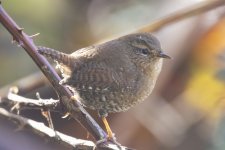
D10PacificWren2505.jpg
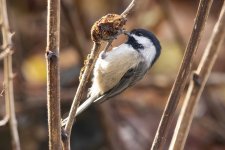
But the Pacific wren was replaced by a black-capped chickadee who was determined to demolish several galls on thimbleberry stems.
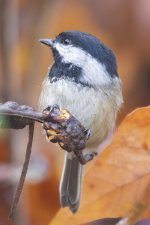
E11BlackCappedChickadeeProbingGall2500.jpg
E12BlackCappedChickadeeProbingGall2455.jpg
I investigated this and found that the gall wasps (likely Diastrophus kincaidii) lay eggs on the thimbleberry stems in the spring. The thimbleberries build the galls in response to the presence of the wasp larvae. It is likely that the wasp larvae release growth hormones that stimulate the localized growth of the plant that results in the gall structure. The herbivorous wasp larvae consume the plant tissue. The wasp larvae pupate in the fall and emerge as adults in the spring to continue the process. This chickadee might have been searching for the pupae of the thimbleberry gall wasp or for other wasp species that parasitize these gall wasp pupae (parasitoids – think Alien movie).
Song sparrows are ubiquitous at Nisqually NWR. And they are not shy.
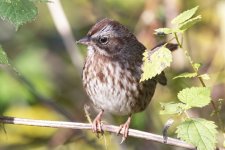
F13SongSparrow2524.jpg
F14SongSparrow2546.jpg
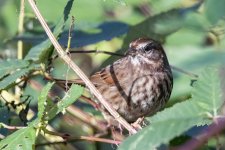
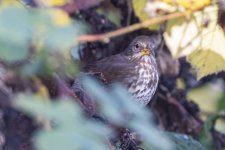
But I was surprised to see two fox sparrows emerge from the undergrowth and perch in view. These are sparrows that think that they are thrushes – scratching at leaves and other vegetation to reveal invertebrates hiding below. They tend to be more cryptic than the other sparrows at Nisqually. But two individuals came out and perched in good light.
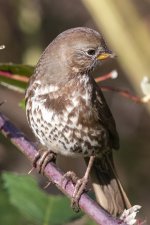
F15FoxSparrow2513.jpg
F16FoxSparrow2565.jpg
A spotted towhee also popped up from the undergrowth, but I never had a clear camera shot at it. I heard pine siskins making their “psee” calls up in the canopy, but, per usual, they were too far off for worthwhile pictures at this site.
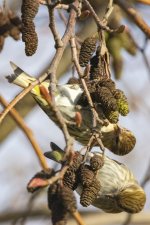
That changed later in my walk. I had just reached the gravel dike that separates the freshwater marsh from the mudflat. I heard and saw golden-crowned kinglets in the shrubs and trees. While I was waiting for a kinglet to give me a clean shot, a flock of 100+ pine siskins landed 20’ away from me in alders on the west edge of the dike. The noisy pine siskins were frantically feeding on the seeds (small-winged nutlets) inside the cone-like strobili (= female reproductive structure).
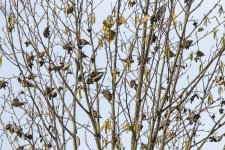
G17PineSiskinsOnAlder2583.jpg
G18PineSiskinsOnAlder2650.jpg
And just as quickly as they arrived, they headed off. And the golden-crowned kinglets were gone too.
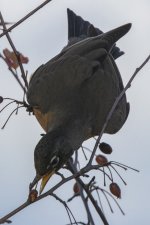
As I walked back to the parking lot, a male robin was perched in a Pacific crabapple tree in great light. It was harvesting the ripe fruit.
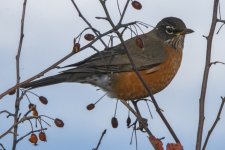
H19AmericanRobinMaleEatingPacificCrabapple2698.jpg
H20AmericanRobinEatingPacificCrabapple2700.jpg
Steve
 
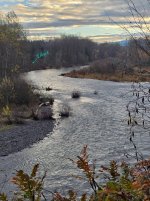
Finally moved into our new, and final home. Walked down to check the river yesterday morning, and was greeted by a bald eagle flying upstream. Crappy pic. The arrow marks a white speck which is the south end of the eagle flying east. I'll be better prepared next time.

View attachment 133557
You will lots of time to practice... And see what your "competition" is harvesting from that pretty river. I know that it was a long time in the planning, but now you are settling in!!! Enjoy.
Steve
 
So you just step out of your house and see a Bald Eagle fly upstream?

Ah, the envy, the envy!

Congratulations on your new home,
Kenneth
You will lots of time to practice... And see what your "competition" is harvesting from that pretty river. I know that it was a long time in the planning, but now you are settling in!!! Enjoy.
Steve

Thanks Matt, Kenneth, and Steve.

Yeah, it was almost a surreal moment after almost 3 years of permitting hell, contractor herding, and lots of both mental and physical work to pull this off. Not to mention some incredibly fortunate real estate market timing with this property and the sale of our last home.

Now the real work begins (fencing, deck, yard scaping), but looking forward to more morning hikes and pics.
 
Last edited:
Congratulations!
 
Thanks Matt, Kenneth, and Steve.

Yeah, it was almost a surreal moment after almost 3 years of permitting hell, contractor herding, and lots of both mental and physical work to pull this off. Not to mention some incredibly fortunate real estate market timing with this property and the sale of our last home.

Now the real work begins (fencing, deck, yard scaping), but looking forward to more morning hikes and pics.
Guy - Congratulations on moving into your dream property! Keep posting pictures!//Pat
 
Finally moved into our new, and final home. Walked down to check the river yesterday morning, and was greeted by a bald eagle flying upstream. Crappy pic. The arrow marks a white speck which is the south end of the eagle flying east. I'll be better prepared next time.

What an amazing view! Looking forward to seeing more nature photos!
 
Nisqually Wildlife Refuge: 26 November 2024. I visited Nisqually Wildlife Refuge about 20 times so far in 2024. Part of the attraction is the convenience; it is about 20 minutes from my house. But the biggest attraction is the diversity of habitats and wildlife that you can find there. And while there are some staples that you expect to see every visit, there are always rare species that you might see only once or twice. So, every visit is different and you cannot predict which animals will come into camera range. And this Monday’s visit was typical. The previous week, I had great views of the “littles”, the small forest and edge birds. On Monday, my wife and I didn’t see many “littles” but we had great views of waterfowl.
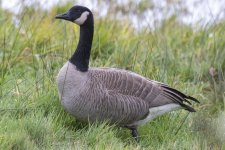
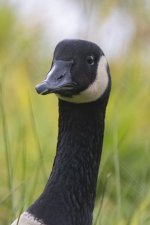
Noisy flocks of cackling geese are mini lawn-mowers as they nibble their way across Nisqually’s grassy meadows.
A01CacklingGoose2721.jpg
A02CacklingGoose2716.jpg
You can hear them tearing the grass blades. When a flock is spooked by passing eagles, the birds explode off the ground and fill the air with their high-pitched yelping calls. Soon enough they will find a place to settle back and get back to munching the new grasses.
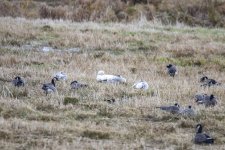
Several snow geese have been hanging out with the cackling geese. Snow geese are a bit larger than cackling geese (5.3lb vs. 3.5lb) and their white plumage contrasts with the darker plumage of the cackling geese. The snow geese include both adults and juveniles.
A03SnowGeeseAmongCacklingGeese2780.jpg
I have always been surprised at the great views of ducks that you can have at Nisqually NWR. The mallards and other ducks in the main pond and canals along the Twin Barns loop are wary but they will often allow you to approach to within 20 or so feet. Ducks in other areas of the refuge tend to be more skittish, totally understandable as they are subject to duck hunting just outside the refuge boundaries. It is more common to see them occupying the freshwater marshes and mud flats farthest from the trails or gravel roads. But sometimes, they are feeding / resting right by the trails – a good day.
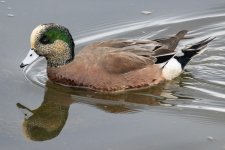
When my wife and I hiked out on the gravel dike trail, the tide was quite high in the salt marsh / mud flats. Sea water had flooded even the grasses in the high intertidal. And the ducks were voraciously feeding in this area like they hadn’t eaten in a week. I wasn’t surprised to see American wigeons
A04AmericanWigeonDrake2799.jpg
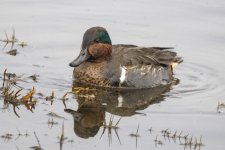
or green-winged teal drakes
A04GreenWingedTealDrake2792.jpg
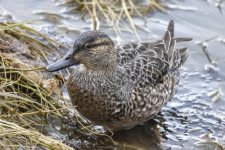
and hens.
A04GreenWingedTealHen2784.jpg
They are the least skittish of the ducks at least to visitors to Nisqually NWR. [They are NOT big fans of Northern harriers cruising by.]
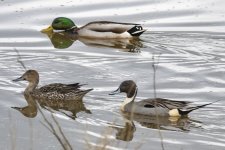
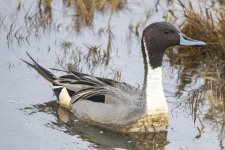
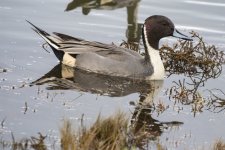
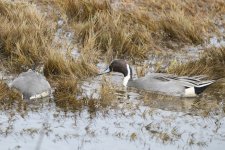
And I wasn’t too surprised that there were several mallard hens and drakes in this mixed-species feeding flock. But I was not expecting for there to be several pintails in the mix as well. They tend to be wary. And these drakes were certainly conflicted between our presence and the rich feeding zone that the other ducks were exploiting as they backed away and then swam back to the shoreline. Hunger won out...
A05PintailPair&MallardDrake2829.jpg
The pintail drakes have great plumage. [First bird needs a bath though... There has to be a fly-tying use for those long black back feathers.]
A06PintailDrake2756.jpg
A07PintailDrake2771.jpg
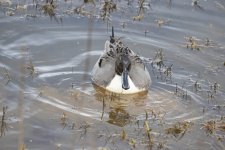
In winter, pintails are known for feeding on seeds that they sieve from sediment. But I think that these pintails were feeding on roots.
A08PintailDrakesFeeding2795.jpg
You can see from the mud plume that this one pintail drake formed as he grubbed in the mud for roots.
A09PintailDrake&MudPlume2815.jpg
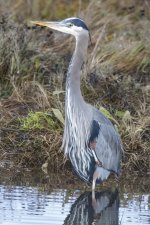
Finally, while not a waterfowl, a great blue heron stalked a snack in the channel too.
A10GreatBlueHeron2774.jpg
Steve
 
Thought they were long gone, was always under the belief that decreasing daylight was the trigger to fly south, but have come to learn it is ice. Once their water is frozen over, that triggers Mallards to fly south to open water. Here in the Poconos, that means head south to Maryland and the Chesapeake.

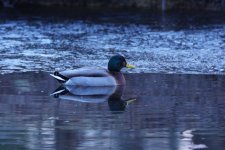
Duck on the pond surveying the ice, he later climbed up on the boulder in the pond, surveyed the situation and flew off; wonder if that will be it.

1733066377989.jpeg

Cheers
 
Back
Top