
Navigation
Install the app
How to install the app on iOS
Follow along with the video below to see how to install our site as a web app on your home screen.
Note: This feature may not be available in some browsers.
More options
Style variation
You are using an out of date browser. It may not display this or other websites correctly.
You should upgrade or use an alternative browser.
You should upgrade or use an alternative browser.
Cutty time
- Thread starter Creatch’r
- Start date
I'm somewhat new to the SRC game. As I understand it, they usually start coming up in numbers after the first decent rain in September. In my area, we have recently had some rain. Maybe a little early? Maybe not? Only one way to find out. Planning on giving it a shot tomorrow.

Creatch’r
Potential Spam
I'm somewhat new to the SRC game. As I understand it, they usually start coming up in numbers after the first decent rain in September. In my area, we have recently had some rain. Maybe a little early? Maybe not? Only one way to find out. Planning on giving it a shot tomorrow.
Depends on the watershed, SRC timing is unique to each basin. There are SRC to be found for sure in the larger PS rivers right now. More then anything the recent rain and bump in flows worked its magic by dropping water temps significantly which I’m sure made for happy fish. Cutthroat should be feisty.
The stilly is staying brown a lot longer than I thought it would. After the rains it was a very dark and odd shade of brown, like I’ve never seen before. Maybe this weekend I’ll try to better pinpoint where the color is coming from. Looking forward to fishing it again.

Blackberries, chanterelles and cutthroat make September my favorite month.
What are patterns you guys really like for SRC once they’re out of salt?
What are patterns you guys really like for SRC once they’re out of salt?

Spiders both standard and reversed. Attractor soft hackles, too, like Hari Kari. Woolly buggers. Crane flies and stimmies for dries.Blackberries, chanterelles and cutthroat make September my favorite month.
What are patterns you guys really like for SRC once they’re out of salt?

I like the classics. Rodericks Haig-Brown's Silver Brown.
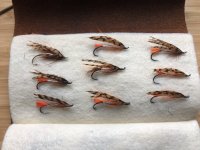
Dark flies like the Dark Mackerel (a Scottish sea trout fly), Mallard and Claret and Peter Ross...
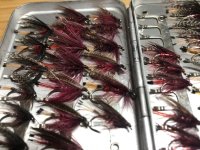
And bright flies like the old reliable Invicta...
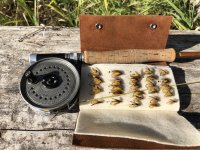
Dark flies like the Dark Mackerel (a Scottish sea trout fly), Mallard and Claret and Peter Ross...
And bright flies like the old reliable Invicta...

This, but mostly reversed. I'm no cutty expert, but I have a lot of faith in that pattern.Spiders both standard and reversed.


Tenkara versions of these, using Scud/Shrimp/Pupa hooks for the high stick guided drift. They're not dry fly surface takes unless there's a fish lying where my fly lands on the first cast before it's waterlogged. But a "commuter's" committed subsurface take of a wet fly can be very energetic. The extra flexibility of a Tenkara rod helps absorb the shock but it can still be a strong jerk on the long rodSpiders both standard and reversed. Attractor soft hackles, too, like Hari Kari. Woolly buggers. Crane flies and stimmies for dries.
 .
.
Question from a curious spider noob...
Is it difficult to tie on your leader with all that hackle sticking forward? Clinch knot? open loop?
Is it difficult to tie on your leader with all that hackle sticking forward? Clinch knot? open loop?
I’d call it a minor inconvenience. Using a nonslip mono loop knot does make it a little less of an issue. Reverse spiders look really cool but I’m not convinced they fish better than normal spiders.Question from a curious spider noob...
Is it difficult to tie on your leader with all that hackle sticking forward? Clinch knot? open loop?

Agree with Matt, pretty much anything orange and gold with some fluff gets hammered...Reverse spiders look really cool but I’m not convinced they fish better than normal spiders.
The entire Snoho is out until "further notice"It's a fucking sham the sky is closed until November
I frequently use reverse hackle flies, and usually use an improved clinch for my smaller freshwater versions and can't seem to consistently tie a small nonslip loop that won't foul the hackle during the drift; yeah more practice... I typically go through the eye from the bottom. As I begin tightening knot I push down on the hackle with a thumb just enough to spread it away from the hook eye and the knot as I snug it down. I check to see if any hackle is caught in the loop and pick it out with one of the safety pins I keep attached on every nippers and scissor-clamps zinger as I do the final tightening.Question from a curious spider noob...
Is it difficult to tie on your leader with all that hackle sticking forward? Clinch knot? open loop?
I think reverse or forward facing and straight stiff hackle with a high rod tip "guided" drift can help me keep a fly in a pocket water eddy for a little longer than a softer or rearward facing hackle.I’d call it a minor inconvenience. Using a nonslip mono loop knot does make it a little less of an issue. Reverse spiders look really cool but I’m not convinced they fish better than normal spiders.
On the other hand I think the soft hen Griz, Partridge, etc. for freshwater and Golden Pheasant I use for saltwater reverse hackle flies have more actual movement, and the variegated patterns imply even more movement than rearward tied hackle when stripped with a western rod, and jigged with subtle tightline Tenkara manipulation techniques.
Agree with Matt, pretty much anything orange and gold with some fluff gets hammered...
I caught my largest freshwater SRC in with a T-rod using beadhead rusty red Dazzleaire yarn body, Olive Ice dubbing thorax-collar with oversized reverse Guinea Hen hackle while twitching it below the surface a few inches in front of the root wad of a downed tree.

Hell, when I read the subject I thought we were talking Scotch, but anyway, I’m with @Josh on the reverse tie due to the confidence factor. After buying and reading all of Syl Nemes books I’ve caught more fish in different places with what I feel is the added pulsating factor the reverse tie gives when feeding the fly into various channels past the 45° downstream angle. Just me…ymmv.

skyrise
Steelhead
Absolutely Butt Head Stupid ! And we will miss all of the Wallace summer kings as well. Not to mention a decent coho run.It's a fucking sham the sky is closed until November
Creatch’r
Potential Spam
Before I tie on a reverse spider I loop the line through the eye and pinch it in my hand and dunk the fly under water for a few seconds and drag it around, with the hackle wet and slicked back it’s easier to finish the knot without capturing any hackle accidentally. I prefer a non slip mono loop with most flies.
Cutts are pretty forgiving and seem happy to swipe at lots of different flies and presentations. Fish what you like and stick with what gives you confidence.
Cutts are pretty forgiving and seem happy to swipe at lots of different flies and presentations. Fish what you like and stick with what gives you confidence.
Attachments
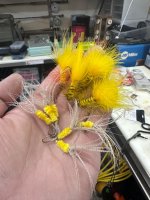
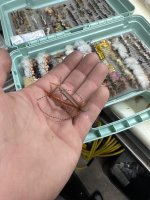
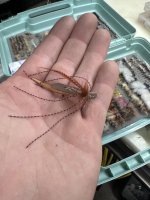
My favorite if not PB freshwater SRC came to a red cone head wooly bugger. The fly might have had black hackle. The fish was in a small, dead water, shallow murky back channel under a lone large bigleaf maple growing on the bank of a consistently smelly dairy farm. That’s a spot that I hadn’t realized it sucks I can’t fish until this thread reminded me of that fact.