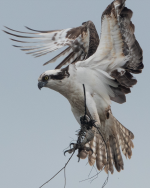
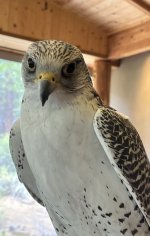
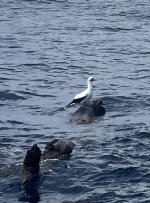
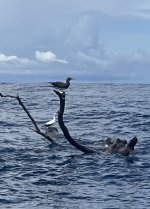
Got any bird pics?

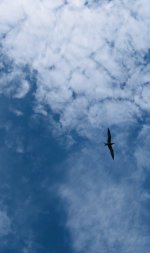
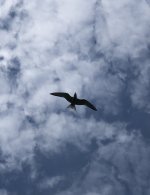
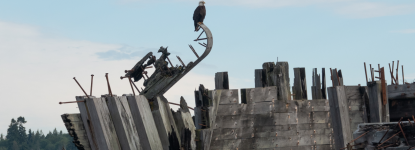
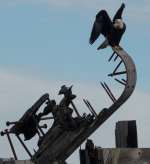
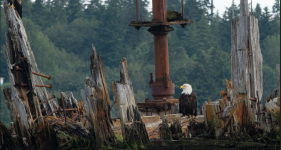
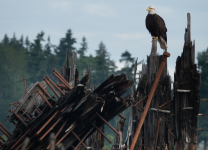
Those are some great pics @Cabezon! I spent many a year studying marbled murrelets and whales in the San Juans so those photos bring back memories. Seems a bit early to see a HEEG so that's cool! I always loved watching minkes crash through the bird balls. Seems like the minkes were clued into the sounds of the birds in some areas and not in others.
 
Been there, done that.....

I really had a hard time deciding if I should say something or not...

Been there, done that.....

I really had a hard time deciding if I should say something or not......
I am glad you did. Ultimately, I prefer accuracy even if I have to accept a little egg on my face when I am sloppy or I don’t do enough research to back my posts. 😬
Steve
 
Heck Steve, in that case, I look like a walking omelet when I try to identify songbirds . . .
 
I am glad you did. Ultimately, I prefer accuracy even if I have to accept a little egg on my face when I am sloppy or I don’t do enough research to back my posts. 😬
Steve
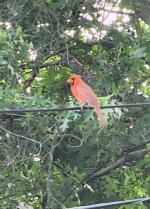
You're forgiven by this old man who now can, thanks to your post, identify house finches in the neighborhood! I love looking at and reading your posts in got any bird pics.
 
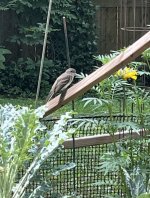
My brother has just about tamed this Eastern Phoebe. Or rather, it chose him. It followed us around his yard.

IMG_1579.jpegIMG_1573.jpeg

It’s entertaining watching it observe and hunt insects around the garden—a useful bird!
 

Attachments

  • IMG_1200.jpeg
    IMG_1200.jpeg
    190.1 KB · Views: 10
  • IMG_1199.jpeg
    IMG_1199.jpeg
    356 KB · Views: 10
I have posted about Bickleton in the past, but need to say it again. If you are at all into birds and are in the Prosser/Yakima or Goldendale area with some time the "Bluebird Capital of the World" is worth a short trip. On Sunday afternoon we went over and slow drove about ten miles of dirt road and saw about 100 Mountain Bluebirds, a few Western Bluebirds, Western Meadowlarks, mule deer, chipmunks, squirrels, Kestrels, Bullock's Orioles and other assorted birds. Lots of relatively undisturbed Sage-Steppe habitat and many wildflowers. The cafes in town are neat as well.
View attachment 117694
This has been on my list of places to go. Do you know how long the blue birds are around?
 
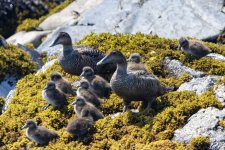
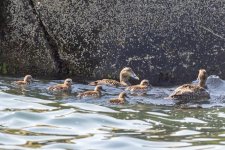
As my brother and I were fishing for stripers around granite islands north of Boston, we had great views of the birdlife. And when we all agreed that we were done with fishing, our guide revisited some of the islands that we had fished so that I could take some bird pictures. We heard and saw American oystercatchers while fishing, but they proved to be elusive when the camera was out. One of the most interesting birds that we saw when fishing and on our photo-safari were hen common eiders and their chicks. I don’t remember eiders breeding in this area in the 70’s when I was diving this area, but they must be breeding on these islands. Typically, we saw two hens escorting a small gaggle of ducklings.
B01CommonEiderHens&Chicks6932.jpg
B02CommonEiderHens&Ducklings6981.jpg
This behavior, creching, is common in eiders. It may include multiple hens shepherding a mingling of their ducklings or non-breeding females helping a breeding hen and her ducklings. The ducklings kept tight to shore and close to their moms. At this size, they would be a tempting morsel to a lurking striped bass or for a hungry black-backed gull.
We also encountered both solitary drake common eiders and small flocks of drakes on the water and resting in the intertidal. While a few of the birds were still in breeding plumage (or close to it),
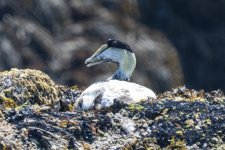
B03CommonEiderDrake6861.jpgmany drakes appeared to be in the less-striking eclipse plumage.
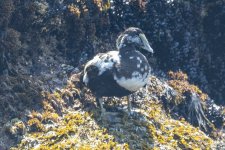
B04CommonEiderEclipseMale6841.jpg
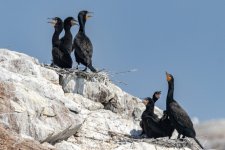
The heights of several uninhabited islands served as nesting sites for double-crested cormorants. The rudimental nests consist of clumps of sticks. The nestlings (cream-colored throat pouches vs. orange for the adults) were quite far along in size – fully feathered but still without flight feathers.
B05DoubleCrestedCormorantsNesting6875.jpg
Of course, you can’t have a marine shoreline without gulls. These included herring gulls
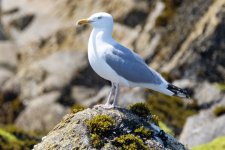
B06HerringGull6918.jpg
And the dominant gull in the Northeast, the greater black-backed gull.
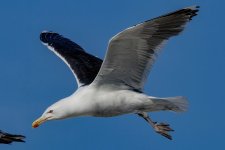
B07GreaterBlackBackedGull7219 copy.jpg
Steve
 
Back
Top