Parker River National Wildlife Refuge, Massachusetts, Mid-June. Where do you go when the temperatures are forecast to be in the 90’s and the index over 100 degrees? To the coast, of course. So, my brother and I headed to the Parker River National Wildlife Refuge on Plum Island, a barrier island north of Cape Ann. We started at the Hellcat Trail access. This consists of a 1.7-mile elevated boardwalk winding pine and oak woods and late successional dunes with spur trails into freshwater marsh. The boardwalk does prevent soil compaction and keeps the hikers away from ticks and poison ivy. But the trees are so tight to the trail (like a green tunnel), that you often spook birds deeper into the forest as you walk along. I suspect that the birding is better in the fall after the leaves have fallen and in spring before the trees have leafed out. Still, we were persistent and did have some good looks.
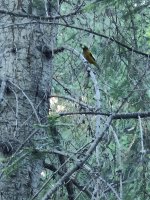
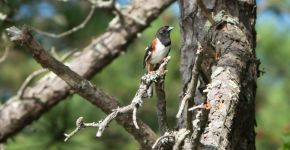
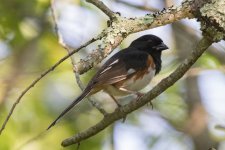
Our “hunt” of this Eastern towhee is great example of some of the challenges birding here in early summer. We could hear the bird singing right in front of us but we could not see it at all. It wasn’t until we walked a few feet further around the winding trail and had a 90o view from where we started. There he was on a small side branch tight to the trunk which is what had shielded it when we originally heard it singing. These are closely related to our Western spotted towhees and the two species have occasionally been lumped together.
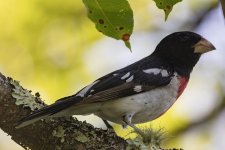
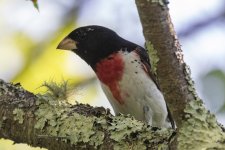
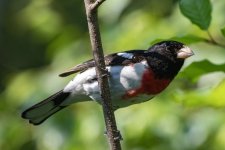
We were having similar problems with rose-breasted grosbeaks. I had confirmed that there were males singing with the Merlin app. And so I tried the playback trick from the pre-recording songs available on Merlin. [This can be a controversial tactic among birders.]. This had the desired effect as a male rose-breasted grosbeak popped into view and bounced between several perches as he searched for the phantom male that had invaded his territory.
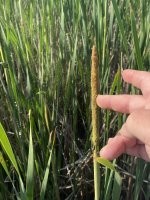
Off a spur trail we ended up in the cattail / Phragmites marsh. I hadn’t noticed it before but the reproductive spike produced a section of male flowers on top and female flowers (which will develop into the characteristic cylindrical structure from which cottony fluff will disperse seeds. At this point, the male flowers were filled with pollen which was released when I flicked the spike.
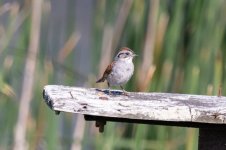
Many marsh birds can be difficult to see in this complex environment. I heard marsh wrens and common yellowthroats but they weren’t willing to play. But I did have a great view of a swamp sparrow,
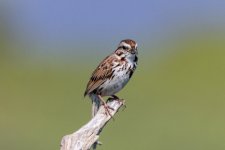
a song sparrow,
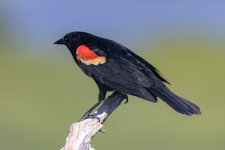
and male red-winged blackbird
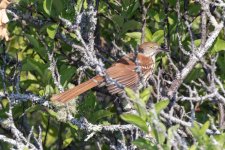
A real treat was seeing a brown thrasher come into view. They normally forage among the leaf litter under shrubs, but this one came up in some great light.
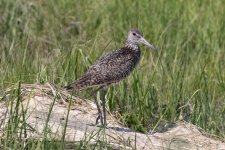
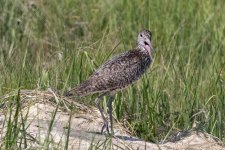
In the salt marsh, we encountered a pair of willets. They kept making alarm calls probably to warn their chicks deeper in the marsh grasses.
Steve