Saving the Kelp in Puget Sound

The balance of nature was far different before mankind entered our west coast. Who knows how many sharks were eating how many otters?

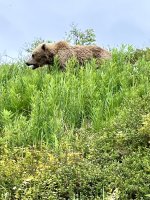
Almost none actually, even then. Otters doesn't have enough fat to be actual shark food. We need wolves and grizzlies back to tidy up Big Otter, that's what's actually missing. "Like popcorn"
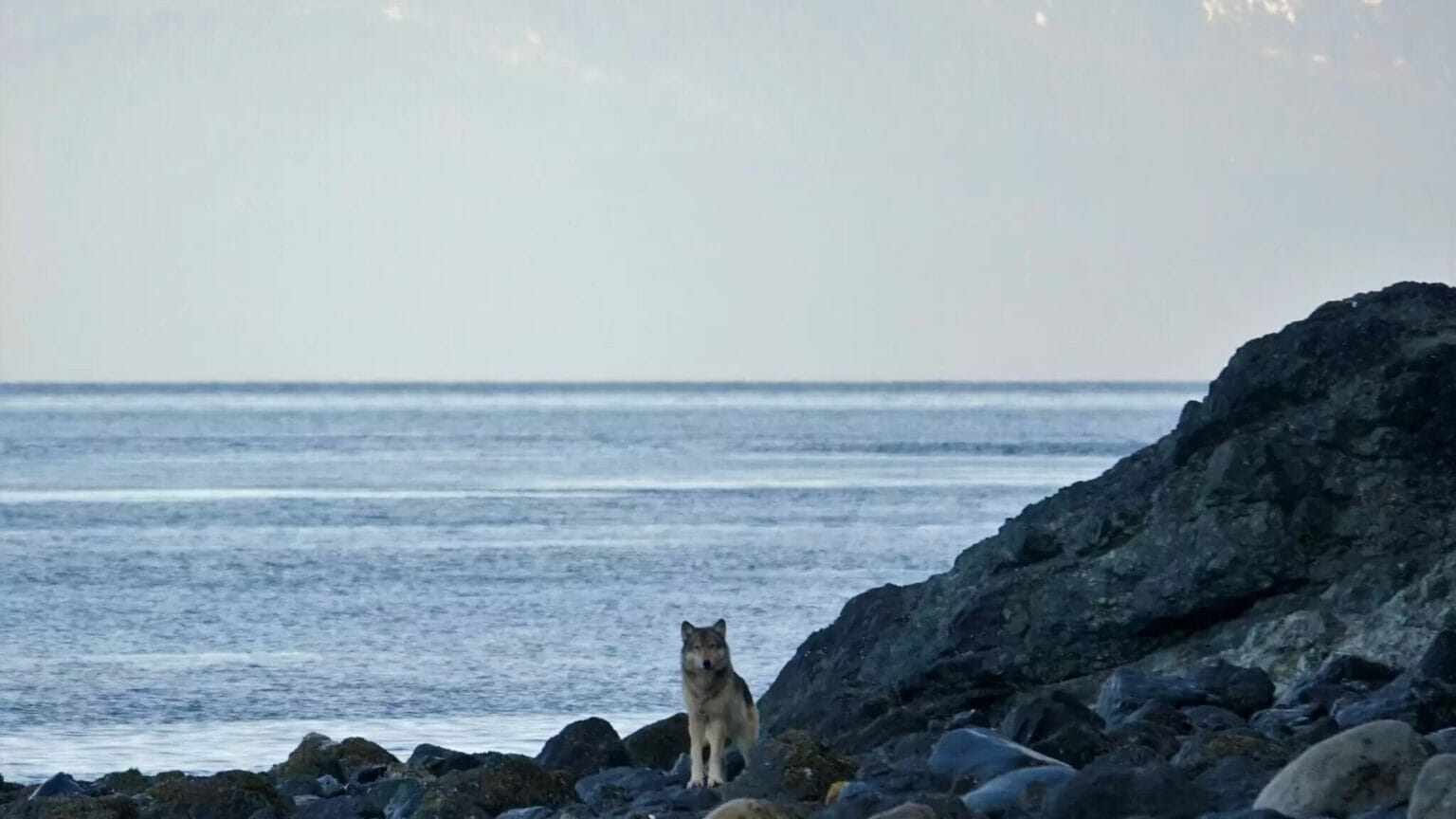
 
... what? What happened to the wolves and bears?? @Brute likes bears ... Bring back the bears!!!

cheers
 
Interestingly enough, "house cats" kill a large percentage of California Sea Otters. They transmit a deadly toxoplasma parasite through their urine that ends up in the ocean.
 
I was referring to the "otter free zones" that used to be part of modern, common sense measures that were used in an attempt to prevent this aggressively destructive species from destroying the ecosystems of Southern California kelp beds. Fortunately, for some reason the otters have been reluctant to move into these areas. Ask any lobsterman if they think that otters will help balance the ecosystem that they rely on to make a living. They will all answer "HELL NO"... just like every other species that relies on the biodiversity of the kelp forest. The "scientist" who get fat paychecks from saying that they are wrong, write one sided, garbage puff pieces.. like we see in post #15.
 
🤡
 
Sea Otters….wolves in water.
SF
 
One might ask....Why were the "otter free zones" created in the first place? Could it be that it was a well known fact that the otters would be harmful to Southern California kelp bed ecosystems? Rest assured that many lawyers, lobbyist, "scientist" and paid activist all made a lot of money in the effort to deceive the public regarding the truth behind the Sea Otter depredation controversy.
 
Here is a quote from the article in post #3
Commercial and subsistence fishermen have reported major consequences from the repopulation for years. In Wrangell’s regionwide call to action, for instance, the city and borough manager wrote that the issue is at a “breaking point” in the community, and has led to the “near-collapse” of once-abundant crab fisheries and dive harvest areas."
Now a quote from the article in post #15...
This highlights a vital intersection of conservation biology and climate science, where protecting a charismatic marine mammal aligns with global efforts to combat climate change.

See the difference? An entire community is watching Sea Otters destroy there livelihoods and way of life. And then we have this nonsense:
"This highlights a vital intersection of conservation biology and climate science, where protecting a charismatic marine mammal aligns with global efforts to combat climate change."
I wonder why the citizens of Wrangell might be just a little miffed. Charismatic mammal combating climate change??? Good grief.
 
Last edited:
Personally I have found that commercial fisherman are profoundly interested in the sustainability of marine life, especially the ones that they harvest. And they also have a deep understanding of the food chain. Most are very careful to adhere to size limits, seasons, log books, catch limits, quotas etc.... Sea Otters just simply eat. That is the problem. That lobster, that has two and a half million eggs attached to her tail, can not be taken by a human. For a 100 pound otter, it's his favorite snack.
 
A Sea Otter can eat about 25% of his body weight. Think of a 100lb otter eating 25 POUNDS of small, female lobsters with eggs. Trust me, if a human was busted killing those lobsters they would lock him up and throw away the key (and probably get national news coverage). Yet day after day after day that otter would be feasting. Now consider dozens of these creatures, all feasting 7 a days week, month after month, year after year.. But a guy wrote an article about how they "align with a global effort to combat climate change"...so they must be good for the kelp beds???.. Does that make any sense?
 
Last edited:
I wonder why the citizens of Wrangell might be just a little miffed. Charismatic mammal combating climate change??? Good grief.
It isn’t that far fetched.

 
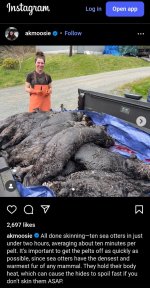
Sea Otters.jpg

There is hope Jim. Sea otters are still harvested for their pelts.
 
A Sea Otter can eat about 25% of his body weight. Think of a 100lb otter eating 25 POUNDS of small, female lobsters with eggs. Trust me, if a human was busted killing those lobsters they would lock him up and throw away the key (and probably get national news coverage). Yet day after day after day that otter would be feasting. Now consider dozens of these creatures, all feasting 7 a days week, month after month, year after year.. But a guy wrote an article about how they "align with a global effort to combat climate change"...so they must be good for the kelp beds???.. Does that make any sense?
Could is be that since we selectivly harvest male crab and lobster, the leftovers are mostly female, so otters eat more of them.... There was a balance before the harvest of sea otters and crab and lobster via modern methods. To blame a native critter seems ridiculous to me without looking at all factors. Pollution, overfishing, other predators that were eliminated would all be factors and the blame comes down to human factors, which may including protection of sea otters and other marine mammals. Seems like the simplest answer is to remove the humans, and that isn't happening.
 
Could is be that since we selectivly harvest male crab and lobster, the leftovers are mostly female, so otters eat more of them.... There was a balance before the harvest of sea otters and crab and lobster via modern methods. To blame a native critter seems ridiculous to me without looking at all factors. Pollution, overfishing, other predators that were eliminated would all be factors and the blame comes down to human factors, which may including protection of sea otters and other marine mammals. Seems like the simplest answer is to remove the humans, and that isn't happening.
"Seems like the simplest answer is to remove the humans, and that isn't happening." I take it, you don't watch the news?
 
Back
Top