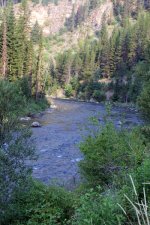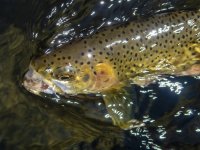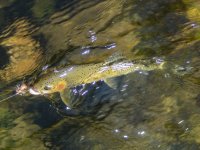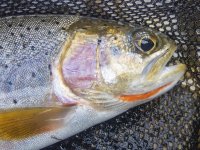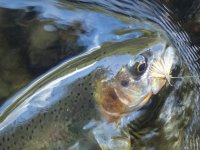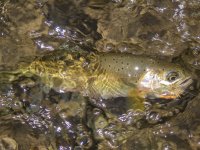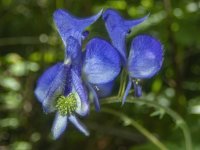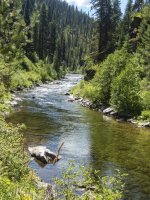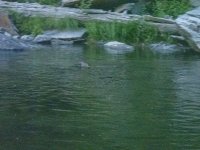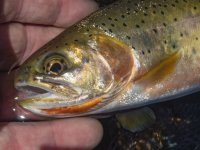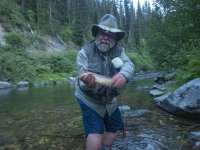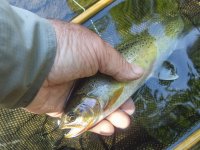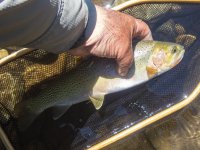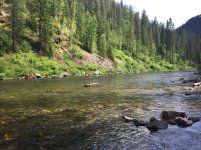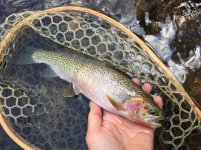
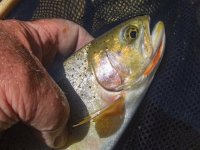
“River of Garnet Sands”, July 27 – August 1, 2025. Part A: “The Guide Hole”. I’ve fished this river just about every summer for the last 20+ years. Coming back is like renewing a friendship with an old friend. If you have been there, this picture is all you need to identify just which river this is: colorful cutts and patches of ruby-red garnets.
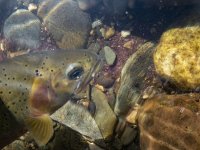
Some years but not all, morning hatches (especially caddis and PMDs) will have the fish looking up. In this crystal-clear water, a trout will have ample opportunities to scrutinize your fly. I prefer to fish biot-bodied parachute PMDs or cdc caddis patterns. On some casts you are simply prospecting likely water. However, if you see a fish rise and you can drop a quality cast in its direction, there is a very good chance that you will be rewarded.
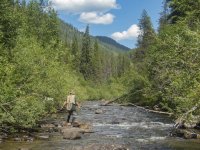
Over the years, we’ve given nicknames to our favorite spots along an 8-mile stretch of this river. A favorite, albeit very popular, spot is the “Guide Hole”. The wading here is easy, there is little vegetation to catch a wayward backcast, and the pool holds many cutts. It is the perfect spot for a fishing guide to bring their greenest clients. After an early start, I reached the pull-out for the “Guide Hole” to find that it was unoccupied. Sweet.
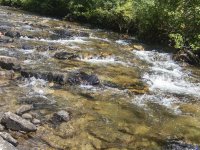
The “Guide Hole” lies below a long, shallow stretch of small rapids.
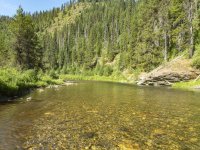
Its center piece is a large bedrock outcrop that extends into the path of the river. The river has scoured a deep hole as it flows around the outcrop. The shallow rapid transitions quickly into this deep pool. Trout hovering below the dropoff are in the perfect position to ambush any food carried down by the rapid. Downstream of the outcrop, the pool becomes into a wide gentle glide that shallows out gradually to the tailout. This section is perfect for trout to harvest insects leisurely in the slow current. Finally, any fishers likely overlook the potential of a thin tongue of fast, shallow water that runs along the far bank upstream of the bedrock and the main pool. Trout lying in narrow slots under the fast surface current are in a perfect position to intercept food carried by this conveyor belt. It is best to wade halfway across the calf-deep rapid to reach the optimum casting location. A soft cast dropped into this fast water will achieve a short drift that is often sufficient to induce a strike. Trout in this lie have to make quick go/no-go decisions.
My favorite fly style here has a cdc wing. I had tied several biot-bodied, CDC PMDs just a day before I left on this trip just for this opportunity.
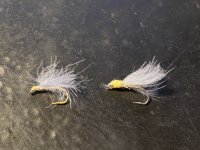
The yellow-dyed biot provides a segmented-appearing body. The gray CDC wing allows the fly to float right in the surface film. This fly pattern has two downsides. When dry, the huge surface area provided by the fine CDC barbules balances the resistance of water’s surface tension against the weight of the fly. It doesn’t take much turbulence to drown a CDC fly though. If a CDC wing gets wet or slimed, the barbules collapse and won’t provide the support to keep the fly floating. A quick dusting in a bottle of desiccant powder restores their fluffiness. The biot body (made by wrapping a single, dyed duck wing barb around the hook) is delicate. After just a few fish, the biot is often shredded by trout teeth. But this short life is still worth it in my opinion.
I had high expectation when I approached the head of the pool. My first casts landed just at transition from the rapid to the upstream edge of the pool. Twice in my first three casts, fish rocketed out of the depths of the pool to grab my fly.
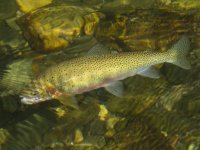
It was going to be a great day.
And it was just a sublime three hours of fishing – total bliss. There must have been something emerging, perhaps a few PMDs. A few fish occasionally rose to the surface to pick off prey. The fish were cooperative, but not pushovers.
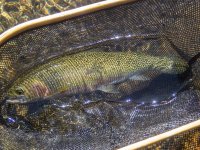
Of course, I missed the biggest fish lying in the fast water along the far bank. It turned downstream to strike the fast-departing fly. One of three things happened. 1) In my eagerness, I pulled the fly out of its mouth. 2) It missed the fly in the turbulence. 3) It aborted its attack at the last minute. Even though I knew from past experience that it was futile to induce this old boy to come up a second time, I kept casting in this neighborhood, but no love. But I did hook and landed a few other nice fish from this stretch.
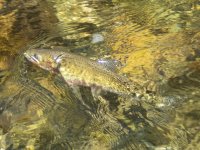
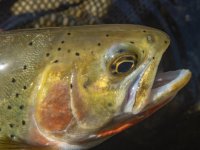
In the end, I caught fish from the slow water of the pool and everywhere in between. Even the sunk fly induced a few cutts to strike on the swing. After the fishes’ teeth had shredded the biot-body (see right fly above), the fly still caught fish. I probably that I hooked and released 30 fish from that pool, all on that same fly.
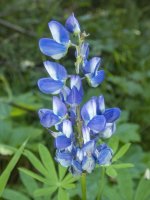
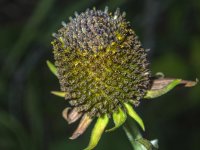
And the environment was just so zen. The pool is far enough from the road that I felt totally isolated and undistracted by anything but the river, the fish, the environment. Birds were singing. Swallows zoomed over the water. Patches of flowers, like lupine,
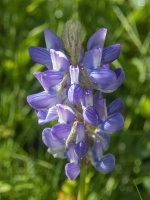
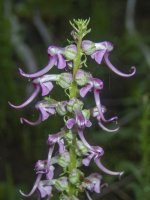
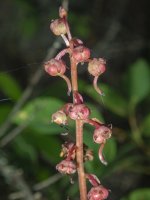
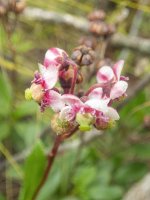
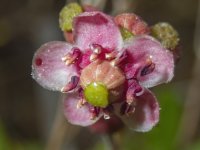
elephant’s head Pedicularis,
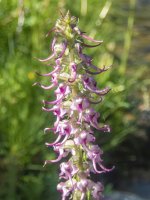
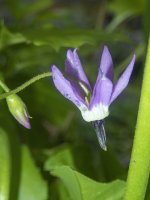
cornflower,
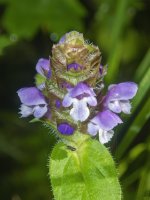
and Indian paintbrush
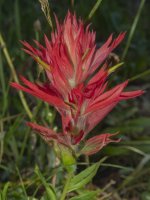
provided explosions of color along the green shoreline.
When I brought one fish to shore for some pictures, I even encountered a spotted frog along the bank that was cooperative enough to stay until I released the fish and could come back to take its pictures.
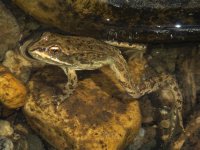
Wow.
In fact, I came back to the “Guide Hole” the next morning after fishing a different spot to recapture the magic. And the fish were generous again.
Steve
Some years but not all, morning hatches (especially caddis and PMDs) will have the fish looking up. In this crystal-clear water, a trout will have ample opportunities to scrutinize your fly. I prefer to fish biot-bodied parachute PMDs or cdc caddis patterns. On some casts you are simply prospecting likely water. However, if you see a fish rise and you can drop a quality cast in its direction, there is a very good chance that you will be rewarded.
Over the years, we’ve given nicknames to our favorite spots along an 8-mile stretch of this river. A favorite, albeit very popular, spot is the “Guide Hole”. The wading here is easy, there is little vegetation to catch a wayward backcast, and the pool holds many cutts. It is the perfect spot for a fishing guide to bring their greenest clients. After an early start, I reached the pull-out for the “Guide Hole” to find that it was unoccupied. Sweet.
The “Guide Hole” lies below a long, shallow stretch of small rapids.
Its center piece is a large bedrock outcrop that extends into the path of the river. The river has scoured a deep hole as it flows around the outcrop. The shallow rapid transitions quickly into this deep pool. Trout hovering below the dropoff are in the perfect position to ambush any food carried down by the rapid. Downstream of the outcrop, the pool becomes into a wide gentle glide that shallows out gradually to the tailout. This section is perfect for trout to harvest insects leisurely in the slow current. Finally, any fishers likely overlook the potential of a thin tongue of fast, shallow water that runs along the far bank upstream of the bedrock and the main pool. Trout lying in narrow slots under the fast surface current are in a perfect position to intercept food carried by this conveyor belt. It is best to wade halfway across the calf-deep rapid to reach the optimum casting location. A soft cast dropped into this fast water will achieve a short drift that is often sufficient to induce a strike. Trout in this lie have to make quick go/no-go decisions.
My favorite fly style here has a cdc wing. I had tied several biot-bodied, CDC PMDs just a day before I left on this trip just for this opportunity.
The yellow-dyed biot provides a segmented-appearing body. The gray CDC wing allows the fly to float right in the surface film. This fly pattern has two downsides. When dry, the huge surface area provided by the fine CDC barbules balances the resistance of water’s surface tension against the weight of the fly. It doesn’t take much turbulence to drown a CDC fly though. If a CDC wing gets wet or slimed, the barbules collapse and won’t provide the support to keep the fly floating. A quick dusting in a bottle of desiccant powder restores their fluffiness. The biot body (made by wrapping a single, dyed duck wing barb around the hook) is delicate. After just a few fish, the biot is often shredded by trout teeth. But this short life is still worth it in my opinion.
I had high expectation when I approached the head of the pool. My first casts landed just at transition from the rapid to the upstream edge of the pool. Twice in my first three casts, fish rocketed out of the depths of the pool to grab my fly.
It was going to be a great day.
And it was just a sublime three hours of fishing – total bliss. There must have been something emerging, perhaps a few PMDs. A few fish occasionally rose to the surface to pick off prey. The fish were cooperative, but not pushovers.
Of course, I missed the biggest fish lying in the fast water along the far bank. It turned downstream to strike the fast-departing fly. One of three things happened. 1) In my eagerness, I pulled the fly out of its mouth. 2) It missed the fly in the turbulence. 3) It aborted its attack at the last minute. Even though I knew from past experience that it was futile to induce this old boy to come up a second time, I kept casting in this neighborhood, but no love. But I did hook and landed a few other nice fish from this stretch.
In the end, I caught fish from the slow water of the pool and everywhere in between. Even the sunk fly induced a few cutts to strike on the swing. After the fishes’ teeth had shredded the biot-body (see right fly above), the fly still caught fish. I probably that I hooked and released 30 fish from that pool, all on that same fly.
And the environment was just so zen. The pool is far enough from the road that I felt totally isolated and undistracted by anything but the river, the fish, the environment. Birds were singing. Swallows zoomed over the water. Patches of flowers, like lupine,
elephant’s head Pedicularis,
cornflower,
and Indian paintbrush
provided explosions of color along the green shoreline.
When I brought one fish to shore for some pictures, I even encountered a spotted frog along the bank that was cooperative enough to stay until I released the fish and could come back to take its pictures.
Wow.
In fact, I came back to the “Guide Hole” the next morning after fishing a different spot to recapture the magic. And the fish were generous again.
Steve