The amount of joy it brings me to hear @jaredoconnor talking about indicators is hard to measure. This is truly a banner day.

Follow along with the video below to see how to install our site as a web app on your home screen.
Note: This feature may not be available in some browsers.

@jaredoconnor do you have a finder yet for your tube? The median depth of the lake isn’t really useful but knowing the depth at your location certainly is. A 20’ leader is great for fishing water at least 12’ deep and down to around 21-22’. But that all depends on where the fish are.

@jaredoconnor I've got my old depth finder that I'll never use. It's yours if you want it. It's probably not going to be the easiest to setup on a float tube, but you've got that engineers mind - I'm sure you'll be able to figure that out.@jaredoconnor do you have a finder yet for your tube? The median depth of the lake isn’t really useful but knowing the depth at your location certainly is. A 20’ leader is great for fishing water at least 12’ deep and down to around 21-22’. But that all depends on where the fish are.

@jaredoconnor I've got my old depth finder that I'll never use. It's yours if you want it. It's probably not going to be the easiest to setup on a float tube, but you've got that engineers mind - I'm sure you'll be able to figure that out.

Nothing wrong with this at all. It just takes a while longer to develop a mental picture of the bathymetry, so you can decide where and how deep to start fishing, and then what to do after that, if your first idea doesn't work.On that note, for future reference, what’s wrong with just attaching weight to my leader and gauging depth that way? Do lake depths change too frequently for that to be viable?


actually it is the best way, just use your clamp for the weight..having a depth finder in my skiff doesn't change how I determine leader depth, which is clamp hemostat to bottom fly, drop to the bottom with indicator unpegged, identify depth, then peg the indicator so balanced leech or chrom is suspended 1' above the bottom as a starting point.On that note, for future reference, what’s wrong with just attaching weight to my leader and gauging depth that way? Do lake depths change too frequently for that to be viable?
Very true. I think that @jaredoconnor may even want to look into a couple other techniques for lakes, given that he hates actual fly line so much.The amount of joy it brings me to hear @jaredoconnor talking about indicators is hard to measure. This is truly a banner day.


This was the method I learned in the 70's, a TDC on a long leader. When I joined the forum several years ago and learned about indicators, I though wow! I just had no clue. I've been sold ever since.The first is fishing chironomids "naked," or sans indicator. Jared is already familiar with spooling yards of mono onto his fly reel, so it's not too hard to imagine him happily concocting a 30' leader with one or two weighted flies, slinging it out there and fishing it under his rod tip. I bet something like an 11' 3 wt would be pretty useful for this.
Very true. I think that @jaredoconnor may even want to look into a couple other techniques for lakes, given that he hates actual fly line so much.
The first is fishing chironomids "naked," or sans indicator. Jared is already familiar with spooling yards of mono onto his fly reel, so it's not too hard to imagine him happily concocting a 30' leader with one or two weighted flies, slinging it out there and fishing it under his rod tip. I bet something like an 11' 3 wt would be pretty useful for this.
The second is something I've just heard about. You string up your reel with dental floss, somehow affix that to your fly (tippet? leader? IDK) and you pull a bunch off and let a strong wind make your fly bounce on the water, supposedly inducing strikes.


@troutpocket shared his leader formula; he's a trout catching machine and his information is spot on.


@jaredoconnor have you looked for a bathymetric map of the lakes you are targeting? Many county sites/resources have them available. Not sure where you live but King and Snohomish have some great resources. I can provide links if they would help.
What you see on the surface and what happens below the surface can be very different. There are places on the lake where if you measure the depth off one side of the boat will be significantly different than the other side. Also if the lake is 30' to 50' deep, there quite possibly/will be thermoclines. One would want to fish the thermocline area rather than the bottom.
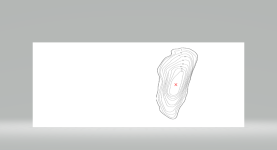
Example of a bathymetric lake map I know well. It has thermoclines at about 20' down and 30' down. Having a fish finder will help identify the depth of the thermocline because you may/can see fish.
Add indicators/bobbers?I may be ignorant, but on ff only lakes aren’t barrel swivels and split rings considered “weights” and not legal?