
Navigation
Install the app
How to install the app on iOS
Follow along with the video below to see how to install our site as a web app on your home screen.
Note: This feature may not be available in some browsers.
More options
Style variation
You are using an out of date browser. It may not display this or other websites correctly.
You should upgrade or use an alternative browser.
You should upgrade or use an alternative browser.
NFR Got any Herp pictures?
- Thread starter Matt B
- Start date
Non-fishing related

'Boot - It was nice and cool when I woke up today (62F) and it seems like it's weather like this when I do see snakes coming out of wherever they've been. Often they seem to like to lie in the trail bed soaking in the sun. No science in my comment, just an observation (or off the wall comment).Buzzy how's that weather = snake weather? Just first hint of fall means they come out in the open a mite more or something? Out here west of the mountains it is spider weather, I got the whole orb spider move-like-water kung fu web avoidance going on on my way to the car each morning....
Spiders, huh? I worked on the Columbia River for years. This time of year spiders are casting their webs into the wind and drifting down the river to find new homes (like Priest Rapids Dam). Countless spiders building nests on all the structure and there's lots of food (caddis hatches are prolific).

And Orb Weavers along the Columbia tend to be on the huge side.Spiders, huh? I worked on the Columbia River for years. This time of year spiders are casting their webs into the wind and drifting down the river to find new homes (like Priest Rapids Dam). Countless spiders building nests on all the structure and there's lots of food (caddis hatches are prolific).

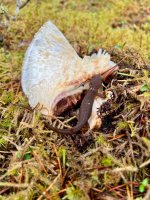
Matsutake lover.
Melted down shroom fest love orgy

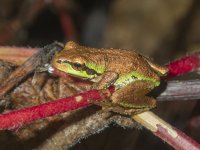
Pacific treefrog, Pseudacris regilla. Pacific treefrogs, the state amphibian of Washington, are tough, but cute, little buggers. Even in the depths of winter, you can hear them calling from deep cover if we have a warm afternoon. At Nisqually NWR, from late summer through fall, individuals will climb out from the depths of the Himalayan blackberries and other shrubs by the ponds and canals to bask on leaves bathed by the sun (and maybe pick up a few flying midges that have hatched from the water). Generally, a Pacific treefrog has a dark mask that runs from the tip of the nose, through the pupil of the eye, and to the base of the front limbs. Most Pacific tree frogs come in one of two color morphs: brown
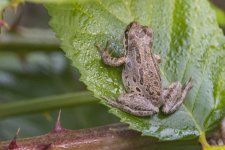
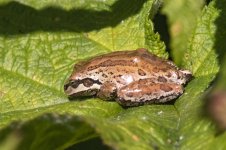
or green.
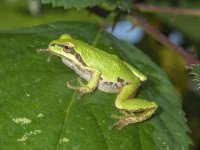
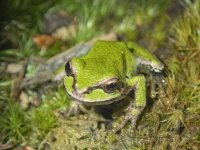
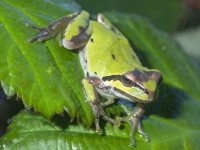
While the green morph versus brown morphs are fixed (non-changing) in about 2/3rds of Pacific treefrogs, a study of Pacific treefrogs from Central California has also identified a third morph that can change color to match the current background. This color-change process is triggered by a change in the background brightness, rather than changes in hue (see here). This change can take hours to weeks. Individuals that are a better match to their environment are less likely to suffer predation from garter snakes, especially if the treefrogs are not moving (see here); moving is VERY bad for treefrogs in the presence of a garter snake).
[A complication to understanding the biology of the Pacific treefrog is that a study using molecular analysis (mtDNA) has identified three “species” of Pacific treefrogs: a southern California / Nevada / Baja species (P. hypochondriaca), a Central California / inland Oregon / Idaho / Montana species (P. sierra), and an Oregon / Washington (P. regilla); the authors originally messed up the appropriate species names for the central and PNW species (see here), but they are corrected here. The divergence of the putative species appeared to be a million years ago based on molecular clock calculations. Therefore, we do not know if the findings of the coloration studies and predation studies apply to equally all three "species".]
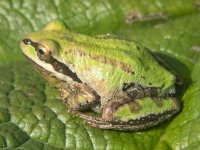
And there are many individuals at Nisqually whose colorations are wildly different from the brown – green dichotomy. These include individuals that are green and gold,
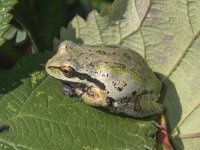
gray with hints of green,
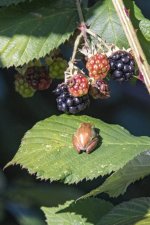
and bright bronze.
The bronze morphs may be trying to blend in with the color of unripe blackberries.
Steve
or green.
While the green morph versus brown morphs are fixed (non-changing) in about 2/3rds of Pacific treefrogs, a study of Pacific treefrogs from Central California has also identified a third morph that can change color to match the current background. This color-change process is triggered by a change in the background brightness, rather than changes in hue (see here). This change can take hours to weeks. Individuals that are a better match to their environment are less likely to suffer predation from garter snakes, especially if the treefrogs are not moving (see here); moving is VERY bad for treefrogs in the presence of a garter snake).
[A complication to understanding the biology of the Pacific treefrog is that a study using molecular analysis (mtDNA) has identified three “species” of Pacific treefrogs: a southern California / Nevada / Baja species (P. hypochondriaca), a Central California / inland Oregon / Idaho / Montana species (P. sierra), and an Oregon / Washington (P. regilla); the authors originally messed up the appropriate species names for the central and PNW species (see here), but they are corrected here. The divergence of the putative species appeared to be a million years ago based on molecular clock calculations. Therefore, we do not know if the findings of the coloration studies and predation studies apply to equally all three "species".]
And there are many individuals at Nisqually whose colorations are wildly different from the brown – green dichotomy. These include individuals that are green and gold,
gray with hints of green,
and bright bronze.
The bronze morphs may be trying to blend in with the color of unripe blackberries.
Steve
Last edited:
You continue to amaze me, and educate me.
Many thanks!
Many thanks!

1Pacific treefrog, Pseudacris regilla. Pacific treefrogs, the state amphibian of Washington, are tough, but cute, little buggers. Even in the depths of winter, you can hear them calling from deep cover if we have a warm afternoon. At Nisqually NWR, from late summer through fall, individuals will climb out from the depths of the Himalayan blackberries and other shrubs by the ponds and canals to bask on leaves bathed by the sun (and maybe pick up a few flying midges that have hatched from the water). Generally, a Pacific treefrog has a dark mask that runs from the tip of the nose, through the pupil of the eye, and to the base of the front limbs. Most Pacific tree frogs come in one of two color morphs: brown
View attachment 132511
View attachment 132512
or green.
View attachment 132513
View attachment 132514
View attachment 132515
While the green morph versus brown morphs are fixed (non-changing) in about 2/3rds of Pacific treefrogs, a study of Pacific treefrogs from Central California has also identified a third morph that can change color to match the current background. This color-change process is triggered by a change in the background brightness, rather than changes in hue (see here). This change can take hours to weeks. Individuals that are a better match to their environment are less likely to suffer predation from garter snakes, especially if the treefrogs are not moving (see here); moving is VERY bad for treefrogs in the presence of a garter snake).
[A complication to understanding the biology of the Pacific treefrog is that a study using molecular analysis (mtDNA) has identified three “species” of Pacific treefrogs: a southern California / Nevada / Baja species (P. hypochondriaca), a Central California / inland Oregon / Idaho / Montana species (P. sierra), and an Oregon / Washington (P. regilla); the authors originally messed up the appropriate species names for the central and PNW species (see here), but they are corrected here. The divergence of the putative species appeared to be a million years ago based on molecular clock calculations. Therefore, we do not know if the findings of the coloration studies and predation studies apply to equally all three "species".]
And there are many individuals at Nisqually whose colorations are wildly different from the brown – green dichotomy. These include individuals that are green and gold,
View attachment 132516
gray with hints of green,
View attachment 132517
and bright bronze.
View attachment 132518
The bronze morphs may be trying to blend in with the color of unripe blackberries.
View attachment 132519
Steve
Love those little dudes. The house in my "previous life" was adjacent to a pond. They were everywhere. Dozens would be on our front porch at night eating all the bugs attracted to the lights. Cleaning up their calling cards was a small price for never needing ANY pest control in the vegetable beds.

Capt Insano Emeritis
Legend
Just saw this post for the first time. I had the a similar thought as WW. I really paused before opening the thread. Thread titles matter guys. So do regular eye exams.After I posted I realized the visual of the title of my thread is a bit different than I meant in my brain/family where snakes and frogs are considered cool and frequent topics of discussion. But then I thought, I’m okay with that.
Last edited:
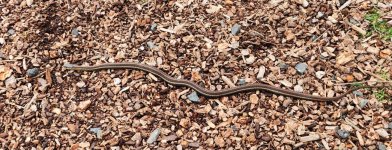
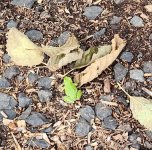
Calling Clark man- this little guy was sunning on some gravel and I almost stepped on him before he split down onto the rip rap. Mind you this was today in W WA about 30 minutes after a snow squall and outside temp was 35 at the time. Weird right? All tan/brown with no typical garter snake coloration and small, maybe 10" long max. Bottom center of pic.
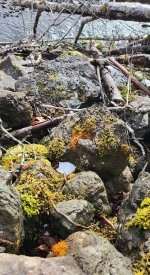

def doesn't look like a garter, but tough to tell with the pic (although, there are all sorts of color/pattern morphs of most species), but there are limited options in W WA. Def not unheard of for garters to be poking out in weirdly cold temps though....nice find!Calling Clark man- this little guy was sunning on some gravel and I almost stepped on him before he split down onto the rip rap. Mind you this was today in W WA about 30 minutes after a snow squall and outside temp was 35 at the time. Weird right? All tan/brown with no typical garter snake coloration and small, maybe 10" long max. Bottom center of pic.
View attachment 140487
oh nice link Steve!There are Western Washington garter snakes that are that brown (see here).
Steve

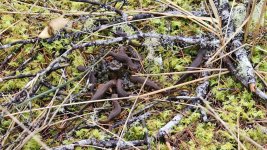
Had to do some digging around the well (replace well pump and fix leak, uuuugh), but on the positive side, found scores of these guys,
Northern Red Salamander:
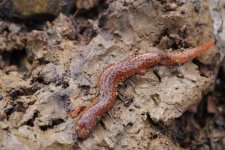
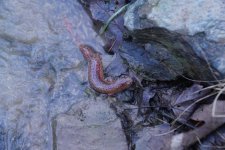
Lotsa frog too, though no pics, so no positive IDs.
Cheers
Northern Red Salamander:
Lotsa frog too, though no pics, so no positive IDs.
Cheers

Got yourself some nice looking hydric soil there, too.Had to do some digging around the well (replace well pump and fix leak, uuuugh), but on the positive side, found scores of these guys,
Northern Red Salamander:
View attachment 141843
View attachment 141844
Lotsa frog too, though no pics, so no positive IDs.
Cheers