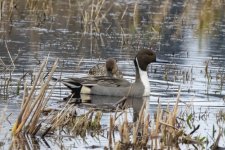
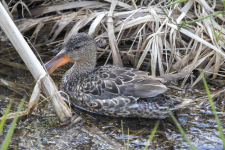
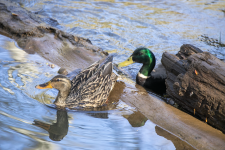
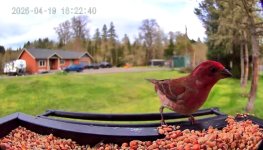
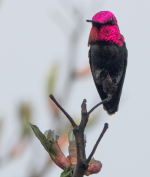
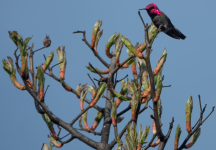
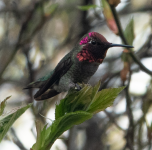
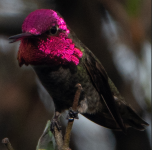
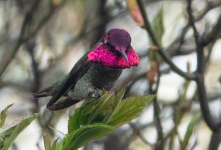
Got any bird pics?

We went once and got lucky. My wife is not a birder but she spotted them after we heard them. Cool quail species down there too - might be my favorite. I was sleeping in the back of my car on a forest road one night and had one wake me up. If memory serves it was a Montezuma.
I'm still waiting to see or hear Montezuma quail and have spent quite a bit of time in SE Arizona, New Mexico and West Texas where they are known to occur. Scaled and bobwhite quail are quite common in West Texas. I think scaled quail are a way cool species.
 
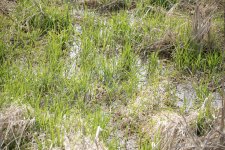
Billie Frank Jr. - Nisqually NWR, early-mid April. Part 1: Cryptic marsh birds. Spring is on the way. I have observed the rapid pace of change at the refuge. The weather, the flora, and the fauna reflect that this transition is underway. And one impact of this was demonstrated during several recent visits to the refuge. After being battered by the winds and rain of a long winter, the dried brown leaves of cattails have fallen over. And the new growth has not yet grown very tall. This has provided a window, at least for now, into the core of the freshwater marsh.
A01NewCattailGrowth2C2A8688.png
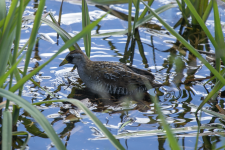
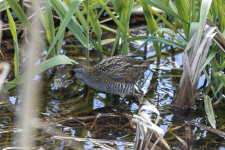
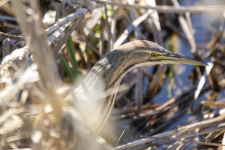
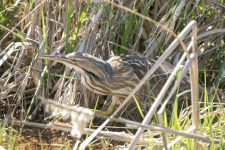
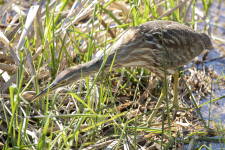
As a result, I have been fortunate to have had clear views of the three most elusive marsh birds in the PNW: sora, Virginia rail, and American bittern. On occasion in other times of year, I have heard the former two species calling from deep in the cattails of the freshwater marsh near the start of the elevated estuary boardwalk. But it is rare for them to come into view when the cattails have grown out.
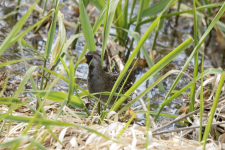
On an early April visit to Nisqually, another birder was kind enough to show me where a sora was foraging among the pools along the new cattail blades.
B02Sora2C2A8685.png
B03Sora2C2A9254.png
On a subsequent visit, I paid particular attention to this area and a sora obligingly popped into view again. It plucked midges and seeds off the water’s surface. It appeared for a minute or so, ducked into a dense clump of old cattail leaves, then reappeared a short distance away from its original location as if had been transported ala Star Trek.
B04Sora2C2A9281.png
B05Sora2C2A9295.png
B06Sora2C2A9353.png
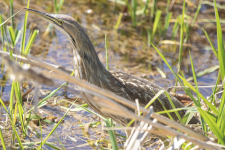
In light of that success, my wife, a big fan of soras and Virginia rails, joined me on a morning visit to the refuge. In spite of our patience and diligence, no soras or Virginia rails made an appearance. However, we had a great view of an American bittern.
C07AmericanBittern2C2A8165.png
C08AmericanBitternHeadShot2C2A8151.png
This bittern was hunting at the edge of the marsh. We were perhaps 20’ away from this individual as it stealthily searched for a meal.
C09AmericanBittern2C2A8186.png
C10AmericanBittern2C2A8185.png
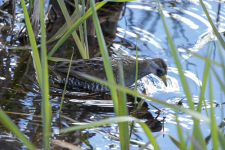
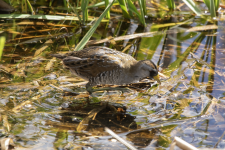
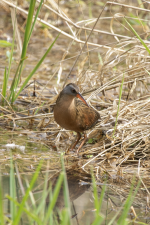
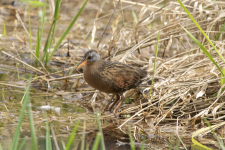
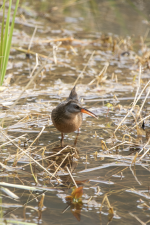
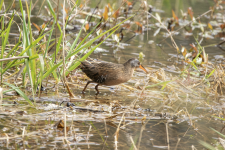
I took advantage of the sunny weather last Friday to hunt for these rarities again. I picked up two out of the three species. In addition to the sora that I described above, I had a great view of a Virginia rail. While I have heard its call several times out in the freshwater marsh, I have not seen one in close to 20 years. Another birder had told me that a rail had been seen recently in the main pond by the Visitor Center, the only place where I had seen them previously in Washington. He hadn’t provided a more specific location though. So, as I was returning to the parking lot, I was scanning the marsh adjacent to the pond hoping that a common yellowthroat or a marsh wren or a cinnamon teal would pop into view for a few pictures. Instead, I heard the distinctive squeaks of a Virginia rail. Scanning with my binocs, I soon spotted the bird in clear view. Up went the camera with telephoto lens and snap, snap, snap.
D11VirginiaRail2C2A8908.png
D12VirginiaRail2C2A8914.png
After a minute or two, it disappeared under a large fallen tree trunk. I went in search of a cinnamon teal drake that another birder had reported. On my way back, I heard that distinctive squeak again. The Virginia rail had popped out in the open on the other side of the tree trunk. More good views and more quality pictures.
D13VirginiaRail2C2A8943.png
D14VirginiaRail2C2A8954.png
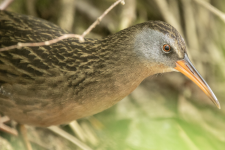
My wife and I returned to Nisqually NWR on Monday. While no soras or bitterns, we had a great day (51 bird species, 2 mammal species, 1 reptile species, 1 amphibian species). Again as we were heading back to the truck and near the same spot as last time, I heard again the distinctive call of a Virginia rail. This time it appeared by the edge of the elevated boardwalk for a few seconds. We both had a great view and it was clear of vegetation for long enough for a few head-shot pictures before it disappeared from view.
D15VirginiaRail2C2A9947.png
I know that this is a fleeting moment. I have managed to see a sora or a Virginia rail, or an American bittern (or more than one of these) on my last five visits. However, the reeds, grasses, and cattails are growing tall again. The green wall will again hide these cryptic species and they will again become heard (sometimes) and rarely seen.
Steve
 
Last edited:
Awww . . . I'm in awe! Thanks!
 
Billie Frank Jr. - Nisqually NWR, early-mid April. Part 2: Geese and Ducks. There has been a flock of 100ish cackling geese at Nisqually since late fall.
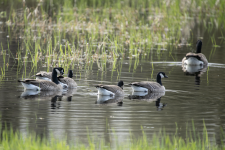
A01CacklingGeese2C2A7722.png
They are especially vigilant when a bald eagle cruises by, exploding into the air and noisily repositioning
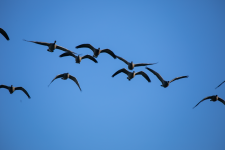
A02CacklingGeeseInFlight2C2A7953.png
to a quieter meadow to graze. They are feathered lawn-mowers as they move across the meadow like a horde of locusts nipping the new grass growth. However, one lone cackling goose has been on its own along the dike trail for the last several months. It is smaller than the other cackling geese and has darker breast feathers.
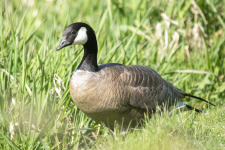
A03CacklingGooseMinima2C2A8147.png
This may be the cackling goose subspecies minima. Members of this subspecies are described as barely larger than a drake mallard, which fits this individual. This subspecies typically overwinters in the Willamette Valley and breeds in northwest Alaska. Given how tight the other cackling geese are when feeding and resting, it is surprising to find this individual on its own. But it may have learned that people, at least here, are not a threat and provide some protection from a marauding bald eagle.
Two weeks ago, I spotted four greater white-fronted geese foraging on the edge of the cackling flock. They are slightly larger than the cackling geese and were more aggressive toward any cackling goose that encroached on what a greater white-fronted goose thought was its “personal space”.
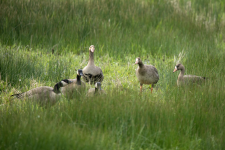
A04WhiteFronted&CacklingGeese2C2A8627.png
While a flock of 20ish greater white-fronted geese overwintered last year at Nisqually, they were absent this winter. A major traditional overwintering region is the Central Valley of California and some spots along the coast (e.g., Morro Bay). On a recent visit, at least a dozen greater white-fronted geese (the original four plus “friends” or a new flock???) formed a flock completely separate from the cackling geese.
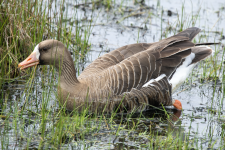
A05WhiteFrontedGoose2C2A9875.png
I suspect that this is “refueling stop” before they continue their migration to their breeding grounds in the tundra of Alaska and Northern Canada.
Most Canada geese that overwinter at Nisqually are likely resident birds that will breed in the refuge or nearby. In the winter, they formed small flocks or even pairs away from the cackling geese. While watchful of passing eagles, they appear to be less threatened by their presence than do the cackling geese. At this point of the spring, the Canada geese are almost exclusively in pairs.
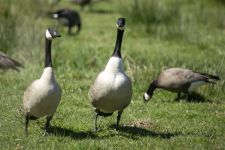
A06CanadaGeesePair&CacklingGoose2C2A8232.png
[The bird on the right background is a cackling goose. Note the smaller size (perspective doesn't help the comparison) and the much darker breast when compared to the Canada geese.]
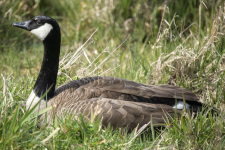
A07CanadaGoose2C2A7846.png
The male in a pair will noisily drive off any other pair of Canada geese that approaches too close. Some pairs are clearly exploring possible nesting mounds in the freshwater marsh or in the main pond. Goslings should be appearing in the next month or so.
Only a few pintails remain from the winter peak.
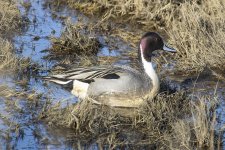
B08PintailDrake2C2A0324.jpg
B09PintailDrake7060.jpg
But they are easy to spot from a long way away as their long pointed tails tip up as they probe the bottom for as they nip roots of flooded grass and other vegetation.
Similarly, most shovelers have migrated north. But a few remain in the refuge. With the long lamellae on their bills, they actively sieve food from the flooded meadows or from the edges of the freshwater marsh.
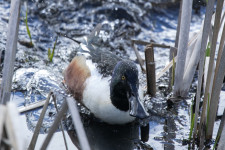
C10NorthernShovelerDrake2C2A7860.png
C11NorthernShovelerHen2C2A7864.png
American wigeons appear to be one of the most versatile foragers among the ducks. They will tip up like a typical puddle duck, sieve fine materials from the mud flat like a green-winged teal, or nip fresh grass like a cackling goose.
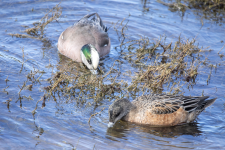
D12AmericanWigeonPair2C2A4399.png
Their numbers at Nisqually have dropped off as spring has progressed. Among the American wigeon, you can find one or two Eurasian wigeon drakes (cinnamon head) among the American wigeons.
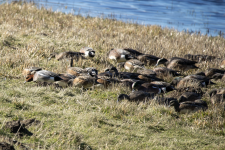
D13EurasianWigeonAmongAmericanwWigeons2C2A4254.png
The number of green-winged teals appear to have increased recently.
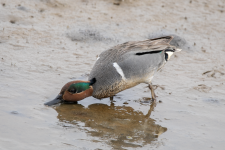
E14GreenWingedTealDrake2C2A9830.png
They are especially common in the salt-water mud flats. They sweep their bills back and forth through the surface mud.
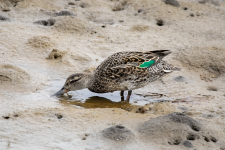
E15GreenWingedTealHen2C2A9832.png
You can hear a low-clattering as they repeatedly clap open and close their bills. I suspect that they are filtering out the abundant diatoms from the mud. These diatom populations explode with the longer days of spring, forming a golden sheen on the surface at times.
Flocks of mallards tip up to feed or just rest in the flooded meadow south of the Twin Barns. I suspect that these may be migratory birds soon to depart for points north. In contrast, the mallards in the canals and main pond are paired up. These may be resident birds and should be nesting very soon.
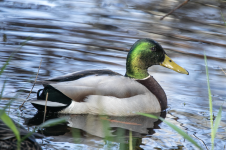
F17MallardDrake2C2A8018.png
F16MallardHen&Drake2C2A8028.png
A gadwall pair been a consistent presence in the main pond. Perhaps they intend to nest on the refuge as well.
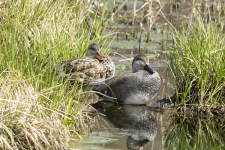
G18GadwallPair2C2A7949.png
The refuge has several nest boxes mounted on trees over water. And there are a number of tree holes present as well. These are perfect nesting sites for hooded mergansers. I have spotted several pairs diving for meals in the main pond / canal on recent visits.
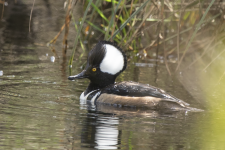
H19HoodedMerganserDrake2C2A8760.png
The nest boxes are also great nesting sites for wood ducks, like this hen.
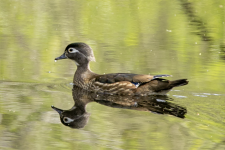
H20WoodDuckHen2C2A8781.png
Several times, I have heard / seen wood ducks flying out of the branches in the forest - arboreal ducks...
[Reached the maximum number of images in a single post... Other ducks that I have seen at Nisqually recently include ring-bills, buffleheads, cinnamon teal]s, common goldeneyes, common mergansers, and red-breasted mergansers. A good slice of the Anatidae diversity in the PNW…]
Steve

 
Your images are as outstanding as always Steve! Thanks for sharing. The image of the solitary goose looks to me like a Taverner's (B. h. taverneri) or perhaps an Aleutian cackling goose (B. h. leucopareia). The breast feather coloration doesn't appear quite dark enough or the bill small enough for B. h. minima. My best guess is Taverner's as both can have rather dark breast feather coloration but Aleutian's tend to have a more distinct white neck ring while Taverner's typically do not. Cackling goose subspecies taxonomy/field ID can be incredibly challenging.

A fun fact about B. h. minima aka cacklers. The entire population nests in Alaska's Yukon Kuskokwin Delta and used to winter almost exclusively in California. Changing land use patterns in California (conversion of grass pastures and grain to row crops and orchards) pushed almost the entire wintering population into the Willamette Valley where they cause serious depredation issues with the grass seed growers. While I was working, the ODFW waterfowl folks used to give those of us in California a lot of grief for "giving" them cacklers.

For any goose nerds out there - here's a link to a paper covering cackling goose taxonomy coauthured by a former colleague of mine. Cackling Geese
 
Your images are as outstanding as always Steve! Thanks for sharing. The image of the solitary goose looks to me like a Taverner's (B. h. taverneri) or perhaps an Aleutian cackling goose (B. h. leucopareia). The breast feather coloration doesn't appear quite dark enough or the bill small enough for B. h. minima. My best guess is Taverner's as both can have rather dark breast feather coloration but Aleutian's tend to have a more distinct white neck ring while Taverner's typically do not. Cackling goose subspecies taxonomy/field ID can be incredibly challenging.

A fun fact about B. h. minima aka cacklers. The entire population nests in Alaska's Yukon Kuskokwin Delta and used to winter almost exclusively in California. Changing land use patterns in California (conversion of grass pastures and grain to row crops and orchards) pushed almost the entire wintering population into the Willamette Valley where they cause serious depredation issues with the grass seed growers. While I was working, the ODFW waterfowl folks used to give those of us in California a lot of grief for "giving" them cacklers.

For any goose nerds out there - here's a link to a paper covering cackling goose taxonomy coauthured by a former colleague of mine. Cackling Geese
Thank you for your experienced input RRS. Do you have any thoughts on the subspecies identification of the larger cackling geese? In a few years, I have progressed from realizing that these "small" Canada Geese are actually a separate species to trying to tease out their subspecies. As someone who worked on marine sculpins for my professional career, I have a great appreciation for the years of work that has to go in to really feel comfortable identifying challenging species, especially in the field.
The striking aspect of this bird is its isolation. In an area with a loud, large flock of cackling geese, this one even smaller individual chose to remain separated from the others.
Steve
 
Thank you for your experienced input RRS. Do you have any thoughts on the subspecies identification of the larger cackling geese? In a few years, I have progressed from realizing that these "small" Canada Geese are actually a separate species to trying to tease out their subspecies. As someone who worked on marine sculpins for my professional career, I have a great appreciation for the years of work that has to go in to really feel comfortable identifying challenging species, especially in the field.
The striking aspect of this bird is its isolation. In an area with a loud, large flock of cackling geese, this one even smaller individual chose to remain separated from the others.
Steve
Hi Steve, The most common subspecies of cackling geese in the PNW from smallest to largest are cackler or Ridgway goose (minima), Aleutian and then Taverner's. You should also see lessers (Branta canadensis parvipes) which are in between a cackling and a Western Canada goose in size.

There are "intermediates" between the two subspecies (minima and taverneri) that occur and are basically unidentifiable to the level of subspecies. Your solitary bird may fall into that category. That said, I did show your image to a buddy of mine that did a ton of work on cackling geese and he thought it was either minima or taverneri but needed to see a size comparison. He was certain it was not leucopareia (which I thought it might be).

You do mention that it was smaller than other cackling geese which might suggest that it is indeed minima. Do you have any other photos where we can see more of the bird?
That paper I linked is probably the most comprehensive/one stop shopping for all things cackling geese. Bob
 
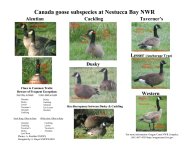
Here's a photo I copied from the Nestucca Bay NWR website for waterfowl hunters to help distinguish between the various spp/sub spp of white cheeked geese that occur on the refuge. It appears as if it was made prior to taxonomists breaking off cackling geese from Canada geese. To this day, waterfowl hunter's colloquial name for minima is "cackler" and I doubt that will change.

I forgot to mention dusky Canada's which probably are an uncommon visitor to the Washington Coast. They are quite a bit larger and are also fully protected from hunter harvest.

Dusky-Goose-Identification.jpg
 
Last edited:
Thanks!
 
Let me guess…King County…maybe north central Seattle…round about the Green Lake area…in Woodland Park Zoo?
Ya mean those aren’t native to western Wa?

I was thinking the burbs of Everett or Port of Seattle area 😏
 
Back
Top