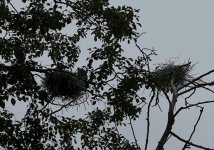
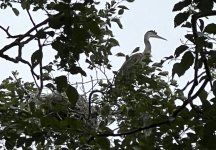
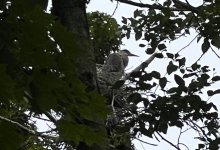
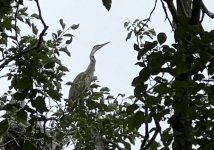
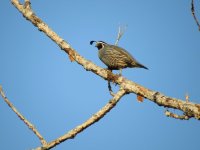
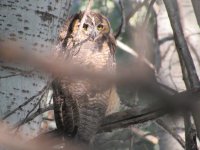
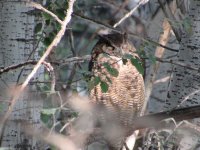
Umptanum Rd., May 24, 2025. Birds. As part of our adventure, our plan was to drive from Ellensburg to Naches via the Umptanum Rd / North Wenas Rd. There had been some interesting recent reports on eBird from this area. We were really looking forward to seeing western and mountain bluebirds and we were rewarded. The Yakima Valley Audubon Society has erected 130+ nest boxes along these roads (the Vredenburgh Bluebird Trail).
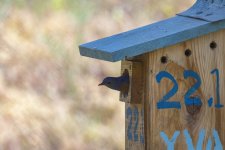 Volunteers monitor the activity of the bluebirds (and other birds that use these nest boxes) weekly. Their records indicate that western bluebirds favor sites near Ponderosa forest or tall shrubs.
Birds were very busy feeding their chicks in the nest boxes, including this male Western bluebird with a grasshopper
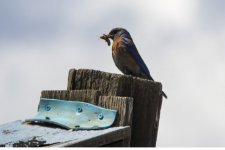
or this female Western bluebird with a larger caterpillar.
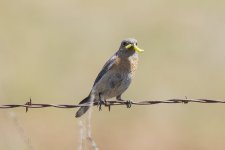
The bluebirds live using the power lines as convenient perches while they scan for food.
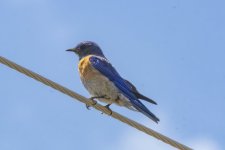
The presence of these nest boxes, especially in the more open shrub-steppe areas has attracted mountain bluebirds to breed at this elevation, lower than the heart of their breeding range from 4,500 feet to above treeline at 12,500 feet.
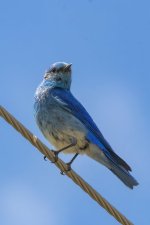
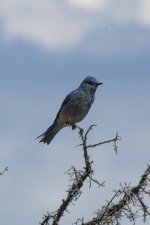
The mountain bluebirds were also busy provisioning their chicks in the nest boxes too.
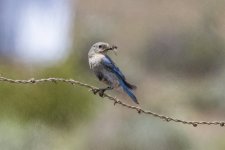
We also encountered a third member of the thrush family (Turdidae), an American robin.
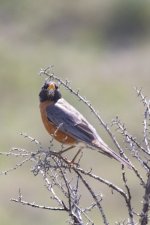
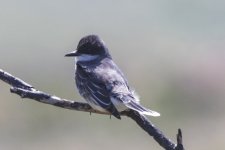
The insects that thrive in the wetlands adjacent to Umptanum Creek attracted other insectivorous birds, such as this Western kingbird
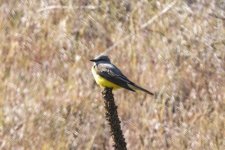
and this Eastern kingbird.
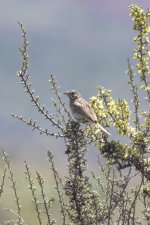
In the shrub-steppe areas, we encountered male vesper sparrows singing from the tops of bitterbrush shrubs or sagebrush.
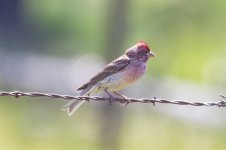
As the North Wenas road climbs, the shrub-steppe habitat transitions to Ponderosa savannah. The forest here was impacted by the Evans Canyon Fire in September 2020. The stands were a mix of live and dead conifers. It was early enough in the year that spring and seeps dribbled water along the edges of the road in places. In just this complex habitat (mix of live and dead trees and a spring seep), we stopped by a pair of birders that were looking for a second view at a black-backed woodpecker. While we were waiting for the black-backed woodpecker to reappear, we encountered a pair of Cassin’s finches drinking from one of these puddles, including this sharp-looking male.
I was delighted to also find a female red crossbill in the same area.
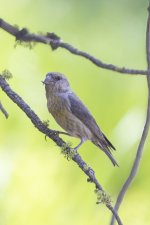
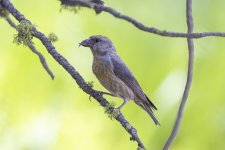
This was clearly the best look that I ever had of a crossbill. These are real specialists on pine seeds. The crossed bill tips allow these birds to pry open the scales of closed pine cones to reveal the seeds. Different “populations” = “types” of red crossbills specialize on different conifer species and cone types and have subtle differences in bill morphology. Further, each “type” has a different flight call. Genetic investigations indicate 1) that different “types” do not interbreed even though their breeding ranges often overlap and 2) that there are at least 11 “types” in North America.
At the same location, we did have great looks at a female hairy woodpecker.
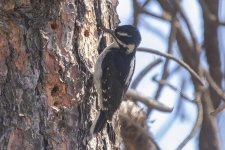
But the black-backed woodpecker never reappeared and we even missed a white-headed woodpecker that snuck behind us.
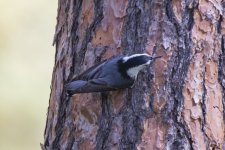
A white-headed nuthatch searching the trunk of ponderosa pines was a partial consolation prize.
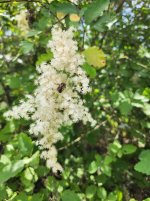
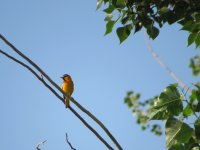
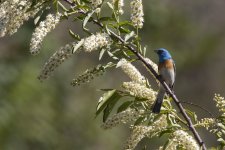
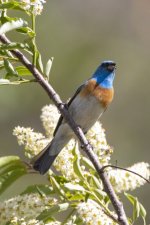
Birding on the go, I spotted a male lazuli bunting perched on the higher branches of a flowering chokecherry; He was advertising his availability to the neighborhood.
Finally, this is not an area where you expect to encounter shorebirds, but a pair of killdeers
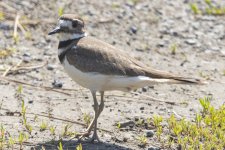
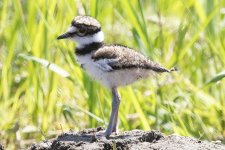
were guarding two long-legged chicks which were by a road-side seep.
Steve
Volunteers monitor the activity of the bluebirds (and other birds that use these nest boxes) weekly. Their records indicate that western bluebirds favor sites near Ponderosa forest or tall shrubs.Birds were very busy feeding their chicks in the nest boxes, including this male Western bluebird with a grasshopper
or this female Western bluebird with a larger caterpillar.
The bluebirds live using the power lines as convenient perches while they scan for food.
The presence of these nest boxes, especially in the more open shrub-steppe areas has attracted mountain bluebirds to breed at this elevation, lower than the heart of their breeding range from 4,500 feet to above treeline at 12,500 feet.
The mountain bluebirds were also busy provisioning their chicks in the nest boxes too.
We also encountered a third member of the thrush family (Turdidae), an American robin.
The insects that thrive in the wetlands adjacent to Umptanum Creek attracted other insectivorous birds, such as this Western kingbird
and this Eastern kingbird.
In the shrub-steppe areas, we encountered male vesper sparrows singing from the tops of bitterbrush shrubs or sagebrush.
As the North Wenas road climbs, the shrub-steppe habitat transitions to Ponderosa savannah. The forest here was impacted by the Evans Canyon Fire in September 2020. The stands were a mix of live and dead conifers. It was early enough in the year that spring and seeps dribbled water along the edges of the road in places. In just this complex habitat (mix of live and dead trees and a spring seep), we stopped by a pair of birders that were looking for a second view at a black-backed woodpecker. While we were waiting for the black-backed woodpecker to reappear, we encountered a pair of Cassin’s finches drinking from one of these puddles, including this sharp-looking male.
I was delighted to also find a female red crossbill in the same area.
This was clearly the best look that I ever had of a crossbill. These are real specialists on pine seeds. The crossed bill tips allow these birds to pry open the scales of closed pine cones to reveal the seeds. Different “populations” = “types” of red crossbills specialize on different conifer species and cone types and have subtle differences in bill morphology. Further, each “type” has a different flight call. Genetic investigations indicate 1) that different “types” do not interbreed even though their breeding ranges often overlap and 2) that there are at least 11 “types” in North America.
At the same location, we did have great looks at a female hairy woodpecker.
But the black-backed woodpecker never reappeared and we even missed a white-headed woodpecker that snuck behind us.
A white-headed nuthatch searching the trunk of ponderosa pines was a partial consolation prize.
Birding on the go, I spotted a male lazuli bunting perched on the higher branches of a flowering chokecherry; He was advertising his availability to the neighborhood.
Finally, this is not an area where you expect to encounter shorebirds, but a pair of killdeers
were guarding two long-legged chicks which were by a road-side seep.
Steve
Last edited: