Got any bird pics?

I was doing a project yesterday for a friend who lives right on Oyster Bay on the S Sound. At some point, a bird flew in the open door, and with two high window walls couldn't find its way back out. My friend was convinced it was a goner; "they always die" before managing an exit.
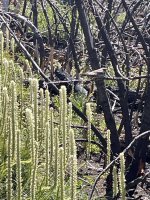
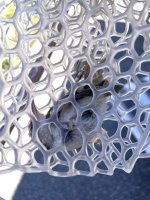
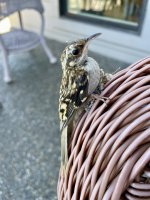
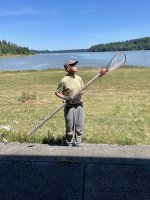
I wasn't going to settle for that, and since I had my fishing gear along, lashed the old Brodin to a 2x2 and went hunting. About the third attempt I caught what I'm pretty sure is an immature Brown Creeper.


IMG_9086 2.jpeg

IMG_9087.jpeg

Fly Away!

IMG_0823.jpeg
 
Last edited:
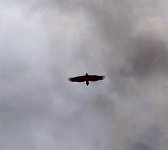
Best I can do with a cell phone and Sea Eagle flying above Sydney Harbor
1000020390.jpg
 
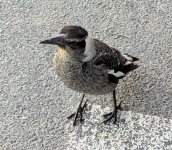
A very curious juvie Australian magpie...
1000020561.jpg
 
A very curious juvie Australian magpie...
View attachment 159656
Australian magpie parents become super aggressive during the breeding season. They are know to snap at or even make contact with beaks, wings, or claws if they feel that people are coming too close. As a result of the attacks, cyclists sometimes crash their bikes, leading to injuries. Other attacks lead to eye injuries (see here).
Steve
 
Last edited:
They are quite large!
 
I was doing a project yesterday for a friend who lives right on Oyster Bay on the S Sound. At some point, a bird flew in the open door, and with two high window walls couldn't find its way back out. My friend was convinced it was a goner; "they always die" before managing an exit.
I wasn't going to settle for that, and since I had my fishing gear along, lashed the old Brodin to a 2x2 and went hunting. About the third attempt I caught what I'm pretty sure is an immature Brown Creeper.


View attachment 159411

View attachment 159412

Fly Away!

View attachment 159413
Definitely appears to be a B Creeper. Very cool, and nice work!
 
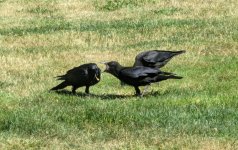
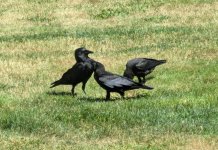
Who are the generous people who feed crows unshelled peanuts? They seem to be unaware of all the peanut shells and droppings inflicted on their neighbor's houses.


***Sorry - this is a recurring issue in my neck of the woods.
 
Last edited:
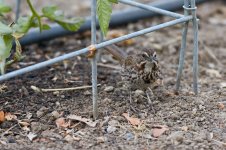
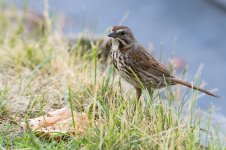
Song Sparrows: I've had them nesting in my yard for years. So long that I am clearly multiple generations in. I haven't even seen anything distinguishing about them until now. And it's two parts--behavior and plumage. Plumage: this year's bird is probably the most crisply-marked song sparrow that I've ever seen, The clearness of the white throat patch, the definition of the cheek and eyebrow lines, and the solidness of the dark breast spot really stand out to me. (Apologies, this particular camera/lens combo has some back-focusing as I approach MFD.)

018-Song-Sparrow-071225.jpg

But plumage aside, here's the thing that has made this bird stand out. My backyard nesters always do two broods. As I was putzing around in the garden earlier in the year, he'd move around, keep some distance, but generally get used to our shared space. I found some grubs and put them on a space near their nest, but they didn't respond.

Then when the babies got to the vocalizing stage, suddenly this guy wouldn't leave me alone. I'd be out in the garden or on the patio and he'd perch and hop/fly/feed/move to maintain a very close proximity, all the while low chirping at me, with the occasional higher "cht" or "chit." If I move, he moves to maintain a very close space while continuing to vocalize. He'll chirp at me with a bill half-full of bugs. Chirp at me while continuing to feed, scratch, peck, and move around between plants. And if I move 10-15 feet over, this bird moves so that it is back within 5-7 feet of me. And keeps chirping at me.

The first time this happened (maybe 1.5 months ago) I found a grub while gardening and ended up tossing/rolling it over towards the bird. He cock-eyed it for 15-20 seconds, and then dropped right down to it and took it. Same bird I couldn't get to see the grubs several weeks earlier. I thought it weird, but now I'm in the middle of the 2nd brood, and it's exactly the same thing. I'm hearing the nest vocalize. Suddenly I can't be out back without this guy making his presence known. If I move, he moves to just keep chirping at me. So here he is moving from the garden up to the lawn just to track me, all the while still pecking and trying to find bugs.

029-Song-Sparrow-071225.jpg

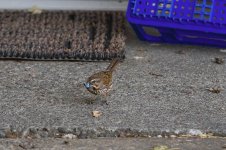
And to add the intrigue, I moved from the back (patio) to the door, and the bird rushed up ahead, (25-30'), flew into one of the blueberry bushes (up against the house), took a blueberry and dropped into the walkway leading up to the door where it pecked and worked away at eating it. It genuinely seemed like it knew I was watching it, like it knew it flew down into the path I have to take to get to the door. Seems wildly intentional and performative. Unfortunately I don't speak Song Sparrow.

041-Song-Sparrow-071225.jpg
 
Song Sparrows: I've had them nesting in my yard for years. So long that I am clearly multiple generations in. I haven't even seen anything distinguishing about them until now. And it's two parts--behavior and plumage. Plumage: this year's bird is probably the most crisply-marked song sparrow that I've ever seen, The clearness of the white throat patch, the definition of the cheek and eyebrow lines, and the solidness of the dark breast spot really stand out to me. (Apologies, this particular camera/lens combo has some back-focusing as I approach MFD.)

View attachment 160064

But plumage aside, here's the thing that has made this bird stand out. My backyard nesters always do two broods. As I was putzing around in the garden earlier in the year, he'd move around, keep some distance, but generally get used to our shared space. I found some grubs and put them on a space near their nest, but they didn't respond.

Then when the babies got to the vocalizing stage, suddenly this guy wouldn't leave me alone. I'd be out in the garden or on the patio and he'd perch and hop/fly/feed/move to maintain a very close proximity, all the while low chirping at me, with the occasional higher "cht" or "chit." If I move, he moves to maintain a very close space while continuing to vocalize. He'll chirp at me with a bill half-full of bugs. Chirp at me while continuing to feed, scratch, peck, and move around between plants. And if I move 10-15 feet over, this bird moves so that it is back within 5-7 feet of me. And keeps chirping at me.

The first time this happened (maybe 1.5 months ago) I found a grub while gardening and ended up tossing/rolling it over towards the bird. He cock-eyed it for 15-20 seconds, and then dropped right down to it and took it. Same bird I couldn't get to see the grubs several weeks earlier. I thought it weird, but now I'm in the middle of the 2nd brood, and it's exactly the same thing. I'm hearing the nest vocalize. Suddenly I can't be out back without this guy making his presence known. If I move, he moves to just keep chirping at me. So here he is moving from the garden up to the lawn just to track me, all the while still pecking and trying to find bugs.

View attachment 160069

And to add the intrigue, I moved from the back (patio) to the door, and the bird rushed up ahead, (25-30'), flew into one of the blueberry bushes (up against the house), took a blueberry and dropped into the walkway leading up to the door where it pecked and worked away at eating it. It genuinely seemed like it knew I was watching it, like it knew it flew down into the path I have to take to get to the door. Seems wildly intentional and performative. Unfortunately I don't speak Song Sparrow.

View attachment 160068

That is a very handsome song sparrow. And he has you well-trained as his assistant at this point...
Steve
 
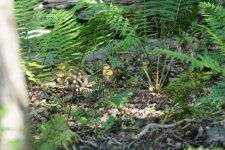
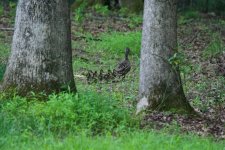
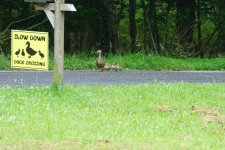
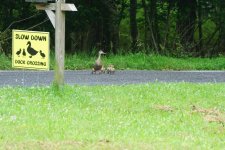
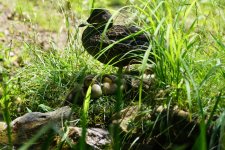
Unsure of where to put this, "Backyard Wildlife", "Pond Restoration" or here in Bird Pics (obviously decided this one). Seems mother Mallard likes to take the little ones on cross country treks, several hundred yards through the underbrush, down to the back marsh:

1752424202391.jpeg

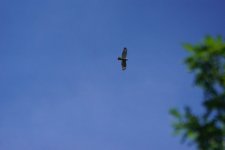
Not sure why she does this (different/better diet?), it can be a perilous journey with the Hawk circling overhead:

1752424311654.jpeg

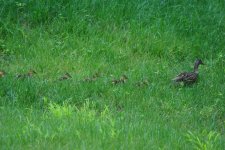
She has also taken them across the property, through the woods over to our neighbor Ed's bog:

1752424513696.jpeg

1752424566016.jpeg

But the best is when she takes the youngsters down the crick, across the road, back into the crick, and down to our other neighbor Walt's place where the crick flows through. Course, crossing the road, I just had to do this (note also how she looks both ways):

1752424843037.jpeg

1752424884083.jpeg

But their home does seem to be our pond, for which I am very gratified, they are an endless source of fascination, joy, and worry, though after 2 weeks, we still have 6 ducklings, far better than last year, when we were down to 2 after 2 or 3 days.

At home, pond side:

1752425344463.jpeg


Cheers
 
Seems mother Mallard likes to take the little ones on cross country treks, several hundred yards through the underbrush, down to the back marsh:

Thanks for keeping us in the loop on how your mallard brood is faring. Hopefully as the ducklings get a little older, survival will increase. Duckling survival also depends on the experience of the hen. Older hens tend to be more successful with brood rearing compared to young ones. Regarding movement of broods - usually it's forage related and you are correct that it exposed the ducklings to peril in doing so. The fact that she's bringing them back to your pond is a good thing! Please keep us posted!
 
Australian magpie parents become super aggressive during the breeding season. They are know to snap at or even make contact with beaks, wings, or claws if they feel that people are coming too close. As a result of the attacks, cyclists sometimes crash their bikes, leading to injuries. Other attacks lead to eye injuries (see here).
Steve
been on the receiving end of swooping many, many times. Rite of passage.... on the way to the bus stop had to sprint in spring time to avoid getting nailed. Some kids wore backwards caps with giant eyes on them, those kids are now all unemployed and still living with their Mamas... in their fifties....

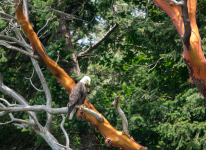
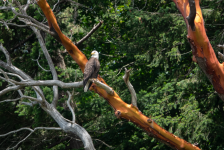
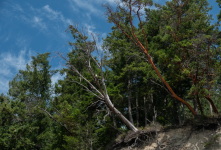
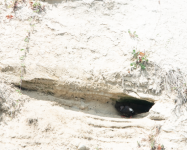
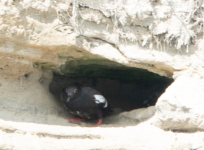
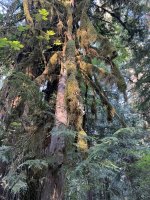
this pair were hanging in the madrones, lucked out today as normally they seem to hang in the evergreens....


1753063535288.png
1753063570713.png
1753063604589.png


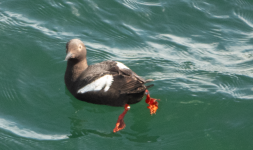
And where do these guys nest?
1753063853084.png
1753063801441.png
1753063725372.png
1753063770111.png
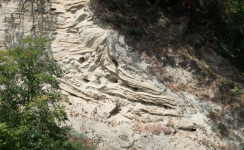
their bluffside caves were prime location for a solid feeding trough....
 
Back
Top