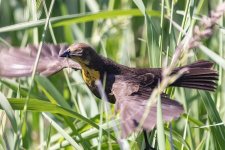
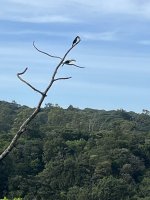
Got any bird pics?

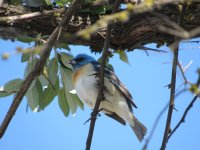
There seem to be an unusual amount of songbirds in the mid-Columbia this year. Seeing them all over the place, including a pair of Lazuli Bunting in our neighbor's trees for the first time anyone remembers
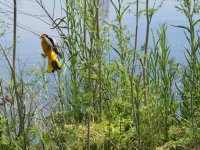
Bullocks's Oriole
BO2.JPGBO1.JPG
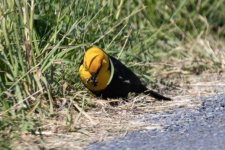
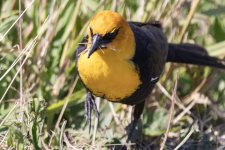
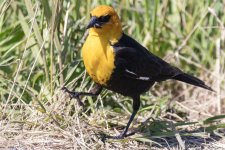
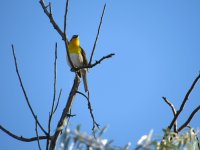
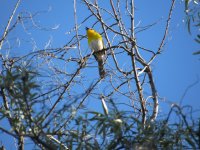
Yellow Breasted Chats
YBC1.JPG
YBC2.JPG
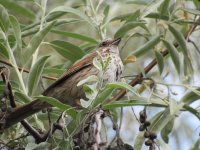
Song Sparrows
SS.JPG
Lazuli Buntings
LAZ.JPG
 
There seem to be an unusual amount of songbirds in the mid-Columbia this year. Seeing them all over the place
Unless I'm around, lol. Nice captures, Rich!
 
There seem to be an unusual amount of songbirds in the mid-Columbia this year. Seeing them all over the place, including a pair of Lazuli Bunting in our neighbor's trees for the first time anyone remembers
Bullocks's Oriole
View attachment 117060View attachment 117059
Yellow Breasted Chats
View attachment 117061
View attachment 117062
Song Sparrows
View attachment 117063
Lazuli Buntings
View attachment 117069
Nice, sharp pictures. Great selections of birds that are not common (song sparrow as exception) west of the Cascades.
Steve
 
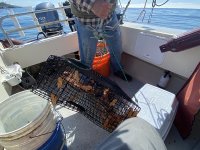
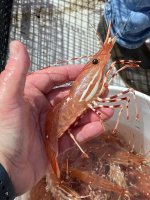
My BIL Paul invited to join him late last week on Lopez Island to collect some tasty crustacean groceries.
A01FourSpotPrawn8410.jpg
We had two very successful mornings, limiting out on spot prawns both mornings (80 shrimp per person per day).
A04ShrimpTrapWithCatch8402.jpg
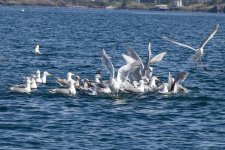
Thursday morning was a bit choppy due to wind waves traveling down the Strait of Juan de Fuca, but Friday was very calm. As we headed out to drop the two shrimp pots, we had encountered several bird balls.
A05aBirdBall6236.jpg
So, while we were waiting an hour or so for our harvest to gather themselves into the traps, we motored back to where we had seen the bird balls earlier.
A05bGulls&RhinoAuklets6018.jpg
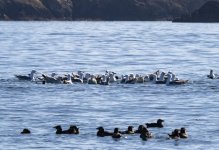
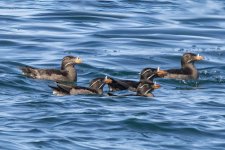
The fish finder detected lots of baitfish underneath the boat as we motored near an active bird ball. It appeared to me that the major originators of the bird balls were rhinoceros auklets. The ‘fourth puffin”, these birds forage on baitfish during the day and return to their burrows at dusk to feed their waiting chicks. There were several flocks of auklets just resting on the water.
A06RhinocerosAukletFlock6157.jpg
A07RhinocerosAukletFlock6162.jpg
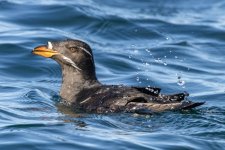
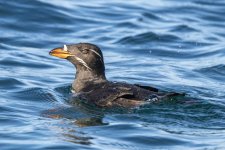
But other rhinoceros auklets were actively diving and presumably responsible for forcing fish schools to the surface (though I have seen dogfish also drive baitfish to the surface in the San Juans). Of course, one of the most distinctive aspects of the morphology of rhinoceros auklets is the presence of a keratin “horn” in the breeding season (which is shed in the non-breeding season).
A08RhinocerosAuklet6190.jpg
Recent research has indicated that the horn is florescent, like the bills of puffins. While there are no differences between males and females in the level of florescence, there are differences among individuals. I noticed in several pictures that the bird’s eyes were covered with nictitating membranes. The commonly-given reason for the presence of this membrane is to protect the eye from damage while swimming.
A09RhinocerosAukletWNictitatingMembrane6189.jpg
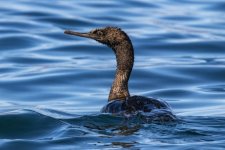
Possibly contributing to driving fish to the surface, there were one or two pelagic cormorants working the edges of the bird ball.
A10PelagicCormorant6090.jpg
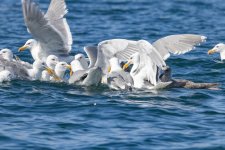
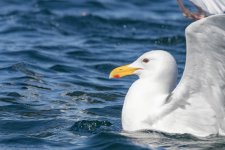
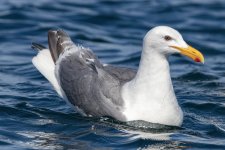
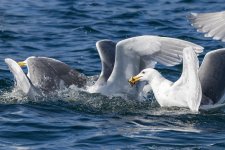
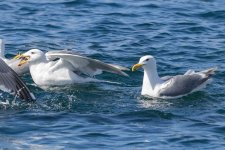
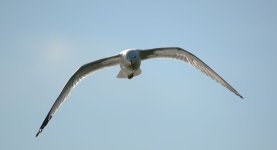
The most obvious birds in these feeding aggregations are the gulls, primarily adult glaucous-winged gulls.
B00GlaucousWIngedGullsBirdBall6174.jpg
B01GlaucousWingedGull6187.jpg
B02GlaucousWingedGull6198.jpg
There were also one or two juveniles in the mix.
So, what were the birds feeding on? There were no fish visible in the bills of the rhinoceros auklets, but I captured pictures of small sand lance in the bills of some of the glaucous-winged gulls.
B04GlaucousWingedGullWSandLance6220.jpg
B03GlaucousWingedGullsWSandLance6222.jpg
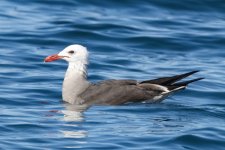
And we saw a single Hermann’s gull in its striking breeding plumage. It was trying to fight for its share of the bounty. Interestingly, almost all Heermann’s gulls breed earlier in the late winter / spring on desolate rocky islands in the Sea of Cortez. The birds then disperse from there along the west coast.
B05HerrmannsGull6107.jpg
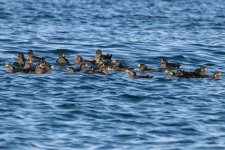
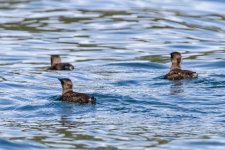
We still had time to kill and slowly motored along the coast. I have seen tufted puffins here in the past, but none were visible today. And we had seen a few common murres in breeding condition the previous day, but none today. But as we circled a small island, we encountered three marbled murrelets in their all-dark breeding plumage. Very unusual for birds in the family Alcidae, they nest on the moss that has grown on branches of old Douglas fir trees near the coast. The logging of old-growth forests has been proposed as a major factor behind the dramatic decline in populations of marbled murrelets. It is classified as a species of greatest conservation need in Washington and threatened by the US. Fish & Wildlife Service. [Nope, they wouldn't turn around...]
B06MarbledMurrelets6265.jpgSteve
 
Last edited:
Great opportunity, Steve! You have access to a great variety of feathered subjects on the west side and your dialogs are both educational and appreciated. Photos are excellent as always! Thanks!
 
Here's an interesting behavior, and one I can honestly say I haven't seen...
20240607_160052.jpg
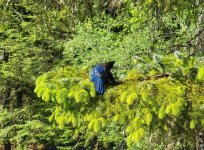
This Stellar's Jay just finished piggin' out on the suet feeder on the back deck then flew a dozen feet over to one of the spruces, where it appeared to pass the hell out and flop onto the bough. Beak open, feathers all ruffled...I though I might have been watching a bird's last breaths, but after a 10 minute power nap and a bit of a bask in the sun, he was back up and annoying as ever.
 
Here's an interesting behavior, and one I can honestly say I haven't seen...
View attachment 117289
This Stellar's Jay just finished piggin' out on the suet feeder on the back deck then flew a dozen feet over to one of the spruces, where it appeared to pass the hell out and flop onto the bough. Beak open, feathers all ruffled...I though I might have been watching a bird's last breaths, but after a 10 minute power nap and a bit of a bask in the sun, he was back up and annoying as ever.
Just like the typical post-Thanksgiving stupor... [Never heard of this behavior before. Seems risky with the possibility of a passing Cooper's hawk.]
Steve
 
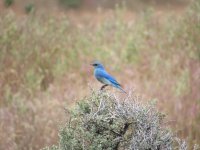
I have posted about Bickleton in the past, but need to say it again. If you are at all into birds and are in the Prosser/Yakima or Goldendale area with some time the "Bluebird Capital of the World" is worth a short trip. On Sunday afternoon we went over and slow drove about ten miles of dirt road and saw about 100 Mountain Bluebirds, a few Western Bluebirds, Western Meadowlarks, mule deer, chipmunks, squirrels, Kestrels, Bullock's Orioles and other assorted birds. Lots of relatively undisturbed Sage-Steppe habitat and many wildflowers. The cafes in town are neat as well.
MBB.JPG
 
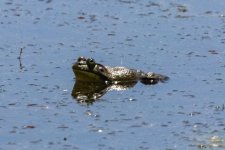
Ridgefield NWR, June 5, 2024: Close your eyes. I am going to transport you to a special habitat. With just two "love" songs, I bet you can predict where we are - a freshwater marsh. What were the two sounds that capture this habitat? I would argue that the deep croak of a bullfrog male would be one characteristic sound.
A01Bullfrog6552.jpg
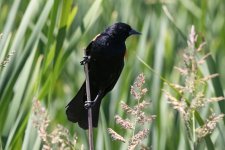
And a second would be the distinctive trill of a male red-winged blackbird.
A02RedWingedBlackbirdMale6524.jpg
Ridgefield NWR has lots of the latter and on a trip last week, I encountered one of the former. This is a bit of surprise considering the large number of great blue herons and great egrets that stalk the edges of the canals and ponds for such a desirable morsel.
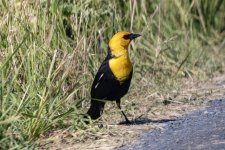
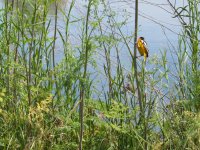
But if I spent more time in the freshwater marshes from Eastern Washington east to the Mississippi River, I might would like add a third sound in the mix, the coarse buzz song of a male yellow-headed blackbird.
A03YellowHeadedBlackbirdMale6397.jpg
While the occasional yellow-headed blackbird may wander into the Puget Sound basin, they really don’t make it west of the flatlands of Eastern Washington.
But there a number of yellow-headed blackbirds at Ridgefield NWR. Yes, they are outnumbered by the red-winged blackbirds, but they are more aggressive. Both species have the same breeding strategy – male establishes a territory, one or more females build nests in the territory, neither the male or female is particularly “faithful” (lots of fooling around…). There were several male yellow-headed blackbirds stalking the verge of the gravel road. One found a spicy carpenter ant for a snack.
A04YellowHeadedBlackbirdWBlackAnt6408.jpg
Another picked up a newly-emerged damselfly.
A05YellowHeadedBlackbirdWDamselfly6435.jpg
A06YellowheadedCowbirdMaleWDamselfly6439.jpg
There were also a few females, one of whom had also found a damselfly to feed her chicks.
A07YellowheadedBlackbirdFemaleWDamsefly6442.jpg
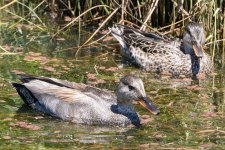
As expected, most of the water birds have dispersed to more northerly locales. But I have read reports of one or two sandhill cranes in the refuge. I encountered a pair of gadwalls in one of the canals
A08GadwallPair6534.jpg
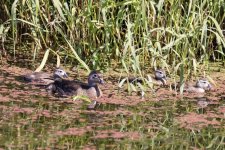
and a hen wood duck with several ducklings.
A09WoodDuckHen&Ducklings6377.jpg
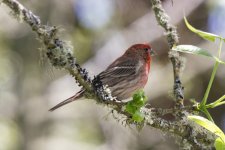
The grasses along the Auto Route have grown tall, blocking some sight lines into the marsh. But the grasses also provide perches / food for finches and sparrows, such as this male house finch
A10HouseFinchMale6541.jpg
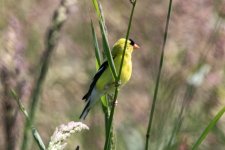
And this lesser goldfinch.
A11LesserGoldfinchMale6483.jpgI also was fortunate to catch a male common yellowthroat in the open.
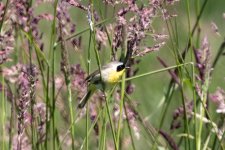
A12CommonYellowthroat6499.jpg
Steve
 
Last edited:
Back
Top