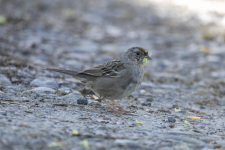
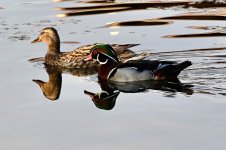
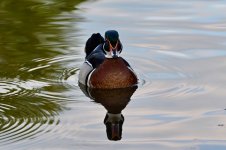
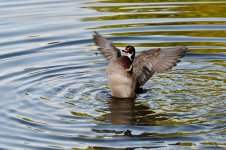
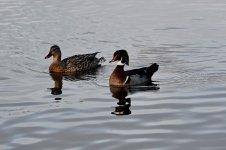
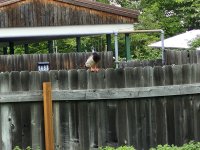
Got any bird pics?

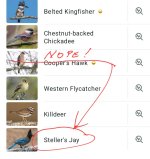
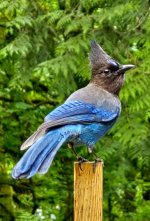
Our resident Stellar's gang tricked Merlin again. This time I busted one faking a Cooper's hawk. Seemingly an intimidation display to get us off the deck to raid the feeder in peace. .. And just now, switched to a very convincing red tail call! Such entertaining birds.

Screenshot_20260505_082149_Merlin Bird ID.jpg
 
Our resident Stellar's gang tricked Merlin again. This time I busted one faking a Cooper's hawk. Seemingly an intimidation display to get us off the deck to raid the feeder in peace. .. And just now, switched to a very convincing red tail call! Such entertaining birds.

View attachment 183452
Jays are great mimics. And it is deliberate manipulation as you said. Merlin does make ID mistakes as it recently indicated that I had a pigeon guillemot in my yard... While within a half mile of the very south Sound, I just don't believe it. Still, Merlin generally does an amazing job of matching the sonogram that it is recording with the likely local avifauna.
Steve
 
Jays are great mimics. And it is deliberate manipulation as you said. Merlin does make ID mistakes as it recently indicated that I had a pigeon guillemot in my yard... While within a half mile of the very south Sound, I just don't believe it. Still, Merlin generally does an amazing job of matching the sonogram that it is recording with the likely local avifauna.
Steve

What's cool about Merlin is seeing the ID highlight at the same time as hearing and seeing the bird.

At first I was hesitant to write the Cooper's off as a mimic because I have seen one here twice. Even got some crappy cell pics. Being in a wooded clearing, the killdeer was another suspect mimic. Then heard it myself yesterday across the river.

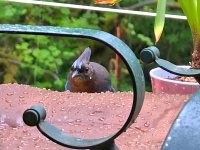
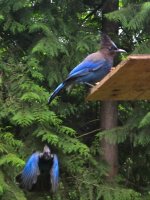
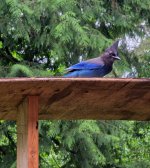
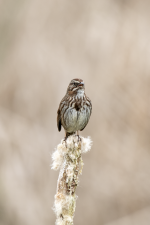
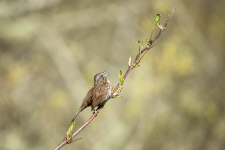
Stellar's have always been a favorite. That distinctive call brings back wonderful memories of long ago camping trips. This morning was the first time they've gone to the feeder with us on the deck.

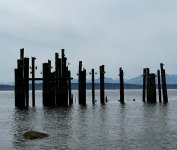
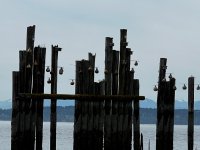
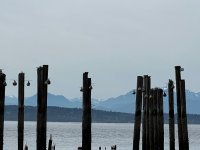
20260505_083557.jpg20260505_083625(2).jpg20260505_085604.jpg
 
Last edited:
My Daughter's African Gray was a superb mimic. Whistled for the dog when I opened the door, said "hello" in my Daughter's voice when the phone rang & imitated the microwave "beep" so well that I got up and checked it several times. It knew over 75 words & phrases & his sense of timing could be uncanny.
 
Last edited:
I was bird-sitting out front, accompanied by Sinbad in his cage when a somewhat scantilly clad young lady walked by. Sinbad immediately wolf-whistled. The girl shot me an angry glare even though I pointed & told her it was the bird. Fortunately "Sinner" whistled again & rescued me. When the young lady said "I'm sorry. It WAS the bird," I responded "Yup ... but he does have exceptionally good taste." ;)
 
When I started birding, I followed the practice of other experienced birders who would made the "pish, pish, pish" alarm sound to elicit mobbing by smaller birds, such as wrens or chickadees. With the advent of Merlin and other similar software programs, you have the ability to play back precise recordings of bird calls or sounds. In some circumstances, it may be just to confirm the identity of a call or song that you just heard. In other cases, birders play back the call or song of the species to draw individuals, especially territorial males or shy species, into view. In addition, i have had professional bird guides play screech owl calls to 1) draw out an owl in the area or 2) initiate a mobbing reaction by smaller birds. On one Arizona trip, our guide himself vocalized the high, sharp whistles of a common black hawk so accurately that it drew in a bird in thick, tall cottonwoods. Playback is used as a tool to monitor the abundance of rare species for their conservation (see The uses and implications of avian vocalizations for conservation planning).
On the other hand, I have hired guides who adamantly consider playback to be unethical. Their argument is that playback has the potential to stress / disturb / distract a bird from its usual routine. In fact, the National Park Service considers the use of recorded sounds to be "harassment" and it is illegal (see Bring This, Not That) ["Do not use bird calls, or apps that imitate animal sounds. Mimicking animal sounds is considered harassment, which is illegal. Using animal calls can also harm wildlife. For example, it can cause birds to leave their nests, leaving their young vulnerable to predation. Animals who feel threatened may try to protect themselves resulting in human injury."]. The same rules apply in some refuges.
I will admit that I have used Merlin's playback feature sparingly to draw out an elusive bird that I suspect is in an area. And it often works, especially in spring. Evidence of an effect by playback on birds is limited and mixed: some studies show negative impacts, others show positive impacts, and others show no impact. There is a very entry-level discussion of the issue here: "The proper use of playback in birding" by the eminent ornithologist David Sibley. This article is from 2011 and some more recent articles and discussions show similar ambivalent responses: see The Effects of Pishing and Playback on Avian Fitness, Simulated Birdwatchers’ Playback Affects the Behavior of Two Tropical Birds, Perceived Predation Risk Reduces the Number of Offspring Songbirds Produce per Year, and Why Photographers Should Reconsider Using Playback in the Field).
Where not explicitly illegal, playback or even "pishing" becomes a question of personal perspective.
Steve
 
Last edited:
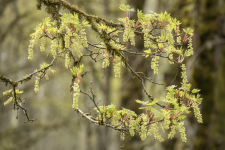
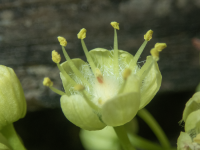
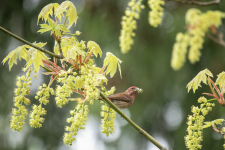
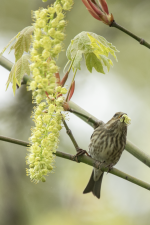
Billie Frank Jr. - Nisqually NWR, early-mid April. Part 4: Sparrows and finches. We had just begun a recent visit when we saw two small birds fly into a big leaf maple. The tree was covered with clusters (racemes) of lime-green flowers.
A01BigLeafMapleFlowers2C2A8569.png
A02BigLeafMapleFlower4200011.png
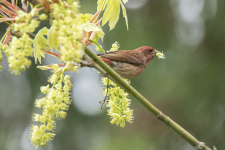
The birds were a male
A03HouseFinchMaleEatingBigleafMapleFlowers2C2A9571.png
and female house finch.
A05HouseFinchFemaleEatingBigleafMapleFlowers2C2A9583.png
They were pulling flowers off the clusters by the flower base. Each appeared to squeeze the flower’s base and then discard. After conducting some online research, I suspect that the house finches were squeezing nectar out of the flowers. The flowers of big leaf maples do produce significant nectar and some beekeepers market the distinctive big leaf maple honey as a premium variety.
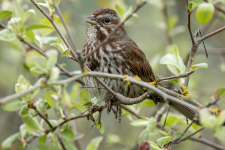
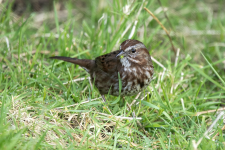
Song sparrows are perhaps the greatest habitat generalists among the birds inhabiting Nisqually NWR.
B06SongSparrowSinging2C2A9768.png
They inhabit the forest edges, grassy meadows near cover, the riparian vegetation lining the canals and freshwater pond, and the freshwater marsh.
B07SongSparrow2C2A7714.png
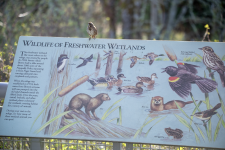
The following song sparrow appeared to be annoyed that it wasn’t included in the graphic on freshwater marsh fauna.
B08SongSparrowExclusion2C2A7978.png
B09SongSparrowOnCattail2C2A9747.png
They are not intimidated by human presence and go about their business regardless of my presence. With the sap rising in the spring…, the males are staking out territories and singing their hearts out.
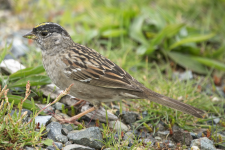
B10SongSparrowSinging2C2A8076.pngOver the year, I have learned the sites around the refuge where flocks of golden-crowned sparrows hang out.
C11GoldenCrownedSparrowAdult2C2A9076.png
In the fall, they foraged in the blackberries for the last fruits and seeds. For most of the winter and spring, they have nibbled on fresh grass blades.
C12GoldenCrownedSparrow2C2A9772.png
But they also have been exploiting the big leaf maple flowers that have fallen on the ground.
C13GoldenCrownedSparrow2C2A8038.png
They should be heading north soon to their breeding grounds in Alaska and northwestern Canada.
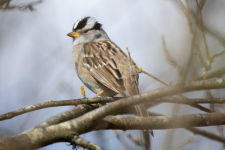
While white crowned sparrows are common sights in winter in the Olympia area (e.g., the Olympia Harbor area), they are not very common at Nisqually NWR. But a few birds do mix with the more abundant golden-crowned sparrows.
C14aWhiteCrownedSparrow2C2A0169.png
Superficially similar in appearance, you have to sift through many golden-crowned individuals to find a white-crowned individual. They should also be migrating north soon.
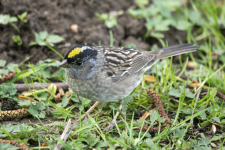
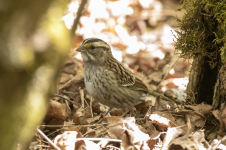
A third member (out of five) of the genus Zonotrichia, a white-throated sparrow or two often appears on the eBird list posted by the more diligent birders at Nisqually. But I had never seen this species in the West until a week ago. I was scanning a flock of golden-crowned sparrows that were foraging in and around some shrubs near the Twin Barns picnic area. One individual in the undergrowth looked different. Anticipating that it might be a white-throated sparrow, I waited very patiently for an opening through the shrubs to see and photograph this individual.
C14bWhiteThroatedSparrow2C2A0806.png
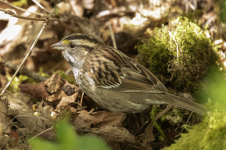
Its feet were scraping at the dried leaves under the shrubs and by the trunk of a big-leaf maple in a search for insects sheltering there. I was persistent and managed to take some better pictures of this individual.
C14cWhiteThroatedSparrow2C2A0831.png
White-throated sparrows are far more common in the Central and Eastern U.S. in winter. However, some overwintering individuals can also be found along the West Coast. Their breeding grounds range across Canada, east of the other two Zonotrichia species.
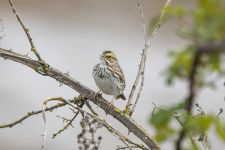
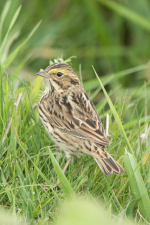
The only place where I have seen savannah sparrows at Nisqually NWR is on either side of the elevated dike that separates the permanent freshwater marsh and seasonally flooded meadow to the east from the salt marsh and mud flats to the west. [I commonly also see them at Mima Mounds as well.].
D15SavannahSparrowMale2C2A9899.png
They are more often heard than seen, especially when they are among the cattails or the salt marsh vegetation. But individuals will come out into the open as they search for insects along the grassy banks of the dike. On a recent visit, a male savannah sparrow started singing from the canes of a Himalayan blackberry bush.
D16SavannahSparrow2C2A9760.png
He was quite exuberant.
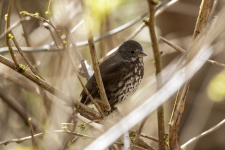
In my experience at Nisqually, the most elusive of the sparrow species is the fox sparrow. There probably aren’t that many individuals in the refuge anyway, and the individuals who are there prefer to stay in deep cover. They act more like thrushes than sparrows. Most commonly, I see them scratching at leaf litter under shrubs as they search for insects taking cover under leaves. This individual I detected by the sounds of that scratching.
E17FoxSparrow2C2A7921.png
Maneuvering stealthily, I managed to catch a few pictures of this individual before it noticed my presence and burst off into deep cover.
Steve
 

Attachments

  • A04HouseFinchMaleEatingBigleafMapleFlowers2C2A9594.png
    A04HouseFinchMaleEatingBigleafMapleFlowers2C2A9594.png
    1.7 MB · Views: 1
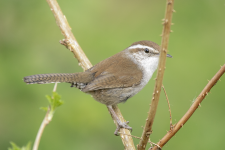
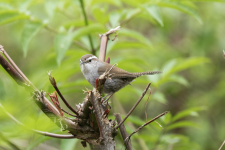
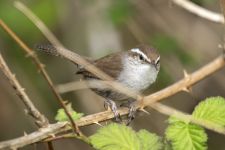
Billie Frank Jr. - Nisqually NWR, early-mid April. Part 5: Wrens. Wrens can be SOOO frustrating. They seem to be always aware of your presence. You hear a wren sing or call from deep in the underbrush. The bird will pop into sight for a millisecond and then disappear into undergrowth again before you can lift your binocs or camera. A short time later, it will pop up again briefly from a spot 10 feet away, mocking you.
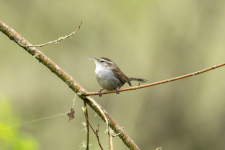
Bewick’s wrens are slightly more cooperative. They will call, sing, and perch in trees which give you a shot at a shot.
A01BewicksWren2C2A7975.png
A02BewicksWren2C2A8829.png
A03BewicksWrenMale2C2A9631.png
A04BewicksWren2C2A8824.png
But your opportunities to see them clearly are better in the spring, especially as the males alight on perches to sing vigorously to advertise their territories.
A06BewicksWrenMaleSinging2C2A8548.png
The diversity of their songs is impressive. Frankly, I think that wren song diversity, on occasion, can confuse the identifications provided by the Merlin app.
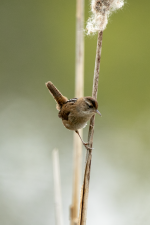
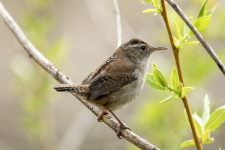
Marsh wrens are just as frustrating. You know that they are there due to their buzzy “chit” sounds. Suddenly, one will perch into clear view, but just as you raise your camera, it will disappear into deep cover.
B07MarshWrenInCattailStalk2C2A9658.png
B08MarshWrenMale2C2A8847.png
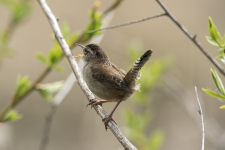
But like the Bewick’s wren, singing male in spring provide a good opportunity for some solid pictures.
B09MarshWrenSinging2C2A8857.png
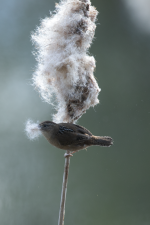
When not hiding or singing, these males are building nests. This male is collecting cattail fluff to line his nest.
B10MarshWrenMaleWCattailFluff2C2A9020.png
And I actually spotted the nest that one male was building among dried cattail stalks.
B11MarshWrenMaleWNest2C2A9640.png
This male alternated between calling and nest building.
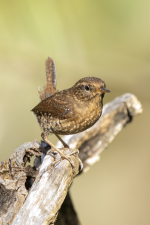
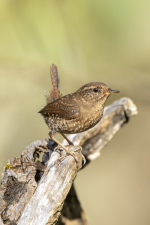
Pacific wrens are not very common at Nisqually NWR (much more common at McLane Creek Nature Trail for example). It appears that they prefer denser forests, though they themselves are typically only found a few feet off the ground in the understory shrubs. I was lucky to catch this individual who popped up onto this dead branch long enough for me to snap two pictures and then it was gone again.
B12PacificWren2C2A8033.png
B13PacificWren2C2A8035.png

Steve
 
Went looking for purple martins while out on my walk, but they were being rather shy today.
SF

IMG_6798.jpegIMG_6799.jpegIMG_6800.jpeg
 
Can we talk about Muffs?

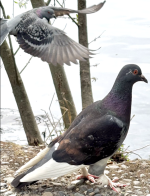
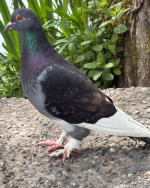
I had to slow my jog pace because I spied some exceptional wild variegated muff on a bird just working Green Lake near the snack shack.
It's not the first time I did a double take and slow down to check out muff!

A PC internet muff harvest so you don't have to do one at work:

"Pigeons with feathered feet, often called "muffs" or "muffed pigeons," are typically domestic or "fancy" breeds rather than wild rock doves. These feathers, which can be subtle or extremely long, are caused by genetic variations in the Pitx1 and Tbx5 genes that influence limb development. Common breeds include the Lahore, Fairy Swallow, and Bokhara Trumpeter."
1778378277552.png1778378333038.png
This muffed beauty above did seem tamer than usual for a pigeon, these are cell phone snaps, alternatively that particular stretch is known for kids and otherwise lonely people feeding the birds...

Ospreys were working Green Lake, Two Eagles were working Haller Lake, and one either Northern Harrier or Sharp Shinned or Coopers were also working Haller today. I didn't have my good camera, which was probably a good thing because the chironomid action was just enough to force focus on that...
 
As most know, the Galapagos finches (and mockingbirds) played a large role in Charles Darwin's investigations of evolution via natural selection. But another bird, the domestic pigeon (aka rock dove), was also a critical link in his insights and evidence. This research formed part of Darwin's analogy between artificial selection and natural selection. Darwin not only made contacts with upper-class and working-class fanciers of domestic pigeons, but even bred fancy pigeons at his estate, Down House. His research on pigeons helped Darwin understand how features could be selected and inherited (at a time when Mendelian genetics was not widely known - only to be rediscovered in the early 20th century) and the extent to which variation that could be generated by a single species.
Steve
 
Billie Frank Jr. - Nisqually NWR & McLane Creek Nature Area. Part 6: Woodpeckers. On a bird walk, I have my hearing focused on any sign of life: a ripple in a pond, a flash in my peripheral vision, a scratching sound in the undergrowth, or an unnatural “drum” sound in the trees. The later is a tip-off that there is a woodpecker in the vicinity. Now seeing the bird is another story. The bird may be tapping from inside a tree hollow. And woodpeckers are very adept at keeping to the far side of a branch or trunk when they detect your presence. Patience and good luck work in my favor on occasion.
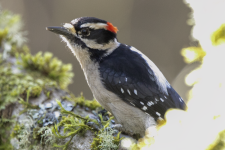
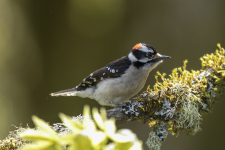
Downy woodpeckers are the smallest woodpecker species in the U.S. at under an ounce, length of almost 7” and a wingspan of 12”. It is its “tiny” size that is one of the better characters to separate downy and hairy woodpeckers (weight = 2.3oz, length = 9.25”, and wingspan = 15”). Because they are so light, downy woodpeckers can exploit thinner branches and smaller trees and shrubs in their search for prey. Befitting their size, their hammering is much quieter (and more superficial) and they are more likely to glean insects than to dig them out. I had heard a high pitched “pik” call along the Twin Barns Boardwalk and suspected a downy was in the vicinity. This little guy was searching for newly-emerged midges among the branches of a willow shrub. He was only a few feet away at eye level (and just beyond the minimal focusing distance of my 150-600mm lens). just stayed very still (except for clicking the camera shutter), he continued foraging.
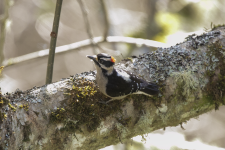
A01DownyWoodpeckerMale2C2A8094.png
A02DownyWoodpeckerMale2C2A8103.png
A03DownyWoodpeckerMale2C2A9423.png
Eventually, he moved deeper into the willows and I moved on.
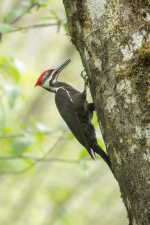
At the other end of the size spectrum, the pileated woodpecker (weight = 10oz, length = 16.5”, wing span = 29”) is the largest extant woodpecker in North America (assuming that the ivory-billed woodpecker is in fact extinct). Their loud rattling calls echo through the forest, but you really know that they are in the vicinity when they are destroying a decaying tree in search of carpenter ants or burrowed beetles. It sounds like someone hammering the wood with a chisel, which is not far from the truth. There is at least one pair at Nisqually but they can be quite camera shy. I found this bird at McLane Creek on the trunk of a rotting snag. Atypically, it kept at its excavation while I watched and filmed. When it eventually flew off, there was a pile of wood fragments across the trail.
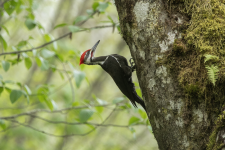
B04PileatedWoodpeckerMale2C2A0003.png
B05PileatedWoodpeckerMale2C2A9998.png
Northern flickers have very diverse foraging habits. They will probe in the grass for grubs and ants. They will also eat nuts, berries, and seeds. They will also “hawk” insects on the wing. Their calls are similar too, but higher pitched, the calls of pileated woodpeckers. They also make a “wicka-wicka-wicka” call. I often see them around my house. In the spring, males will often drum rhythmically and loudly to establish their territory drive off other male flickers, and attract mates. They like to drum on surfaces, like metal roofs, that produce especially loud sounds, much to the annoyance of the home owner.
At Nisqually, it is more common to hear the rattling call of a northern flicker perched in the canopy of a tree. If you do see one, you may only have a brief view before it bursts into flight and you catch the flash of color under its wings and tail as the bird flies off to a more secluded spot. If the underwing color is red/orange, the individual is the red-shafted subspecies so common in the Western U.S. and B.C.; if the underwing color is yellow, the individual is the yellow-shafted subspecies common in the eastern half of the U.S., across Canada, and into Alaska. Hence, a local common name for this species in the Southeastern U.S. is “yellow hammer”. The two subspecies do interbreed where their ranges overlap and produce individuals that have a mix of characteristics. This female (lacking the red mustache of a male red-shafted or the black mustache of the male yellow-shafted) is a red-shafted as you can see from the reddish color peaking out under the flight feathers.
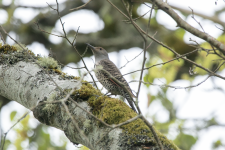
C06NorthernFlickerFemaleRedShafted2C2A9692.png
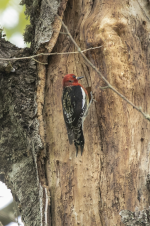
Sapsuckers, like this male red-breasted sapsucker,
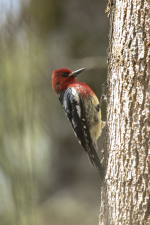
D07RedBreastedSapsuckerMale2C2A8203.png
commonly include tree sap in their diet as their common name indicates. In fact, the deciduous trees along our driveway are riddled with rows of shallow, regular pits that this species carves in the bark. The sap is lapped up with the bird’s brush-like tongue for lapping up the sap. Sapsuckers will also eat insects that are attracted to these sap wells. They will also search crevices in the bark for insects.
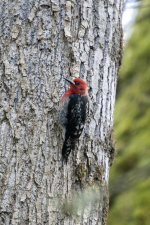
D08RedBreastedSapsucker2C2A9107.png
D09RedBreastedSapsuckerMale2C2A9690.png
I often encounter red-breasted sapsuckers during my birding walks at McLane Creek. On one walk, I heard a male hammering high up on a snag. A week later, it had dug out a new nesting cavity here. While I watched, it periodically headed into the newly-formed nest cavity to hammer out some final touches.
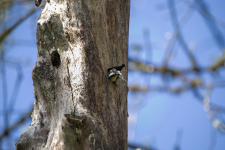
D10RedBreastedSapsuckerInNesthole2C2A0363.png
While watching this sapsucker at work, I also noticed a chestnut-backed chickadee visiting a smaller nest hole further down the snag.
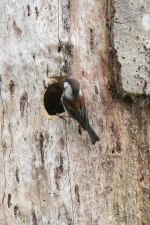
E11ChestnutBackedChickadeeByNestHole2C2A0054.png
This might have previously been the nest cavity for a downy woodpecker, based on its diameter. It just required some cleaning to be a suitable nesting spot for this chickadee and his mate.
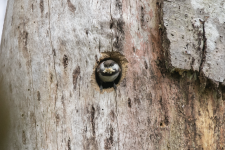
E12ChestnutBackedChickadeeCleaningNestHole2C2A0053.png
Nest cavities abandoned by woodpeckers provide critical nesting habitat for many other bird species, including chickadees and titmice, swallows and swifts, nuthatches and wrens, warblers and bluebirds, and ducks and owls. For this reason, protection of snag habitat is essential to maintain bird diversity in PNW forests.

Steve

 
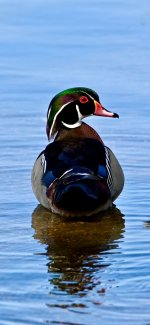
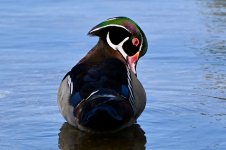
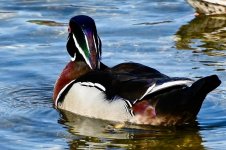
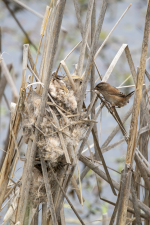
Anyone else ever see a duck land on a fence? It was a crazy perfect landing. Wide open slow glide, lay back, and step down onto the fence.
1000005139.jpg
 
Back
Top