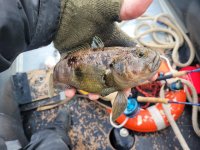
First fly-caught fish in Antarctica?

I wouldn't be surprised that this is the first Antarctic fish caught on a fly rod. I brought down a 5-wt rod on a research trip to Palmer Station on the Antarctic Peninsula in 1993 and made a few casts from the shoreline. [We were studying the physiology of icefishes, a family of Antarctic fishes that lack hemoglobin in their blood (kind of a yellowish plasm) and many species lack myoglobin in their hearts (yellowish vs. red).]. Even though I brought a sinking line, I soon determined that I couldn't get flies my deep enough to be anywhere near where a fish would likely be. In winter, the sea ice grinds the shoreline rocks down to a depth of 15-20 feet, leaving an area with very little food.
I'm glad that someone has broken through.
Steve
 
Full sink 7 line. Wonder if was the Cortland. That thing sinks like a stone.
 
I wouldn't be surprised that this is the first Antarctic fish caught on a fly rod. I brought down a 5-wt rod on a research trip to Palmer Station on the Antarctic Peninsula in 1993 and made a few casts from the shoreline. [We were studying the physiology of icefishes, a family of Antarctic fishes that lack hemoglobin in their blood (kind of a yellowish plasm) and many species lack myoglobin in their hearts (yellowish vs. red).]. Even though I brought a sinking line, I soon determined that I couldn't get flies my deep enough to be anywhere near where a fish would likely be. In winter, the sea ice grinds the shoreline rocks down to a depth of 15-20 feet, leaving an area with very little food.
I'm glad that someone has broken through.
Steve
You never cease to amaze me 👍
 
I wouldn't be surprised that this is the first Antarctic fish caught on a fly rod. I brought down a 5-wt rod on a research trip to Palmer Station on the Antarctic Peninsula in 1993 and made a few casts from the shoreline. [We were studying the physiology of icefishes, a family of Antarctic fishes that lack hemoglobin in their blood (kind of a yellowish plasm) and many species lack myoglobin in their hearts (yellowish vs. red).]. Even though I brought a sinking line, I soon determined that I couldn't get flies my deep enough to be anywhere near where a fish would likely be. In winter, the sea ice grinds the shoreline rocks down to a depth of 15-20 feet, leaving an area with very little food.
I'm glad that someone has broken through.
Steve
Steve, you're living my dreams, lemme just say.

Kenneth
 
Probably not in our lifetime, but I bet sea run browns from S. America and the assorted islands in the south Atlantic will eventually make their way down there.
 
I bet one of our local SRC heroes that has the January amphipod fishery dialed could nab something small on a "bug" down there. That said, I'm not sure I could object to that being the first fly-caught fish in Antarctica.
 
Only 700 miles from Tierra Del Fuego to Mendel Polar Station. I’ve seen Sea Run Browns there that look like they could make the trip.
The way things are going here Fly Water could be running trips by 2030.
 
Only 700 miles from Tierra Del Fuego to Mendel Polar Station. I’ve seen Sea Run Browns there that look like they could make the trip.
The way things are going here Fly Water could be running trips by 2030.
While there are no land barriers, there is a prominent current barrier that isolates Antarctica from South America, Africa, and Australia. The Antarctic Circumpolar Current circles the Antarctic continent. This current, the largest ocean current (carrying more than 100x the flow of the Earth's rivers), isolates the marine environment around Antarctica from the South Pacific, South Atlantic, and Indian Oceans. It is propelled by westerly winds that have no land barriers to block them. Waters south of the Antarctic Circumpolar Current form the Southern Ocean, the only ocean not delineated by landmasses. Over 88% of the fish species and most of the invertebrates found off Antarctica are found only there = endemic. The establishment of the Antarctic Circumpolar Current dates back to at least 30mya with the final fragmentation of the Gondwana continents of Antarctica and South America and the development of the Drake Passage between them. Water temperatures in the Southern Ocean range from 28oF to 50oF, but are typically in the 29oF to 34oF right off the continent. Even though it is the end of the Antarctic summer, sea surface temperatures off Antarctica today range from 34oF to 29.5oF. Any trout or salmon would need to wear a thick jacket...
Steve

 
Last edited:
While there are no land barriers, there is a prominent current barrier that isolates Antarctica from South America, Africa, and Australia. The Antarctic Circumpolar Current circles the Antarctic continent. This current, the largest ocean current (carrying more than 100x the flow of the Earth's rivers), isolates the marine environment around Antarctica from the South Pacific, South Atlantic, and Indian Oceans. It is propelled by westerly winds that have no land barriers to lock them. Waters south of the Antarctic Circumpolar Current form the Southern Ocean, the only ocean not delineated by landmasses. Over 88% of the fish species and most of the invertebrates found off Antarctica are found only there = endemic. The establishment of the Antarctic Circumpolar Current dates back to at least 30mya with the final fragmentation of the Gondwana continents of Antarctica and South America and the development of the Drake Passage between them. Water temperatures in the Southern Ocean range from 28oF to 50oF, but are typically in the 29oF to 34oF right off the continent. Even though it is the end of the Antarctic summer, sea surface temperatures off Antarctica today range from 34oF to 29.5oF. Any trout or salmon would need to wear a thick jacket...
Steve
Thank you Steve. Second trip to Argentina in the mid 80s we were fortunate enough to fly into Ushuaia to fish some rivers on TdF. Between the current ripping through the channel and the wind I couldn’t imagine what happens to the current being “pinched” between Antarctic's northern point and Tierra Del Fuego.
I feel like I’m attending a graduate class in Nature when you respond to questions regarding our interaction with our surroundings in nature. Can’t thank you enough!
 
Back
Top