Is Anywhere Safe Anymore?

I'm not a period guy. There is nothing that I know for 100% certain. I am not even certain that the Jets will ruin their next QB, although if history holds...........

I do know that I had a friend who had travelled to Egypt (it may have been another M.E. country). There was no crime as he saw it. The punishment for theft was exceptionally harsh by our standards, maybe a lost hand or death. Anyhow, he thought that it was great. Things were clean, and he felt safe. Maybe the solution is to have a shit ton of cops, a more efficient legal system that convicts people at higher rates and kill anyone who is caught stealing. I certainly don't want to live in Egypt or any other country with punishments that harsh. It gives a bit too much power to a government for my liking. Those countries with a low bar for physical punishment or death tend to have a larger religious presence than I care to have. To be honest my preference is exactly 0 religion.

Maybe there is a better balance than that struck by WA State or Egypt though. I guess that is my point. We seem to view things as I am 100% right and morally above the other person. I have found that more than one thing can be correct at one time. Sometimes a question has more than one answer. Sometimes there is no actual answer. There is rarely a 100% correct answer to societal problems.

I do think that we have less violent crime for the same reason that we tolerate more property crime. That is that we are just a less moralistic, religious, and black and white area than the South. This leads to less violence. Like the South, we have a political arena completely dominated by one party.

The South and middle of the country take a different more punitive view on property crimes. They are far less tolerant of it. They jail far more people comparatively. I have seen some people argue that mathematically they jail the same proportion of people that we do plus the amount that we have homeless. So, at least they have homes.

The same in not true for the Northeast. They are low in both types of crimes. Is it that the culture matters in how you learn to react to things and how you solve problems?

That is why the Northeast is so interesting to me. The states with the lowest crime rates Maine, NH and VT. are very familiar to me. They have some of the lowest rates of religiosity, the highest rates of education, and much more balanced politics. As a group of states they are in many ways the least extreme in their beliefs. Maybe educated people who are less religious tend to commit less violent and property crimes. When you have a dominant worldview that requires logic and thought and have the ability to use it, you are less likely to steal or to hurt someone physically. When you have regional politics that are not dominated by one group, potential solutions to issues are more multiple in nature.

There could also be no correlation at all. Maybe it's just so damned cold in the winter that it incentivizes work and harshly punishes being a drug addict and resultant homelessness by death.
Not so sure about the cold aspect being a deterrent. Look at Detroit and its cold weather crime rate.
 
Can you explain this a bit for me? I am not sure what has been settled. I wrote a fairly rambling post so I am not sure what you are responding to.
The data on what actually works to reduce crime. I'm not a criminologist, but at least prior to the great awokening, nearly every academic criminologist I listened to more or less said you can look at the data going back to the mid-nineteenth century and what seems to give the best bang-for-the-buck in terms of promoting public safety is "More cops, shorter sentences." Per all of them what actually deters criminals is getting caught, prosectued, and incarcerated. Evidently the length of the sentence matters way less than most of us would imagine.

Of course - all of that presumes that there's a functional consensus that supports allowing the police enforce the law, prosecutors willing to prosecute criminals post-arrest, judges willing to sentence them, capacity in jails/prisons, etc - so there are clearly situations where hiring more police would do little or nothing to make society safer. FWIW I remember there was a case recently where someone was being pursued by the police in WA and called 911 to report the *police* for pursuing him because, per his understanding of recent reforms to the law - the police were not allowed to do so given the nature of the crime that he'd committed...
 
The data on what actually works to reduce crime. I'm not a criminologist, but at least prior to the great awokening, nearly every academic criminologist I listened to more or less said you can look at the data going back to the mid-nineteenth century and what seems to give the best bang-for-the-buck in terms of promoting public safety is "More cops, shorter sentences." Per all of them what actually deters criminals is getting caught, prosectued, and incarcerated. Evidently the length of the sentence matters way less than most of us would imagine.

Of course - all of that presumes that there's a functional consensus that supports allowing the police enforce the law, prosecutors willing to prosecute criminals post-arrest, judges willing to sentence them, capacity in jails/prisons, etc - so there are clearly situations where hiring more police would do little or nothing to make society safer. FWIW I remember there was a case recently where someone was being pursued by the police in WA and called 911 to report the *police* for pursuing him because, per his understanding of recent reforms to the law - the police were not allowed to do so given the nature of the crime that he'd committed...
Thanks for the clarification.
 
Ummm,
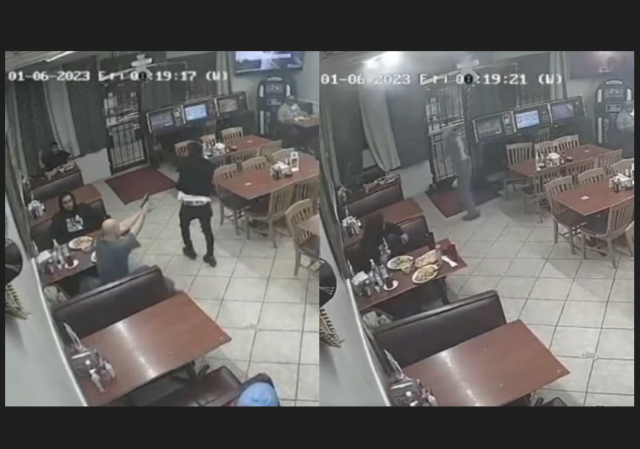
You might want to read this before you make such statements:


While it deals with a recent situation in houston, several of the legal tenents used to analyze the whole sordid mess apply up here.
He was shot in the back and then shot several more times. Several criminal actions here and simply wrong. These actions cannot be condoned and could not be considered justifiable.
 
You may recall this Skagit County incident. A few years ago my sister's neighbor did shoot the local dirtbag. Said dirtbag had previously threatened to kill this neighbor, by BIL twice, and several others in the neighborhood. With all the tractors and backhoes in the immediate farming community neighborhood (Bow), you'd think the best alternative would have been more than obvious. But no, the neighbor decided to "do the right thing" by calling the Sheriff's dept. Should have been a straight forward self-defense clearance, and the neighbor should have receive a medal for neighborhood improvement. But no, the county prosecutor had political ambitions and decided to take the King County approach and prosecute the neighbor. Two years and $175,000 later the neighbor was acquitted of any and all charges, proving that no good deed goes unpunished. Hence, why I love backhoes.
And the real crime here is that your sister would have to go through a successful lawsuit to recover the 175k - if it's even possible.
I myself have run into a young aggressive prosecutor in Skagit County. It didn't involve a death, just a couple of young people acting foolish. On the day of court a letter I had written to the judge was presented which offered up our family's interpretation of events, the desire for no prosecution to take place. The prosecutor was publicly dressed down a bit and the "sentence" was very lenient.
 
The data on what actually works to reduce crime. I'm not a criminologist, but at least prior to the great awokening, nearly every academic criminologist I listened to more or less said you can look at the data going back to the mid-nineteenth century and what seems to give the best bang-for-the-buck in terms of promoting public safety is "More cops, shorter sentences." Per all of them what actually deters criminals is getting caught, prosectued, and incarcerated. Evidently the length of the sentence matters way less than most of us would imagine.

Of course - all of that presumes that there's a functional consensus that supports allowing the police enforce the law, prosecutors willing to prosecute criminals post-arrest, judges willing to sentence them, capacity in jails/prisons, etc - so there are clearly situations where hiring more police would do little or nothing to make society safer. FWIW I remember there was a case recently where someone was being pursued by the police in WA and called 911 to report the *police* for pursuing him because, per his understanding of recent reforms to the law - the police were not allowed to do so given the nature of the crime that he'd committed...
You successfully made me dig into a bit of a rabbit hole prior to bed last night. Thank you for that. I learned quite a bit.

It appears as though your suggestion of more police officers and lesser jail sentences has a significant amount of support. It does stand to reason that being caught is a far greater deterrent that potential penalties, especially for property crimes. The studies cited showed a few really interesting things regarding policing in our recent history, especially that many predominantly African American neighborhoods and are simultaneously under policed and over arrested for petty crimes (below the level of theft even). There is also significant support across America for there to be more police. This extends to predominantly African American neighborhoods. In fact, White American are less likely to favor larger police forces.

There is an interesting NPR/ Planet Money article that coldly discusses the decrease in violent crime that adding 1 police officer represents. It looks at whether adding enough officers to statistically stop 1 homicide is worth it if you value a life at 10 million. The statistical effect of a police officer on violent crime surprised me a whole lot. It's an interview with a stat guy. I love this sort of stuff:


As with so many things it is a part of a solution. You can also point to improving education as a long term way to reduce crime. I think that we should. It has significant statistical backing as a long term measure. This gets to the question of educational equity and school funding. It also get to the "drug war" and it's effect on families especially in poorer urban areas. All of this is not necessarily in conflict with other ideas like increasing the number of police.

I think that is where the "I am right and you are wrong" binary sort of thinking really plagues us as a country. So often, we see any other answer than the one we espouse to be contrary to our own. Quite often it is complementary. We fight and argue when we'd be better off listening and thinking. I am guilty of this at times too.

A friend of mine taught me that ,"A good idea does not care who had it." or something similar. I may have butchered the language. The idea is sound though.

My thought is that much of what we see today with the difficulty policing is sort of a boomerang effect of the "drug war". I have a lot of thoughts about police and culture, the incredibly difficult job that police have, and the necessity to make the job more appealing to a broader swath of society. There is not time to discuss it here but I sure wish it could be discussed nationally, locally and civilly without the moralist shaming that has become the standard operating procedure for policy discussions.
 
Dean,
Sorry you have to deal with this stuff and sorry for your loss.
SF
 
Everyone wants more/better law enforcement, most not willing to be taxed for it.

I'm sure you could find the funds in a few lines items of a budget that are being spent to nearly no benefit to the tax paying public. There's plenty of fat and waste in most government budgets. But as government budgets go you are not encouraged to not waste but instead the opposite. Government is the only "business" where operating at a loss over and over yields benefit. There's simply no incentive to be smart with tax payer money.
 
Everyone wants more/better law enforcement, most not willing to be taxed for it.

Have you looked at how much tax money goes to law enforcement? I’d expect cops to be on every block for what some communities pay. I used to see cops all the time around Bellingham and I rarely do anymore.
 
Have you looked at how much tax money goes to law enforcement? I’d expect cops to be on every block for what some communities pay. I used to see cops all the time around Bellingham and I rarely do anymore.

Washington state is the lowest officer density per capita. Has been for a few years. As for paying for more protection? No way. What's the point? You would drown in the river of wasted tax money in this place. I'm going to demand a little accountability before in fleeced more to get more of the same.
 
It really sucks. Back in March of 1993 I was driving to the Hoh to fish for steelhead and my truck broke down on Hwy 101, north of Quinault. Pre-cell phone and no traffic at all, so I walked a few miles north until I found a logging operation for help. I had felt a little uneasy about leaving my truck along the road packed to the gills with camping and fishing equipment, so before I left I put my pistol and a few other things in a small duffle bag and hid them in the woods. When the guys at the logging camp found out my truck was parking five miles back they jumped in their truck and jetted back to my truck - everything had been stolen, and I mean everything. It took me a few years to replace many of the items, but thank goodness I had the presence of mind to hide a few things in the woods. Ever since then I try to travel only with items that can fit into a large camo duffle, just in case I need to hide them again. Sometimes this isn't possible, but I try to adhere to this.
 
big part of the tax pie for states and counties is the PERS/retirement for cops/teachers/civil support, etc.
Early 2000's, the genius in charge decided instead of giving a raise to Oregon PERS employees during a time of high returns, negotiated a guarenteed 6% return on all PERS money in leiu of a raise. So when the market tanked a few years later and returns dropped below 6%, the state had to make up the difference.
To put it into perspective each OR resident pays an average of $1500 a year to the State just to cover PERS.
And have no beef with the recipients, who trade what are typically higher salaries in the private sector for a solid retirement.
Have always considered things upside down from way back when I discovered the garbagemen in our town were making 80K a year while the teachers were making 40K.
 
Last edited:
I'm sure you could find the funds in a few lines items of a budget that are being spent to nearly no benefit to the tax paying public. There's plenty of fat and waste in most government budgets. But as government budgets go you are not encouraged to not waste but instead the opposite. Government is the only "business" where operating at a loss over and over yields benefit. There's simply no incentive to be smart with tax payer money.
Absolutely true, I used to work for a company that subcontracted through the shipyards. We would go in and deck these officers sleeping quarters with the most outlandish waste of money shit, they would only use said space a handful of times then the next year go back to the same quarters and tear all the shit out that is nearly brand new and throw it away then replace with new shit. It's the use it or lose it budget attitude. The government spends astronomical amounts of money on things it absolutely doesn't need so it can continue to get at least the same amount the following year
 
Last edited:
He was shot in the back and then shot several more times. Several criminal actions here and simply wrong. These actions cannot be condoned and could not be considered justifiable.

He was shot in the back and then shot several more times. Several criminal actions here and simply wrong. These actions cannot be condoned and could not be considered justifiable.
 
The guy was a hero for a few seconds. The extra shots were not needed.

The robber got what he deserved.
 
Back
Top