

Navigation
Install the app
How to install the app on iOS
Follow along with the video below to see how to install our site as a web app on your home screen.
Note: This feature may not be available in some browsers.
More options
Style variation
You are using an out of date browser. It may not display this or other websites correctly.
You should upgrade or use an alternative browser.
You should upgrade or use an alternative browser.
NFR Got any Herp pictures?
- Thread starter Matt B
- Start date
Non-fishing related
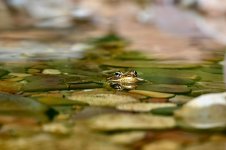
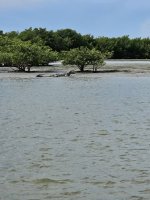

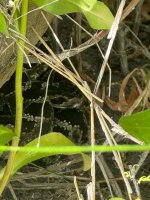
Pretty little Northern Pacific Rattlesnake from the Crooked River

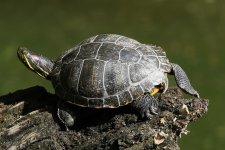
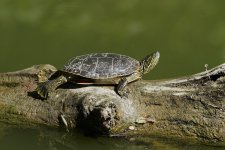


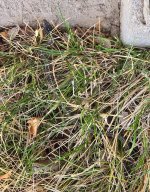

Don’t know.
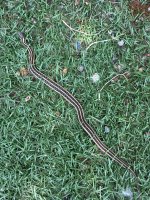
But here’s a snake in fake grass. Just a little fella, probably born this spring.
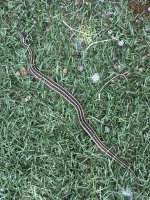
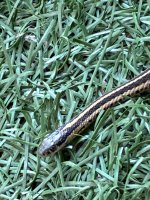
Attachments

Uptonogood
PNW raised
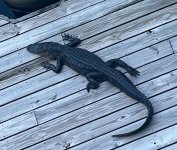
Our new downstairs neighbor getting some cool shade before our 100+ days came to an end. He ain’t very big, 6ft or so. Didn’t see any hatchlings this year, they must have removed momma and made a suitcase or a pair of boots out of her.


Micro tree frog.
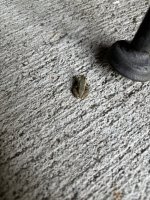
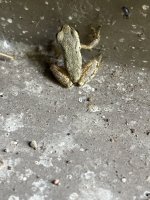

As part of my new exercise / activity regime, I’ve been walking the trails through the Evergreen State College forest and the connecting McLane School Trail several times a week. At one point, a rustic bridge along the Evergreen trail passes over a seasonal creek. A few weeks ago during my walk, I caught a sudden movement out of the corner of my eye. Upon closer examination, this was due to a hop by a Northern red-legged frog, Rana aurora, not far from the creek. You can see some of the red coloration on the legs in the second picture and the prominent dorsolateral folds that
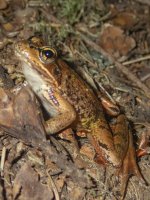
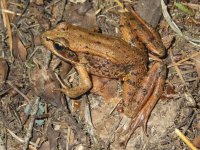
This species ranges from the coastal range of Northern California through the Cascade lowlands of Oregon, Washington, and British Columbia (including Vancouver Island. They appear to prefer forested areas during the non-breeding season, a perfect description of the mix of Douglas fir, cedars, big-leaf maples, and sword ferns in the Evergreen forest. They breed in slow-moving streams and ponds. While the population is stable in Washington, their numbers appear to be declining in Oregon and British Columbia. Populations of the Northern red-legged frog are likely facing many of the same issues as those of the threatened California red-legged frog, R. draytonii: habitat loss / alteration by humans and competition / predation from introduced species, especially bullfrogs.
And let me throw in a bonus animal, the Puget Oregonian snail, Crytomastix devia, which I encountered nearby a few days earlier.
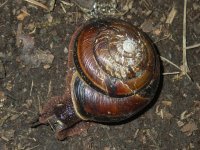
This is a large (about 1" diameter) snail of lowland coniferous forest, especially those with big leaf maples. This is another species of concern due to its low density, specialized habitat requirements, and isolated populations.
Steve
This species ranges from the coastal range of Northern California through the Cascade lowlands of Oregon, Washington, and British Columbia (including Vancouver Island. They appear to prefer forested areas during the non-breeding season, a perfect description of the mix of Douglas fir, cedars, big-leaf maples, and sword ferns in the Evergreen forest. They breed in slow-moving streams and ponds. While the population is stable in Washington, their numbers appear to be declining in Oregon and British Columbia. Populations of the Northern red-legged frog are likely facing many of the same issues as those of the threatened California red-legged frog, R. draytonii: habitat loss / alteration by humans and competition / predation from introduced species, especially bullfrogs.
And let me throw in a bonus animal, the Puget Oregonian snail, Crytomastix devia, which I encountered nearby a few days earlier.
This is a large (about 1" diameter) snail of lowland coniferous forest, especially those with big leaf maples. This is another species of concern due to its low density, specialized habitat requirements, and isolated populations.
Steve
Does that trail lead you to the clothing optional Luhr beach?
Nice stuff, as usual, Cabezon. Always enjoy your educational descriptions and info.
Nice stuff, as usual, Cabezon. Always enjoy your educational descriptions and info.
No, I'm deeper in the forest trails nearer the Organic Farm... If they saw me on that beach, folks would report a marine mammal stranding and try to roll me back into the water...Does that trail lead you to the clothing optional Luhr beach?
Nice stuff, as usual, Cabezon. Always enjoy your educational descriptions and info.
Steve
Love it, Cabezon.
I was there back in the old days.
Steve Herman had a turkey vulture in his house and a loon in the bathtub. Loons are mean. He. also had Falcons that would hunt with his Brittany. The Nisqually Delta was a trip each weekend. What a special place.
Oh, and we hunted a lot down there, back in the days. McAllister creek side.
I was there back in the old days.
Steve Herman had a turkey vulture in his house and a loon in the bathtub. Loons are mean. He. also had Falcons that would hunt with his Brittany. The Nisqually Delta was a trip each weekend. What a special place.
Oh, and we hunted a lot down there, back in the days. McAllister creek side.

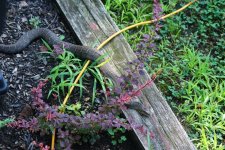
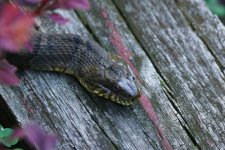
This guy has unfortunately decided to make his home under our deck, say unfortunately because we are currently rehabbing/restoring saiid deck and it has the wife somewhat spooked:
Uptonogood
PNW raised
A highly venomous South African puff adder in Northern Cape a few years back. They don’t typically kill any snakes but the puffy snake whose skin is in the photo below, was found in their laundry room. I said to the kids’ mother “That must have been scary, wasn’t it?”. The kids mother, a Ph.D. Zoologist, said, “Yes, but not as scary as the cobra in the bedroom.” I asked, “Which bedroom was it in?” She phased for a moment and said, “Um, the one you’re sleeping in.”.
True story.
True story!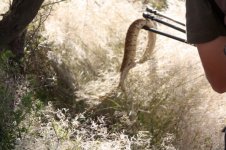
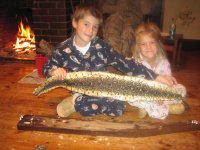
True story.
True story!
Uptonogood
PNW raised
A broad headed skink sunning in the garden. Pretty critters eh?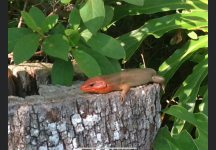
Last edited:
Uptonogood
PNW raised
A couple of days after moving back to the Southeast, my wife brought this to me for identification. Pretty little snake, isn’t it?
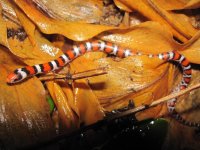

How does it go? Red and white, it's all right, red and yellow, kill a fellow?A couple of days after moving back to the Southeast, my wife brought this to me for identification. Pretty little snake, isn’t it?
View attachment 163469
See here for the rhymeHow does it go? Red and white, it's all right, red and yellow, kill a fellow?
Red Touch Yellow - Kills a Fellow
Red Touch Black - Venom Lack
Yellow Touches Red - Soon You'll Be Dead
Red Touches Black - Friend of Jack
and its explanation. This snake with a red snout (versus a black snout in a coral snake) is a gorgeous scarlet kingsnake / scarlet milkshake.Steve
Thank you!See here for the rhyme
Red Touch Yellow - Kills a FellowRed Touch Black - Venom LackYellow Touches Red - Soon You'll Be DeadRed Touches Black - Friend of Jackand its explanation.
Steve