WA. State DNR Failure Being Rectified

RCF

Legend
Forum Supporter
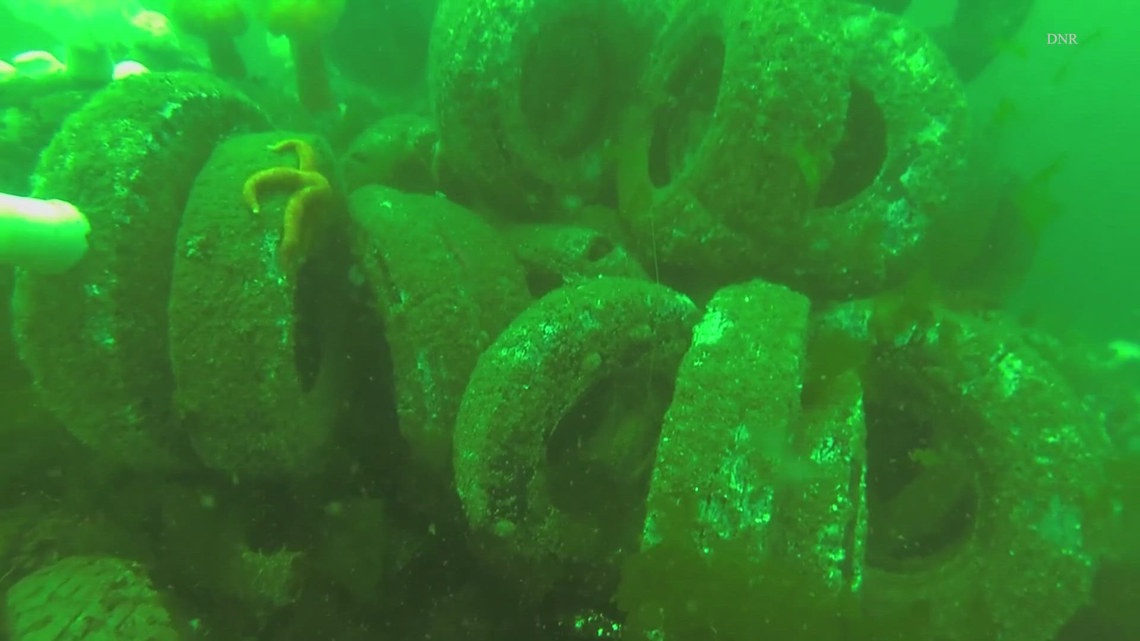
Couple of articles about the WA. State DNR failure regarding tire piles are now being removed from Puget Sound:


Huh, I guess sometimes the "science" can be a crapshoot.
 
Having grown up in Tacoma, I remember the fire. Anyone who has walked along the waterfront there has seen the old mill site.
SF

 
Huh, I guess sometimes the "science" can be a crapshoot.
Yeah, maybe folks could use a refresher on how it works. I like the scientific method better than prophesy and prayer in most cases. This is how it is done: You come up with a hypothesis like “tires can help form a reef to host native fishes,” then you test it and observe. Looks like in this case the hypothesis was not true so far as we can tell and so the scientists are adapting management in response to the new information.

I suppose other options include praying real hard that the fish come back. Is that the same, better or worse than a “crapshoot”?
 
You come up with a hypothesis like “tires can help form a reef to host native fishes,” then you test it and observe.
Is 60 years a typical interval for "test and observation" in marine science to determine efficacy - outcome?
What were some of the other artificial reef alternatives at the time? Car bodies? Cement blocks? Derelict vessels? ...
Should they have tested and observed them near one another for a shorter interval before commiting to using >100,000 tires that they now have to remove and dispose of?
 
Is 60 years a typical interval for "test and observation" in marine science to determine efficacy - outcome?
What were some of the other artificial reef alternatives at the time? Car bodies? Cement blocks? Derelict vessels? ...
Should they have tested and observed them near one another for a shorter interval before commiting to using >100,000 tires that they now have to remove and dispose of?
I don't know the answers to all those questions, and some of them are rhetorical. I suggest you ask the WA DNR, or spend some time researching, and report back here. Or not.
 
Too bad it didn't work out as expected. My memory is foggy on the subject, but I thought the project was undertaken because it had been successful elsewhere. I don't recall that it was promoted based on a SWAG (Scientific Wild Azz Guess). Seems like I've read about artificial reefs being successful in the Texas gulf area, though I don't think they used old tires as the substrate.
 
I ask myself.....what would Salmo_g do?
Background research. As I posted above, I've read about a number of artificial reef projects. And I think they have been described as successful. But I don't know about tires being used. There must be some information available to cause DNR to decide to remove the tire reefs.
 
I always thought sinking the concrete sections of the old 520 floating bridge would have made for some cool artificial reefs and dive sites, but that didn’t happen…..
SF
 
I always thought sinking the concrete sections of the old 520 floating bridge would have made for some cool artificial reefs and dive sites, but that didn’t happen…..
SF

I think that was looked into, as was using the old Alaskan way viaduct as artificial reef structure. I am not sure exactly why the idea was finally discarded, but there was an issue of toxicity caused by stuff from vehicles being absorbed by the concrete - lead from gasoline, tire chemicals, that sort of thing.

I would love to see more artificial reefs in the sound, but not if they have to be pulled out again!
 
Background research. As I posted above, I've read about a number of artificial reef projects. And I think they have been described as successful. But I don't know about tires being used. There must be some information available to cause DNR to decide to remove the tire reefs.

There have been a lot of tire reef removals around the country. Some big ones in Florida. I think it really is one of those things that seemed like a good idea at the time, but wasn’t thought through enough. Everyone who dives has seen a tire with a happy looking fish sitting inside it, but back then there was not as much attention on potential toxicity, and nobody seemed to realize that tires are not dense enough to stay put during major storms.
 
Huh, I guess sometimes the "science" can be a crapshoot.
Brian, I actually think you are right about this in some sense, but I can't speak to how scientific the folks who originally put these tires in Puget Sound thought they were being at the time. I suspect it was based on, what looks like in hindsight anyway, a poorly, or at least incompletely, educated guess.

But overall I think that "they should have been more cautious" is a different argument than "science is a crapshoot." Although, sure, some experiments are sort of a crapshoot I suppose, in the sense that people are trying something that they aren't sure will work or not. A lot of times, that's kind of the whole point. I don't disagree that it's important to consider potential unintended consequences and risks. I do think it's important not to always view a disproved hypothesis as an out-and-out "failure" of a project. Sometimes that what is learned, that a thing didn't work.
 
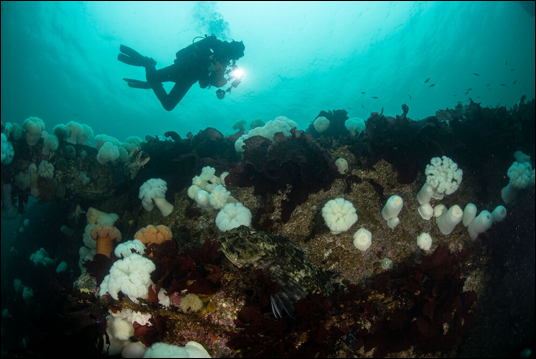
See below for a recent student blog from the UW School of Marine and Environmental Affairs on success and failures of Puget Sound's artificial reefs, including the failed and degrading tire reefs experiment. It mentions concerns over the tire toxic compound 6PPD-quinone and its impact on salmon mortality, which was the topic of a related previous forum post (linked below). Sometimes even the best intentions may have unintended consequences that are brought to light by new scientific research, at least it is encouraging that we can (sometimes?) learn from failure and hopefully continue to correct and mitigate impacts.


PS: ignore blog's mention of Rankin cod and blue grouper...now that would be something if we had those in Puget Sound!
 
Last edited:
There have been a lot of tire reef removals around the country. Some big ones in Florida. I think it really is one of those things that seemed like a good idea at the time, but wasn’t thought through enough.
I hazily recall another short documentary or news story about tires reefs as a solution to a growing problem with tire dumps on land that could also provide a benefit to aquatic life as artificial reefs. Agreed that the science for that proposal was sketchy. It brought to mind the "best available science" that WDFW will use as a basis for rulemaking on Native Trout Harvest Mangement with what appears to be little to no recent research on abundance and carrying capacity of the streams the rules will be applied to.
I don't know the answers to all those questions, and some of them are rhetorical. I suggest you ask the WA DNR, or spend some time researching, and report back here. Or not.
I would think that tests at 1, 5, 10... for efficacy and toxicity to fish and other organisims in and around the structure would have been prudent. One paper on artificial reefs I saw today had a thorough review at 10 years.
 
Human beings have been finding novel uses for their trash forever. Generally much more so in the past than in the present, where we have landed on dumping it out of sight and not thinking about it anymore. Glad they're getting rid of them, but I'm not mad at the people who thought it was a good idea. If you dont understand the toxicity issues, i see how you figure better to use them than to fill the dump.

We are gross creatures.
 
Background research. As I posted above, I've read about a number of artificial reef projects. And I think they have been described as successful. But I don't know about tires being used. There must be some information available to cause DNR to decide to remove the tire reefs.
I have heard of it just sort of a litter removal effort mostly. Some of the shallow ones are breaking apart in storms and moving around. That plus some recognition that they didn't turn out to be any amazing habitat.
 
Thankfully, the tire reefs in puget sound were put there before 6ppd-quinone became widely used in car tires. There are plenty of other nasties in them, but not that.
Not true actually, at least for most of the tires dumped. Maybe some of the very oldest ones don't have the same tire chemicals. The lack of extensive marine growth, colonization, etc does suggest that plenty of nasties do exist in them.
 
Back
Top