NFR Electric Truck

Non-fishing related
Status
Not open for further replies.
With EVs of all types it will just take time for the early adopters to expand the market (and it's supporting infrastructure) sufficiently to become attractive and economically sound for the rest of us.

The city of Spokane's council demanded that the PD purchase Teslas as patrol vehicles...against the wishes of the PD and Fleet dept. The trial purchase has not gone well. Police officers, with their equipment, and detainees do not fit well in Teslas. Hotseating EV patrol cars doesn't work well, so you need more of them. The speed advantages of the Teslas are not attractive to PD management or Risk Management because high speed pursuit collateral damage is a serious public risk and huge financial liability.

The council now faces the decision of replacing about 80 conventional vehicles (currdepth. at the end of their service life) with electric (from a market that doesn't yet produce a suitable police EV) or go the conventional route.
I will pay someone decent $$ for a pic of a Logan neighborhood Spokie in cuffs getting put into the back of a Tesla police car.
 
I will pay someone decent $$ for a pic of a Logan neighborhood Spokie in cuffs getting put into the back of a Tesla police car.
More probable in Felony Flats (my birthplace). The cops really can't use them on patrol. Too much cop gear and too little room for offenders...and I believe I mentioned their insuitability for hotseating from from shift to another due to charge time. The optics are also terrible.

Cops wreck a LOT of vehicles...and the parts and repair times for Tesla are atrocious.
 
Last edited:
Not sure if this has already been brought up, but this is a pretty interesting EV platform in the truck/van space.
https://www.canoo.com/pickup/
Ha, that’s an interesting modern/retro looking rig!

When I was a kid my Dad had one of these Jeep cabover 4x4’s. Crossing a steep shale slide on the Colockum was scary in that thing. We were up there on a camping trip and my sister and Mom were so scared they got out and walked. This was way back in the ‘60’s. I used to sit on the folding jumpseat that was on top of the engine. Dad sold it and got a ‘62 F250 4x4 that Mom found tolerable and would still go camping in with us. Great memories !!

 
EVs are fine and down the road will be a better option. But lest you think they are the end all here's the Paul Harvey rest of the story.

This is an excellent breakdown.
Batteries, they do not make electricity – they store electricity produced elsewhere, primarily by coal, uranium, natural gas-powered plants, or diesel-fueled generators. So, to say an EV is a zero-emission vehicle is not at all valid.
Also, since forty percent of the electricity generated in the U.S. is from coal-fired plants, it follows that forty percent of the EVs on the road are coal-powered, do you see?"
Einstein's formula, E=MC2, tells us it takes the same amount of energy to move a five-thousand-pound gasoline-driven automobile a mile as it does an electric one. The only question again is what produces the power? To reiterate, it does not come from the battery; the battery is only the storage device, like a gas tank in a car.
There are two orders of batteries, rechargeable, and single-use. The most common single-use batteries are A, AA, AAA, C, D. 9V, and lantern types. Those dry-cell species use zinc, manganese, lithium, silver oxide, or zinc and carbon to store electricity chemically. Please note they all contain toxic, heavy metals.
Rechargeable batteries only differ in their internal materials, usually lithium-ion, nickel-metal oxide, and nickel-cadmium. The United States uses three billion of these two battery types a year, and most are not recycled; they end up in landfills. California is the only state which requires all batteries be recycled. If you throw your small, used batteries in the trash, here is what happens to them.
All batteries are self-discharging. That means even when not in use, they leak tiny amounts of energy. You have likely ruined a flashlight or two from an old, ruptured battery. When a battery runs down and can no longer power a toy or light, you think of it as dead; well, it is not. It continues to leak small amounts of electricity. As the chemicals inside it run out, pressure builds inside the battery's metal casing, and eventually, it cracks. The metals left inside then ooze out. The ooze in your ruined flashlight is toxic, and so is the ooze that will inevitably leak from every battery in a landfill. All batteries eventually rupture; it just takes rechargeable batteries longer to end up in the landfill.
In addition to dry cell batteries, there are also wet cell ones used in automobiles, boats, and motorcycles. The good thing about those is, ninety percent of them are recycled. Unfortunately, we do not yet know how to recycle single-use ones properly.
But that is not half of it. For those of you excited about electric cars and a green revolution, I want you to take a closer look at batteries and also windmills and solar panels. These three technologies share what we call environmentally destructive production costs.
A typical EV battery weighs one thousand pounds, about the size of a travel trunk. It contains twenty-five pounds of lithium, sixty pounds of nickel, 44 pounds of manganese, 30 pounds cobalt, 200 pounds of copper, and 400 pounds of aluminum, steel, and plastic. Inside are over 6,000 individual lithium-ion cells.
It should concern you that all those toxic components come from mining. For instance, to manufacture each EV auto battery, you must process 25,000 pounds of brine for the lithium, 30,000 pounds of ore for the cobalt, 5,000 pounds of ore for the nickel, and 25,000 pounds of ore for copper. All told, you dig up 500,000 pounds of the earth's crust for just - one - battery."
Sixty-eight percent of the world's cobalt, a significant part of a battery, comes from the Congo. Their mines have no pollution controls, and they employ children who die from handling this toxic material. Should we factor in these diseased kids as part of the cost of driving an electric car?"
I'd like to leave you with these thoughts. California is building the largest battery in the world near San Francisco, and they intend to power it from solar panels and windmills. They claim this is the ultimate in being 'green,' but it is not. This construction project is creating an environmental disaster. Let me tell you why.
The main problem with solar arrays is the chemicals needed to process silicate into the silicon used in the panels. To make pure enough silicon requires processing it with hydrochloric acid, sulfuric acid, nitric acid, hydrogen fluoride, trichloroethane, and acetone. In addition, they also need gallium, arsenide, copper-indium-gallium- diselenide, and cadmium-telluride, which also are highly toxic. Silicon dust is a hazard to the workers, and the panels cannot be recycled.
Windmills are the ultimate in embedded costs and environmental destruction. Each weighs 1688 tons (the equivalent of 23 houses) and contains 1300 tons of concrete, 295 tons of steel, 48 tons of iron, 24 tons of fiberglass, and the hard to extract rare earths neodymium, praseodymium, and dysprosium. Each blade weighs 81,000 pounds and will last 15 to 20 years, at which time it must be replaced. We cannot recycle used blades.
There may be a place for these technologies, but you must look beyond the myth of zero emissions.
"Going Green" may sound like the Utopian ideal but when you look at the hidden and embedded costs realistically with an open mind, you can see that Going Green is more destructive to the Earth's environment than meets the eye, for sure.
Obviously copied/pasted. I encourage you to pass it along too.

 
Well, my horse eats grasses and shits, so i am no better than the CEO from BP.

I don't wear shoes and i regenerate skin cells from eating processed food.


We are screwed.
 
Lets add in tires to the equation. Hybrids and BEV's are both very heavy compared to what we currently consider "normal" cars. This requires stronger and more specialized tires, which still wear out faster than the ones you'd normally purchase. You pay more and replace more often.
 
Lets add in tires to the equation. Hybrids and BEV's are both very heavy compared to what we currently consider "normal" cars. This requires stronger and more specialized tires, which still wear out faster than the ones you'd normally purchase. You pay more and replace more often.
Not to mention the wear n tear on our road system. Hell…that hasn’t even been kept. More oil for more asphalt. It’s a win win situation. 😉
 
Lets add in tires to the equation. Hybrids and BEV's are both very heavy compared to what we currently consider "normal" cars. This requires stronger and more specialized tires, which still wear out faster than the ones you'd normally purchase. You pay more and replace more often.
EV cars are definitely 1-2 people heavier, but hybrids really aren't a big diff.
Toyota Corolla XLE (gas) weighs 3045
Toyota Prius XLE (Gas/Electric Hybrid) weighs 3075. That's a bag of dog food with less HP and torque. 20-25 miles more MPG.
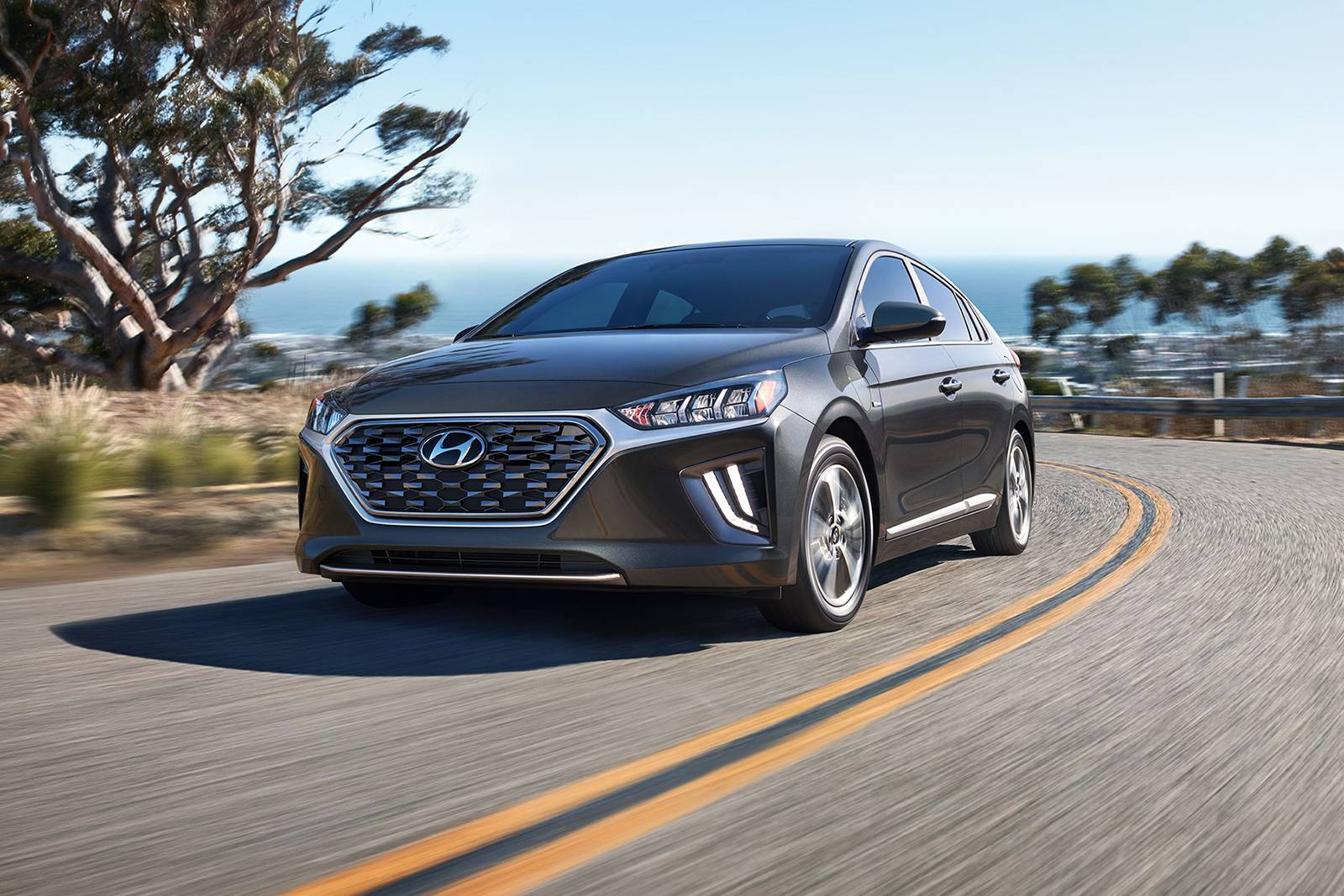
Hyundai Ionic (EV) weighs 3371. So me + 2 bags of dog food, but yes, EVs are heavier. But so is my wife's CRV at 3529. Does the Prius spins the wheels worse than the CRV? Not a chance. It can't even spin em more than the Corolla.

My 2008 Infiniti G35XS weighs 3700 so heavier than those 3, but the G35 is bigger. Ok, so compare it to a very similar sized Tesla Model 3 AWD with about the same range...Tesla comes in at 4250. So 550 more. I'll give you that, but that's like 3 people.

The special tires are mostly for the high torque on most EVs, not all. And for traction and quiet ride. I could put the same performance tires I have on the Infiniti on the Tesla and they would do very well. Would they last as long? Depends on how I drive it. If I drove it like I drive the G35 then no. If I drove it like I drive my wife's CRV then yes.
Remember, the tire people are also the ones that tell you that they can't sell you just 2 tires for your AWD (or even 4WD) vehicle even if within the tolerances. Has to be 4, according to them. Isn't that convenient for them.

If they can sell you more tires, they will. Just a note on that...tire shaving is a real thing and Tire Rack can even tell you where to do it locally. Only about $25-50 + 1 new tire vs buying 4 new tires. Fight the hype.

 
I wonder how many of the folks arguing against EVs using the above arguments drive trucks?

I mean, a Ford Super Duty weighs anywhere from 5600-7500, so there is that....

Just about the only legit argument to be made might be the mining of materials for the batteries, but even then I've seen several studies that it's still far less harm to the environment than status quo over the long term (I think there were a couple mentioned earlier in this very thread).
 
EV cars are definitely 1-2 people heavier, but hybrids really aren't a big diff.
Toyota Corolla XLE (gas) weighs 3045
Toyota Prius XLE (Gas/Electric Hybrid) weighs 3075. That's a bag of dog food with less HP and torque. 20-25 miles more MPG.
Hyundai Ionic (EV) weighs 3371. So me + 2 bags of dog food, but yes, EVs are heavier. But so is my wife's CRV at 3529. Does the Prius spins the wheels worse than the CRV? Not a chance. It can't even spin em more than the Corolla.

My 2008 Infiniti G35XS weighs 3700 so heavier than those 3, but the G35 is bigger. Ok, so compare it to a very similar sized Tesla Model 3 AWD with about the same range...Tesla comes in at 4250. So 550 more. I'll give you that, but that's like 3 people.

The special tires are mostly for the high torque on most EVs, not all. And for traction and quiet ride. I could put the same performance tires I have on the Infiniti on the Tesla and they would do very well. Would they last as long? Depends on how I drive it. If I drove it like I drive the G35 then no. If I drove it like I drive my wife's CRV then yes.
Remember, the tire people are also the ones that tell you that they can't sell you just 2 tires for your AWD (or even 4WD) vehicle even if within the tolerances. Has to be 4, according to them. Isn't that convenient for them.

If they can sell you more tires, they will. Just a note on that...tire shaving is a real thing and Tire Rack can even tell you where to do it locally. Only about $25-50 + 1 new tire vs buying 4 new tires. Fight the hype.

I'll check weights on our 3 vehicles when I get home tonight. Pretty sure the Energi is close to the F150 in weight. Not sure about wifes all wheel drive Rogue.

I was getting my tire data from Electrek.com and Teslarati.com, theres been tire articles on both sites.
Edit: forgot to mention Transport Evolved when listing websites.
 
Last edited:
Ah, pretty sure that did not come from Paul Harvey Rest of the Story. He died in 2009
No sorry didn't mean to insinuate that it was something he said just using his tag line. There is lots more to the story was all I was pointing out. Again, you have to look at the entire cradle to grave picture. Here's the bottom line. If you own a car today then there is zero way its economical to buy a EV car. Its never going to pay for itself. But if you have to buy a car then an EV is certainly a consideration even then its not going to be cost effective. Doing it for the environment is fine but its not a money saver. A new daily driver small car can easily be had for $20K. An electric car is $60K. So lets say gas averages $5/gallon and that other costs are a wash. $40K at $5/gallon is 8000 gallons of gas. Lets say your daily driver only gets 20mpg. The break even point is 160K miles. Shoot if you have a 100 mile rt commute/day it would still take 8 years to pay for itself. Make that 50 miles rt and its 16 years.
 
I thought this was a nice easy to read comparison of equivalence of EV to gasoline cars.


It uses 12 cent per kW residential electricity (close to OR and WA) and calculates an equivalent of $1.22/gallon. Better yet it provides a very simple formula to calculate differences.
That's a handy little document. I sure went about trying to figure this out a hard way a while back. But I came to a similar conclusion. The wife still bought a Subaru, and she loves it.
 
In my fantasy world where I retire early and live happily ever after, I'm going to take up rally racing.
You should check this out:
My grandson and I went there 3 years ago, he drove a BRZ and came away with an appreciation of the old “it’s more fun to drive a slow car fast than a fast car slow” axiom.
Their showroom has an old English Ford Escort, Subies and other prepared rally cars. Cool place to visit even if you don’t drive or take a course.
 
Status
Not open for further replies.
Back
Top