NFR Electric Truck

Non-fishing related
Status
Not open for further replies.
Dude, you could literally say the same about the pro EV crowd. It has to be 100% carbon free, or nothing. Which is why I proposed a hybrid system of effiecient fossil fuel/renewable bio diesel use with electric motors and batteries.
Can you provide any examples? I haven't seen anyone say that. I think hybrid tech is awesome and currently underutilized and will be important in bridging the gap between full internal combustion power and full EV for many people. I have a feeling our next vehicle purchase will be a plug-in hybrid, but I won't completely discount full EV.

I just feel like the anti-EV crowd in this thread seems overly negative and combative. I don't understand completely dismissing or disliking new tech because all the kinks aren't worked out. I also don't think now is the time to be dragging our feet in finding and implementing new energy sources even if the current iterations aren't perfect.
 
My Dad was a was a proponent of hydrogen. These are a modern iteration
 
There is another way. What if you got 100mpg in your truck? No complete infrastructure overhaul, no dependency on elecric grids. Trains have been using this tech for years. A turbine generator charging electric batteries powering and electric motor. Scaled down to non commercial level. Instant acceleration and torque, programed to charge while stopped or coasting or cruising at highway speed with the help of an alternator and generator. Generators could be configured to run on nat gas, gas, diesel, biodiesel, alcohol, whatever we can dream up in the future.

re: micro turbines in cars. Here is an article from 2010, suggesting they may be viable by 2015. Optimistic, ok, but seems the tech isn’t there yet.

 
Last edited:
Did some cleanup of the last two pages. Even if your particular post was fine on its own, its best we erase the direction we were going in.

I'll keep the thread open if the constructive dialogue can continue.
 
I've published in both Science and Nature (in my area of expertise which is not batteries or EV) and you have to remember that there is always an editor, editorial board and reviewers. As hard as editors and reviewers try to be objective they are human and usually under pressure to win research funding. Coming out against politically popular topics and opinions could impact their career.

It is not a coincidence that the highest impact factor researchers (most published in prestigious journals) are also sources of funding for research.

Interesting, where do you got this regarding most published in prestigious journals. Not trying to start something, just really would like to know sources since this is something I have often wondered about, ie, just who has the most Nature, Science, Cell-type publications - hard to come by (my guess is Bert Vogelstein) but I cannot find any list of "highest impact factor researchers" (or other sorts of key words), but by institution, this is what I have found (not a government funding institution/agency in the top 10:


Also, not sure I see the connection between researchers at the funding institutes and where they publish and extramural funding. In the Biomedical field, NIH researchers do not compete for extramural grants, their funding is internal; About 80% of NIH funding goes to extramural research.

Cheers
 
re: micro turbines in cars. Here is an article from 2010, suggesting they may be viable by 2015. Optimistic, ok, but seems the tech isn’t there yet.

I hadn't heard of this until @FontinalisFin mentioned it. Sounds like a very interesting concept. Hopefully they can figure it out.
 
I have often wondered if there was a case for a hybrid platform that is EV with a fuel-powered generator to help with charging. Take the gas engine out of the drivetrain and just have it to charge as needed. VS the most common hybrid method of taking a traditional platform and adding some electric assist. Basically a means to extend range of an EV.

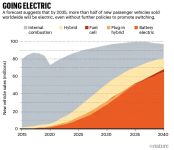
One of the articles Evan posted though indicates hybrid use will grow, but that the market will mostly go to full EV. I imagine hybrid use will be primarily in rural areas that will not support full EV use as quickly.

1647552188936.png
 
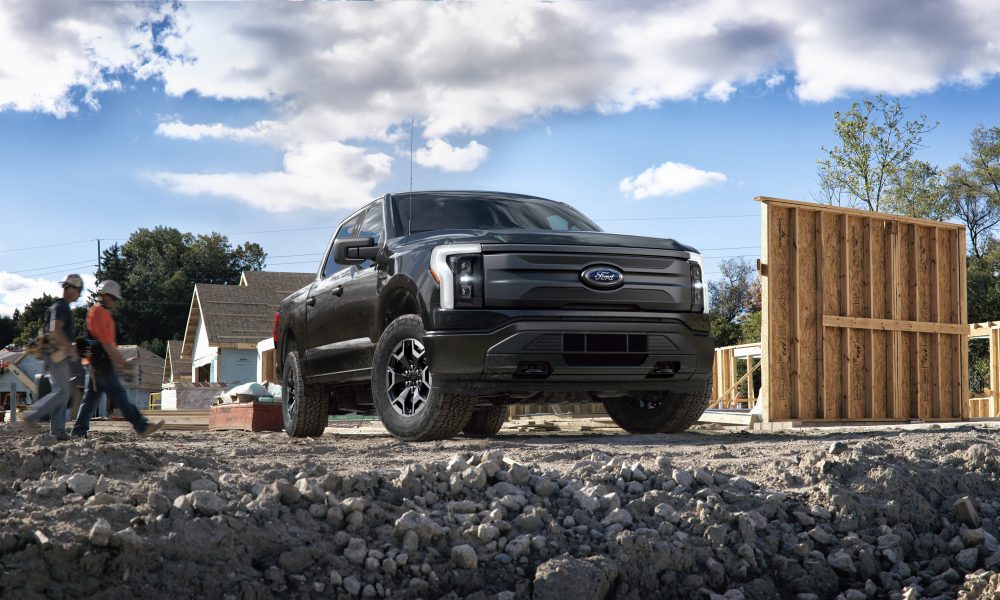
In EV Truck news from Teslarati today:


Teslarati: Ford F-150 Lightning Range, efficiency revealed in Monroney sticker leak.
 
Can you provide any examples? I haven't seen anyone say that. I think hybrid tech is awesome and currently underutilized and will be important in bridging the gap between full internal combustion power and full EV for many people. I have a feeling our next vehicle purchase will be a plug-in hybrid, but I won't completely discount full EV.

I just feel like the anti-EV crowd in this thread seems overly negative and combative. I don't understand completely dismissing or disliking new tech because all the kinks aren't worked out. I also don't think now is the time to be dragging our feet in finding and implementing new energy sources even if the current iterations aren't perfect.
I agree that at the current tech level, the plug in hybrid is probably the best option for a lot of people. I have a BMW i3 REx - it has a gas powered generator to supplement the battery. 80 miles battery with another 60 or so on a 2 gallon gas tank. Works well, mostly as a way to assuage range anxiety.

The development of vehicles like the Prius, as a parallel electric and gas system, without plug in capability, never seemed like a good direction to me.
 
I hadn't heard of this until @FontinalisFin mentioned it. Sounds like a very interesting concept. Hopefully they can figure it out.
I remember as a kid in the 60's that Chrysler and GM both were working on automotive turbines for daily use. ('62-68?) We even had an Indianapolis 500 that had a couple Turtle Turbine race cars in it .

Chrysler built a bunch of turbine cars.(14, i think, is the recorded number) GM was trying to use them in semi trucks. One or two fires later and USG shut them down. Chrysler ended up crushing almost all its cars. Jay Lenos Garage on YouTube has an episode dedicated to them.
 
I have often wondered if there was a case for a hybrid platform that is EV with a fuel-powered generator to help with charging. Take the gas engine out of the drivetrain and just have it to charge as needed. VS the most common hybrid method of taking a traditional platform and adding some electric assist. Basically a means to extend range of an EV.

One of the articles Evan posted though indicates hybrid use will grow, but that the market will mostly go to full EV. I imagine hybrid use will be primarily in rural areas that will not support full EV use as quickly.

View attachment 8981
Fisker tried the engine as generator only in its first iteration. 4cyl GM Iron Duke
 
  • Like
Reactions: smc
YouTube videos are my life coach...
😆
 
A couple weeks ago I was in the GM facility that is making the Hummer EV in Detroit. Pretty impressive facility. They are currently on a 2 year wait list for the vehicle. Still building the production center so all year 1 vehicles will be white only, the paint booth hasn’t been built yet. Base model is $113k…thought it was funny that people are paying that and can’t even get the color of the vehicle they want.
 
I'm headed for a electric bike ,two buddy's have them & changed my opinion on them 100% or a weed wacker motor powered bike ,four stroke of course.
Did you mean electric bike as in bicycle or motorcycle? If its the latter, check out Zero Cycle. If the former, RadPower in Seattle. Both offer excellent products.
 
  • Like
Reactions: Zak
I paid $21k for my 2019 Bolt with 6k miles on it in early 2021.
I paid $16,700 with 22000 miles on my 14 , in 16. Energi's at that time went for almost $39000 new.
What I've noticed over the years is that dealerships around here were dumping PHEV's and regular hybrids as fast as they could, normally taking a loss to do so.
 
A typical EV battery weighs one thousand pounds, about the size of a travel trunk. It contains twenty-five pounds of lithium, sixty pounds of nickel, 44 pounds of manganese, 30 pounds cobalt, 200 pounds of copper, and 400 pounds of aluminum, steel, and plastic. Inside are over 6,000 individual lithium-ion cells.
It should concern you that all those toxic components come from mining. For instance, to manufacture each EV auto battery, you must process 25,000 pounds of brine for the lithium, 30,000 pounds of ore for the cobalt, 5,000 pounds of ore for the nickel, and 25,000 pounds of ore for copper. All told, you dig up 500,000 pounds of the earth's crust for just - one - battery

And then there’s the problem of the battery at the end of it’s life cycle…

but hey, it’s green…right?
@Roper
Here's a few battery weights;

625 kg

In August Tesla announced the P100D with the Ludicrous mode option, a 100 kWh battery with 315 miles (507 km) of range, weighing 625 kg in a 0.40 m³ volume; a density of 160 Wh/kg.
1647646760151.png
https://en.m.wikipedia.org › wiki

Tesla Model S - Wikipedia


Munro Live disassembles a dual-motor, all-wheel-drive version of the car with the Standard Range battery (68 kWh usable / 75.7 kWh total).
...
The 75.7 kWh pack weighs 485 kg. that's the Ford Mach E.

Here's the Porsche Taycan
Power comes from a 93 kWh 630 kg (1,389 lb) lithium-ion battery pack that doubles as a structural chassis component and keeps the center of gravity low.
Battery: 79.2 kWh (71.0 kWh usable) liquid-cooled lithium-ion; or 93.4 kWh (83.7 kWh ...
Layout: Rear-motor, rear-wheel drive (Taycan); Dual-motor, all-wheel drive (Taycan ...
Plug-in charging: 270 kW (800 volt) DC; 150 kW (400 volt) DC using onboard step-up ...
Body style: 4-door sedan/saloon; 5-door shooting brake (Taycan Cross Turismo /

Not denying the weights.

Munro's youtube channel does a good job of breaking down how and what makes up an EV battery .
 
Status
Not open for further replies.
Back
Top