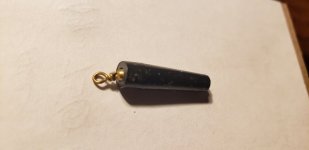
Old406Kid
Legend
I occasionally use these on moving water just as they come and like them for the easy adjustment.I use these, and just glue the slots.... https://www.amazon.com/dp/B00BD571Y4?psc=1&ref=ppx_yo2_dt_b_product_details
Pretty cheap too.


Follow along with the video below to see how to install our site as a web app on your home screen.
Note: This feature may not be available in some browsers.
I occasionally use these on moving water just as they come and like them for the easy adjustment.I use these, and just glue the slots.... https://www.amazon.com/dp/B00BD571Y4?psc=1&ref=ppx_yo2_dt_b_product_details

Sometimes, the indicator will actually come up. The flies if heavy enough will pull the indicator slightly down. When a fish takes and releases that tension, it can cause the bottom of the indicator to move up.They are okay in the river, but I like oblong indicators in stillwater to better reveal those light takes. I actually like the indicator to sit a little bit on its side, ideally. It's usually easy to see when the indicator goes down for a strong take, but if a fish takes and creates some slack, if the indi is partly on its side, when the slack forms below the indi, the indi will move.


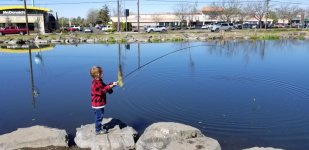
kids like watching bobbers going down, have fun with it. that has been one of my goals as well.Guys, thanks, this helps me up my bobbercator game to help my 8yro enjoy fishing


Hahaha, I haven't used the 2487 for years and when I did it was for a floating something or other. I too like Daiichi 1150's.
RE: the bold and underlined portion of your comments. In another thread, @SashaD's first post included a link to a video from Mad River Outfiters. I watched it and then let Utube roll to their next video, this one:
I cut the loops off my fly lines, not because of them being "Eeeevil" (Love the way Mr. Pallot says "evil") but initially because the leader loop knot would sometimes hang up in the rod tip, I DON'T LIKE THAT. I digress, the video is very interesting to me from the perspective of turning a leader over, energy transfer and mostly, the knot Flip Pallot uses to build his leader.
btw - I agree with you regarding tapered leaders for long leader indicator use. @troutpocket's leader formulas work for me.
Instead of sinking your forceps, make a bunch of depth finders by gluing some foam through the loop on a quarter ounce casting sinker. Hook the foam with your bottom fly and send it down. Less risk of losing your forceps to DJs locker
A couple years ago I started drilling out the indicator pegs. Make the hole big enough to let the swivel pass through. Solves this problem pretty easily.This is an effective rig, but the thing I dislike about this setup is if I want to run the bugs shallow, say 3-5 feet, the swivel or tippet ring prevents me from setting the indi close to the flies.

I drilled out some pegs recently. https://pnwflyfishing.com/forum/ind...ers-whats-your-approach.471/page-5#post-20487A couple years ago I started drilling out the indicator pegs. Make the hole big enough to let the swivel pass through. Solves this problem pretty easily.
 . The tiny ones aren't heavy enough to help sink your flies.
I do use the smallest swivel I can, more for changing setup than anything else. I also cut about 3/16" off the narrow end of the peg for weight reduction since it serves no purpose that I can tell.I drilled out some pegs recently. https://pnwflyfishing.com/forum/ind...ers-whats-your-approach.471/page-5#post-20487
I don't see how you would get it wide enough to fit a swivel through, unless you're using one of those super duper tiny swivels, in which case, I don't see the point. I thought guys like swivels for extra weight, er, I mean to keep your leader from getting all twisty
I was able to get the pegs I drilled out wide enough to fit a surgeon's knot through, which was good enough. Any wider and there'd be no peg left.
Got it, sounds like it functions like a tippet ring for you. What do you use to cut the peg?I do use the smallest swivel I can, more for changing setup than anything else. I also cut about 3/16" off the narrow end of the peg for weight reduction since it serves no purpose that I can tell.
Razor knife on a hard surface. I lose tippet rings too easily, swivels solve the problem.Got it, sounds like it functions like a tippet ring for you. What do you use to cut the peg?

You truly got my attention with the swivel being small enough to go through the drilled-out peg. What size, exactly, are your "smallest" swivels? Thanks.I do use the smallest swivel I can, more for changing setup than anything else. I also cut about 3/16" off the narrow end of the peg for weight reduction since it serves no purpose that I can tell.
I believe they are 14s. The smallest I've found.You truly got my attention with the swivel being small enough to go through the drilled-out peg. What size, exactly, are your "smallest" swivels? Thanks.
I don’t remember where I got these. The ‘zon? I think they had a 20 lb version too. These are allegedly 30 lb.You truly got my attention with the swivel being small enough to go through the drilled-out peg. What size, exactly, are your "smallest" swivels? Thanks.
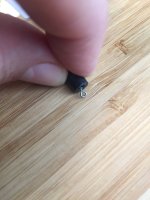
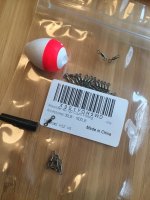
Oh man, if I were a trout I’d bite the shit out of that delicious looking shiny brass swivel.I believe they are 14s. The smallest I've found.

Apparently Phil Rawley, in his new book, talks about having swivels in three colors: helps determine what colour midge to put on and as we know, in BC, one fly per rod.Oh man, if I were a trout I’d bite the shit out of that delicious looking shiny brass swivel.

I especially like this part:
Pretty dang sure we're gonna need a step by step on this one!I guess it's time to post my "Swivelmid" again....good luck if they try messin' with this one.
View attachment 7920
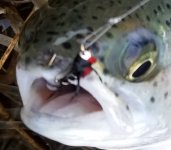
Phil has all sorts of interesting ideas that stem from his BC days.Apparently Phil Rawley, in his new book, talks about having swivels in three colors: helps determine what colour midge to put on and as we know, in BC, one fly per rod.