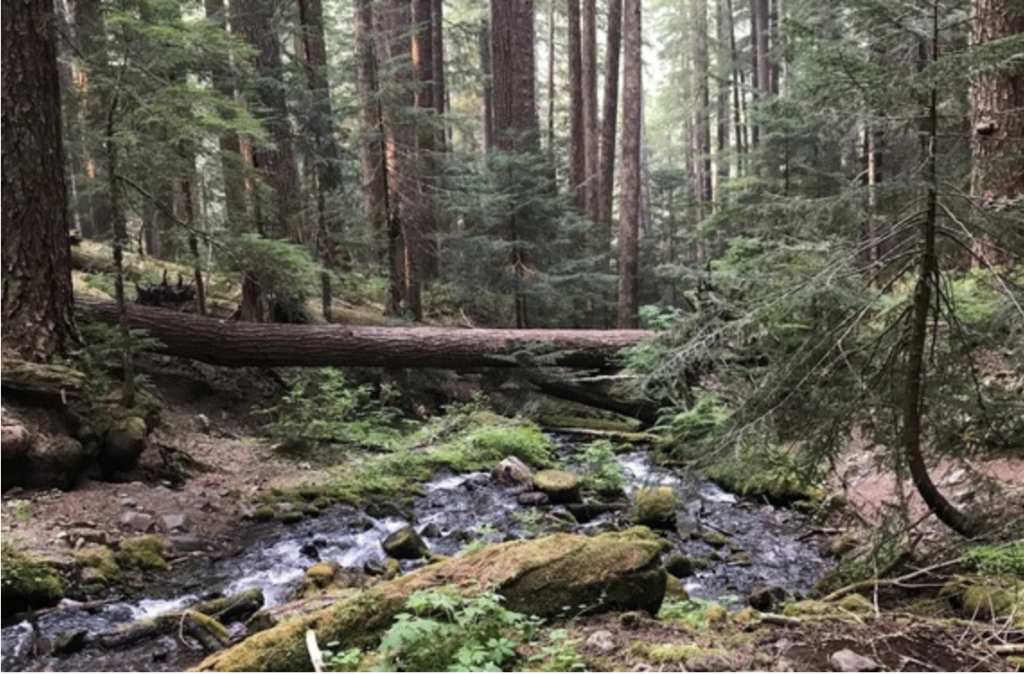
Western Washington Draft Proposal - Cooling Our Streams

RCF

Legend
Forum Supporter
They could do so much more, and they know it.

We, the taxpayers, recently paid bookoo bucks for a state agency to review the science around riparian buffers, or riparian management zones (RMZs) and make recommendations. To protect water quality and the integrity of a stream system, it doesn’t matter whether a given stream is seasonal, perennial, or fish habitat or not. I mean it’s just a theory I guess, but I have a theory that water flows downhill. You want high quality water down low in the river? You gotta protect it up high. But that would cost the timber industry too much, so, they trot out one set of rules for all of us, and a whole ‘nother more permissive set of rules for industry.

WDFW did a good job with this, but the extractive agencies (DNR and ECY) won’t push their science-based recommendations forward. They leave it up to us to do that, and then whittle down the RMZs when they get a crack at it, and spin it as a great thing since it is an incremental improvement over the harmful status quo.

Up with Site Potential Tree Height as the RMZ width! Down with narrow RMZs based on outdated stream characterizations that were developed not on a scientific basis, but to enable industry to extract more and protect less.

 
I'm with Matt. The problem with stuff like this is it isn't supported system wide.
We have critical areas ordinances, streams of statewide significance with designated buffers, and other development regulations already.
These get blown up at other agencies and the local planning level.
How many of us have seen something go in in the floodplain? At one point our city ESTABLISHED the UGA south of town with 1/3 of it being in flood plains or critical areas. Couldn't go north of town 'cause that would require new freeway crossings. BS.
Money, and our system of beliefs in personal property rights, often compete with the fine goals laid out in documents like this. I pray they work better in practice in the forest than similar ideas have in the rural and urban areas.
 
The reason I call it a step forward:

Inter agencies worked together.
There is/are positive step(s), albeit not very big at all, but better than the alternative.
These days, any positive step forwarded is a good thing...
 
The narrow RMZs also often suffer from partial to near complete blowdown. Lots more could be done for certain.
 
On the surface I think cooler streams are a great idea.

But a couple things to think about. And that's all I mean! Something to think about..

1. All regulation causes inflation. This particular regulation may have a negligible impact on timber prices but to expect it to have no impact is not realistic.
Increase in lumber prices makes housing less affordable.

2. This adds a layer of responsibility to governing agencies that are already responsible for
More than they are capable of doing and paying for. Our state is already on the verge of a tax revolt. So adding more taxes to pay for this implementation may be problematic.

Again I am not arguing against the idea. Just throwing these out there as food for thought.
 
On the surface I think cooler streams are a great idea.

But a couple things to think about. And that's all I mean! Something to think about..

1. All regulation causes inflation. This particular regulation may have a negligible impact on timber prices but to expect it to have no impact is not realistic.
Increase in lumber prices makes housing less affordable.

2. This adds a layer of responsibility to governing agencies that are already responsible for
More than they are capable of doing and paying for. Our state is already on the verge of a tax revolt. So adding more taxes to pay for this implementation may be problematic.

Again I am not arguing against the idea. Just throwing these out there as food for thought.
As someone passionate about our native fish, I am willing to pay slightly higher taxes to ensure my kids and grandkids can see and fish for them. As someone who works in construction management, I can assure you that the cost of construction has absolutely nothing to do with Washingtons insane real estate prices.
 
One must look at it several ways. Though we want native, sustainable fish, is it possible anymore? How has past money spent made them so? More taxes to get them? Both state and federal? Like our wonderful carbon offset tax on gas? I can’t afford that one. If you increase sea run fish, should ocean fisheries become restricted for commercial use, otherwise taking our fish?
 
Protecting watersheds on private land is a near impossible dynamic tension. On public lands it should be easy, if the collective "we" want it so. Just declare environmental preservation as the management priority and go from there. Private forest land needs to be slightly profitable. If it isn't, then owners sell it off for development for strip malls, parking lots, and McMansions. Development is death to watershed productivity. Under efforts like Timber, Fish, & Wildlife (TFW) and the Forest & Fish initiative, land remains in forestry, and watershed retain a lot of ecological integrity, enough that they are fish friendly, especially compared to the alternative. Admittedly, it's an imperfect balance. I'm a lot happier driving up river valleys and seeing forested hillsides rather than developed ones.
 
I grew up around urban streams. They were really cool spots until the engineers showed up. I know a couple of spots in California where they have started restoration. This creek was my stomping grounds when I was going to community college. I am not impressed with the design of the restoration facilities (those damn engineers again), but they work.

Why do we have to make EVERYTHING we build UGLY???

https://www.alamedacreek.org/restoration-progress/projects-by-stream.php

https://caltrout.org/projects/sunol-valley-fish-passage-project-alameda-creek/


I have a forester friend that also runs an orchard. He said, if he did the orchard management practices on his forested lands he would be thrown in jail.

Riparian buffers on timberlands are not really an issue.

We need to restore the landscape and natural areas where we live day to day.
 
I know this will likely be an unpopular take in this era of inflation, but i don't think wood should be cheap. I don't think food should be cheap either. We make them cheap by betraying the land that provides them. We clear cut and monocrop the land until it can no longer function. The question of "how much buffer should we not clear cut?" is so insufficient. We gotta stop clear cutting the hills. It's ruining their ability to provide timber. It's ruining the marriage between our trees and marine nitrogen. It's ruins the mycelium and that doesn't just recover. How do we get to the point of selectively logging exclusively?

Just thoughts from a dude who spends as much time walking across landslides as he does fishing the rivers cutting through them.
 
I know this will likely be an unpopular take in this era of inflation, but i don't think wood should be cheap. I don't think food should be cheap either. We make them cheap by betraying the land that provides them. We clear cut and monocrop the land until it can no longer function. The question of "how much buffer should we not clear cut?" is so insufficient. We gotta stop clear cutting the hills. It's ruining their ability to provide timber. It's ruining the marriage between our trees and marine nitrogen. It's ruins the mycelium and that doesn't just recover. How do we get to the point of selectively logging exclusively?

Just thoughts from a dude who spends as much time walking across landslides as he does fishing the rivers cutting through them.
My forest economics professor agreed with you. His comment was "there is no problem in forestry, that cannot be fixed with a $15 two by four. We actually in real dollars hit $15 in the late 70's. That environmental President Jimmy Carter ORDERED the Forest Service to increase their cut above the sustain yield level! People like cheap wood and food.

I hate clear-cutting and have turned down jobs and refused to return to National Forests that clear-cut. However, in the Douglas-Fir region not clear cutting leads to a different ecosystem that is historically on the land. We could burn down our Douglas-Fir forests to get the same effect and are doing a very good job of that these days. Currently we are "burning down" more trees than we are growing on the National Forests. We are below sustain yield.

But that doesn't matter. It is that we are changing the forested ecosystems so dramatically that we are pushing lots of species to extinction via fire. Likewise we are creating brush fields that will last for hundreds of years.

Here is a consensus forestry view. Granted it has a California bias, since it is a bunch of UC Berkeley foresters.

https://camp70foresters.substack.com/

Future generations will curse us for what we have done to the public lands in the west over the past 40 years.

Never was a fan of the UW forestry school, but you should look at taking a silviculture class on western Washington forested ecosystems.

The University of Washington (UW) offers forest silviculture through its School of Environmental and Forest Sciences (SEFS), particularly within the Sustainable Forest Management (SFM) option in the Environmental Science and Resource Management (ESRM) major, focusing on managing forests for various goals, with practical applications at Pack Forest, covering topics like stand dynamics, restoration, and mimicking natural processes for healthy forests.

Key Aspects of UW's Silviculture Program:


  • Focus: The program teaches the science and art of controlling forest establishment, composition, and growth, integrating research with hands-on experience.
  • Curriculum: Includes core concepts of silvics (forest ecology) and their application in treatments like thinning, site preparation, and reforestation.
  • Practical Learning: Students gain experience at UW's Pack Forest, a research and demonstration forest, applying principles to real-world scenarios.
 
Riparian buffers on timberlands are not really an issue.
Seriously? I'm not following this idea. Are you saying that cutting every stem along a stream in a zone equal to a mature tree (say, about 100 feet) causes no measurable adverse effects within the stream channel? Cutting is followed by yarding which results in massive soil disturbance which is a shortcut to significant erosion, at least in west side forests and streams.
 
@Salmo_g , thanks for asking that question. I didn't have the energy to respond when I read that.
 
Small timber farmers can get paid for the trees inside the buffer by selling a 40 year easement through the Forest Reparian Easement Program (FREP). The increase in buffers would just increase the amount that the small forest owner would get paid this way rather than by harvesting. It's the sort of deal that only would be applied to forestry/ ag. IMO.
I spend a good bit of time hunting and helping a tree farming friend in the SW WA/ Wilapa hills area. From what I have seen, stream buffers often have the largest trees since many were not harvested the last time the trees were cut. They're often the only areas of a tree farm where there is a diversity of tree species and where the tress have been allowed to grow to actual large sizes. They're often the most unique places in a land of monoculture fir. They provide habitat for species other than fish that is not found in other parts of the "farm".
One other thing that I have noted is that the small forest owners and smaller forestry companies in that area tend to have a larger diversity of tree species on their parcels. They often appear tohave the longer rotations as well, or at least have portions of their holdings where there are larger trees when compared to Weyco, Sierra, Green Diamond etc. I am not sure as to all the reasons. I think that some of it is the ground that they have been able to purchase being lower and closer to the road. They may not spray as much or get the best planting crews and end up with less of a monoculture because of it. The landowned by the small timber owners is generally a much more natural environment than what a what you see on Weyco etc. For that reason, I like FREP. If it gives those small owners an incentive to keep owning the land, I think it's a win.

Sorry for the thread drift.
 
A decade or so ago, my wife and I volunteered to be lake stewards for a local lake. Weekly we would take temps at various depths, measure water quality, obtain samples of algae, count numbers of others on the lake, wind speed, etc. Easy Peasy.

But before the county let us loose, we had to attend several environmental educational courses. The one course that stuck with me most was one about how to support inlets/outlets and the streams and keeping water temps lower. Those bushes, low hanging limbs and overhead tree covers are so important. Each little bit adds up to maintaining/improving our stream systems. And here I got educated about streams by being a lake steward. Who da thunk?
 
Back
Top