Wanting to get into SRC

Hey all, first post here. Longtime fisherman, new here from New Jersey. I'm currently living in the Blaine/Birch Bay area through at least June. I loved walking the beach for fluke in NJ, as well as searching the hilly streams for brookies and wild browns, so walking the beach and being able to possibly catch sea run trout is a mind blowing thought.

From my research, if they're around this time of year they typically come in pretty close. Is there a chance of catching them in any decent numbers this far north? From what I've read, seems there's plenty of them in Puget Sound, but I'm not seeing any information from my immediate area.

Not looking for anyone's spots, truly I'd rather find them myself or at least join a trip with others to learn, but wanted to know if walking the beach at high tide in this area would be worth it or not. Any information you guys could pass on would be awesome. Hope to meet some of you on the water someday!
 
Welcome! Others will probably chime in with much better detail, but generally North Sound sea runs and South Sound sea runs have pretty divergent behavior, with the takeaway that there are better year round prospects in the South Sound (and Hood Canal). I think those North Sound fish start outmigrating from rivers (especially the “S rivers”)to salt later in the spring whereas the smaller-stream spawning South Sound cutts are more erratic and salt heavy in their schedule.
 
Last edited:
Short course in coastal cutts:
Rocky beaches near a small creek because cutts stay close to home.
Avoid north sound beaches in winter because the cutts are in the skagit or north stilly or sky.
Watch the wind. 15 mph and less fine. Gusts to 35 mph (like today) are a problem.
Welcome! Others will probably chime in with much better detail, but generally North Sound sea runs and South Sound sea runs have pretty divergent behavior, with the takeaway that there are better year round prospects in the South Sound (and Hood Canal). I think those North Sound fish start outmigrating from rivers (especially the “S rivers”)to salt later in the spring whereas the smaller-stream spawning South Sound cutts are more erratic and salt heavy in their schedule.
Appreciate the info guys. Sounds like up where I am this is more of a spring timeline. That makes sense that further north they are in bigger river systems.
 
I'm a bit south of you and fish beaches around the "S" rivers and usually don't bother until April/May. For your area, there's not a lot of info out there as far as internet information goes. Like others have said, find creek mouths and focus around those areas with cobble like rocks, eel grass beds, or oysters.
 
Hey there, we are likely neighbors lol. If I were in your shoes, being here until June, I'd put my focus on bass at Terrell, wiser and the local ponds. Floatation really helps at the first 2 but not necessary. They will be waking up early this year and can be excellent fishing.

If you're intent on SRC, my dad and uncles used to do well trolling herring or spoons on the outside edge of kelp beds local to our area, primarily in summer. That's the closest I've come to figuring out a consistent way to catch them in the salt north of bellingham.

Beach fishing is much more productive with a drive down to whidbey Island, and the further south the better in my experience. The beaches are more conducive to fly fishing and there are more fish in the salt.
 
If you find yourself at a beach with SRC ingredients (Pebbles, moving water, a small creek dumping into the salt) I think it is still worth trying around now even in North Sound. There is a central/north sound beach that I fish that fishes completely differently to the typical May-August peak times I hear most people characterize North Sound as. It follows ingredients more along the lines of fish showing up around March, remaining small in numbers until around late June, peaking in November, petering out in December. I haven't caught any but absolutely have seen fish around January-February. I am sure the beach I fish isn't unique in having a different timing to other North Sound beaches.
 
For clarity, I do think the "North Sound" has fish. Blaine/birch bay isn't in the sound and it's not terribly close.

Head south or get fresh! It's the whatcom county way.
 
If you find yourself at a beach with SRC ingredients (Pebbles, moving water, a small creek dumping into the salt) I think it is still worth trying around now even in North Sound. There is a central/north sound beach that I fish that fishes completely differently to the typical May-August peak times I hear most people characterize North Sound as. It follows ingredients more along the lines of fish showing up around March, remaining small in numbers until around late June, peaking in November, petering out in December. I haven't caught any but absolutely have seen fish around January-February. I am sure the beach I fish isn't unique in having a different timing to other North Sound beaches.

When people talk about May-August for north sound cutts, they are generally describing early entry fish that utilize large rivers for spawning. Creek spawners in the north / central like you describe act a lot like their late entry cousins down south and on the canal.
SF
 
To understand our anadromous coastal cutthroat I think it is best to start with their basic biology. They are essentially small low gradient creek fish. It is this habitat where they spawn and where they rear until large enough to make the transition to saltwater (usually after 2 years of freshwater rearing. If you look at a map of the north Sound region you will see that the vast majority of those small low gradient streams are tributaries to the larger north rivers. Thus, the vast majority of that region's cutthroat will be spawning and rearing in those mainstem rivers with relatively few using independent streams. This is further complicated by the behavior of the sub-adults (that is those fish that are older than the smolts but younger than the mature adults. Those large river systems abundant mainstem freshwater habitat supply safe over-wintering habitat (found in the lower main stem areas) when food resources tend to be limited on marine beaches.

For cutthroat those advantages of those mainstem overwintering habitat is such that it attracts sub-adult fish from not only those that originated in those basins but those from nearby independent drainages. The result is that the only independent creek origin cutts will be the relatively small number of adult fish using those systems. Over the next few months, a persist angler may find encounter the occasional post spawn adult near the mouth of those creeks. But keep in mind that those fish are but a tiny fraction of the total cutthroat population of that region. This contrasts with the situation in south Sound where the fish from those kinds of systems represents the vast majority of the region's cutthroat.

The end result is the two regions tend to produce two very distinct fisheries with the south sound having essentially year-round marine fisheries while those to the north also having potentially year-round fishing but roughly half of the fishing will be in freshwater. That northern river freshwater fishing can be specular at times.

My recommendation is to understand and appreciate the differences in the fish and the fishery they support for each of the distinct regions in the sound.

Curt
 
Really appreciate all the responses here, guys! So much valuable information. I definitely intend to crawl around some of the creeks when they open in my area, as well as drive south to the sound for some of that action. I have no problem driving a decent distance for fish too, used to shoot up 5 hours to Upstate NY for 8 hours of lake trout fishing and then drove 5 hours back in the same day.

Hey there, we are likely neighbors lol. If I were in your shoes, being here until June, I'd put my focus on bass at Terrell, wiser and the local ponds. Floatation really helps at the first 2 but not necessary. They will be waking up early this year and can be excellent fishing.

If you're intent on SRC, my dad and uncles used to do well trolling herring or spoons on the outside edge of kelp beds local to our area, primarily in summer. That's the closest I've come to figuring out a consistent way to catch them in the salt north of bellingham.

Beach fishing is much more productive with a drive down to whidbey Island, and the further south the better in my experience. The beaches are more conducive to fly fishing and there are more fish in the salt.
I did visit Terrell already once, nice spot. I don't have flotation out here yet, so I'm stuck on the bank for now, but I intend to fish that wuite often as it's just a short drive from me.


To understand our anadromous coastal cutthroat I think it is best to start with their basic biology. They are essentially small low gradient creek fish. It is this habitat where they spawn and where they rear until large enough to make the transition to saltwater (usually after 2 years of freshwater rearing. If you look at a map of the north Sound region you will see that the vast majority of those small low gradient streams are tributaries to the larger north rivers. Thus, the vast majority of that region's cutthroat will be spawning and rearing in those mainstem rivers with relatively few using independent streams. This is further complicated by the behavior of the sub-adults (that is those fish that are older than the smolts but younger than the mature adults. Those large river systems abundant mainstem freshwater habitat supply safe over-wintering habitat (found in the lower main stem areas) when food resources tend to be limited on marine beaches.

For cutthroat those advantages of those mainstem overwintering habitat is such that it attracts sub-adult fish from not only those that originated in those basins but those from nearby independent drainages. The result is that the only independent creek origin cutts will be the relatively small number of adult fish using those systems. Over the next few months, a persist angler may find encounter the occasional post spawn adult near the mouth of those creeks. But keep in mind that those fish are but a tiny fraction of the total cutthroat population of that region. This contrasts with the situation in south Sound where the fish from those kinds of systems represents the vast majority of the region's cutthroat.

The end result is the two regions tend to produce two very distinct fisheries with the south sound having essentially year-round marine fisheries while those to the north also having potentially year-round fishing but roughly half of the fishing will be in freshwater. That northern river freshwater fishing can be specular at times.

My recommendation is to understand and appreciate the differences in the fish and the fishery they support for each of the distinct regions in the sound.

Curt
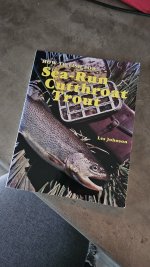
I really appreciate this breakdown! Definitely need to read up more on them to get a better understanding. Any primary resources you'd recommend?
 
I was in your shoes a decade or so ago. Grew up in the northeast. Had done a lot of conventional and fly fishing and rivers and creeks back east and various places in the west I have lived.

I can’t help you much up where you’re located. I’m down in Kitsap County. I will just say saltwater SRC is a super unique fishery that’s worth experiencing, especially if your time in western WA is limited. Even if it means driving south some ways this time of year to consistently find them. Get some the recommended books and make good use the search function on this site too. This site (well, its predecessor) helped me tons when I first got started. Good luck!
 
I send a DM with some info I have but also a great place to dig for north sound info is from Scott and Brandon at Confluence in Bellingham.
Second going down to confluence and plunking down some dough. Brandon knows his beach fishing better than anyone else I know from up here and they are both Grade A dudes
Appreciate this tip guys, always looking for local shops. I'll definitely head down there and stock up on some things!
 
Back
Top