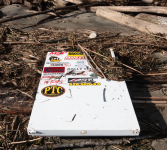
Pretty much only going to beaches with fridge doors on them these days

Follow along with the video below to see how to install our site as a web app on your home screen.
Note: This feature may not be available in some browsers.


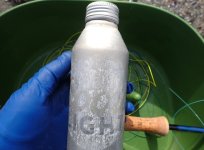
Obviously from a Hotroder’s garage! Wonder what kind of bad ass car shared the garage with this beer cooler??Pretty much only going to beaches with fridge doors on them these days
View attachment 178473

Obviously from a Hotroder’s garage! Wonder what kind of bad ass car shared the garage with this beer cooler??

Nice ride! Is it yours?
Nice ride! Is it yours?



i was on the deschutes years ago, towards the end of a 4 day trip, and beers started showing up floating right by me. i collected maybe 5 or 6, and i am pretty sure they were consumed that evening. i think it was deemed some kind of msg from the universe....I love this thread. I grew up walking the beach in the San Juan’s I can’t remember all the strange things I’ve seen. There used to be allot more interesting stuff on the high tide line. Most of it was trash but as a kid I really liked finding the treasure. Found quite a few dead animals from porpoises to seals and jellyfish. Actually found quite a few live animals in trouble like sea pups. Early eighties there was a lot of stuff from the rivers like corkies and spin n glows. We used to find quite a few unopened beers and six packs. The score at 15. You also used to find quite a few log boom chains and log boom logs with the hole for the chains. The beach seems pretty lacking now days for good or bad. Probably good.
I love seeing the finds on this thread.

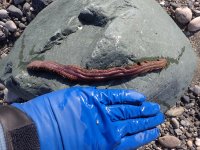
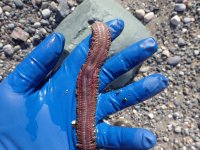
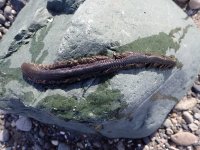
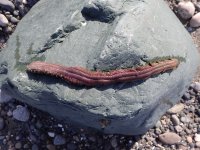


Hi Brian,I assume this is a type of polychaete worm. If so, what kind? When I picked it up, two sections fell off of it even though it was alive. Is the falling apart due to it possibly spawning?
I put the sections together and measured them against my rod butt. I’d guess it was 13-14”. This is the largest section.
Can’t say I’ve ever seen one this large or thick in the sound. Might have to up may marine worm pattern game!
View attachment 179136View attachment 179137View attachment 179138View attachment 179139
Hi Brian,
That is the giant pile worm or giant clam worm. The old scientific name was Nereis brandti. That genus has been better defined in recent research papers and this species has been placed in a new genus, Neanthes, though there is some discussion of moving it into yet another genus Alitta (see here). This is the largest polychaete species in the PNW, reaching up to 5' in length (and as thick around as your thumb). For most of their lives, they are detritivores consuming organic material and waste algae, such as Ulva = sea lettuce, buried in the mud or fine sand. On full moon nights in spring and early summer, mature males and females emerge from their burrows and swarm in the water column. They are quite fast swimmers for benthic worms at between 1 and 1.5mph. Males are attracted to pheromones released by gravid females. When two individuals of opposite sexes come in contact, the bodies of each worm rupture to release clouds of eggs and sperm. The adult worms then die and those are what you have found. The close proximity of egg and sperm release maximizes fertilization rates (it is a bit ocean and dilution can be a real problem for fertilization success (see pinto abalone...)). The fertilized eggs hatch and the larvae spend several weeks in the water column, added several segments. They then settle onto the bottom for the next year or more before being drawn up into the water column themselves on a full moon night to continue the cycle.
Steve


That fly is gonna be hell to cast. But it must be like one of these to the fish! Who could resist?Steve,
Great info as always. 5’ long marine worm…. Wow, mind blown!
SF
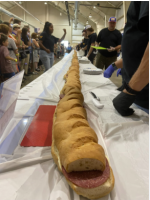

The fly? Or the sandwich?@Stonedfish has way too much time on his hands...so expect a prototype soon...
View attachment 180324
So you're saying giant benthic marine pile worms get to first base and then mutually EXPLODE?When two individuals of opposite sexes come in contact, the bodies of each worm rupture to release clouds of eggs and sperm. The adult worms then die .......

If you want a real mind-blower, look up the Bobbit worm (see here and here). They can reach 10' in length buried into the sediment. They are ambush hunters which can explosively strike a passing fish with its powerful jaws and pull the fish down its burrow to be devoured.Steve,
Great info as always. 5’ long marine worm…. Wow, mind blown!
SF