
Navigation
Install the app
How to install the app on iOS
Follow along with the video below to see how to install our site as a web app on your home screen.
Note: This feature may not be available in some browsers.
More options
Style variation
You are using an out of date browser. It may not display this or other websites correctly.
You should upgrade or use an alternative browser.
You should upgrade or use an alternative browser.
Strange, weird or odd or whatever beach finds thread….
- Thread starter Stonedfish
- Start date
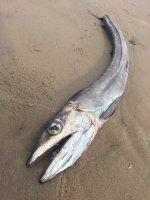
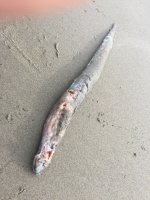
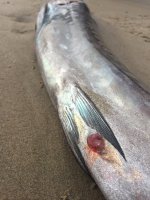

Great finds. I always wanted a skull off a Lancetfish.
SF
SF

That would be cool. We don’t come down here that often, less than once a year on average but this is the second time I’ve found one washed up on a spring break trip. Is it a common thing here? Or just a coincidence that I’m basically 2 for 2 the last 2 springs?Great finds. I always wanted a skull off a Lancetfish.
SF
That would be cool. We don’t come down here that often, less than once a year on average but this is the second time I’ve found one washed up on a spring break trip. Is it a common thing here? Or just a coincidence that I’m basically 2 for 2 the last 2 springs?
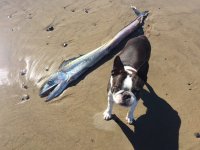
^April 12 2021. We didn’t come down here last year. This year’s was bigger—on April 13 2023.
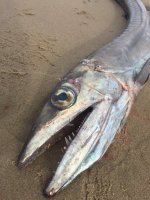
That would be cool. We don’t come down here that often, less than once a year on average but this is the second time I’ve found one washed up on a spring break trip. Is it a common thing here? Or just a coincidence that I’m basically 2 for 2 the last 2 springs?
No idea how common they are, though I’ve never seen one in person.
Now you need to find an Oarfish.

SF
Well I have also witnessed in person 2 perfect MLB ballgames. And I haven’t been that THAT many baseball games. So I will be on the lookout for that oarfish.No idea how common they are, though I’ve never seen one in person.
Now you need to find an Oarfish.
SF

Let me know next time you're going to a Mariners game please!Well I have also witnessed in person 2 perfect MLB ballgames. And I haven’t been that THAT many baseball games. So I will be on the lookout for that oarfish.

Well one was Phil Humber white Sox v Mariners, April 2012. Might not go the way you want.Let me know next time you're going to a Mariners game please!

Great pictures of a long-snouted lancet fish. I looked into their biology a bit more and they are simultaneous hermaphrodites, producing sperm and eggs simultaneously - probably a good strategy for a midwater fish - love anyone you run into...
Those long dagger-like front teeth would penetrate into the body of its prey. Those closely-spaced rear teeth would act like shears to cut out a chunk. Their jaws remind of the jaws of a wahoo. See https://www.coolwaterphoto.com/image/I0000CUMzYALVUs8.
Steve
Those long dagger-like front teeth would penetrate into the body of its prey. Those closely-spaced rear teeth would act like shears to cut out a chunk. Their jaws remind of the jaws of a wahoo. See https://www.coolwaterphoto.com/image/I0000CUMzYALVUs8.
Steve
Last edited:
Great pictures of a long-snouted lancet fish. I looked into their biology a bit more and they are simultaneous hermaphrodites, producing sperm and eggs simultaneously - probably a good strategy for a midwater fish - love anyone you run into...
Those long dagger-like front teeth would penetrate into the body of its prey. Those closely-spaced rear teeth would act like shears to cut out a chunk. Their jaws remind of the jaws of a wahoo. See https://www.coolwaterphoto.com/image/I0000CUMzYALVUs8.
Steve
Steve,
Any idea what might causes the Lancet mortality?
Possibly post spawn effects, environmental issues?
SF
Hi SF,Steve,
Any idea what might causes the Lancet mortality?
Possibly post spawn effects, environmental issues?
SF
No one really knows where/when/how they reproduce. The odds are that they are not semelparous (only because there are relatively few fish species that are semelparous, Pacific salmon and lampreys as notable local exceptions).
I had the same question about how this individual might have ended up on an Oregon beach. Given the time of year, my initial thought was that this fish might have been cold-shocked when it wandered into nearshore coastal water. I even found a short scientific paper that articulated this hypothesis: "the main reason why lancet fish approach the coast and experience unusual mortality is that sharp cold spells that follow La Nina events in the North Pacific Ocean".
But there are problems with that hypothesis (theirs and mine) While they are primarily found in the epipelagic and mesopelagic zones (down to 6000ft) in the tropics and subtropics, they have been caught off Alaska and even in the Bering Sea during NOAA ground fish surveys. They are often caught as bycatch in tuna longlines which aren't that deep (60ish feet). And some fish have even been caught from the surf zone on hook and line. So, they are appear to be quite cold-adapted, not truly unusual in coastal waters, and unlikely to have been cold-shocked in shallow coastal Oregon waters this time of year.
From the picture, there appears to be some damage in the caudal peduncle area. So, a predator like a shark or a seal might have grabbed it but later lost it and the carcass washed up. But the damage could have occurred after the fish died by scavengers. The fact that it still has its eyes would indicate that the carcass is relatively fresh as gulls just love to pluck out eyeballs...
Best I can do...
Steve
Hi SF,
No one really knows where/when/how they reproduce. The odds are that they are not semelparous (only because there are relatively few fish species that are semelparous, Pacific salmon and lampreys as notable local exceptions).
I had the same question about how this individual might have ended up on an Oregon beach. Given the time of year, my initial thought was that this fish might have been cold-shocked when it wandered into nearshore coastal water. I even found a short scientific paper that articulated this hypothesis: "the main reason why lancet fish approach the coast and experience unusual mortality is that sharp cold spells that follow La Nina events in the North Pacific Ocean".
But there are problems with that hypothesis (theirs and mine) While they are primarily found in the epipelagic and mesopelagic zones (down to 6000ft) in the tropics and subtropics, they have been caught off Alaska and even in the Bering Sea during NOAA ground fish surveys. They are often caught as bycatch in tuna longlines which aren't that deep (60ish feet). And some fish have even been caught from the surf zone on hook and line. So, they are appear to be quite cold-adapted, not truly unusual in coastal waters, and unlikely to have been cold-shocked in shallow coastal Oregon waters this time of year.
From the picture, there appears to be some damage in the caudal peduncle area. So, a predator like a shark or a seal might have grabbed it but later lost it and the carcass washed up. But the damage could have occurred after the fish died by scavengers. The fact that it still has its eyes would indicate that the carcass is relatively fresh as gulls just love to pluck out eyeballs...
Best I can do...
Steve
Steve,
As always, I appreciate your input.
SF
That is the 2021 fish with the damage to the caudal peduncle. It was probably from a gull, which I witnessed pecking that spot. The 2023 fish was apparently undamaged other than the lamprey—which was the gulls’ first choice on that carcass. Maybe lamprey sashimi is tastier than lancetfish sashimi. My 4 year old wanted to know why it died, too. I said, maybe old age. And the jaws remind me of wahoo, as well. In fact, the 2021 fish, I didn’t know what it was and a first thought before I had a chance to look it up was “emaciated wahoo.”Hi SF,
No one really knows where/when/how they reproduce. The odds are that they are not semelparous (only because there are relatively few fish species that are semelparous, Pacific salmon and lampreys as notable local exceptions).
I had the same question about how this individual might have ended up on an Oregon beach. Given the time of year, my initial thought was that this fish might have been cold-shocked when it wandered into nearshore coastal water. I even found a short scientific paper that articulated this hypothesis: "the main reason why lancet fish approach the coast and experience unusual mortality is that sharp cold spells that follow La Nina events in the North Pacific Ocean".
But there are problems with that hypothesis (theirs and mine) While they are primarily found in the epipelagic and mesopelagic zones (down to 6000ft) in the tropics and subtropics, they have been caught off Alaska and even in the Bering Sea during NOAA ground fish surveys. They are often caught as bycatch in tuna longlines which aren't that deep (60ish feet). And some fish have even been caught from the surf zone on hook and line. So, they are appear to be quite cold-adapted, not truly unusual in coastal waters, and unlikely to have been cold-shocked in shallow coastal Oregon waters this time of year.
From the picture, there appears to be some damage in the caudal peduncle area. So, a predator like a shark or a seal might have grabbed it but later lost it and the carcass washed up. But the damage could have occurred after the fish died by scavengers. The fact that it still has its eyes would indicate that the carcass is relatively fresh as gulls just love to pluck out eyeballs...
Best I can do...
Steve

Thanks for the additional information!


I guess with the news of lancetfish on the coast and shad in Lake Washington I should not have been too surprised to encounter this dragonfruit today. Although it looks like it could be on the beach, this was actually in a parking lot median at my local Safeway. The produce equivalent of the Atlantic Salmon net pen escape? Luckily some type of "land lamprey" took a chomp out if it before it could reproduce.

Sorry, Ernie. Facts are facts. Saw it. What did I miss. They had the fresh produce barge that came in weekly.
More from you?
More from you?
Marry had been in the rest home for a long time and knew most of the people men and women. She walked around in her bath coat all day long. She saw a new guy name Bob and ran over to him and said supper sex and open up her bath coat, Bob looked at her body and said ” I’ll take the soup “ I’m sorry I though I was in the humor thread. And I don’t know how to move it.
Last edited:

That's alright, people come here looking for weird stuff and this does not seem at all out of place.Marry had been in the rest home for a long time and knew most of the people men and women. She walked around in her bath coat all day long. She saw a new guy name Bob and ran over to him and said supper sex and open up her bath coat, Bob looked at her body and said ” I’ll take the soup “ I’m sorry I though I was in the humor thread. And I don’t know how to move it.
Not sure what this bone is from. Maybe a deer or cow?
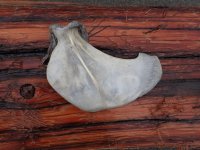
This was kind of creepy. Kind of looks like a dog?

and this was just a couple feet from it.

SF
This was kind of creepy. Kind of looks like a dog?
and this was just a couple feet from it.
SF