I’m with you on that Steve , I didn’t even know they could jumpWow, I would never have believed that a Apostichopus (formerly Parastichopus) californicus sea cucumber could have chased down that jig. Normally, they mop up detritus from the sea floor.
Steve

Navigation
Install the app
How to install the app on iOS
Follow along with the video below to see how to install our site as a web app on your home screen.
Note: This feature may not be available in some browsers.
More options
Style variation
You are using an out of date browser. It may not display this or other websites correctly.
You should upgrade or use an alternative browser.
You should upgrade or use an alternative browser.
Strange, weird or odd or whatever beach finds thread….
- Thread starter Stonedfish
- Start date
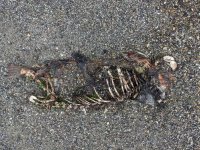

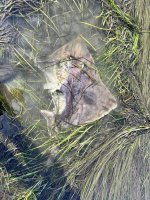
Hey, we're staying at a beach house on Whidbey, and my sister found this washed up on the beach. These are the only 2 pics she snapped. Said it was maybe 4-5 inches long. Not sure if the pics are even right side up!
What the heck is it??
(I'm leaning towards marine iquana rather than fish, but I didn't see it in person)
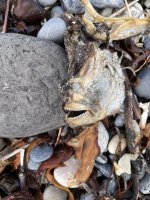
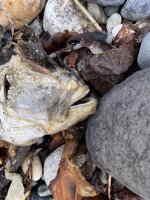
What the heck is it??
(I'm leaning towards marine iquana rather than fish, but I didn't see it in person)

Its some kind of fish, probably a deep living species?Hey, we're staying at a beach house on Whidbey, and my sister found this washed up on the beach. These are the only 2 pics she snapped. Said it was maybe 4-5 inches long. Not sure if the pics are even right side up!
What the heck is it??
(I'm leaning towards marine iquana rather than fish, but I didn't see it in person)
View attachment 18004
View attachment 18005

I certainly believe that it is a fish carcass, probably a fllounder, most likely a starry flounder. 1) Why is it a fish? In all non-bony fish vertebrates, there is an upper jaw (maxilla, generally fused to the skull) and a lower jaw (mandible). But in bony fish, there are two upper jaw bones, the maxilla and the premaxilla and a single lower jaw bone. If you look at the upper jaw, you can see the maxilla (with its ventral end reaching the mandible) and the T-shaped premaxilla [seen better in the lower image] (with teeth. In advanced bony fish, the premaxilla slides down the skull to protrude out as the jaws open). 2) Why is it a flounder? We are looking at the "blind side" of the flounder. There is no eye and the color is very light; you can see from the skin in the upper image that the other side of the flounder is pigmented. 3) Why a starry flounder? First, they are quite common. Second, you can see star-shaped clusters ('plates" = tubercles) of modified scales on the head and on the dark skin. Are the teeth consistent with this identification? Yes, larger starry flounders often nip off the exposed siphons of clams; this requires teeth that can cut the tough siphons and these fit that requirement.Hey, we're staying at a beach house on Whidbey, and my sister found this washed up on the beach. These are the only 2 pics she snapped. Said it was maybe 4-5 inches long. Not sure if the pics are even right side up!
What the heck is it??
(I'm leaning towards marine iquana rather than fish, but I didn't see it in person)
View attachment 18004
View attachment 18005
Steve
Sweet, thanks for that analysis - makes perfect sense! The bizarre teeth threw us, although the lack of an eye should have tipped me off. I've never seen a flounder bigger than about a dinner plate, tho, so I didn't know they even had teeth.I certainly believe that it is a fish carcass, probably a fllounder, most likely a starry flounder. 1) Why is it a fish? In all non-bony fish vertebrates, there is an upper jaw (maxilla, generally fused to the skull) and a lower jaw (mandible). But in bony fish, there are two upper jaw bones, the maxilla and the premaxilla and a single lower jaw bone. If you look at the upper jaw, you can see the maxilla (with its ventral end reaching the mandible) and the T-shaped premaxilla [seen better in the lower image] (with teeth. In advanced bony fish, the premaxilla slides down the skull to protrude out as the jaws open). 2) Why is it a flounder? We are looking at the "blind side" of the flounder. There is no eye and the color is very light; you can see from the skin in the upper image that the other side of the flounder is pigmented. 3) Why a starry flounder? First, they are quite common. Second, you can see star-shaped clusters ('plates" = tubercles) of modified scales on the head and on the dark skin. Are the teeth consistent with this identification? Yes, larger starry flounders often nip off the exposed siphons of clams; this requires teeth that can cut the tough siphons and these fit that requirement.
Steve
I told them I had no idea, but I knew who would!
*edit/update
I came across a smaller one, definitely a starry flounder, and it did have those same teeth, in miniature - so probably spot on with the ID, @Cabezon
Must have been a BIG flounder!
Last edited:

I took advantage of the -4 low tide today on the beach I grew up on. As I reflected on it, I don't think I've really walked it on low tide since I moved out of my parents house. One of the coolest things that always facilitated me was the how the beach is relatively flat then 300 yards out from the house there is a shelf that drops of down to 90 feet. Today at minus 4 I could have waded out maybe knee deep to the edge of the abyss.
The other cool thing is I see (and hear) life on the beach. Sea anemones all over the place, more than I have ever seen. Hundreds of moonsnale collars. Lots of clams squirting their water. I've seen this beach go through a lot of changes. It seems like it's coming back to life. A few pictures from my walk.
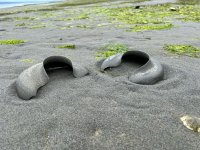
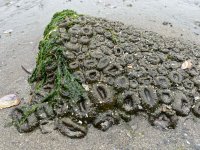

The other cool thing is I see (and hear) life on the beach. Sea anemones all over the place, more than I have ever seen. Hundreds of moonsnale collars. Lots of clams squirting their water. I've seen this beach go through a lot of changes. It seems like it's coming back to life. A few pictures from my walk.

Dr. Magill
Life of the Party
Does it vibrate???
It’s a make-up brush.Does it vibrate???
Dr. Magill
Life of the Party
^I think it’s a legit question
I agree, I just thought I knew what it was, and I could not see any place to recharge the batter.^I think it’s a legit question

biomass
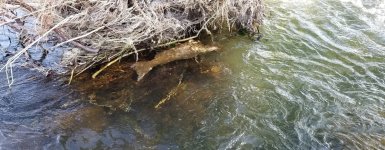



Dude was just trying to make it to the nesting grounds
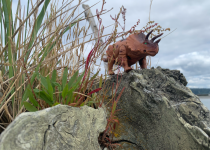
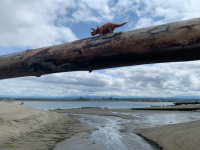

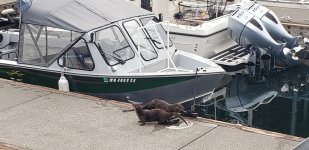
in the spirit of dead things....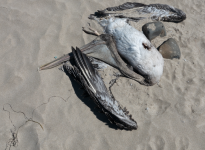

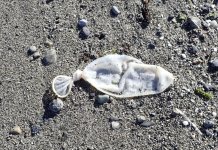
I found this today on a MA 10 beach.
It appears to be some type of squid. Perhaps it died after spawning?
It has a very unusual ribbed mantle and appears to have no fin or tentacles. Maybe it swims by blowing water out of the ring at the end?
Found not to far from Schlong beach.
SF
It appears to be some type of squid. Perhaps it died after spawning?
It has a very unusual ribbed mantle and appears to have no fin or tentacles. Maybe it swims by blowing water out of the ring at the end?
Found not to far from Schlong beach.
SF

Someone really needed a bobber. Blow it up and tie it in a knot. Problem solved.I found this today on a MA 10 beach.
It appears to be some type of squid. Perhaps it died after spawning?
It has a very unusual ribbed mantle and appears to have no fin or tentacles. Maybe it swims by blowing water out of the ring at the end?
Found not to far from Schlong beach.
SF
View attachment 26513


