Stilli opener delayed

While this closure is depressing it hardly a surprise. Lots of talk during NOF about the lack of funds for monitoring Chinook impacts in various fisheries is the freshwater seasons in the "S" rivers highlighted. Is this a budget decision or as the announcement suggest a response to in river impacts?

It is amazing how concerned the "department of Salmon" is about Chinook impacts in freshwater fisheries, especially when comparison how their in-season managed performed in the Puget Sound marine fisheries targeting in 2026.

The estimated impacts compared to the planned allowed impacts for the 2026 fisheries; below are the percent of the guidelines achieved (estimated/planned times 100)

MA 10 winter season 103%
MA 11 winter season 125%
MA 5 summer season 139%
MA 6 summer season 102%
MA 7 summer season 99%
Tulalip Bubble 99%
MA 9 summer season 131%
MA 10 summer season 121%
MA 11 June season 86%
MA 11 July/August season 128%

All the above fisheries expect the MA 6 summer fisheries were expected to impact significant numbers of Stillaguamish Chinook.

While it is not surprising to see some variance in the success of limiting impacts to guidelines one would hope the average would be 100% plus or minus. Clearly WDFW performance in limiting Chinooks impacts in those marine fisheries indicates a lesser concern in directed marine Chinook impacts than incidental impacts in the Stillaguamish freshwater seasons.

Curt
 
It so depressing how far the Stilly has fallen from its glory years especially considering my comrades and I were just throwing bugs there and not even attempting chinook on purpose. Why would you go for brown chinook when you can get a steelhead?

To make matters worse, one of my best friends just bought an amazing place near the river up there, walking distance to stretch far from the road. We can only fish it Nov-Jan. Amazing trouty water….
 
While this closure is depressing it hardly a surprise. Lots of talk during NOF about the lack of funds for monitoring Chinook impacts in various fisheries is the freshwater seasons in the "S" rivers highlighted. Is this a budget decision or as the announcement suggest a response to in river impacts?

It is amazing how concerned the "department of Salmon" is about Chinook impacts in freshwater fisheries, especially when comparison how their in-season managed performed in the Puget Sound marine fisheries targeting in 2026.

The estimated impacts compared to the planned allowed impacts for the 2026 fisheries; below are the percent of the guidelines achieved (estimated/planned times 100)

MA 10 winter season 103%
MA 11 winter season 125%
MA 5 summer season 139%
MA 6 summer season 102%
MA 7 summer season 99%
Tulalip Bubble 99%
MA 9 summer season 131%
MA 10 summer season 121%
MA 11 June season 86%
MA 11 July/August season 128%

All the above fisheries expect the MA 6 summer fisheries were expected to impact significant numbers of Stillaguamish Chinook.

While it is not surprising to see some variance in the success of limiting impacts to guidelines one would hope the average would be 100% plus or minus. Clearly WDFW performance in limiting Chinooks impacts in those marine fisheries indicates a lesser concern in directed marine Chinook impacts than incidental impacts in the Stillaguamish freshwater seasons.

Curt
Hi Curt, longtime enjoyer of your experienced insights on the forum. If one wanted to stay informed and educate themselves on why these closures were happening where would you point them? Does WDFW publish these %'s somewhere? Are they mandated as a publicly funded agency to publish all data used for these decisions somewhere?
 
While this closure is depressing it hardly a surprise. Lots of talk during NOF about the lack of funds for monitoring Chinook impacts in various fisheries is the freshwater seasons in the "S" rivers highlighted. Is this a budget decision or as the announcement suggest a response to in river impacts?

It is amazing how concerned the "department of Salmon" is about Chinook impacts in freshwater fisheries, especially when comparison how their in-season managed performed in the Puget Sound marine fisheries targeting in 2026.

The estimated impacts compared to the planned allowed impacts for the 2026 fisheries; below are the percent of the guidelines achieved (estimated/planned times 100)

MA 10 winter season 103%
MA 11 winter season 125%
MA 5 summer season 139%
MA 6 summer season 102%
MA 7 summer season 99%
Tulalip Bubble 99%
MA 9 summer season 131%
MA 10 summer season 121%
MA 11 June season 86%
MA 11 July/August season 128%

All the above fisheries expect the MA 6 summer fisheries were expected to impact significant numbers of Stillaguamish Chinook.

While it is not surprising to see some variance in the success of limiting impacts to guidelines one would hope the average would be 100% plus or minus. Clearly WDFW performance in limiting Chinooks impacts in those marine fisheries indicates a lesser concern in directed marine Chinook impacts than incidental impacts in the Stillaguamish freshwater seasons.

Curt
IMO, just shows that WDFW has become irrelevant to trout and steelhead fishing and management in rivers these days. I think this goes back to the 2015 season on the Stilly.

Screw WDFW. Fly fishing with 5 or 6 wt rods and floating lines won't harm any Chinook. I'm planning to be up north next week, and I'm thinking that between Occupy Skagit (V 2.0) and Jim Traver's Main Amendment, the Stilly is open to CNR trout fishing with species appropriate equipment. WDFW also closed the Satsop River (one of the better SRC streams on the south OP) to all fishing to protect Chinook (non ESA - listed). They have also done this on the Humptulips - another excellent SRC stream - with no regard for trout fishing that does not harm Chinook. What's next? A statewide closure of all rivers to protect Chinook because salmon should only be killed by fishing in salt water?
 
Most of the Chinooks spawning is the forks which begins in late August and continues through October and at least some years in early November.

Curt
Curt, I haven't spent time in the area for a lot of years, but my recollection is that the Chinook were pretty much finished with spawning by the end of September, same as the Skagit. Not the case?
 
Curt, I haven't spent time in the area for a lot of years, but my recollection is that the Chinook were pretty much finished with spawning by the end of September, same as the Skagit. Not the case?
Spawn timing of Summer Chinook in both the Skagit and NF Stillaguamish currently takes place from early September through October with the spawn timing in the NF confused by significant numbers of out of basin strays spawning in the system. For example a decade ago roughly 100 Skagit Marblemount hatchery springs (August spawners) were spawning in the NF Stilli. The fall Chinook in both basins spawn into early November (later than the Green River Fall type chinook typically of most of Puget Sound basins).

The spawn timing is also being affected by climate change. One example is the spring Chinook of the upper Sauk. 40 years ago, their spawn timing was from late July to early September. Today that spawn timing is from late August to mid-October. This is being driven in at least part by the additional adult, egg, and alvins from elevated stream temperatures (thresholds mid 60s).
 
On snohomish basin chinook spawning. I was told the snoqualmie origin fish are more threatened and spawn later. I have caught chinook in the snohomish basin in late September.

That being said, they have. Utilized selective openings in the past to mitigate impact (up to the pilchuck, confluence, snoqualmie mid october...).

It seems like there were options to hold a september in river coho fishery for "the biggest run in 20 years" and chose not too.
 
The Snoqualmie Chinook maybe the last spawning Chinook in Puget Sound. It is not uncommon to see significant spawning in November, and I have seen active spawning Chinook in the upper Snoqualmie as late as Xmas.

To put that late timing spawning in perspective in the Snohomish wild coho spawning peak is around Thanksgiving with some spawning continuing well into February.

curt
 
While this closure is depressing it hardly a surprise. Lots of talk during NOF about the lack of funds for monitoring Chinook impacts in various fisheries is the freshwater seasons in the "S" rivers highlighted. Is this a budget decision or as the announcement suggest a response to in river impacts?

It is amazing how concerned the "department of Salmon" is about Chinook impacts in freshwater fisheries, especially when comparison how their in-season managed performed in the Puget Sound marine fisheries targeting in 2026.

The estimated impacts compared to the planned allowed impacts for the 2026 fisheries; below are the percent of the guidelines achieved (estimated/planned times 100)

MA 10 winter season 103%
MA 11 winter season 125%
MA 5 summer season 139%
MA 6 summer season 102%
MA 7 summer season 99%
Tulalip Bubble 99%
MA 9 summer season 131%
MA 10 summer season 121%
MA 11 June season 86%
MA 11 July/August season 128%

All the above fisheries expect the MA 6 summer fisheries were expected to impact significant numbers of Stillaguamish Chinook.

While it is not surprising to see some variance in the success of limiting impacts to guidelines one would hope the average would be 100% plus or minus. Clearly WDFW performance in limiting Chinooks impacts in those marine fisheries indicates a lesser concern in directed marine Chinook impacts than incidental impacts in the Stillaguamish freshwater seasons.

Curt
Evidently the coho-catch in MA9 and 8-2 is at ~300% of projections and
While this closure is depressing it hardly a surprise. Lots of talk during NOF about the lack of funds for monitoring Chinook impacts in various fisheries is the freshwater seasons in the "S" rivers highlighted. Is this a budget decision or as the announcement suggest a response to in river impacts?

It is amazing how concerned the "department of Salmon" is about Chinook impacts in freshwater fisheries, especially when comparison how their in-season managed performed in the Puget Sound marine fisheries targeting in 2026.

The estimated impacts compared to the planned allowed impacts for the 2026 fisheries; below are the percent of the guidelines achieved (estimated/planned times 100)

MA 10 winter season 103%
MA 11 winter season 125%
MA 5 summer season 139%
MA 6 summer season 102%
MA 7 summer season 99%
Tulalip Bubble 99%
MA 9 summer season 131%
MA 10 summer season 121%
MA 11 June season 86%
MA 11 July/August season 128%

All the above fisheries expect the MA 6 summer fisheries were expected to impact significant numbers of Stillaguamish Chinook.

While it is not surprising to see some variance in the success of limiting impacts to guidelines one would hope the average would be 100% plus or minus. Clearly WDFW performance in limiting Chinooks impacts in those marine fisheries indicates a lesser concern in directed marine Chinook impacts than incidental impacts in the Stillaguamish freshwater seasons.

Curt
Evidently the catch rate in Marine Area 9 and Marine Area 8-2 are at something like 300% of projections, so both are reverting to a one fish limit starting tomorrow. Instantly, non-mark selective fishing in Marine area 9 just started today.
 
Evidently the coho-catch in MA9 and 8-2 is at ~300% of projections and
Evidently the catch rate in Marine Area 9 and Marine Area 8-2 are at something like 300% of projections, so both are reverting to a one fish limit starting tomorrow. Instantly, non-mark selective fishing in Marine area 9 just started today.
Its almost like when opportunities are limited, systems that are open get extra pressure.

I sure wouldn't be hitting the chuck at this point if there was a decent river option.
 
Evidently the coho-catch in MA9 and 8-2 is at ~300% of projections and
Evidently the catch rate in Marine Area 9 and Marine Area 8-2 are at something like 300% of projections, so both are reverting to a one fish limit starting tomorrow. Instantly, non-mark selective fishing in Marine area 9 just started today.
If 9 is non-selective today, it would have been nice to let all the guys sorting through wild fish to find hatchery brats.
 
Looks like I might be off for a day and the non-selective rags might go inside with the reduction in the limit. Definitely think it would make vastly more sense to go with a "retain your limit and go home" system.
 
This shit is maddening because I just don’t see it. I’ve been fishing the NF nearly every day since the opener. Floating when I can and walking in when time is limited after work or early mornings and at minimum just snooping around checking on things as I drive to and from town. I haven’t seen a single chinook roll and I also haven’t rowed over any (and I’m looking in every run as I row around) or seen any chinook redds between cicero and town. I saw some small schools pinks, and just this week finally saw some coho splashing in select spots. I haven’t seen anyone flailing away at salmon at all. No spin rods spotted. Everyone I’ve crossed paths with has been legitimately out there fly fishing for trout. Sad state of affairs that somehow this is the result.

Leave the river closed all spring and summer and don’t bother to respond to reports of poaching while it’s getting hammered by spin fishermen, bait and people legitimately clubbing chinook. Then open it for fly fishing for trout for a couple weeks and be all up in everyone’s ass and close it anyway. Very WA.

I like the bit “Limited allowable take of Chinook in the Stillaguamish system necessitates this action to preserve coho opportunity later in the fall.” You mean after the kings have spawned and are circling an eddy or dead on a gravel bar? At this point counting spawned out carcs in the bushes against our take wouldn’t even surprise me. I guess it also is worth pointing out that since there isn’t ever a coho salmon kill fishery on the NF what they really mean is NF gamefish season is being sacrificed so someone on the mainstem can knock a coho on the head next month. It’s almost like you’re supposed to read that and feel grateful.

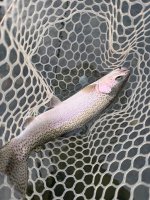
Was anyone on the river on 9/7 between about 5 and 8pm? Was that ant fall not absolutely biblical? I’d rather relive that night one more time then kill another salmon in the next decade. Zoom in to see my secret chinook fly.

IMG_4334.jpeg
 
Back
Top