Rogue Wave

I worked on a 78 ft lobster boat in Oct-Nov 1982 out of Kewalo Basin, HI. We motored for 4 days to get 600 miles NW of Kauai to Moro Reef. We got caught in Hurricane Iwa (which decimated Kauai). We had 50 ft waves and 100 mph winds for 4 or 5 days. One of the instruments in the pilot house showed the contour of the sea bottom and wave height so we knew exactly how big the waves were. My first and last trip to the lobster grounds.
 
My dad worked at Boeing on the hydrofoil program in engineering and testing. Part of the ship's certification was how it did in bad weather. When the Strait of Juan De Fuca would reach at least Sea State 5 they would head out and put it through its paces. He thoroughly loved doing that. Others on the hydrofoil - lets say they were not green due to envy...
 
Last edited:
Oh, definitely sick as a dog.

When I was on the Gilliland, (T-AKR 298, 950 feet), we had rough seas and a storm departing Charleston. Smoothed out for about 4 days, then as, we got closer to the Straits of Gibraltar things started getting sloppy again. About a day before crossing into the Med., we hit 14-20 foot seas. That was no fun. Stayed in staterooms with guard rails pulled up on our bunks.

Merchie crew with decades of experience told us that the biggest they'd ever seen were in the 30 -35 foot range. Then there were always rumors of the ULCC, (Ultra Large Crude Carrier,1400 ft) that broke in half between two rogue waves.

About 2015 I had a bottom fish charter on Fury out of Westport. Took us 3 days of trying to get out over the bar, the waves were that large. You could lose a charter boat between swells , then catch sight of them as they came up and you went into the bowl yourself.
 
I have endured 30+ feet swells in the Drake Passage between the Strait of Magellan and the Antarctic Peninsula in the 219’-long ice-strengthened research vessel Polar Duke. It took us 5 days to complete that crossing to the Antarctic. We traveled from Punta Arenas, Chile to the Palmer Station (a major research lab for the U.S.’s National Science Foundation’s Antarctic Program) about halfway down the Antarctic Peninsula. My cabinmate, one of the support staff for us “beakers” (the scientific researchers), spent the whole crossing semi-comatose and medicated in his bunk. I hadn’t taken any preparations myself and as soon as we left the shelter of the Strait of Magellan to the swells of the open South Atlantic, I was praying to the porcelain god…

The research team that I was with spent 2.5 months in Antarctica between early March to late May (late fall in the Antarctic). Every few days, the Polar Duke would steam off station to explore a different area. We would deploy otter trawls to collect live fish for our research into the biochemistry and molecular biology of icefishes. The first item on the agenda after boarding was always the safety briefing. It became my habit to head right to the galley afterward and put on a scopolamine patch before even heading to my berth. The galley had a basket with various sea-sickness medications available. The Norwegian crew were into lots of odiferous fishy products like fish pastes and shrimp pastes; even with the patch, my stomach was pretty queasy most of the time near the galley. My dinner often consisted of a bag of popcorn that I would microwave long after the rest of the crew had eaten and the odors in the galley had dissipated. But I wouldn’t have missed this adventure for anything.

Late afternoon on one stormy trip, the captain ordered us to stop fishing when waves started breaking over the back deck while retrieving the net and processing the catch. The ship then took refuge in the lee of an island to get out of the worst of the wave action but we were still rocking and rolling. I settled into my cabin to sleep. About 2AM and with the ship pitching like mad, the ship’s alarm went off. Crap. Under these circumstances, we were supposed to don our survival suits and head to the assembly area. Suit doned, I and the other scientists milled around at the assembly area while the crew investigated. The cause of the alarm was a smoldering fire in one of the portable labs; the space heater that had been attached to the wall had broken free and fallen onto a rubber mat on the floor. The heater set off a smoky, but not dangerous fire. With the all-clear, we could all head back to our cabins and try to get back to sleep (after the adrenaline levels dropped below DEFCON 1).

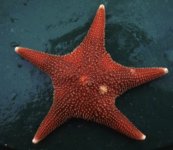
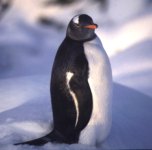
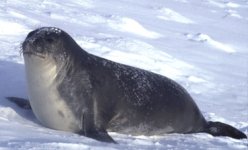
I saw some amazing things on that trip: weird marine creatures, whales, seals, and penguins.
Antarctic starfishNew.jpg
Gentoo penguinNew.jpg
Weddell sealNew.jpg

And in an ironic postscript, the trip back from Palmer Station to Punta Arenas, Chile was incredibly benign – 5-foot seas for most of the trip.

Steve
 
The brain tries hard to correlate sea sickness with sensory conditions. The sense of smell is a huge one. Personally, I know the aroma of frozen squid mixed with diesel fumes just has to be the reason! 😉
 
The brain tries hard to correlate sea sickness with sensory conditions. The sense of smell is a huge one. Personally, I know the aroma of frozen squid mixed with diesel fumes just has to be the reason! 😉


I'm sure if I went out tuna fishing in those old slow diesel charter boats I would have puked 10x more, come to a stop and get that big breath of diesel fuel! Makes my stomach churn just thinking about it.

Gotta love a fast twin 4 strokes on a modern hull like Nick's!
 
My first time fishing the pacific on my kayak was pretty gnarly. We beach launched from Cape Kiwanda/ Pacific City right in front of the Pelican brewpub.

Got pushed back onto the beach twice. So went further over to the right by where the dories launch and finally got out and past the rock. Once out there it was slightly sporty. We were getting 9-12 swells at about 30 seconds.
So, what would happen is you'd hit the top of a swell and see the rest of the group, then slide into the trough and have nothing but water all around you, like being in a bowl. Then the swell would pic you back up and you'd go through the whole process all over again. Meanwhile , the surfers were getting pounded into the sand close to the beach.
Over the radio came the call to head west out farther into open water. Once we did that, things calmed down and we could fish without a lot of worries.
Finally about 1 PM, we headed back in with only 3 of us huli ' ing /having a yard sale when we got to the beach.
My take away from that day is : 1)Read the local swell reports before loading up.
2) If I'm going off the beach , I'm going to stand there and watch the swells for a while first. If i dont feel it, I'm not going.
 
My friends just invited me up to AK to help pilot their 58’ tender. They got a herring contract and will be doing 24hr runs from Sitka to Petersburg, off-loading and running 24 hrs back to Sitka. Rinse and repeat for however long the opening lasts; last year, it was three weeks. The first few wheel watches would be fun but I was already questioning if I wanted to give up three weeks of spring fishing. After reading this thread, and remembering some pretty rough seas on previous trips, 🤢, I am leaning towards trout fishing!
 
Last edited:
What the hell Sue, you're RETIRED, are ya crazy! 🤪
Crazy for not going trout fishing or for turning down endless hours of wheelwatch, LOL?! I haven’t been out to Sitka so I would like to see it sometime. And, I thought that maybe I could stay and fish somewhere in the SE afterwards. OR… I could just fly up and fish somewhere cool instead of hauling stinky herring to the cannery, LOL!
 
Crazy for not going trout fishing or for turning down endless hours of wheelwatch, LOL?! I haven’t been out to Sitka so I would like to see it sometime. And, I thought that maybe I could stay and fish somewhere in the SE afterwards. OR… I could just fly up and fish somewhere cool instead of hauling stinky herring to the cannery, LOL!
Wow! Stinky is not the right word Sue. The process may have changed, but the tenders used to tie-up for three days at the cannery without refrigeration. The idea was to let the herring roe skeins 'firm up' in the carcass before hand removal. Mushy carcass, firm skeins, higher cannery productivity. Yum!
 
I've been on submarine in the North Atlantic at 400ft below the surface and was rocking and rolling. Needless to say we did not come up periscope depth to get news and sports that day.
 
Back
Top