

castsN2trees
The fish are calling...
In order to give the most complete (and hopefully objective) overview of the Simms Flyweight Access Wading Boot, I am going to address various aspects of my experience with these boots. They have a couple very strong positives and also some very strong negatives to discuss:
The Claim: Simms markets this boot with (2) main selling points:
1) They claim they are " optimize for best-in-class wet-slip resistance" with "relentless grip" and
2) They claim they are a lightweight "lean, mean trail to river machine"
The Cost: These boots retail for $279.99 a pair. Simms claims they can be resoled for a $100 fee.
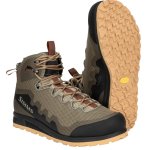
Below is a stock photo of these boots:
My Experience:
I have been using these boots exclusively over the last 11 mos or so. I originally ordered them in a size 10. However, these boots run small, and are extremely tight in the forefoot. So much so, it was painful and I could not wear them with waders and socks. In January, I ordered a pair in size 11. These fit much better with waders. As a result, I used the size 10 boots for summer/wet wading and the size 11 boots for winter/waders.
On the Size 11 boots, I have about 7mos worth of wear.
On the Size 10 boots, I have about 4mos worth of wear.
Keep in mind, this is about $600 worth of wading boots.
Initial Impressions:
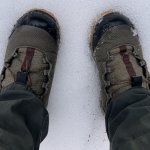
For wading boots, these are pretty good looking boots. And they are light. Very light. More like Basketball shoe weight instead of boot weight. But there were some initial concerns as well. The shoestrings are thin and cheap. These are the cheapest shoestrings I ever remember seeing in any pair of shoes I've purchased. And they are short. Way too short. This is perhaps the most unnecessary shortcoming of the boots. (When the size boots were less than 2mos old, I busted both laces on the same day.)
Support/Comfort:
One of the biggest positives about these boots is the Ankle Support. Surprisingly, it is MUCH better than many boots I've owned, especially considering how light these boots are and how horrible the shoestrings are. Whether wading in the river, or trekking in the woods, the ankle support is consistent. As far as comfort goes, the lightness of these boots is a strong positive, the narrowness of the forefoot is a strong negative. The insoles, like all wading boots are subpar, and I always replace them with aftermarket insoles. With aftermarket insoles, these boots are very comfortable and very supportive.
Grip:
This is the main selling point of this boot. When the boots are new, the grip is decent. It is not mindblowing. It is not "felt-like." It is decent. However, as the boots wear, the grip deteriorates very quickly. With only 5mos on the size 11 boots, I felt like I was trying to walk around on greased bowling balls. It is accurate to say that after 3 or 4mos, I lost confidence in grip of both pair of boots.
Foot Protection:
With a lot of wading boots being built like modified ski boots, foot protection isn't anything I've paid attention to a long time. Not since I bought a cheap pair of Orvis boots 15yrs ago, have I had any issue with any wading boot protecting my feet during wading....Not until the Simms Flyweight Boots. These boots do not provide adequate foot protection during wading and your feet get beat up a little bit each trip, especially on the inside and outside of the forefoot.
Durability:
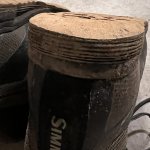
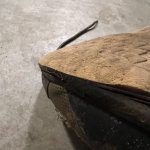
Durability is the biggest failure of these boots. If the durability was any worse, these boots would be water-soluble. They start to break down immediately with use. These boots are cheaply made from cheap materials. And not just the sole. The upper wears out. I have never wore out any pair of shoes in the inside of the forefoot, but I'm convinced in a couple of months these boots would wear all the way through. I will not find out, because the soles are completely wore out. The idea of sending these back to Simms to have them resoled is a joke because the uppers are already falling apart/trashed after 7mos.
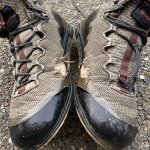
Side note: I have had boots (hiking) resoled before. The problem that can occur is that when they stretch the upper over the last to sew in the new soles, you end up with a tighter fit. I had this happen on a pair of Allan Edmonds boots. If they had an issue, I'd hate to see what problems Simms had when they tried to resole these boots (but then again, it might be funny to see them try).
On the size 10 boots, there is significant wear on the inside of the ankles... this is just odd as you'd think the wear would be consistent between the 2 pairs.
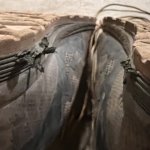
To Simms credit, even on their website, they hint that the sole durability may not be up to par (even though they claim they are "tested for durability and suitable for most anglers). However, the sole is just part of the durabilty problem. The whole shoe is a durability problem.
Odd issue:
The most perplexing issue with these boots is the metal ring that your waders hook into. I have never had waders "unhook" from boots like I've had with these. They won't stay hooked for any amount of time. I'm constantly rehooking the waders, or trying to fish my flyline out of the hook on the bottom of my waders. It is almost as if Simms completely skipped any testing on these boots, and decided to spend all the R/D money on marketing to convince consumers these were revolutionary boots. Too bad. This is such an obvious and avoidable issue.
Overall Verdict:
The positives (ankle support/ walking comfort) are not enough to offset the deal-breaker negatives (durability, foot protection, cheap components). I would not purchase them again. Less than 1yr in, 2 pair of busted boots, $600 spent and I'm going to be looking for a new pair of boots this week (not Simms Flyweights).
On the Bright Side:
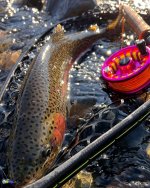
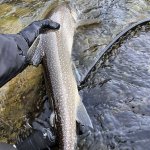
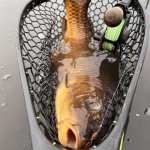
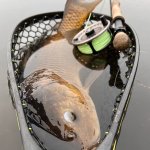
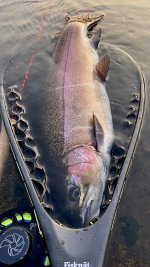
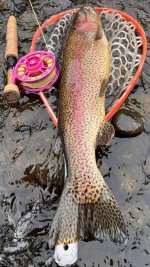
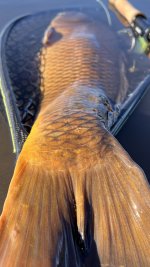
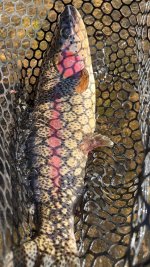
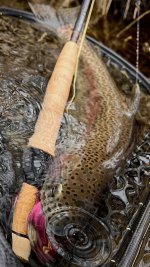
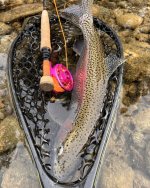
Here's some photos of fish I caught in these boots over the last 11 months.
The Claim: Simms markets this boot with (2) main selling points:
1) They claim they are " optimize for best-in-class wet-slip resistance" with "relentless grip" and
2) They claim they are a lightweight "lean, mean trail to river machine"
The Cost: These boots retail for $279.99 a pair. Simms claims they can be resoled for a $100 fee.
Below is a stock photo of these boots:
My Experience:
I have been using these boots exclusively over the last 11 mos or so. I originally ordered them in a size 10. However, these boots run small, and are extremely tight in the forefoot. So much so, it was painful and I could not wear them with waders and socks. In January, I ordered a pair in size 11. These fit much better with waders. As a result, I used the size 10 boots for summer/wet wading and the size 11 boots for winter/waders.
On the Size 11 boots, I have about 7mos worth of wear.
On the Size 10 boots, I have about 4mos worth of wear.
Keep in mind, this is about $600 worth of wading boots.
Initial Impressions:
For wading boots, these are pretty good looking boots. And they are light. Very light. More like Basketball shoe weight instead of boot weight. But there were some initial concerns as well. The shoestrings are thin and cheap. These are the cheapest shoestrings I ever remember seeing in any pair of shoes I've purchased. And they are short. Way too short. This is perhaps the most unnecessary shortcoming of the boots. (When the size boots were less than 2mos old, I busted both laces on the same day.)
Support/Comfort:
One of the biggest positives about these boots is the Ankle Support. Surprisingly, it is MUCH better than many boots I've owned, especially considering how light these boots are and how horrible the shoestrings are. Whether wading in the river, or trekking in the woods, the ankle support is consistent. As far as comfort goes, the lightness of these boots is a strong positive, the narrowness of the forefoot is a strong negative. The insoles, like all wading boots are subpar, and I always replace them with aftermarket insoles. With aftermarket insoles, these boots are very comfortable and very supportive.
Grip:
This is the main selling point of this boot. When the boots are new, the grip is decent. It is not mindblowing. It is not "felt-like." It is decent. However, as the boots wear, the grip deteriorates very quickly. With only 5mos on the size 11 boots, I felt like I was trying to walk around on greased bowling balls. It is accurate to say that after 3 or 4mos, I lost confidence in grip of both pair of boots.
Foot Protection:
With a lot of wading boots being built like modified ski boots, foot protection isn't anything I've paid attention to a long time. Not since I bought a cheap pair of Orvis boots 15yrs ago, have I had any issue with any wading boot protecting my feet during wading....Not until the Simms Flyweight Boots. These boots do not provide adequate foot protection during wading and your feet get beat up a little bit each trip, especially on the inside and outside of the forefoot.
Durability:
Durability is the biggest failure of these boots. If the durability was any worse, these boots would be water-soluble. They start to break down immediately with use. These boots are cheaply made from cheap materials. And not just the sole. The upper wears out. I have never wore out any pair of shoes in the inside of the forefoot, but I'm convinced in a couple of months these boots would wear all the way through. I will not find out, because the soles are completely wore out. The idea of sending these back to Simms to have them resoled is a joke because the uppers are already falling apart/trashed after 7mos.
Side note: I have had boots (hiking) resoled before. The problem that can occur is that when they stretch the upper over the last to sew in the new soles, you end up with a tighter fit. I had this happen on a pair of Allan Edmonds boots. If they had an issue, I'd hate to see what problems Simms had when they tried to resole these boots (but then again, it might be funny to see them try).
On the size 10 boots, there is significant wear on the inside of the ankles... this is just odd as you'd think the wear would be consistent between the 2 pairs.
To Simms credit, even on their website, they hint that the sole durability may not be up to par (even though they claim they are "tested for durability and suitable for most anglers). However, the sole is just part of the durabilty problem. The whole shoe is a durability problem.
Odd issue:
The most perplexing issue with these boots is the metal ring that your waders hook into. I have never had waders "unhook" from boots like I've had with these. They won't stay hooked for any amount of time. I'm constantly rehooking the waders, or trying to fish my flyline out of the hook on the bottom of my waders. It is almost as if Simms completely skipped any testing on these boots, and decided to spend all the R/D money on marketing to convince consumers these were revolutionary boots. Too bad. This is such an obvious and avoidable issue.
Overall Verdict:
The positives (ankle support/ walking comfort) are not enough to offset the deal-breaker negatives (durability, foot protection, cheap components). I would not purchase them again. Less than 1yr in, 2 pair of busted boots, $600 spent and I'm going to be looking for a new pair of boots this week (not Simms Flyweights).
On the Bright Side:
Here's some photos of fish I caught in these boots over the last 11 months.


