I looked for the email and can’t find it. I want to say it was a 20 hp torqueedo with the lio batteries that is said need to let me troll (kokanee) for hours and hours.

Navigation
Install the app
How to install the app on iOS
Follow along with the video below to see how to install our site as a web app on your home screen.
Note: This feature may not be available in some browsers.
More options
Style variation
You are using an out of date browser. It may not display this or other websites correctly.
You should upgrade or use an alternative browser.
You should upgrade or use an alternative browser.
Mercury electric outboard
- Thread starter Stonedfish
- Start date
Seems to me that the motor technology is pretty close, it’s the batteries that need improvement before electric outboards really work. Energy density of gasoline is such a high bar to match.
This from the pure watercraft site;
“ The Pure Outboard is up to 70% overall efficient, measured as the percentage of energy from the battery pack that is used for propulsion (not just the motor efficiency). Typical electric outboard motors range from 35% to 55% overall efficient, gas outboards are 5-15% overall efficient, and electric trolling motors are 18-22% overall efficient. Greater efficiency results in more energy converting into propulsive power and fewer energy losses. For electric systems, this means less energy is required to travel a given distance, resulting in fewer batteries needed on board – saving space, weight, and battery costs.”
This from the pure watercraft site;
“ The Pure Outboard is up to 70% overall efficient, measured as the percentage of energy from the battery pack that is used for propulsion (not just the motor efficiency). Typical electric outboard motors range from 35% to 55% overall efficient, gas outboards are 5-15% overall efficient, and electric trolling motors are 18-22% overall efficient. Greater efficiency results in more energy converting into propulsive power and fewer energy losses. For electric systems, this means less energy is required to travel a given distance, resulting in fewer batteries needed on board – saving space, weight, and battery costs.”

Mercury 25 Hp gas outboard weighs 186 lbs
6 gallon gas tank full “ 40 lbs
12 volt flooded battery “ 41 lbs
————
247 lbs total
There’s not that much difference in weight going electric once it’s tallied up.
And, no more hauling gas, no more loud obnoxious noise to scare the fish away, and no more stinkin’ exhaust (although that old stench of 2cycle does bring back nostalgic memories on the lake from the past!).
I would definitely consider it if I ever get another powered lake boat.
6 gallon gas tank full “ 40 lbs
12 volt flooded battery “ 41 lbs
————
247 lbs total
There’s not that much difference in weight going electric once it’s tallied up.
And, no more hauling gas, no more loud obnoxious noise to scare the fish away, and no more stinkin’ exhaust (although that old stench of 2cycle does bring back nostalgic memories on the lake from the past!).
I would definitely consider it if I ever get another powered lake boat.

Tohatsu's new MFS20 EFI weighs 97 pounds, and will run all day on 3 gals.Mercury 25 Hp gas outboard weighs 186 lbs
6 gallon gas tank full “ 40 lbs
12 volt flooded battery “ 41 lbs
————
247 lbs total
There’s not that much difference in weight going electric once it’s tallied up.
And, no more hauling gas, no more loud obnoxious noise to scare the fish away, and no more stinkin’ exhaust (although that old stench of 2cycle does bring back nostalgic memories on the lake from the past!).
I would definitely consider it if I ever get another powered lake boat.
Motor, full tank and 45# gel battery = 175#.
My next skiff motor.
Yes, life is filled with compromises and we all have our decisions to make.Tohatsu's new MFS20 EFI weighs 97 pounds, and will run all day on 3 gals.
Motor, full tank and 45# gel battery = 175#.
My next skiff motor.
I was simply pointing out that the weight comparison issue may not be as critical now as technology advances.
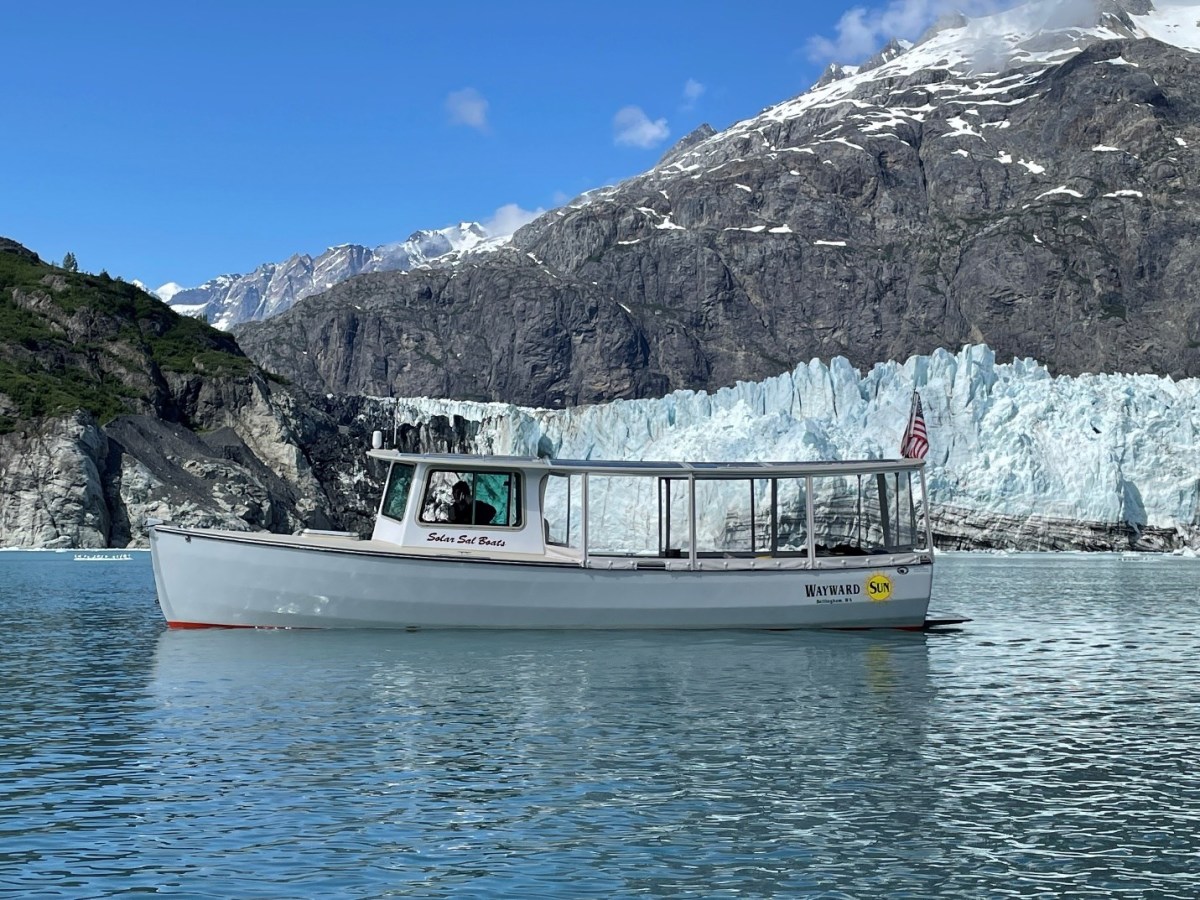
Here's an interesting craft that Sam Devlin from down near Olympia has built. This is a nice looking capable (for it's intended use) solar powered electric boat.

 devlinboat.com
Solar Sal 27 – the Latest Launch from our Shop
Our latest launch with a timely application to this modern world is the Solar Sal 27.
devlinboat.com
Inside Passage voyage with Sam's design...
 thurstonedc.com
Electric Boat Completes 1,400 Mile Voyage to Alaska under 100% Solar Power
Electric Boat Designed by Olympia's Devlin Designing Boat Builders Completes 1,400 Mile Voyage to Alaska under 100% Solar Power “Is this a trip of brave Adventurers or just the first of an inevitable trend into a bright future for boating?” Two men and a dream of almost two
thurstonedc.com

Killing time at the doctors office today I was looking at the link that Greg posted.
It appears batteries could be quite expensive foe those motors. Over 2k for four 12v batteries on their site. They didn't have prices listed for 48v lithium batteries but a little searching online it looks like those are damned expensive too. Also need a 240 dollar connection kit to hook them up. They also seem to weight around 90-110 lbs depending on models.
If I'm understanding what I was reading correctly that's a serious amount of coin that would need to be added into the cost of a motor, as well as a significant amount of weight.
Certainly not bashing them or the concept, as I still thinks it's cool. And that's just one brand with admittedly not a ton of real research, just thought it was interesting. No doubt these things will continue to come down in price, have more options overall, and have better battery solutions moving forward.
It appears batteries could be quite expensive foe those motors. Over 2k for four 12v batteries on their site. They didn't have prices listed for 48v lithium batteries but a little searching online it looks like those are damned expensive too. Also need a 240 dollar connection kit to hook them up. They also seem to weight around 90-110 lbs depending on models.
If I'm understanding what I was reading correctly that's a serious amount of coin that would need to be added into the cost of a motor, as well as a significant amount of weight.
Certainly not bashing them or the concept, as I still thinks it's cool. And that's just one brand with admittedly not a ton of real research, just thought it was interesting. No doubt these things will continue to come down in price, have more options overall, and have better battery solutions moving forward.

Jeff Dodd
Steelhead
Peter introduced me to the Torquito motors too. This wass 5-6 years ago and they have a lot of power and interesting configurations. With the lower leg separate from the battery and throttle controls. Pretty cool for his application or a pontoon boatI've been casually interested in the electric outboard progress since I was introduced to Torquito motors by the owner of Easyrider Kayaks. He was running around with one on his kayak in the sound one day while I was fishing.
High torque trolling motor or these new electric outboard motors; the appeal to me is they are quiet. The draw back is the price of the suitable motor to push a 14 foot boat, and the cost of having enough battery capacity for a day on the water. I am sure the day will come when I replace my 9.9 4 stroke with a electric outboard.
This Mercury is a right step forward in my opinion. But, like others have said, it's going to find its use on a lake. It's compact, and the batteries look like they just fit on top. They look compact enough that a you can have 2 or 3 extra in a rubber made tub with no problem. If the price point is good, it will sell. I'm all for electric. Not cause I am green minded or a tree hugger. I just am tired of smelling gas.
I actually think that a better approach to electric boat motors would be a sequential hybrid (rather than a parallel hybrid model like a Prius). Electric motor, powered by a relatively small battery which when necessary would be charged by a gas powered generator. All the advantages of electric, like high torque, low noise, and the advantage of high energy density of gas, plus the gas motor would be able to work at it’s highest efficiency whenever it was in use.

cdnred
Life of the Party
I think that electric marine motors will be the future for boating just as they're becoming the mainstream in automotive. The plus for electric motors is no more smelly gas, gas handling and plus safer all around. Gasoline motors have their drawbacks with having higher maintenance costs to keep things tuned up and sometimes temperamental starting..
This deals more with the larger motors but with batteries that are dedicated to the motor, built-ins. Not sure of how they're designed but I think you'll be at the mercy of motor manufacturers when it comes to replacing the battery where you might end up paying a premium price for a replacement. Batteries don't last for ever and will be the major cost factor when deciding on which motor to choose from. Plus a built in battery adds much to the overall weight for hauling the motor around..
I like the simplicity of electric trolling motors where the battery is independent of the motor. You then have the option of using an AGM or LifePO4 that are offered in various sizes depending on your budget. The biggest drawback with these bigger motors is that you're restricted by what battery size you're allowed to use. Electric motors are still in the development stage but will be the future of boating in the years to come...
This deals more with the larger motors but with batteries that are dedicated to the motor, built-ins. Not sure of how they're designed but I think you'll be at the mercy of motor manufacturers when it comes to replacing the battery where you might end up paying a premium price for a replacement. Batteries don't last for ever and will be the major cost factor when deciding on which motor to choose from. Plus a built in battery adds much to the overall weight for hauling the motor around..
I like the simplicity of electric trolling motors where the battery is independent of the motor. You then have the option of using an AGM or LifePO4 that are offered in various sizes depending on your budget. The biggest drawback with these bigger motors is that you're restricted by what battery size you're allowed to use. Electric motors are still in the development stage but will be the future of boating in the years to come...

Is he still around? I haven’t seen him plying the waters in West Seattle in his latest concept.Peter introduced me to the Torquito motors too. This wass 5-6 years ago and they have a lot of power and interesting configurations. With the lower leg separate from the battery and throttle controls. Pretty cool for his application or a pontoon boat

JayB
Life of the Party
Seems like the best use-case for these motors at the moment is on tenders and other seasonally-used boats intended to putter around in harbors and and lakes.Electric motors have many fewer moving parts and should, once the bugs are worked out, be far more reliable than an internal combustion engine (though that has not yet proven true in practice for electric vehicles vs. internal combustion vehicles). But on the water, one always has to be concerned about worst case scenarios. What happens with an electric boat battery that runs out of juice? Solar recharging??? If a gasoline engine runs out of fuel, you can hope that there are other boaters around who might be able to share some gas. But you're stuck if the battery of your electric motor is out of charge. A tow will be your only real option.
Steve
Jeff Dodd
Steelhead
Is he still around? I haven’t seen him plying the waters in West Seattle in his latest concept.
Yes, I communicated with him last summer and all is well!
That's about 1800 ft2 of sail area, with run times in the 1000s of hrs. Put hydrofoils on it and it will pass your OB boat like it was standing still..200 hp equivalent, 8 hours run time at WOT.
Able to run off 36 volt battery system that also has to run a trolling motor and all the electronics for a full day with some left over and no special charger, has to plug I to 110.
A motor that doesn't do that isn't worth much.... BUT!!!! progress has to start somewhere.
Pushing water around with boats will likely be pretty tricky in the electric space for awhile, but I am glad people are starting the process.

Possibly even offshore, if one is willing to trade hold space and payload for batteries. I guess the bright side is when ARSC has to go electric, we can tip deckhands according to fish released instead of carkedI'm sure this is the future for outboards at some point down the road, though just like with cars I imagine there will be plenty of things to work out and stepping stones along the way.
I'm not itching to go buy one, but I would love the chance to play around with one. Would be cool to spend some time with that 50 and see how it performs
 .
. I jest (mostly) but am continually surprised by technology changes, so who knows what will be pushing offshore boats in a few years. Just not sure I'd be OK getting in a wind-up toy to run off the edge of the continental shelf ... and still get back to the barn. Well that, and listening to 500 horses of twin O/B harmonics, gives me a warm fuzzy feeling.