This is something that needs it's own thread.
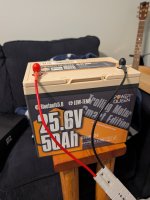
First thing to know is that these are not Lithium Ion batteries. This is newer technology and getting cheaper all the time.
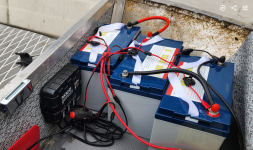
Second thing to know is that these are not for using as service, (starting) batteries in automobiles or boats. They shine as trolling motor or RV batteries, especially when coupled with solar.
Some of the advantages:
They can be discharged almost fully without harming the battery. When You get a 100ah battery, that is the available energy. The older lead acid batteries are only meant to be discharged to 50%. So with LA batteries a 100ah is in reality only a 50ah.
They are half the weight or even lighter.
Depending on the brand they can be discharged 80% or more many thousands of times. Think about that for a second. How many times a year would you discharge one to 80% in a year. How long would it take you to reach 5,000 times.
They can be hooked up in parallel or series.
They now make them in group 24 size at 100ah!
There is no off gassing so they can be stored inside. and most of them can even be used when lying on their side.
Some of the disadvantages:
Currently it is not recommended to charge or discharge at temps below freezing. Many RVers move them to the inside of the RV so they are operating in heated space. There are models with built in heaters. This limitation normally affects only 4 season users.
You need a compatible charger of the amperage recommended by the battery manufacturer. Most modern chargers come with the option to select the battery type. With solar, the charge controller will normally suffice by detecting the battery type.
Things to know:
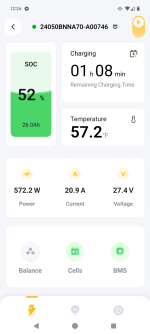
Be sure to get one with a built in BMS, (Battery Management System)
The newer BMS also include low temperature cut off. Here's a typical, but somewhat poorly translated BMS description:
"battery is equipped with upgraded intelligent BMS, which can protect your battery from overcharging, discharging, overcurrent, and overheating which will affect your using experience. The BMS has dustproof, waterproof, and low-temperature cut-off kinetic energy to ensure the safety of use in low-temperature environments, is designed for the harsh environment of the sea, rain and humidity or dusty conditions, to provide high-quality use experience and long service life"
They even come with bluetooth if you think you need that.
These are the basics. I switched over several years ago and will never go back. I have two for the RPOD, two for boats, and one for the van build I'm working on.
These batteries and BMS systems are evolving rapidly. As with all things - READ THE EFFING MANUAL.
First thing to know is that these are not Lithium Ion batteries. This is newer technology and getting cheaper all the time.
Second thing to know is that these are not for using as service, (starting) batteries in automobiles or boats. They shine as trolling motor or RV batteries, especially when coupled with solar.
Some of the advantages:
They can be discharged almost fully without harming the battery. When You get a 100ah battery, that is the available energy. The older lead acid batteries are only meant to be discharged to 50%. So with LA batteries a 100ah is in reality only a 50ah.
They are half the weight or even lighter.
Depending on the brand they can be discharged 80% or more many thousands of times. Think about that for a second. How many times a year would you discharge one to 80% in a year. How long would it take you to reach 5,000 times.
They can be hooked up in parallel or series.
They now make them in group 24 size at 100ah!
There is no off gassing so they can be stored inside. and most of them can even be used when lying on their side.
Some of the disadvantages:
Currently it is not recommended to charge or discharge at temps below freezing. Many RVers move them to the inside of the RV so they are operating in heated space. There are models with built in heaters. This limitation normally affects only 4 season users.
You need a compatible charger of the amperage recommended by the battery manufacturer. Most modern chargers come with the option to select the battery type. With solar, the charge controller will normally suffice by detecting the battery type.
Things to know:
Be sure to get one with a built in BMS, (Battery Management System)
The newer BMS also include low temperature cut off. Here's a typical, but somewhat poorly translated BMS description:
"battery is equipped with upgraded intelligent BMS, which can protect your battery from overcharging, discharging, overcurrent, and overheating which will affect your using experience. The BMS has dustproof, waterproof, and low-temperature cut-off kinetic energy to ensure the safety of use in low-temperature environments, is designed for the harsh environment of the sea, rain and humidity or dusty conditions, to provide high-quality use experience and long service life"
They even come with bluetooth if you think you need that.
These are the basics. I switched over several years ago and will never go back. I have two for the RPOD, two for boats, and one for the van build I'm working on.
These batteries and BMS systems are evolving rapidly. As with all things - READ THE EFFING MANUAL.
Last edited: