NFR How's the housing market where you live?

Non-fishing related
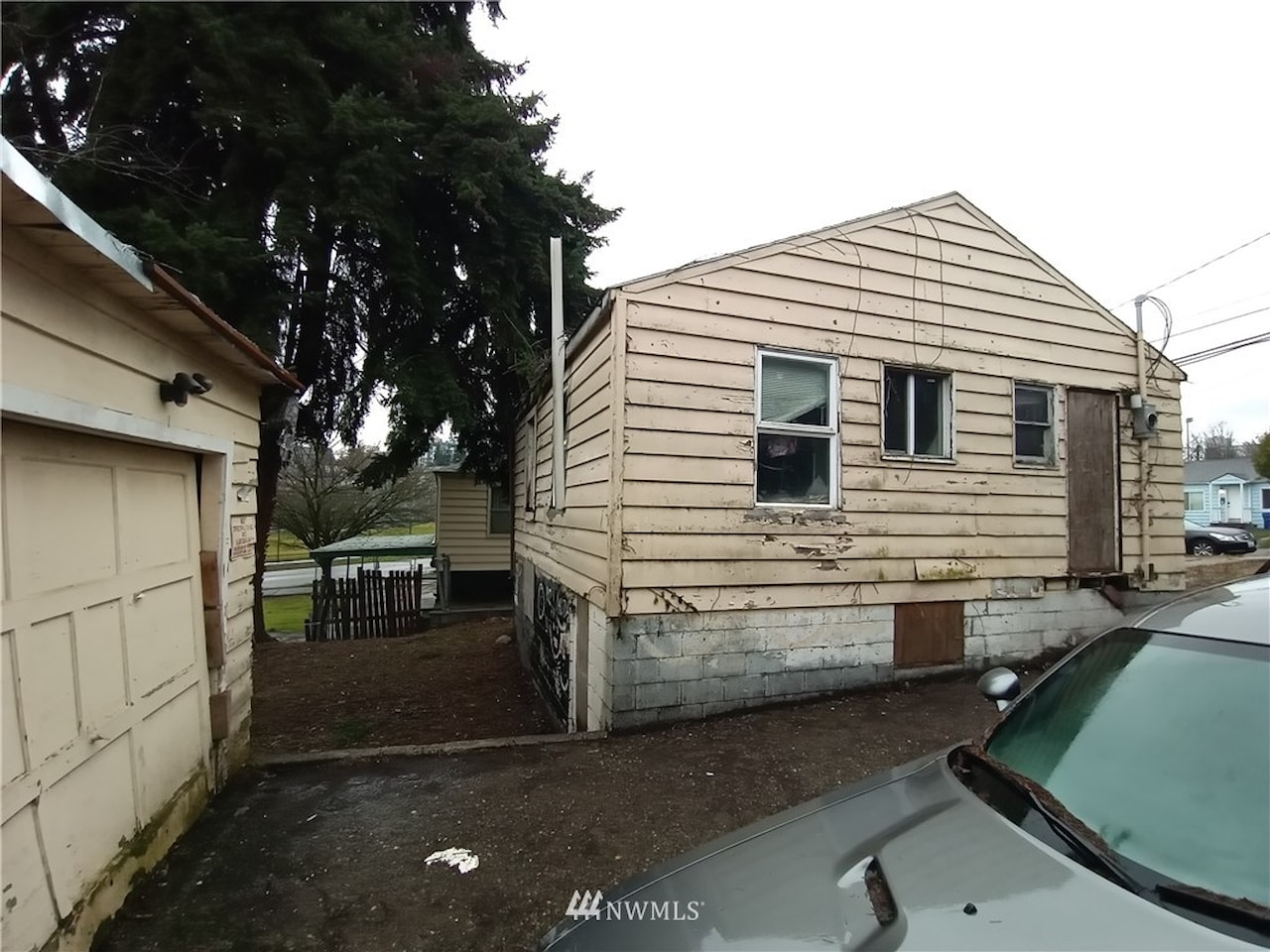
A real estate listing agent/broker has the legally and/or ethically established fiduciary responsibility to the seller. So if an agent has that fiduciary responsibility to the seller, and they represent the buyer and seller, the buyer is SOL! Do not ask me how I learned this, but I did learn the hard way (early on and never again). The listing agent does not want to know about any problems. If they know they have to disclose them.

Sellers lie all the time regarding the condition of the house! A seller provided pre-inspection report is to be taken skeptically at the very least! as is using an inspector recommended by the real estate person. Instead hire someone independent of the transaction. Ask how long an inspection takes. Ask what happens if the inspection does not identify issues or provide estimated costs that are inaccurate to resolve. Who is liable? BTW a 1 hour inspection is not worth a plug nickel. I have had inspections take a half day or more. They check every single receptacle and every faucet. They check for water running at the meter when no water is running in the residence. They understand water damage issues and what to look for. They see waviness in roofs we would not. They walk on the roof looking for issues - not looking through a scope... They look for recent 'cover-ups' of issues and determine why. They know which electric panels are subject to rust. They test for overloaded circuits. They test water pressure. They have worked in a number of industries to gain their knowledge. Those are the ones you want to hire... Cost more? Yes. Save you money - hell ya!!! I have walked away from a couple of potential investments because they found major hidden issues. Money well spent!

For example, a recent home sale by an acquaintance of mine said there were issues and they put money into the property prior to listing. I saw what they were doing. They were trying to fix rot issues, ant infestation issues and some structural issues. They said they were 'putting lipstick on a pig' - actual words to me. The staging they did was putting 'gloss on the lipstick'. There is almost no way a potential buyer would ever see it. It sold in 5 days for 20% over the asking price with no contingencies. The new buyer has had contractors over for 6 weeks since the purchase fixing shit and a lot of it! Get professional help that is independent of the transaction to help with the decision process. Much like buying a vehicle - it is sold AS-IS. No recourse unless there is provable fraud.

If the property has been a rental there is no legal requirement for the seller to disclose many of the issues since they have not lived there. For example a Condo is being sold and there are structural issues, it is the Condo's ownership/board to disclose them - not the sellers! Think they will provide that info? Give me a break!

When buying a place it is the biggest investment you will ever make. Take your time to make sure it is a solid investment. Do your ' due diligence' before hand.
 
Last edited:
Here's a doozy..the day we closed escrow on an upscale home, it was raining heavily and the kitchen flooded from an undisclosed roof leak that had happened before. Both the seller and the broker knew at 9 am the kitchen maple floors had flooded, yet the broker deliberately did not inform us and let the house close escrow at 1 pm, only found out when I arrived to take possession of the house that afternoon and found ServicePro, who had been there since morning, still cleaning up. Once understanding the situation, launched into Defcon 1, and to make a long one short:
-sellers insurance company paid for the new hardwood floors, cabinet and roof repairs since it occured prior to close
-seller wrote a check for the non-disclosure rather than face a damages suit
-the owner of the real estate brokerage wrote a check rather than have a complaint filed against his brokerage with the state
-the owner fired the broker as part of our agreement
-I filed against the broker with the state who lifted the brokers license as they were already on probation from a prior finding.
It took five weeks of hassling to get the above resolved and the floors replaced. Hell of a way to start off in a new home.

Which leads to a valuable lesson I learned about roofs and home inspections - if a complex roof, multiple angles and valleys, always get a roof inspection from a reputable roofer along with the inspection, as the majority of home inspectors will only view the roof from a ladder, they will not actually walk the roof as they do not want the liability. Simple roof usually not needed, pretty easy to spot problems.
 
Real estate agent here, which according to Jared means I should add the following industry designation on my business cards: GLUPOS (Greedy, Lazy, Unethical Piece of Shit).

So given I'm one of the lowest forms of humanity, take whatever I say with that in mind. There are plenty of options in buying/selling real estate ranging from hiring an agent to DIY'ing the whole thing. If you hire an agent, you should interview many. Ask them hard questions. Do they start the conversation by asking what your goals/objectives are or do they start with "what's you're max budget bro?" You're trusting them with one of the most expensive transactions in your life and it is a process fraught with risk and speed bumps. Make sure they'll be a good partner and are in it for the long haul. If you DIY it, just be sure you're educated and have the right resources (lawyers, etc) to tap into if any craziness ensues.

While I completely agree that commissions can be excessive, it always seems like anecdotal occurrences tend to cloud the narrative. For every story about an agent listing a property and getting 24 offers in two days resulting in a big fat commission check for little to no work, there's an equal story where an agent works with client for a year and a half or more touring homes every week, writing offers that might not win in escalation battles and ultimately having the client move out of the area or rent. Most career realtors know that will happen but that's a lot of time they put in trying to find the right fit only to have it all be pro bono. I know....boo hoo; but that is a very common occurrence since it's a crowded occupation.

And on the topic of the buyer, not the seller paying the commission, in a simplistic form that's true. If the buyer didn't write the check, there would be no commissions paid. An alternative view is that the buyer is writing a check for the fair market value of the house. Buyer writes check, gets house and they are indifferent to what happens to those funds during escrow as long as the home is conveyed into their name. The seller receives the check from the buyer for the fair market value of the house then in turn simultaneously "writes" a check to the firms that the two agents work for and those firms distribute the commissions to the buying and selling agent. When it's all said and done, the seller nets much less than the fair market value of the home so who has really "paid" for the commission? In the eyes of the IRS, the seller has paid the commission since it is the seller who gets to add those fees to the cost basis calculation when determining the net capital gain.

A good realtor will not only know the area well but also any pitfalls to buying in certain places. Are you buying land in a rural area where water rights are a concern? Does the house of a dormant oil tank and was it correctly decommissioned? Are you buying a condo and verifying that they have good reserves in the HOA and are you reading the past minutes from the HOA meetings to see if there has been any discussion of an end of life roof, malfunctioning elevator system, cracked pool walls ,etc....all of which could signal an expensive special assessment? If you're Swimmy and find a fabulous mansion in a planned community, have you read the CCR's front to back to determine if you'll be allowed to park your trailer or drift boat out front? Can a non real estate professional do this? Absolutely, but's its a question of whether or not you the buyer even know the right questions to ask. In a seller's market like what we are currently seeing, the listing agent has a somewhat "easier" job and the buyer's agents are working feverishly to figure out how to best position their buyers to win. In reverse conditions, the agent who holds the listing really has to work to market the home properly and coach their seller on what to do make the home as appealing as possible including the assessment of offers that come in under asking price.

In summary, there are many ways to participate in the real estate market. Some are comfortable doing everything on their own, some may prefer to use a service like Redfin who will basically open the door and look at their phone while you look at a house and some opt for using a realtor. All are viable models. And for the record, all real estate agents are not money grubbing marginally ethical lazy chumps....but some most definitely are.
 
Owcchhh...

@ majpreal; how does the hyper inflated market impact those looking to use their VA benefits ?
 
Real estate agent here, which according to Jared means I should add the following industry designation on my business cards: GLUPOS (Greedy, Lazy, Unethical Piece of Shit).

Not necessarily. I specifically mentioned that virtuous realtors do exist. My main point was that the risk is non-trivial. I would say the same for financial planners and a few other professions that are frequently subject to controversy.
 
Owcchhh...

@ majpreal; how does the hyper inflated market impact those looking to use their VA benefits ?
Being in the Seattle market with predominately tech buyers, I haven't personally done a VA transaction in years. But from what I've heard from colleagues in the exceptionally hot Tacoma area market, there's still been a lot of success using VA loans but a lot of times it's the appraiser that ends up being the choke point. On the upside, in markets (like Tacoma) that are much more VA heavy, the numbers of VA certified appraisers has been increasing to respond to the needs of the market.

Edit to add: in some cases, in a multiple offer scenario a seller will often look more favorably on a more cash heavy offer and a buyer who has the means to make up for a short appraisal, so that can put a VA borrower on their heels competitively especially if their leveraging the lower down payment requirements but that's true for conventional borrowers as well.
 
Last edited:
Ok. I'm asking because it would seem with the strictures VA puts on loan process, many first time veteran home buyers would be priced out of market here. (I'm south of Seattle, about halfway between Tacoma and Tukwilla)
 
We sold our house in Battle Ground in mid September. Took the tax appraisal value and added 20% on top for the listing price. Listed for 5 days and took an offer at almost 20% over asking after comparing offes and escalation clauses. We were in heaven.
Then HELL MONTH started...
Time to buy a house and we're on the other end of the equation. We'd been looking in the northern Kitsap area off and on starting in April. After the sale we got a realtor and started in earnest. Found a wonderful place near Seabeck, offered $80K over list and were beaten. We found ourselves having to look at properties and make a decision in no more than 2 or 3 days, which is totally nuts. Looked at one property and were told that we had 15 minutes to make an offer. We passed. By mid October things were getting dicey, listings were falling off as they usually do in the late fall and we had to be out of BG by November 19th. We started to look for a place to park the RV for the holidays.
We found a house in the Kingston / Hansville area that we could make work and in the space of two days and a single visit to the property made an offer with an escalation clause that took it to $+70K over asking. We weren't the high bidder but as we made a cash offer we got the house. We moved out of our house on Nov 17th and into the new house on Nov.18th.
Zombie time... I have little to no memory of about a 3 month period.
The key things we found were:
Being able to make a quick decision - that's the toughest part.
The seller had done a home inspection. we accepted the inspection and waived the right to do our own. I looked the house over carefully, the sellers inspection was very complete and it's turned out well. No, I would not recommend this approach.
Having everything in order to be able to make an offer with no "what ifs", i.e. in our case, a cash offer.
Playing the game like you're bidding on an auction site and using an escalation clause as a last resort up to the maximum offer amount.
HomeBay, anyone?
You're basically playing a bidding game, it sucks, but what is the alternative. The escalation clause was a totally new one to me.
As they say, in the next world, you're on your own...
 
And oh yeah. I've seen no evidence that things have gotten any better after the new year. To my eye they seem to have gotten worse.
 
We sold our house in Battle Ground in mid September. Took the tax appraisal value and added 20% on top for the listing price. Listed for 5 days and took an offer at almost 20% over asking after comparing offes and escalation clauses. We were in heaven.
Then HELL MONTH started...
Time to buy a house and we're on the other end of the equation. We'd been looking in the northern Kitsap area off and on starting in April. After the sale we got a realtor and started in earnest. Found a wonderful place near Seabeck, offered $80K over list and were beaten. We found ourselves having to look at properties and make a decision in no more than 2 or 3 days, which is totally nuts. Looked at one property and were told that we had 15 minutes to make an offer. We passed. By mid October things were getting dicey, listings were falling off as they usually do in the late fall and we had to be out of BG by November 19th. We started to look for a place to park the RV for the holidays.
We found a house in the Kingston / Hansville area that we could make work and in the space of two days and a single visit to the property made an offer with an escalation clause that took it to $+70K over asking. We weren't the high bidder but as we made a cash offer we got the house. We moved out of our house on Nov 17th and into the new house on Nov.18th.
Zombie time... I have little to no memory of about a 3 month period.
The key things we found were:
Being able to make a quick decision - that's the toughest part.
The seller had done a home inspection. we accepted the inspection and waived the right to do our own. I looked the house over carefully, the sellers inspection was very complete and it's turned out well. No, I would not recommend this approach.
Having everything in order to be able to make an offer with no "what ifs", i.e. in our case, a cash offer.
Playing the game like you're bidding on an auction site and using an escalation clause as a last resort up to the maximum offer amount.
HomeBay, anyone?
You're basically playing a bidding game, it sucks, but what is the alternative. The escalation clause was a totally new one to me.
As they say, in the next world, you're on your own...


Welcome neighbor!
 
I saw that Charles Sullivan is going to build an ADU on his big lot. I had to look up the definition of ADU. I suppose the requirements for ADU's vary depending upon local building codes. I'm curious about ownership of these four "houses" on one lot and what the city laws are for ownership.

It looks like house 1 has a single car garage and house 4 has a driveway. What are the requirements for parking? The homes don't have to have off street parking? I can only imagine the increased volume of cars added to the neighborhood?
Just saw this Buzzy. Generally accessory dwelling units (ADU's) have a maximum square footage allowance. In my city it is 800 square feet. In my county it's 1248 square feet. Both make you sign an affidavit stating that you will live in one of the residences. The City does not look for parking. The county does. It's assumed that they won't be turned into a condominium. I am not sure if a planning department could stop that though. That is a state run deal.

They definitely add traffic, probably not at the same rate as a standard home though. With the limited size, city ADU's become desirable for people without cars and such. Young people, students etc.

I am a big proponent of ADU's in residential neighborhoods. They allow for a far more diverse population in age, race and income. I think that this is a very good thing for the USA. The perceived risk that the neighborhood feels with renters is balanced by the landlord living on-site. So you get younger folks in the neighborhood as well as single parents who otherwise could not live there etc. All this is really positive in my opinion. We already self segregate by class, race, and age so often. Single family zoning only exacerbates the trend. In cities, there is existing infrastructure. It seems far better to use that land and infrastructure than to expand horizontally.

They allow for inter generational living and cooperation. Whether is be the parents moving in or the kids. It allows for families to make decisions together by providing an option.

I am looking forward to my project. The building part should be fun in the way building things is always fun. The landlord part is not what I am looking forward too. In fact, I won't really even make money until such time as the underlying zoning and minimum lot size changes. then I will realize the value of the building. However, it sure can be a great way to provide human habitat when we have a shortage.
 
We sold our house in Battle Ground in mid September. Took the tax appraisal value and added 20% on top for the listing price. Listed for 5 days and took an offer at almost 20% over asking after comparing offes and escalation clauses. We were in heaven.
Then HELL MONTH started...
Time to buy a house and we're on the other end of the equation. We'd been looking in the northern Kitsap area off and on starting in April. After the sale we got a realtor and started in earnest. Found a wonderful place near Seabeck, offered $80K over list and were beaten. We found ourselves having to look at properties and make a decision in no more than 2 or 3 days, which is totally nuts. Looked at one property and were told that we had 15 minutes to make an offer. We passed. By mid October things were getting dicey, listings were falling off as they usually do in the late fall and we had to be out of BG by November 19th. We started to look for a place to park the RV for the holidays.
We found a house in the Kingston / Hansville area that we could make work and in the space of two days and a single visit to the property made an offer with an escalation clause that took it to $+70K over asking. We weren't the high bidder but as we made a cash offer we got the house. We moved out of our house on Nov 17th and into the new house on Nov.18th.
Zombie time... I have little to no memory of about a 3 month period.
The key things we found were:
Being able to make a quick decision - that's the toughest part.
The seller had done a home inspection. we accepted the inspection and waived the right to do our own. I looked the house over carefully, the sellers inspection was very complete and it's turned out well. No, I would not recommend this approach.
Having everything in order to be able to make an offer with no "what ifs", i.e. in our case, a cash offer.
Playing the game like you're bidding on an auction site and using an escalation clause as a last resort up to the maximum offer amount.
HomeBay, anyone?
You're basically playing a bidding game, it sucks, but what is the alternative. The escalation clause was a totally new one to me.
As they say, in the next world, you're on your own...

Went through the same but backwards, which I think was nicer. Dealt with being a buyer and the hell it is currently and then enjoyed listing our mountain condo for more than the realtor advised and then getting offers for more. Wish I had more real estate to sell because it was so pleasant. Buying sucks right now and I feel bad for you all in the nuclear hot markets as just a hot market in NC was brutal. One can never time to top of the bubble but it feels like we are getting close to multiple asset bubbles bursting.
 
Just saw this Buzzy. Generally accessory dwelling units (ADU's) have a maximum square footage allowance. In my city it is 800 square feet. In my county it's 1248 square feet. Both make you sign an affidavit stating that you will live in one of the residences. The City does not look for parking. The county does. It's assumed that they won't be turned into a condominium. I am not sure if a planning department could stop that though. That is a state run deal.

They definitely add traffic, probably not at the same rate as a standard home though. With the limited size, city ADU's become desirable for people without cars and such. Young people, students etc.

I am a big proponent of ADU's in residential neighborhoods. They allow for a far more diverse population in age, race and income. I think that this is a very good thing for the USA. The perceived risk that the neighborhood feels with renters is balanced by the landlord living on-site. So you get younger folks in the neighborhood as well as single parents who otherwise could not live there etc. All this is really positive in my opinion. We already self segregate by class, race, and age so often. Single family zoning only exacerbates the trend. In cities, there is existing infrastructure. It seems far better to use that land and infrastructure than to expand horizontally.

They allow for inter generational living and cooperation. Whether is be the parents moving in or the kids. It allows for families to make decisions together by providing an option.

I am looking forward to my project. The building part should be fun in the way building things is always fun. The landlord part is not what I am looking forward too. In fact, I won't really even make money until such time as the underlying zoning and minimum lot size changes. then I will realize the value of the building. However, it sure can be a great way to provide human habitat when we have a shortage.

I know I was critical of ADU’s in my previous post and still stand by that based on that happened on that property. I think putting another house plus two ADU units on one lot is a bit much for a lot amongst single family dwellings. The zoning obviously allows it though.
I will say there are some ADU units in my neighborhood that I think are very well done. You really can’t even tell what they are or that they are even there in some cases. Most of those are in the backyards of the original home and provide ample parking etc.
SF
 
Urban ADU's substantially increase the value of the property. Buddy built one over his stand alone garage in Portland, cost him 150K, he sold the property for 300K over it's pre-ADU estimate. Besides contributing to local housing, ADU's also create an income source that is especially desirable to lower income retireees as well as younger folks who need every $ they can for the mortgage payment.
As to this current market peak, whereas the history of real estate has been run up, sag, run up higher, we're in a new paradigm shift, and the impact of tech money is profound. Over 10 million US tech workers making 100K plus, many making much, much more, increasingly green lit to work remotely, opening up much of the country for an influx of higher income/cash home buyers they have never previously seen.
Oregon started grumbling about 'Californication' 30 years ago...now the entire country is feeling the impact of 'Techification'...
 
I know I was critical of ADU’s in my previous post and still stand by that based on that happened on that property. I think putting another house plus two ADU units on one lot is a bit much for a lot amongst single family dwellings. The zoning obviously allows it though.
I will say there are some ADU units in my neighborhood that I think are very well done. You really can’t even tell what they are or that they are even there in some cases. Most of those are in the backyards of the original home and provide ample parking etc.
SF
Code is never written perfect. There will always be things that are allowed that aren't what was intended and things not allowed that were intended to be. When these imperfections impact you in either way, it is very hard to take.

I suspect that there was never just one lot. I am fairly certain that the owner of that home had 2 lots the whole time. At some point it went from 1 home on 2 lots to 4 homes on 2 lots really quickly.

To your point, there are bills being proposed now that would outlaw single family housing only zoning within city limits in all of WA State. I have my thoughts on this idea. I am sure that you do too. They may or may not be the same. The bills are active. They would drastically change the housing scenario in Western WA. I don't think that the pressures would be felt the same way in most of the cities in the more rural counties.
 
Tear down - almost done. Multi-family zoning. Money maker!
 
Here in Bozeman it is silly. We own a couple of properties and very grateful. However we are looking to sell our primary residence and buy a new place.

As of Jan 5, median cost of home was $782,500.

We found a house we liked last Friday, made an offer $80k over asking, they had 15 offers in 48 hrs, and we weren't even top 5. Hopefully someone that was in more need than us got it. We will continue to look.

How are things in
If things stay like this, man our kids are screwed.
What is happening in parts of Montana is unprecedented. I am wondering what will happen when it simply gets too expensive for the working class to even exist there. Every community needs teachers and law enforcement and grocery stores and basic services. Last I checked 782k is a much larger mortgage than would be comfortable on an average salary no matter what interest rates are doing.
 
  • Like
Reactions: RCF
Back
Top