
Not unprecedented, happen in parts of Colorado 20+ years ago.

Follow along with the video below to see how to install our site as a web app on your home screen.
Note: This feature may not be available in some browsers.


Those calls are illegal. I'd be cashing in on them.I literally get cold calls from realtors in both locations asking me if I 'd be willing to sell.
Technically they have been texts and I don't care if they are "illegal" or not. Sue happy much????Those calls are illegal. I'd be cashing in on them.




Our per month mortgage cost (Principal, interest, escrow, PMI) when we purchased in 2017 was approximately 25% of our monthly gross income at that time. We refinanced 2 years later to a lower interest rate and with enough equity to drop PMI. Property tax increases have pretty much chewed away at that monthly savings over the last few years.Question for you homeowners out there. What was the ratio of your family income to total housing cost when you bought your house? For those who bought recently, are you having to change that ratio significantly?

I built my house with a combo building/mortgage loan, so it started out with small payments as we were building. Then the payments increased to almost 24% of my monthly gross when the house was completed and we moved in. We kept my wife's income out of consideration; in fact we were not yet married when I bought the property and began the planning and building process. Anyway, I was not comfortable with my monthly mortgage payment, so I cashed in a mutual fund and reduced the principle on my loan, so my monthly payment was about 17% of my monthly gross until I retired. Now the monthly mortgage payment is again about 24% of my monthly gross. I don't have insurance and property taxes included in my mortgage payments, so I occasionally have to dip into my retirement savings to pay the damn taxes that have doubled since moving into the house in 2010.Question for you homeowners out there. What was the ratio of your family income to total housing cost when you bought your house? For those who bought recently, are you having to change that ratio significantly?
Around 25% when I bought in 2012 in Portland. House doubled in value, cashed out and escaped Portland in 2016.Question for you homeowners out there. What was the ratio of your family income to total housing cost when you bought your house? For those who bought recently, are you having to change that ratio significantly?

Our per month mortgage cost (Principal, interest, escrow, PMI) when we purchased in 2017 was approximately 25% of our monthly gross income at that time. We refinanced 2 years later to a lower interest rate and with enough equity to drop PMI. Property tax increases have pretty much chewed away at that monthly savings over the last few years.

 thomasfoy.johnlscott.com




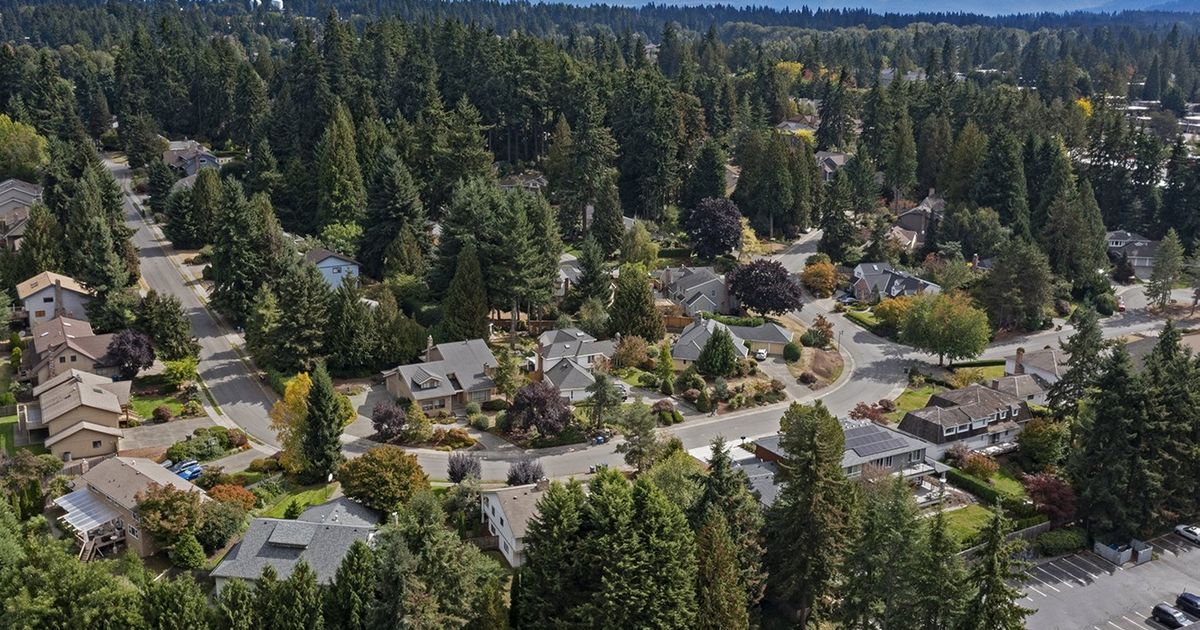
Only fault here is that it's not 170.Our neighborhood is going through a bit of a redevelopment. Seventy townhomes will eventually be built.
View attachment 5980
View attachment 5982
Well, that's just one ongoing project. 84 units are almost done nearby in another development. Across the street another 84 townhomes as well. A 3 building, 300 unit apartment complex is also scheduled.Only fault here is that it's not 170.

 www.seattletimes.com
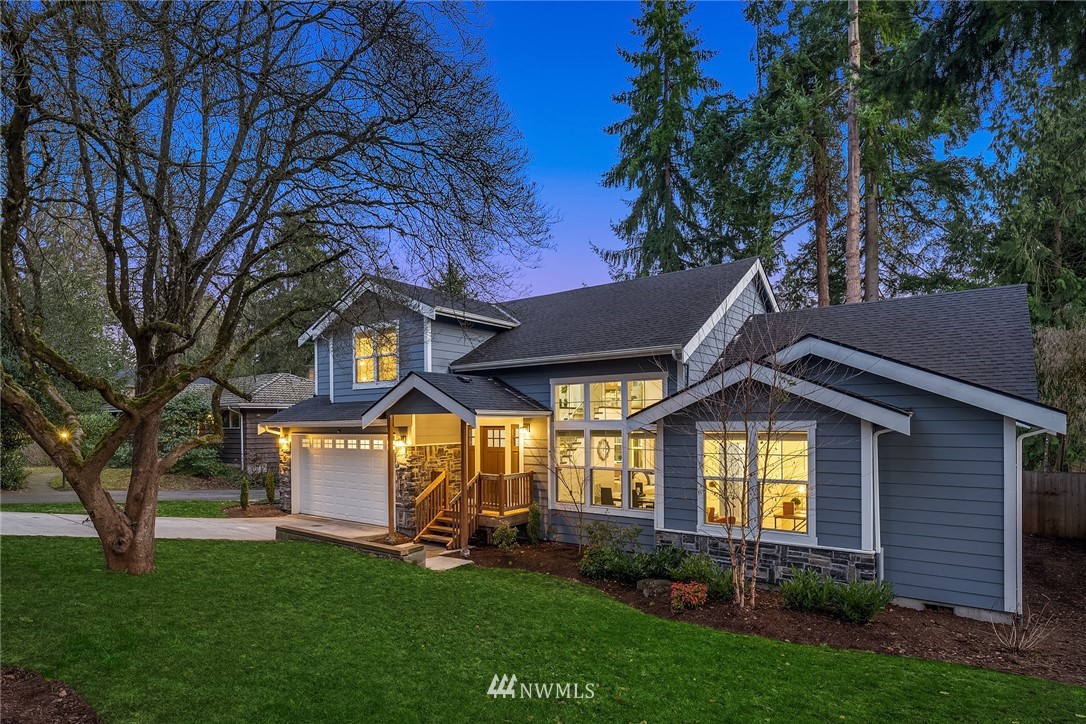
Location, location, location. $500k of that $2m is due to the proximity to Maelstrom Brewing.This listing popped up in one of my news feeds.
Listed 2/17
Three hour open house 2/20
Sellers will review offers by 2/21
That is creating some serious urgency. Nice house by the way in a very desirable area.
SF
Kirkland Area Residential
Exceptional NW Contemporary Home boasts clean lines and a fantastic floor plan. The elevated entrance greets you with natural light, soaring ceilings and walls of windows. A custom grand staircase, gleaming engineered hardwoods and designer finishes make an instant impression. Chefs kitchen...
Worth every penny..Location, location, location. $500k of that $2m is due to the proximity to Maelstrom Brewing.
This all sounds great but now it's too the point where the cheapest house in the areas I am looking to be close to my job are reaching prices even with 20 percent down more than 30 percent of my income. And even renting isn't an option because rents for a house are even more atrocious.Our approach has been what are we comfortable in paying monthly for the mortgage. It has always been less than 25% of our net income. We used net income, not gross income, because it was what we had control over and available to us. Also by doing net income if my wife or I got laid off we could continue paying our mortgage on one salary plus unemployment (for awhile). We never would do PMI because if we can not put 20% down then we can not afford the place. It just forced us to save more quicker so we could avoid PMI. We paid our own property taxes and they started out about 20% of our mortgage payment.
This was in the 'old days' before the all this hyper-real estate. Since 2016 our place has more than doubled in price. IMHO this is when real estate started its incredible journey upwards. We recently paid off our home so retirement would be more comfortable on a reduced income. Property taxes have also gone up a lot. Property taxes increased percentage-wise year over year more than the percentage increase of my raises I received. Our property taxes, if paid monthly, are now 150% of our former monthly mortgage payment. When on fixed income this is a bitter pill to swallow. Who knows what it will be in 5 years.
We can not predict the future. My only advice is to live within your means and have some money set aside (and added to) to account for unforeseen challenges in the future. This might be helping cash flow for sickness/layoff or making a larger down payment to live within your means.
I completely agree with you! Totally!This all sounds great but now it's too the point where the cheapest house in the areas I am looking to be close to my job are reaching prices even with 20 percent down more than 30 percent of my income. And even renting isn't an option because rents for a house are even more atrocious.
Just hard to plan what to do and then throw things like education for kids into the equation, and you just kinda feel stuck

And I would add, Do it while you are young. Putting in a full day doing construction work gets tougher the closer you get to 70.I completely agree with you! Totally!
One a side note related to a comment you made above: My wife and I are paying for our kid's education. One graduated in 2019 and our second is graduating this spring. I am 70 years old. But what we did was start saving 40 years ago. We also started late having a family by adopting 2 later in life. For college we enrolled in the WA. GET program as soon as we could. A saving grace to help us to pay for college...
I was just running the numbers to understand what it looks like.
Old way of calculating with today's prices:
Median price of a home in King County now is between $750k and $830k (depending on where your facts come from).
Using lower amount of $750k
20% down is $150k - who has that or could save that? (Mom and Pops would have to help with that IMHO)
Mortgage would be $600K
Household income would need to be al least $175K
Monthly mortgage (P&I and property taxes) would $5,400
Yet Median household income in King County is ~$95k per year (depending on where you get your facts) which is about 1/2 of what one needs to buy a median priced house. Our household never earned $100k/year. Yet we were able to buy into this market. Refer to last paragraph in this post...
One would need to move out quite aways out to get a home for ~$500k. The commute would suck, expenses to drive and hours away from family would also suck IMHO. But that is what people do now
I remember somewhere above if one is going conventional a 50% down payment is required to compete with all the cash offers and no contingencies environment...
Hear that big sucking sound? Middle class ever owning a home disappearing... I do not see our kids ever being able to buy a home unless they moved to the boonies or a different state.
One of the ways to buy a home is one where sweat equity can be used to make the house into a home. Buy a house with 'good bones' and finish off the basement as time and funds allow it. Make sure plumbing, HVAC and electrical permits are in-place and all changes are cosmetic. Otherwise licensed professionals are required and add to the cost some. Update other portions to make it very nice. Buy a home with no/lousy landscaping and do it right. Again when time and funds are available. Build desks as appropriate. One can do it themselves cheaper and build equity faster that way ---> with sweat equity. For example to finish off our basement I was quoted @$125k. I finished it off for $33k by myself and that included hardware floors and cabinets above what was included in the quote provided. It took me almost 2 years to finish off the basement versus 90 days for a contractor to do it. It added almost $500k to our current home's value. Cha-Ching!!! YouTube was not available and trial and error was the norm. Nowadays everything on how to do something is at one's finger tips. Plan ahead, take your time you will surprise what you can do and take a lot of pride in what you did! It will take longer but why pay someone $90/hr when you can do it for free aka sweat equity? You may only make $50/hr and yet pay a contractor $90/hr for their work. Yet if you do the work in non-working times (evenings, weekends and, yes, vacations) you are paying yourself $0/hr versus $90/hr. Why pay for materials with a markup as a contractor would do when you can buy the same materials directly from the same lumberyard without the markup? Think about it...