
Navigation
Install the app
How to install the app on iOS
Follow along with the video below to see how to install our site as a web app on your home screen.
Note: This feature may not be available in some browsers.
More options
Style variation
You are using an out of date browser. It may not display this or other websites correctly.
You should upgrade or use an alternative browser.
You should upgrade or use an alternative browser.
Hook size inconsistency
- Thread starter adamcu280
- Start date

Best to just yell at the clouds.It's like a riddle, wrapped in an enigma, locked in a box with no keyhole.

New deal: I’ll send you monies, you send me hooks.haha that would be a lot of hooks that is for sure!

Brita Fordice for @Buzzy and others who don't know about her:
 www.theflyfishjournal.com

 www.sevenmileflyshop.com
@SpawnFlyFish @Jake Watrous measurements would be great, but it'd probably be easier to just gather a bunch of the same style hooks (like the Ahrex chart), same listed size, from different manufacturers and take a photo of them next to each other so we can see which ones are bigger/smaller relative to each other.
Brita Fordice - The FlyFish Journal
Sidechannels Podcast from The Flyfish Journal: Brita Fordice cut her flyfishing teeth on the rivers, lakes and shorelines of the Puget Sound region of Washington state. As a product developer, she plays a big part in the development, design and testing of RIO's wide selection of flies—including...
www.theflyfishjournal.com
Five Questions With Brita Fordice
Brita grew up on the banks of the Stillaguamish River, one of Washington state’s “big five” steelhead streams. It was there that she learned to fly fish at the age of 8, and taught herself to tie flies at 10. Following college she spent a couple of years in both Sun Valley, ID and Anchorage...
www.sevenmileflyshop.com
@SpawnFlyFish @Jake Watrous measurements would be great, but it'd probably be easier to just gather a bunch of the same style hooks (like the Ahrex chart), same listed size, from different manufacturers and take a photo of them next to each other so we can see which ones are bigger/smaller relative to each other.
I was kidding (my one attempt at scientifically measuring fishing equipment was an annoying amount of data entry and tedium I wasn't really sad to see ended by equipment failure), but it would be nice. Personally, though, I tend to change hooks only when I run out of something and my "local" shops (Avid and Spawn) don't have more of what I'm out of and I get impatient and grab something they do have that's "close enough". Part of why I prefer physical shops to online or catalog shops is the ability to hold things in hand and do on-the-spot comparisons and checks.Brita Fordice for @Buzzy and others who don't know about her:
Brita Fordice - The FlyFish Journal
Sidechannels Podcast from The Flyfish Journal: Brita Fordice cut her flyfishing teeth on the rivers, lakes and shorelines of the Puget Sound region of Washington state. As a product developer, she plays a big part in the development, design and testing of RIO's wide selection of flies—including...
Five Questions With Brita Fordice
Brita grew up on the banks of the Stillaguamish River, one of Washington state’s “big five” steelhead streams. It was there that she learned to fly fish at the age of 8, and taught herself to tie flies at 10. Following college she spent a couple of years in both Sun Valley, ID and Anchorage...
@SpawnFlyFish @Jake Watrous measurements would be great, but it'd probably be easier to just gather a bunch of the same style hooks (like the Ahrex chart), same listed size, from different manufacturers and take a photo of them next to each other so we can see which ones are bigger/smaller relative to each other.

Not to throw another dimension into this but I think wire diameter inconsistency across brands is as bad as hook size inconsistency. I love Ahrex for some applications but prefer other brands in certain situations. Example, smaller Ahrex flies fished barbless seem less sticky to me then Gamakatsu due to wire diameter. Ahrex is much thicker, stout and durable but I lose way more SRC fishing an Ahrex SA 280 then a Gamakatsu SC 15 of similar size. Though I agree a standard would be great, i don’t see it happening and even if it did, who’d enforce it. You’d end up with the line example stated already. Not just the fishing industry either. Say shoes for example where depending on the brand/style I am one of three sizes usually.
So, whoever builds out that cross brand comparison chart, bust out the Calipers and include wire diameter as well…
So, whoever builds out that cross brand comparison chart, bust out the Calipers and include wire diameter as well…

I would encourage you to familiarize yourself with the genesis of the AFFTA fly line standard. Indeed it was established for compatibility reasons as the previous line labeling method (line diameter/line diameter/line diameter) i.e. HGH as an example was not useful for newer fly rod actions. It was devised in an era of silk or braided lines that weighed all over the map.Stupid really. By the way, there is the AFFTA standards for fly lines, not a safety issue. And not really a compatibility issue since many of the newer fly rod designations are best used with lines that are overweighted.
And it would not be any harder for a fly hook company to come out with their "master hook", see how it measures on a "standard" and then base the rest of their lineup on that. Just stupid reasoning, and a reason not to buy hooks from smaller manufacturers.
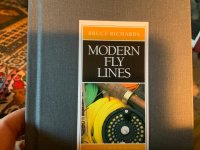
Bruce Richards in his book: Modern Fly Lines (1994) outlines why the AFFTA standard was adopted and also its short comings most of which have come true as fly rod manufacturers have upped their game with new actions, tapers, and materials. Fly line manufacturers have kept place and only reluctantly give a nod to an outdated compatibility standard.
Alas, I missed the joke. Hopefully @SpawnFlyFish is being serious.I was kidding (my one attempt at scientifically measuring fishing equipment was an annoying amount of data entry and tedium I wasn't really sad to see ended by equipment failure), but it would be nice. Personally, though, I tend to change hooks only when I run out of something and my "local" shops (Avid and Spawn) don't have more of what I'm out of and I get impatient and grab something they do have that's "close enough". Part of why I prefer physical shops to online or catalog shops is the ability to hold things in hand and do on-the-spot comparisons and checks.
As I’ve said before, I also tend to stick with what I like and only branch out when I’m out of my usual stuff and the local doesn’t have them and/or I’m going way outside my normal routine.
Although it turns out still figuring out my favorites for certain applications; yesterday I had an Ahrex NS122 bend out after battling some coho. A similar size Gamakatsu “bonefish” (can’t recall the model number) held up nicely after an equal number of fish.

Ten years ago a friend gifted me his six weight switch rod. I knew (and know) nothing about switch rods. I lined the rod with my standard WF6F thinking this 11'-6" rod would be a great indicator rod. HUH! I couldn't load the rod with a WF6F no matter where I had the lines taper when starting to cast. WTH? I mean, it's a 6 weight, right? ;-)I would encourage you to familiarize yourself with the genesis of the AFFTA fly line standard. Indeed it was established for compatibility reasons as the previous line labeling method (line diameter/line diameter/line diameter) i.e. HGH as an example was not useful for newer fly rod actions. It was devised in an era of silk or braided lines that weighed all over the map.
Bruce Richards in his book: Modern Fly Lines (1994) outlines why the AFFTA standard was adopted and also its short comings most of which have come true as fly rod manufacturers have upped their game with new actions, tapers, and materials. Fly line manufacturers have kept place and only reluctantly give a nod to an outdated compatibility standard.
View attachment 129401

Not sure about switch rods, but Spey rod designations are always one to two sizes over a single hand line. Better match using grain weight. Spey lines are generally thicker and heavier in the butt section (Scandi) to enable formation of a D-loop and forward cast or thicker over the entire head (Skagit). But, like single hand fly rods, line weight preferences are up to the individual.Ten years ago a friend gifted me his six weight switch rod. I knew (and know) nothing about switch rods. I lined the rod with my standard WF6F thinking this 11'-6" rod would be a great indicator rod. HUH! I couldn't load the rod with a WF6F no matter where I had the lines taper when starting to cast. WTH? I mean, it's a 6 weight, right? ;-)
Buy lines designed for switch rods, my only point was don't line a six weight switch rod with a six weight line designed for a "standard" six weight rod (Is there a standard? I'll have to ping Brita).Not sure about switch rods, but Spey rod designations are always one to two sizes over a single hand line. Better match using grain weight. Spey lines are generally thicker and heavier in the butt section (Scandi) to enable formation of a D-loop and forward cast or thicker over the entire head (Skagit). But, like single hand fly rods, line weight preferences are up to the individual.
Not sure about switch rods, but Spey rod designations are always one to two sizes over a single hand line. Better match using grain weight. Spey lines are generally thicker and heavier in the butt section (Scandi) to enable formation of a D-loop and forward cast or thicker over the entire head (Skagit). But, like single hand fly rods, line weight preferences are up to the individual.
In the old days, before the spey bros crawled out of their primordial ooze and everything went to shit
 , you could get a DT line that matched the number on your spey rod and be confident that it would work well.
Emailed Ahrex this morning, we have a very close relationship with them and will hopefully get what we are after then use it to get all the other companies to provide the same!Alas, I missed the joke. Hopefully @SpawnFlyFish is being serious.
As I’ve said before, I also tend to stick with what I like and only branch out when I’m out of my usual stuff and the local doesn’t have them and/or I’m going way outside my normal routine.
Although it turns out still figuring out my favorites for certain applications; yesterday I had an Ahrex NS122 bend out after battling some coho. A similar size Gamakatsu “bonefish” (can’t recall the model number) held up nicely after an equal number of fish.

https://www.flyhooks.org/ has measurements of some hooks. The hooks models that include pictures include measurements of hook length, shank length, throat, gape, eye width and wire thickness for one size of the hook.

Wayne Kohan
Life of the Party
Outside of Sportsman's Warehouse, which has a very poor fly tying section, I have no local fly shops. I have to order hooks online. If I am out of size 12 Mustads at home, which I need for the fly I want to tie, but everyone is out of the Mustads, or god-forbid I might try someone else's hook, I hate to order three packs at $15 just to try to get the size that I want. My only issue is if you say it is a size 12 hook, it should be a size 12, not a size 8. I have spent a lot of money over the years and have received hooks that really aren't going to get used because they are not the size I need, and I already have plenty of hooks in that size, though with a different number. When I order a 12 ounce coffee, I get a 12 ounce coffee, and when I order a foot long sub at Subway, I get a... wait a minute, bad example.I don’t get all wrapped up in hook size discrepancies, I just visualize…lash it up…and go swim it.
The numbered size of any given hook is only relevant to the brand/model of the hook in question. Your expectations are unreasonable. What are the physical dimensions of a #2 hook? — An unanswerable question. Your examples are irrelevant as well. Ounces are measurable and have a precise standard. Inches are are measurable and have a precise. We have an enforceable standard of weights and measures. Your frustrations are understandable but wedding a precise hook to any given pattern is not a good approach when you are confronted with the situation you describe. If I had to get all my hooks from an online source and had your requirements, I’d be asking some questions first of the seller — which hook of model X has a .5” shank? If thats what you need, it’s irrelevant what size # the brand has placed on the hook.Outside of Sportsman's Warehouse, which has a very poor fly tying section, I have no local fly shops. I have to order hooks online. If I am out of size 12 Mustads at home, which I need for the fly I want to tie, but everyone is out of the Mustads, or god-forbid I might try someone else's hook, I hate to order three packs at $15 just to try to get the size that I want. My only issue is if you say it is a size 12 hook, it should be a size 12, not a size 8. I have spent a lot of money over the years and have received hooks that really aren't going to get used because they are not the size I need, and I already have plenty of hooks in that size, though with a different number. When I order a 12 ounce coffee, I get a 12 ounce coffee, and when I order a foot long sub at Subway, I get a... wait a minute, bad example.

FinLuver
Native Oregonian…1846
That’s when ya get on the phone to a reputable fly shop, who will give you the straight dope. If they won’t or don’t, then don’t spend any money on their website.Outside of Sportsman's Warehouse, which has a very poor fly tying section, I have no local fly shops. I have to order hooks online. If I am out of size 12 Mustads at home, which I need for the fly I want to tie, but everyone is out of the Mustads, or god-forbid I might try someone else's hook, I hate to order three packs at $15 just to try to get the size that I want. My only issue is if you say it is a size 12 hook, it should be a size 12, not a size 8. I have spent a lot of money over the years and have received hooks that really aren't going to get used because they are not the size I need, and I already have plenty of hooks in that size, though with a different number. When I order a 12 ounce coffee, I get a 12 ounce coffee, and when I order a foot long sub at Subway, I get a... wait a minute, bad example.
If ya don’t have one, let me know…my local is very good about givin’ it to ya honestly.
Wayne Kohan
Life of the Party
My expectations are not unreasonable, they only are unreasonable because the group of manufacturers refuse to provide that info to me. I don’t understand why I have to do extra work when I am the one paying the money. If a fly shop owner can tell me which hook has a 0.5” shank, why can’t the manufacturers make that information readily available? It’s not unreasonable to be given information in order to make a more accurate purchase.The numbered size of any given hook is only relevant to the brand/model of the hook in question. Your expectations are unreasonable. What are the physical dimensions of a #2 hook? — An unanswerable question. Your examples are irrelevant as well. Ounces are measurable and have a precise standard. Inches are are measurable and have a precise. We have an enforceable standard of weights and measures. Your frustrations are understandable but wedding a precise hook to any given pattern is not a good approach when you are confronted with the situation you describe. If I had to get all my hooks from an online source and had your requirements, I’d be asking some questions first of the seller — which hook of model X has a .5” shank? If thats what you need, it’s irrelevant what size # the brand has placed on the hook.
Wayne Kohan
Life of the Party
Again, why should it be up to the fly shop owner to give me the sizing? I’m sure the manufacturers have this info. Stop calling things size 1 or 2 if it’s meaningless, call it something meaningful.That’s when ya get on the phone to a reputable fly shop, who will give you the straight dope. If they won’t or don’t, then don’t spend any money on their website.
If ya don’t have one, let me know…my local is very good about givin’ it to ya honestly.