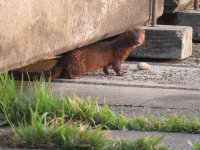
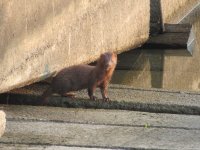
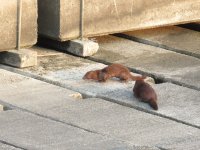
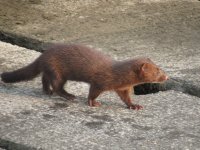
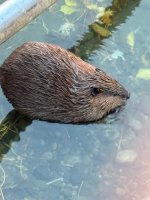
NFR Got any mammal pictures

Non-fishing related
Moose don't look as big when they are swimming, but they can swim fairly fast. I was part of a float tube/pontoon flotilla fishing the mouth of a bay on my fav back home lake. A young bull appeared along the shoreline, fed for a bit and then decided to cross the bay, unperturbed and right through the the fly-fishing fleet. Did I mention that Moose can swim pretty fast?
 
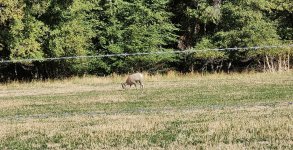
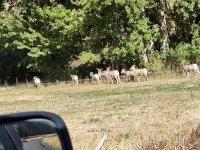
When I see pictures like these and so many other great photos I realize how compromised I am at capturing images with my lousy phone camera*. Friday I was fishing on the Columbia River upstream of White Bluffs when we spotted three bull elk. WOW! One of the bulls was huge with very impressive antlers.

*I didn't even try to capture an image with my old phone.

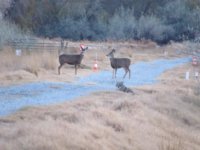
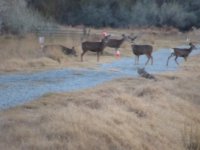
On several of the islands we saw lots of does with fawns. Deer and elk are obviously very good swimmers.
 
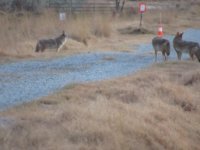
This image is an oldie but a goodie for me. While out of focus - in some ways it's just as I remember it - a blur. I was out checking water at Butte Valley Wildlife Area in the Klamath Basin many years ago and was watching a wad of mallards dry feeding in a grain field. The coyote came out of nowhere. I wished it was more in focus but am kinda glad that it's not.

View attachment 99620
Exceptional photo!
 
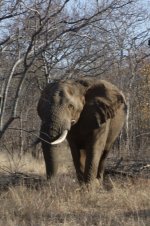
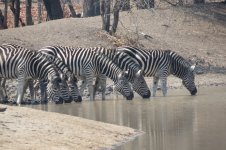
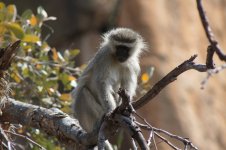
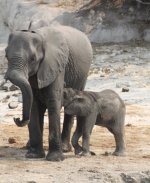
A few of my favorite photos from Zimbabwe and Botswana. I sure wish I could go back again, incredible experience with camera and rifle.
 

Attachments

  • IMG_0114.jpeg
    IMG_0114.jpeg
    741.9 KB · Views: 4
  • IMG_2144.jpeg
    IMG_2144.jpeg
    696.8 KB · Views: 4
  • IMG_0014.jpeg
    IMG_0014.jpeg
    514.8 KB · Views: 4
  • IMG_0691.jpeg
    IMG_0691.jpeg
    606.4 KB · Views: 4
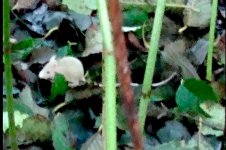
I came across this very cool rodent while I was trudging through some jungle by our river near the coast. I have only seen 2-3 of them ever and I think they were cat kills. This one seems lighter a tad. It hopped with its long legs. Cellphone shots.

My ID is a Pacific jumping mouse? Maybe leucisitic even? Anyone want to give it a go?

rat33333333.jpg

ratttttttt.jpg
 
Last edited:
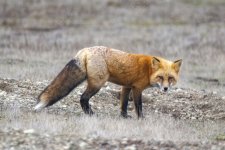
San Juan Island Foxes. During a "grocery" trip to San Juan Island (yes, the silver salmon fishing was excellent as was the crabbing), I spent a off day exploring some of my favorite wildlife haunts. One was the rabbit meadow near South Beach at San Juan Island National Historical Park. For several acres to the west of Pickett’s Lane, introduced European rabbits have modified the landscape into tightly-cropped grasses punctuated by scattered burrows and mounds. While there are European rabbits elsewhere on the island, I don’t know of another large aggregation like this one.
In the presence of all that potential food, there are predators, especially bald eagles (though I did not see an eagle in four days) and introduced red foxes. Before Western colonization, there were no foxes (or European rabbits, and very few other mammals) on San Juan Island. The rabbits were raised for food on the island and either escaped or were released near the end of the 19th century.
When the hare populations exploded, introducing red foxes was one of several options that were implemented to control the rabbit numbers. These foxes came from fur farms and are not the same population genetics as the native red foxes on the mainland. And that explains the atypical color morphs among the island foxes.
For the last several years, at least one pair of foxes has had a den at the edge of the trees between the rabbit meadow and South Beach itself. The adult foxes hunt rabbits in the meadow and feed them to their kits. [Bald eagles have learned to steal the rabbits from the juveniles, leading to some famous pictures of a bald eagle with a rabbit in its talons and a fox holding onto its lunch.]
The foxes attract photographers – the “foxarazzi”. The park service’s rules keep visitors out of the field; visitors are supposed to keep 75’ buffer between themselves and the foxes. Generally, the grazing activity of the rabbits stops about 30’ from the fence that surrounds this meadow; outside the grazed area, the grasses are much taller, perhaps 18-24” tall. On this nice Saturday afternoon, two volunteers from the Park Service had set up a spotting scope to help visitors see foxes and answer questions (and ensure that the rules were followed).
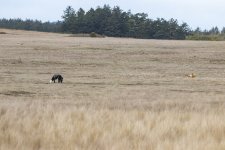
This was an amazing day for viewing rabbits and foxes. [You can see the short grazed grasses around the rabbits and foxes in the center of the field of view and the ungrazed, taller grasses in the foreground and far background.]
A01Foxes&Hares9819.jpg
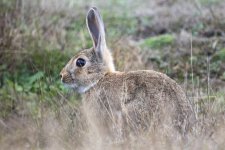
When I arrived, I could see many rabbits out of their burrows grazing on the short grasses, keeping watch, and chasing each other.
A02EuropeanHare9883.jpg
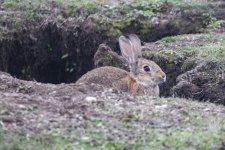
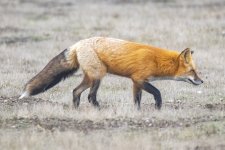
A03EuropeanHareInBurrow9876.jpgAt that point, there were two foxes in view, a silver morph to the north edge of the meadow and a gold morph (dark tail) at the west edge. As I drove down toward South Beach, another gold morph individual trotted up from the trees heading north at the edge of the grazed grasses nor far from the fence. I quickly pulled over and managed some nice shots of the fox as it entered the taller grasses, as if on the hunt for mice / voles.
A04RedFoxGoldMorph9753.jpg
A05RedFoxGoldMorph9762.jpg
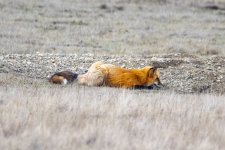
It was heading toward the aggregation of watchers. So I quickly turned around at the South Beach parking lot, headed back up Pickett’s lane, and parked near the group. The fox settled down on a mound by a large rabbit warren as if waiting for a rabbit to emerge. It was only 100’ from the cluster of observers.
A06RedFoxGoldMorph9852.jpg
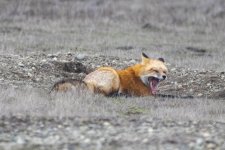
Later, it yawned, revealing a nice set of sharp, pointed teeth.
A07RedFoxGoldenMorphYawning9831.jpg
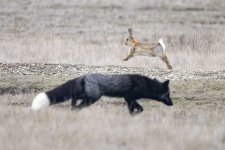
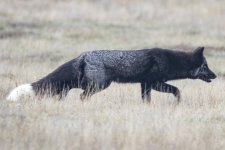
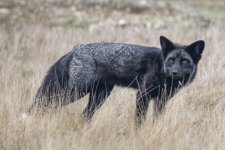
A short time later, a second silver morph appeared and trotted across the meadow toward us and the reclining gold morph (see the first picture). The rabbits were VERY wary of the passing fox.
A08PassingFox&Hare9820.jpg
At that moment, there were four foxes in view across the meadow.
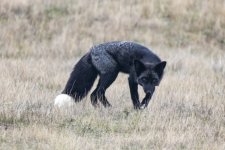
The silver morph looped around the gold morph and headed north again at the margin between the short cropped grass and the tall uncropped grass by the road / fence.
A09RedFoxSilverMorph9786.jpg
A10RedFoxSilverMorph9809.jpg
A11RedFoxSilverMorph9839.jpg
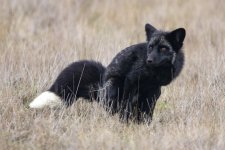
It stopped to scent mark.
A12RedFoxSilverMorphScentMarking9854.jpg
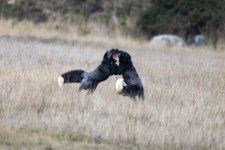
It was heading up to the first silver morph at the northeast corner of the meadow. Its movements had been saltatory, but as it approached the second silver morph, it stayed low to the ground and headed straight for it. These two individuals began to fight with lots of teeth showing and vocalizations.
A13RedFoxSilverMorphsSparring9863.jpg
I wasn’t sure if they were really going after each other or just sparring. The individual that I had been watching appeared to be the aggressor and the second silver morph soon displayed submissive postures and vocalizations. After the “fight” died down, this second fox made a beeline across the road to another field. If I had to speculate, I would say that the aggressor was the breeding male in the meadow and he was driving out a male offspring to encourage him to find his own territory.
Steve

 
Last edited:
San Juan Island Foxes. During a "grocery" trip to San Juan Island (yes, the silver salmon fishing was excellent as was the crabbing), I spent a off day exploring some of my favorite wildlife haunts. One was the rabbit meadow near South Beach at San Juan Island National Historical Park. For several acres to the west of Pickett’s Lane, introduced European rabbits have modified the landscape into tightly-cropped grasses punctuated by scattered burrows and mounds. While there are European rabbits elsewhere on the island, I don’t know of another large aggregation like this one.
In the presence of all that potential food, there are predators, especially bald eagles (though I did not see an eagle in four days) and introduced red foxes. Before Western colonization, there were no foxes (or European rabbits, and very few other mammals) on San Juan Island. The rabbits were raised for food on the island and either escaped or were released near the end of the 19th century.
When the hare populations exploded, introducing red foxes was one of several options that were implemented to control the rabbit numbers. These foxes came from fur farms and are not the same population genetics as the native red foxes on the mainland. And that explains the atypical color morphs among the island foxes.
For the last several years, at least one pair of foxes has had a den at the edge of the trees between the rabbit meadow and South Beach itself. The adult foxes hunt rabbits in the meadow and feed them to their kits. [Bald eagles have learned to steal the rabbits from the juveniles, leading to some famous pictures of a bald eagle with a rabbit in its talons and a fox holding onto its lunch.]
The foxes attract photographers – the “foxarazzi”. The park service’s rules keep visitors out of the field; visitors are supposed to keep 75’ buffer between themselves and the foxes. Generally, the grazing activity of the rabbits stops about 30’ from the fence that surrounds this meadow; outside the grazed area, the grasses are much taller, perhaps 18-24” tall. On this nice Saturday afternoon, two volunteers from the Park Service had set up a spotting scope to help visitors see foxes and answer questions (and ensure that the rules were followed).
This was an amazing day for viewing rabbits and foxes. [You can see the short grazed grasses around the rabbits and foxes in the center of the field of view and the ungrazed, taller grasses in the foreground and far background.]
View attachment 129142
When I arrived, I could see many rabbits out of their burrows grazing on the short grasses, keeping watch, and chasing each other.
View attachment 129143
View attachment 129144At that point, there were two foxes in view, a silver morph to the north edge of the meadow and a gold morph (dark tail) at the west edge. As I drove down toward South Beach, another gold morph individual trotted up from the trees heading north at the edge of the grazed grasses nor far from the fence. I quickly pulled over and managed some nice shots of the fox as it entered the taller grasses, as if on the hunt for mice / voles.
View attachment 129145
View attachment 129146
It was heading toward the aggregation of watchers. So I quickly turned around at the South Beach parking lot, headed back up Pickett’s lane, and parked near the group. The fox settled down on a mound by a large rabbit warren as if waiting for a rabbit to emerge. It was only 100’ from the cluster of observers.
View attachment 129147
Later, it yawned, revealing a nice set of sharp, pointed teeth.
View attachment 129148
A short time later, a second silver morph appeared and trotted across the meadow toward us and the reclining gold morph (see the first picture). The rabbits were VERY wary of the passing fox.
View attachment 129149
At that moment, there were four foxes in view across the meadow.
The silver morph looped around the gold morph and headed north again at the margin between the short cropped grass and the tall uncropped grass by the road / fence.
View attachment 129150
View attachment 129151
View attachment 129152
It stopped to scent mark.
View attachment 129153
It was heading up to the first silver morph at the northeast corner of the meadow. Its movements had been saltatory, but as it approached the second silver morph, it stayed low to the ground and headed straight for it. These two individuals began to fight with lots of teeth showing and vocalizations.
View attachment 129154
I wasn’t sure if they were really going after each other or just sparring. The individual that I had been watching appeared to be the aggressor and the second silver morph soon displayed submissive postures and vocalizations. After the “fight” died down, this second fox made a beeline across the road to another field. If I had to speculate, I would say that the aggressor was the breeding male in the meadow and he was driving out a male offspring to encourage him to find his own territory.
Steve
Stunning shots and narrative @Cabezon !
 
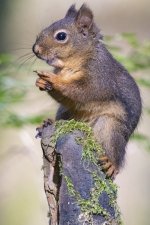
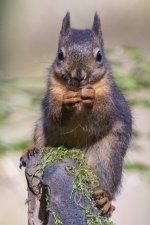
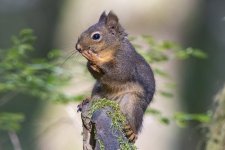
The Douglas squirrel is native to coastal pine forests of the Pacific Northwest and the Sierras (with a disjunct subspecies in Baja California). I have both Douglas squirrels and gray squirrels in my yard. While much smaller than the gray squirrels, the Douglas squirrels are far more territorial and aggressive. They chase the gray squirrels away from their trees. This behavior toward gray squirrels may stem from Douglas squirrels wishing to defend their seed caches. This time of year, Douglas squirrels are busy harvesting pine seeds to fill their caches. If you are out in the woods and pine cones seem to be dropping from the Douglas firs regularly, there is probably a Douglas squirrel in the canopy biting the cones free and letting them drop to the ground. The squirrels collect the fallen cones and separate the seeds from the scales. A squirrel may repeatedly do this processing at a single site, leaving a mountain of scales and striped “cobs” of the pine cones. As I was hiking along the trail at McLane Creek, I caught this individual posing on its feeding spot in great light.
DouglasSquirrel1936.jpgDouglasSquirrelPosing1932.jpgDouglasSquirrelPosing1933.jpg
Seems like such an exposed location would make the squirrel vulnerable to a predator like a Cooper's hawk or a barred owl, especially as the squirrel use the same locations for processing cones. But it must work.
Steve
 
Back
Top