
Navigation
Install the app
How to install the app on iOS
Follow along with the video below to see how to install our site as a web app on your home screen.
Note: This feature may not be available in some browsers.
More options
Style variation
You are using an out of date browser. It may not display this or other websites correctly.
You should upgrade or use an alternative browser.
You should upgrade or use an alternative browser.
Got any bird pics?
- Thread starter Wadin' Boot
- Start date


I should probably start a crappy cell bird pic thread. Oh well, I finally got a pic of the egret we've seen flying upriver a few times. Never enough warning to get a shot. Tonight it flew right over the house. If it's not gonna pose the least it could do drop a few of those neck hackles.

Last edited:

tkww
Life of the Party
Crummy cell phone pic -
View attachment 188694
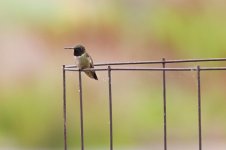
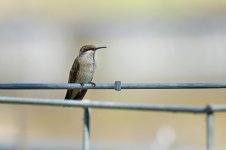
Last winter, while staying at an Airbnb in Redondo Beach, I found a hummingbird feeder in the casita. Cleaned it up and made the syrup - we enjoyed watching the birds feed and the birds "defend" (?) the feeder. Fast forward, back home in Ephrata and we're seeing the same behavior. It's a lot of fun to see the intruder try to sneak a drink. Entertaining!
It's funny that you both bring this up. Last few years I've been working on flowers in the garden and a feeder. Found a couple of Zinnias they like, but an overwintered agastache turns out to be the real prize. Which is interesting because they wouldn't touch it last year. Now it's so popular that they have pretty much stopped using my feeder.They are entertaining. The little guys startle the beejeezus out of me, divebombing and buzzing me, coming out of nowhere, when I'm the one who keeps their bottle filled with sugar water. No appreciation, I tell ya!
But to the point: I've seen some territorial behavior--the buzzing and energy they put into it makes it fairly obvious. Plus it usually results in an immediate exit from the area, which I assume is one chasing the other. But I've also seen some interplay that is much less clear to me. Not sure if it is siblings or mom/young. They put a little energy into the dance, a little back and forth and hovering and repositioning. But no vocalization, and definitely not the clear aggression that I would associate with a territorial interaction. A bit more of "I'm annoyed that you're here, but I'm not going to do anything about it." Which leads me to the familial presumption, but I have no idea if that's accurate or not.
An addition this year is a consistently-present male (Black-chinned)--normally it's just female/juvies that I see regularly. He usually shows up in the afternoons or evenings. Doesn't seem to cause much conflict with the birds that are their earlier in the day. However last week I saw him hop down off a tall plant cage and hover/move laterally back and forth over a 3-4' arch around the agastache. Back and forth several times, then returned to the cage perch. And then repeated. Eventually a not-male made itself clear, perching on a much shorter cage. There was something going on, but whatever it was didn't drive off the not-male--didn't really seem to provoke much reaction from it. Just kinda sat there and watched the male do this aerial sweeping back and forth around it. Still not sure what to make of it.

This is the first year we've had a hummingbird feeder so....... not much first hand experience in Ephrata observing their behavior. It has been fun watching one roost on the fiberoptic cable drop to the house then drop down and challenge other hummingbirds that get to close "to my feeder".It's funny that you both bring this up. Last few years I've been working on flowers in the garden and a feeder. Found a couple of Zinnias they like, but an overwintered agastache turns out to be the real prize. Which is interesting because they wouldn't touch it last year. Now it's so popular that they have pretty much stopped using my feeder.
But to the point: I've seen some territorial behavior--the buzzing and energy they put into it makes it fairly obvious. Plus it usually results in an immediate exit from the area, which I assume is one chasing the other. But I've also seen some interplay that is much less clear to me. Not sure if it is siblings or mom/young. They put a little energy into the dance, a little back and forth and hovering and repositioning. But no vocalization, and definitely not the clear aggression that I would associate with a territorial interaction. A bit more of "I'm annoyed that you're here, but I'm not going to do anything about it." Which leads me to the familial presumption, but I have no idea if that's accurate or not.
An addition this year is a consistently-present male (Black-chinned)--normally it's just female/juvies that I see regularly. He usually shows up in the afternoons or evenings. Doesn't seem to cause much conflict with the birds that are their earlier in the day. However last week I saw him hop down off a tall plant cage and hover/move laterally back and forth over a 3-4' arch around the agastache. Back and forth several times, then returned to the cage perch. And then repeated. Eventually a not-male made itself clear, perching on a much shorter cage. There was something going on, but whatever it was didn't drive off the not-male--didn't really seem to provoke much reaction from it. Just kinda sat there and watched the male do this aerial sweeping back and forth around it. Still not sure what to make of it.
My wife has an incredible variety of flowers in our yard, about a week ago the tiger lilies started blooming, the hummingbirds love them - hollyhocks are a favorite as well. Yesterday I was pulling weeds from the tomato bed; there's hollyhocks just outside of the tomato bed - a hummingbird flew within a few feet of me, close enough that even this hard of hearing old guy heard it (and felt it). So darn cool!



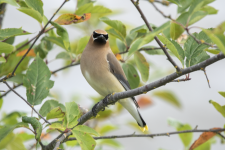
Nisqually NWR, Mid July. In visits to Nisqually in late spring and early summer, I could hear the high-pitched trills of cedar waxwings high in the canopy where they were likely hawking insects to feed chicks and nestlings. But they were hard to see. Now that nesting is over, their diet has shifted from protein to sweets and the flocks have been easier to photograph as they forage closer to the ground.
The adult plumage of an adult cedar waxwing: the striking black bandit mask, the yellow border of the tail, and the red tips on some wing secondaries, is so striking.
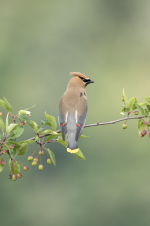
There are multiple food options for them now, including the fruits of native crabapples
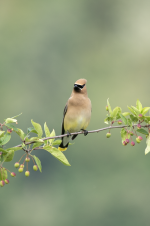
and twinberry honeysuckle.
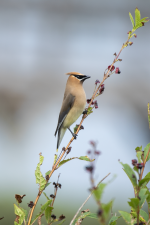
The thrushes are another bird group with a sweet tooth for ripe fruit. When adults and their offspring find a bush or tree with ripening fruit, they can really cluster until they clean the fruit out. American robins are certainly into their fruit phase.
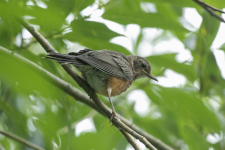
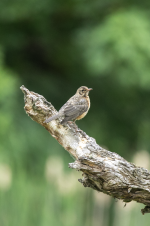
Fortunately for me, my neighborhood robins have moved to greener pastures before they completely stripped the ripening blueberries in my yard.
A favorite thrush due to their flute-like song, the Swainson’s thrush, migrates later into the Nisqually area (and my backyard) from their wintering grounds in South America and southern Central America. Normally, they are quite elusive (heard, but not seen). Unlike robins that often will pose in the open sunshine, Swainson’s thrush prefer the shade and are far more camera-shy than robins. So, I was quite pleased to have an adult pose in a light gap. It had just inhaled a ripe red fruit from a bittersweet nightshade vine.
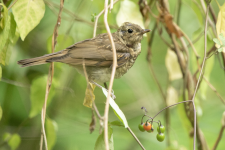
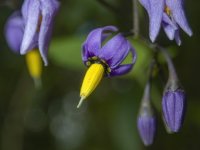
Bittersweet nightshade is native to Eurasia and Northern Africa, but it is now found across North America. The flowers are quite distinctive
 and a cluster of nightshade fruits looks like a bunch of tiny grape tomatoes.
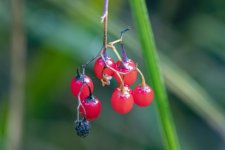
In fact, tomatoes (and potatoes and egg-plants) are in the same genus, Solanum, as the bittersweet nightshade In spite of the pretty flowers and fruits, various parts of the nightshade plants are toxic due to several alkaloids (solanine in unripe fruit, solasodine in flowers, and beta-solamarine in roots). The fruits are the least toxic and thrushes are immune to its effects. Because the initial taste of bittersweet nightshade fruit is quite bitter to humans, it is unlikely that any person would want to consume enough to experience its toxic effects (i.e., convulsions and death), though the aftertaste is sweet (hence the common name “bittersweet”).
When the first Conquistadors brought unique domesticated plants from South and Meso-America back to Europe in the late 16th century, the crops included tomatoes and potatoes. Because of their close relationships to known toxic plants in the same genus in Europe (e.g., nightshades, belladonna, and mandrake), the acceptance of tomatoes and potatoes as food items in Europe was muddled, especially in England. In fact, the roots, stems, and leaves of tomatoes do contain the toxin solanine. An early common name for the tomato in Europe was the “poison apple”. [In an additional complication for their reputation, the acids in tomatoes and their dishes can leach lead from pewter plates, causing lead poisoning. However, there is some academic debate as to whether the amount of lead released could actually cause neurological effects]. Eventually, tomatoes were gradually accepted as a culinary staple, especially in Italy, leading to a dramatic transition in “Italian cuisine” due to this introduced plant. In potatoes, the sprouts, flowers, and green-skin of sprouting tubers contain potentially lethal levels of solanine. The fruits of tomatoes and the white flesh of potatoes contain levels of solanine several orders of magnitude below toxic doses (i.e., detectable but not a health hazard). Peeling away the green skin of ripening potatoes removes the greatest concentration of solanine.
Steve
The adult plumage of an adult cedar waxwing: the striking black bandit mask, the yellow border of the tail, and the red tips on some wing secondaries, is so striking.
There are multiple food options for them now, including the fruits of native crabapples
and twinberry honeysuckle.
The thrushes are another bird group with a sweet tooth for ripe fruit. When adults and their offspring find a bush or tree with ripening fruit, they can really cluster until they clean the fruit out. American robins are certainly into their fruit phase.
Fortunately for me, my neighborhood robins have moved to greener pastures before they completely stripped the ripening blueberries in my yard.
A favorite thrush due to their flute-like song, the Swainson’s thrush, migrates later into the Nisqually area (and my backyard) from their wintering grounds in South America and southern Central America. Normally, they are quite elusive (heard, but not seen). Unlike robins that often will pose in the open sunshine, Swainson’s thrush prefer the shade and are far more camera-shy than robins. So, I was quite pleased to have an adult pose in a light gap. It had just inhaled a ripe red fruit from a bittersweet nightshade vine.
Bittersweet nightshade is native to Eurasia and Northern Africa, but it is now found across North America. The flowers are quite distinctive
and a cluster of nightshade fruits looks like a bunch of tiny grape tomatoes. In fact, tomatoes (and potatoes and egg-plants) are in the same genus, Solanum, as the bittersweet nightshade In spite of the pretty flowers and fruits, various parts of the nightshade plants are toxic due to several alkaloids (solanine in unripe fruit, solasodine in flowers, and beta-solamarine in roots). The fruits are the least toxic and thrushes are immune to its effects. Because the initial taste of bittersweet nightshade fruit is quite bitter to humans, it is unlikely that any person would want to consume enough to experience its toxic effects (i.e., convulsions and death), though the aftertaste is sweet (hence the common name “bittersweet”).
When the first Conquistadors brought unique domesticated plants from South and Meso-America back to Europe in the late 16th century, the crops included tomatoes and potatoes. Because of their close relationships to known toxic plants in the same genus in Europe (e.g., nightshades, belladonna, and mandrake), the acceptance of tomatoes and potatoes as food items in Europe was muddled, especially in England. In fact, the roots, stems, and leaves of tomatoes do contain the toxin solanine. An early common name for the tomato in Europe was the “poison apple”. [In an additional complication for their reputation, the acids in tomatoes and their dishes can leach lead from pewter plates, causing lead poisoning. However, there is some academic debate as to whether the amount of lead released could actually cause neurological effects]. Eventually, tomatoes were gradually accepted as a culinary staple, especially in Italy, leading to a dramatic transition in “Italian cuisine” due to this introduced plant. In potatoes, the sprouts, flowers, and green-skin of sprouting tubers contain potentially lethal levels of solanine. The fruits of tomatoes and the white flesh of potatoes contain levels of solanine several orders of magnitude below toxic doses (i.e., detectable but not a health hazard). Peeling away the green skin of ripening potatoes removes the greatest concentration of solanine.
Steve
Last edited:


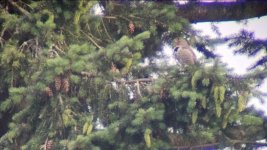
I recently got an ollin system to quick mount my phone to spotting scope. I went out in the front yard to check it all out, and without any aiming or focus, this was literally what the scope was randomly looking at when I set my phone on the scope. Qualifies for your crappy bird Pic thread.I should probably start a crappy cell bird pic thread. Oh well, I finally got a pic of the egret we've seen flying upriver a few times. Never enough warning to get a shot. Tonight it flew right over the house. If it's not gonna pose the least it could do drop a few of those neck hackles.
View attachment 188917

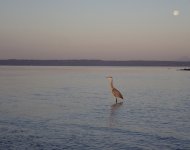
Did you toss a clouser in front of it? I bet you could have gotten an eat.


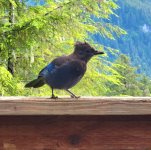
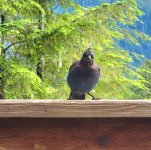
Trying to relax with our morning coffee when the robins and jays started making a huge ruckus.
Went out front and found this guy. He was talking to his mate. Got a brief glimpse of her when they both flew off. Love the expression. Looks super annoyed at the Robin thats freaking out just below and to the left.
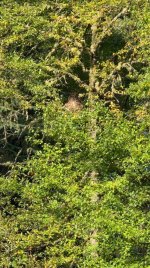
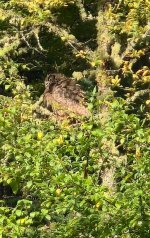
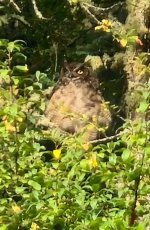
Went out front and found this guy. He was talking to his mate. Got a brief glimpse of her when they both flew off. Love the expression. Looks super annoyed at the Robin thats freaking out just below and to the left.
Last edited:

Coach Potter
Legend
I recognize the bird in the foreground as a yellow bird and the bird in the background as an owl . I shot those while waiting to recover a bear I had shot a few minutes earlier. It was a great distraction.I shot the bear with a completely different tool than the birds.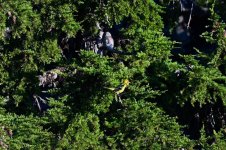
. I shot those while waiting to recover a bear I had shot a few minutes earlier. It was a great distraction.I shot the bear with a completely different tool than the birds.
Coach Potter
Legend
I think this is the female version of the yellow bird. 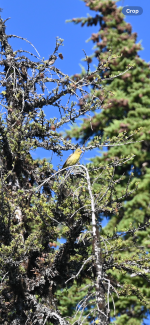
Yellow with red head = male Western tanager. Yellow head = female Western tanager. Owls = barred owls. Congrats on the bear.I recognize the bird in the foreground as a yellow bird and the bird in the background as an owl
Steve
Coach Potter
Legend
Yellow with red head = male Western tanager. Yellow head = female Western tanager. Owls = barred owls. Congrats on the bear.
Steve
Thank you sir! I didn’t even see the owl when I initially started shooting the tanager.

Is that a Great Horned Owl?Trying to relax with our morning coffee when the robins and jays started making a huge ruckus.
Went out front and found this guy. He was talking to his mate. Got a brief glimpse of her when they both flew off. Love the expression. Looks super annoyed at the Robin thats freaking out just below and to the left.
View attachment 189767
View attachment 189768
View attachment 189766