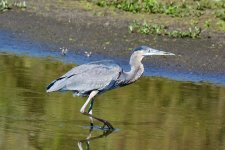
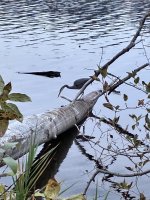
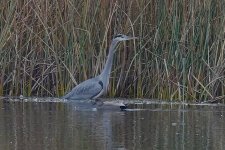
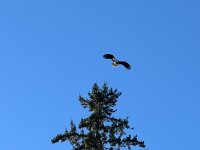
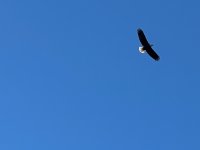
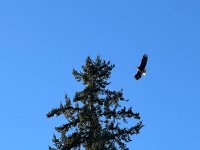
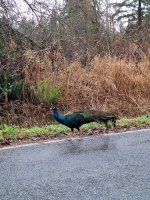
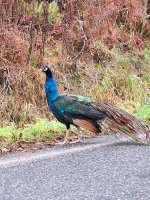
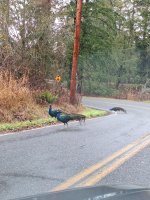
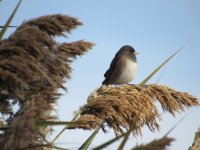
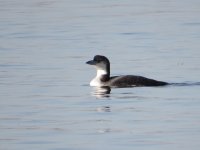
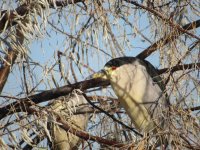
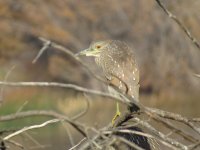
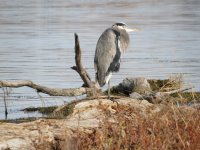
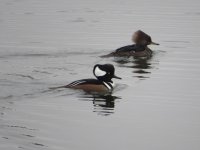
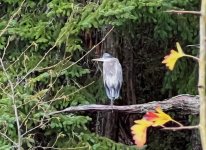
Got any bird pics?

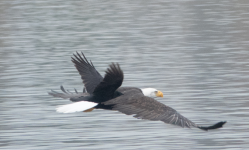
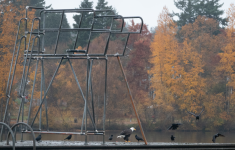
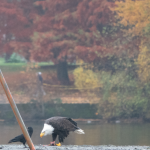
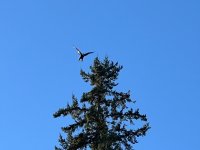
Down at the diving platform on Green Lake today. There's a pair of Eagles hanging around the theater, and one of them was partying with the crows. Eagle prototype with a V-wing tail...
1763261562036.png1763261597087.png
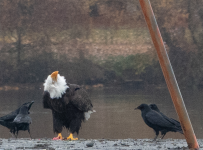
This is the look you get when you try and steal a dead coot


1763261628277.png

1763261681208.png
 
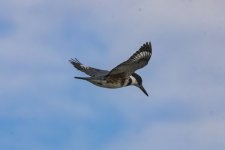
Lots of kingfishers around.
Hard bird for me to get a good picture of as they always move when you get close. I do enjoy watching them hunt and their calls. A few less than stellar pics from this morning.
SFIMG_4585.jpegIMG_4584.jpegIMG_4583.jpeg
 
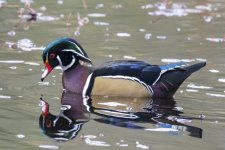
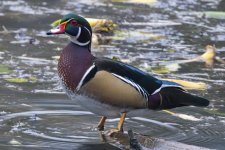
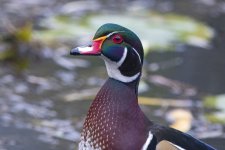
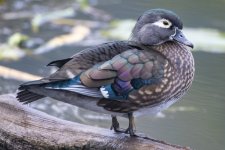
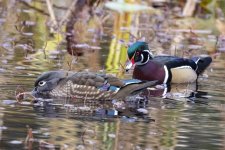
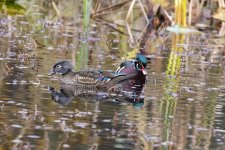
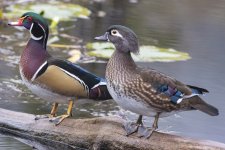
McLane Creek Natural Area. Early November 2025. Birds: I make no apologies for posting more pictures of wood ducks from the main pond at McLane Creek. There are about a dozen woodies here. The drakes are so striking, enhanced by the reflected fall colors in the main pond.
A01WoodDuckDrake6365.jpg
A02WoodDuckDrake6745.jpg
A03WoodDuckDrake6762.jpg
Typically, drakes and hens
A04WoodDuckHen6731.jpg
are paired up.
A05WoodDuckPair6348.jpg
A06WoodDuckPair6349.jpg
A07WoodDuckPair6767.jpg
and low-level vocalizations maintain their spatial connection. There are also about a dozen mallards that come and go. They say that familiarity breeds contempt, but mallards are quite handsome ducks too, easy to overlook.
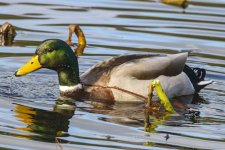
A08MallardDrake6806.jpg
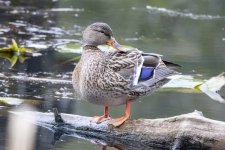
A09MallardHen6503.jpg
There is at least one pair of belted kingfishers whose territory includes the ponds and the nearby sections of creek. Earlier this week, my wife watched a kingfisher pluck a lamprey from the creek. The lamprey may have been dislodged from its gravel refuge by the spawning activities of the ubiquitous chum salmon.
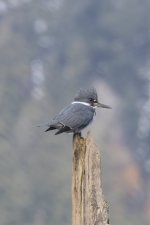
In the ponds, the kingfishers are quite vocal, but skittish typically (a common condition for kingfishers in my experience). Their favorite trick is to perch close to you, but to take off immediately when you raise your camera for a few pictures, laughing all the way. But on my last two visits, the male has remained perched on a dead snag in the pond not far from the boardwalk platform that extends into the lake.
A10BeltedKingfisherMale6799.jpg
Steve
 
Do you happen to know if springtime is a customary time for a Flock at this location?

I watch a lot of webcams at other locations and they certainly come and go, e.g. Henrietta peak, or Pacheco peak, but I don’t have Any clear idea if they are on a seasonal schedule

I have been to the redwoods a couple years and kept my eyes out for birds of the Klamath flock, w/o success

Jay
I honestly have no idea. We were lucky and the early morning high peaks hike was loaded with condors when we reached the top. The in flight photo was a frame filling shot. We hiked down to the east side and then back up and by that time it was afternoon and all condors were very far away. I think we just go lucky.
 
Do you happen to know if springtime is a customary time for a Flock at this location?

I watch a lot of webcams at other locations and they certainly come and go, e.g. Henrietta peak, or Pacheco peak, but I don’t have Any clear idea if they are on a seasonal schedule

I have been to the redwoods a couple years and kept my eyes out for birds of the Klamath flock, w/o success

Jay
Condors are technically non migratory but that doesn't mean they don't move around some in search of food. I do think some persistence and luck is involved. Maybe early or later in the day near known roosts would be a good place to start.
 
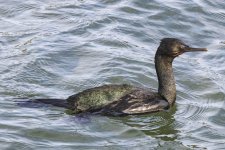
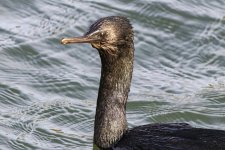
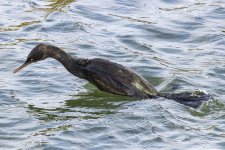
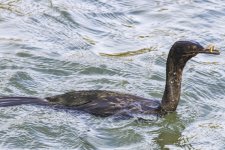
Washington Coast, 8 November 2025. Not surprisingly on a dry weekend day, the outer dock and Fisherman’s Boardwalk at the Westport Marina were packed with folks trying the alchemy of converting chicken drumsticks into Dungeness crab. In the calm waters of the marina, common loons and Western grebes were diving in the channels between the docks. From the Fisherman’s Boardwalk, we could see surf scoters bobbing among the white-capped waves in the bay. As we were leaving, I spotted a pelagic cormorant diving on either side of the bridge that connects the parking lot to the floating docks. I love that green sheen on their backs.
A01PelagicCormorant6690.jpg
A02PelagicCormorant6591.jpg
While it was wary of me and my camera, it also was determined to continue its feeding dives. I have a behavioral “tell” for identifying pelagic versus other cormorant species; a pelagic will make a small “hop” as it dives.
A03PelagicCormorantDiving6638.jpg
Every three or four dives, the cormorant was successful. One snack was a pholid.
A04PelagicCormorantWPholid6633.jpg
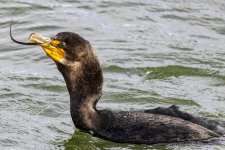
While photographing the pelagic cormorant, a double-crested cormorant wandered into camera range. It was also looking for lunch. After one dive, it came up with a pipefish.
A05DoubleCrestedCormorantWPipefish6594.jpg
Not much “meat” on a pipefish, but it must have been worth the effort.
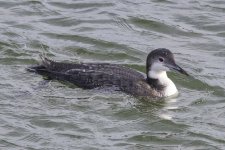
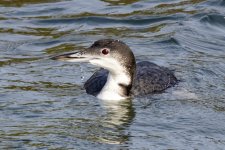
A common loon also popped up into range. Even in its drabber non-breeding plumage, those dark red eyes give it a very sinister appearance.
A06CommonLoon6672.jpg
A07CommonLoon6599.jpg
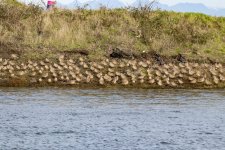
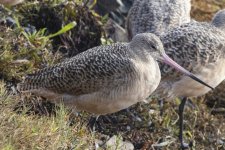
As it was nearly high tide, a flock of 50+ marbled godwits snoozed along the shore between the outer rock breakwater and the bridge that leads to float 20.
A08MarbledGodwitFlock6572.jpg
A09MarbledGodwit6543.jpg
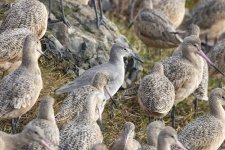
A single light-gray willet rested in the midst of the massed cinnamon godwits.
A10WillettAmongMarbledGodwits6709.jpg
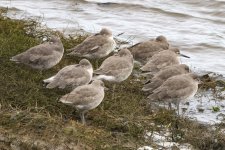
At the Tokeland marine earlier in the day, we encountered a dozing flock of a dozen willets.
A11WilletFlock6537.jpg
While the steady winds were a challenge for us, a female belted kingfisher used the breeze to hover near the shore of the marina. Periodically, it would dive to grab some morsel but soon returned to its hover position.
A12BeltedKingfisherFemale6519.jpg
A13BeltedKingfisherFemale6532.jpg
Steve
 
Had a couple free hours on this rare of late sunny morning. Played around with a big lens and Sony Clear Image Zoom. Pics were taken at 1600mm. Sun wasn't where I wanted it, but the birds were obliging.
DSC01940.JPGDSC01944.JPGDSC01945.JPG
 
Nisqually NWR, 18 November 2025. While just about all of the warblers and vireos have headed south to warmer climes, our resident tiny insectivores are still active and with fewer / no leaves to obscure then, often easier to see. They have coalesced into mixed-species feeding flocks as they industriously glean insects and spiders from the branches, trunks, and remaining leaves. It is magical when you find yourself in the middle of a flock. Their delicate sounds surround you. The air is filled with their frenetic movements.
Considering that they consume the same prey, there must be advantages for joining in these larger feeding flocks. More eyes might reduce the overall predation risk from Cooper’s or sharp-shinned hawks.
A week ago, I found myself immersed in this situation at Nisqually NWR. For almost an hour, I tried to photograph these tiny, fast birds under relatively the relatively low light conditions of mid-November, especially under cloudy skies (higher ISO and slower shutter speeds…). Not unexpectedly, I discarded many pictures (thank you for digital vs. the film cameras I started with decades ago.). I have over a dozen images of empty branches where there had been a bird just a fraction of a second before or a blurred bird flying out of frame… But there were many solid ones that I thought I would share.
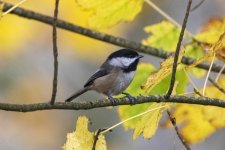
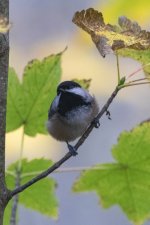
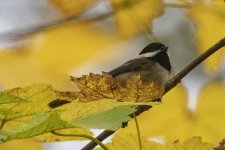
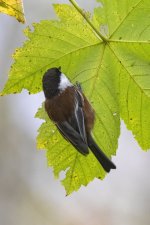
Chickadees, both black-capped and chestnut-backed, were the most common participants in this flock. On multiple occasions, I watched a chickadee hang from the yellow leaf of a big-leaf maple as it scanned for caterpillars or other potential food items. A black-capped chickadee (11g)
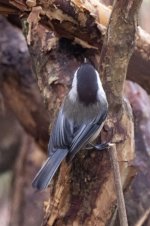
A01BlackCappedChickadee6829.jpg
A02BlackCappedChickadee6889.jpg
A03BlackCappedChickadee6912.jpg
A04BlackCappedChickadee6953.jpg
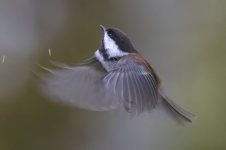
is just about the mass of two quarters (11.3g) (or two nickels = 10g). A chestnut-backed chickadee (9.7g)
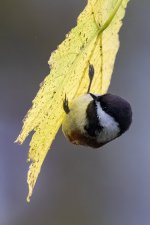
A05ChestnutBackedChickadee6931.jpg
A06ChestnutBackedChickadeeInFlighjt6935.jpg
A07ChestnutBackedChickadeeOnLeaf6940.jpg
is even lighter.
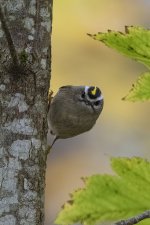
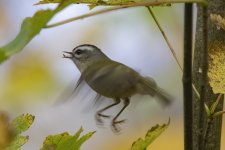
For the last few trips to Nisqually, Merlin’s sound ID feature has indicated the presence of golden-crowned kinglets (6g) in the crowns of the trees, hidden by leaves for the most part. But on this day, the mixed feeding flock included golden-crowned kinglets coming closer to the ground and in better photographic range.
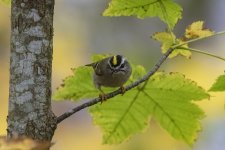
A08GoldenCrownedKinglet6919.jpg
A09GoldenCrownedKinglet6879.jpg
A10GoldenCrownedKingletCapturesBugInFlight6910.jpg
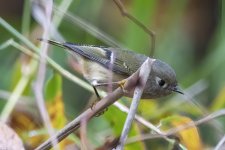
Adding to the species diversity, there were a few ruby-crowned kinglets (6.5g) in the mix as well.
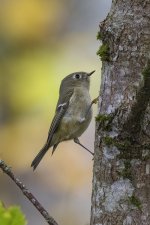
A11RubyCrownedKinglet6893.jpg
A12RubyCrownedKinglet7026.jpg
A solitary brown creeper searched up the main tree trunks.
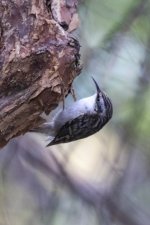
A13BrownCreeper6835.jpg
I often encounter downy woodpeckers traveling with this mixed-flock. Today, I first heard their high-pitched squeaks deeper in the woods and then found a pair of downy woodpeckers who were chasing each other through the trees. While I do not see many nuthatches at Nisqually NWR, I have observed red-breasted nuthatches traveling with these flocks in my neighborhood.
While not traveling with these groups, species that have more limited ranges, such as song sparrows and Bewicks wrens,
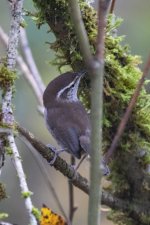
A14BewicksWren7009.jpg
appear to become more active as a mixed-species flock passes through their range. Perhaps they are more comfortable when there are so many other individuals on alert for predators.
Interestingly, I rarely find bushtits (5.3g – one quarter), another classic small insectivore, as members of these mixed flocks.

Steve

 
A week ago, I found myself immersed in this situation at Nisqually NWR. For almost an hour, I tried to photograph these tiny, fast birds under relatively the relatively low light conditions of mid-November, especially under cloudy skies (higher ISO and slower shutter speeds…).
Fabulous images Steve - I can totally appreciate what you went through trying to capture them - well done!
 
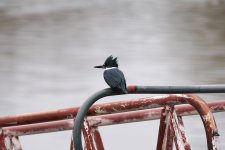
Gloomy day, saw more than I could photograph, including a Kingfisher which outdrew me.

DSC01950.JPG

And a Hawksquatch that was a long way off. Broadwinged whatever it is.
DSC01965.JPG
 
IMG_4847.JPGIMG_4857.JPGIMG_4984.JPGIMG_4844.JPGIMG_4859.JPGIMG_4947.JPG
From what is likely my last walk on Bateman Island. The causeway that allows dry land access to the island is being removed to restore the historical flow path at the mouth of the Yakima in hopes of lowering late summer water temperatures that block early chinook passage. The end of an era for birders, shore bound smallmouth fisherman and homeless folks.
 
The pending loss of access hurts, Rich but I'm glad your "last walk" was a productive one. The Corps of Engineers seems to relish "managing" lands under their purview via rendering said lands difficult to access, or in this case inaccessible.
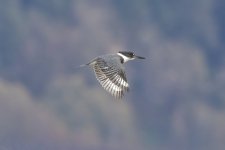
 
The Kingfisher gave me another chance, and on the very same perch!
DSC01981.JPG
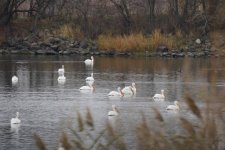
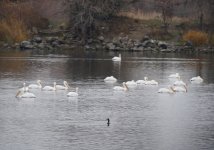
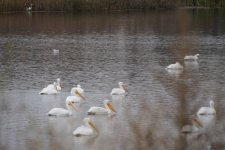
Pelicans
DSC01967.JPG
Pelicans
DSC01969.JPG
And more Pelicans.
DSC01972.JPG
Strange pairing on a real crappy dock.
DSC01984.JPG
 
Nice shots, Brian. Must have been after tree frogs . . . ;)

It has always amazed me that these long-legged feathered critters nest in the top of tree canopies.
 
Back
Top