
Navigation
Install the app
How to install the app on iOS
Follow along with the video below to see how to install our site as a web app on your home screen.
Note: This feature may not be available in some browsers.
More options
Style variation
You are using an out of date browser. It may not display this or other websites correctly.
You should upgrade or use an alternative browser.
You should upgrade or use an alternative browser.
Got any bird pics?
- Thread starter Wadin' Boot
- Start date




Arizona, late March 2025. Part 1 of Many: Ducks and Water Birds. My wife and I spent her Spring Break in Southern Arizona, south of Tucson for the most part. This was replay of a trip that we made to this area in 2023. For that earlier trip, we hired a local guide to show us some great birding spots in the area and to help us identify the new species there. We decided to forego hiring a guide for this trip. But we used his itinerary as a framework for this recent trip and added several other promising spots that we found on eBird. Over 8 days, we covered 500 miles in our rental car. Typically, we visited two sites per day: deserts, riparian corridors, human-created wetlands and lakes, oak-pine canyons, birding hotspots with dozens of feeders.
Even though the Southern Arizona region has been in the grip of an extreme drought, the trip was very successful. As we relaxed in our hotel room after each day’s adventures, we would tote up a list of the fauna that we had encountered. While waiting for our flight home to SeaTac at the end of the trip, we created an impressive master list. Over the eight-days, we had identified 124 bird species, including several lifers for both of us. And we had great views of some species and witnessed some interesting behavior. And while the focus was birds, we also saw one amphibian, seven reptiles, and five mammals (including a new species for me, a bobcat).
As you might expect, I took a few pictures…. 3709 to be exact. It has taken a while to go through them all and to select the best of the best to share with you. I have tried to organize them into some rationale (?) order, primarily by their taxonomy or through their ecological role. This is likely to take a few posts…
Let’s start with the ducks (no geese interestingly) and other water birds. Southern Arizona might not strike you as a hotspot for ducks and other water birds. But the area is in a major flyway between the U.S. / Canada and Mexico / Central America and the mild winter weather encourages birds to overwinter wherever there is suitable habitat. At one of our favorite places, Sweetwater Wetlands Park (originally a groundwater recharge site converted into a rich, popular wetland reserve), we had great looks at ten duck species (and lots of other great birds). The park is an oasis in the middle of urbanized Tucson and the surrounding Sonoran desert.
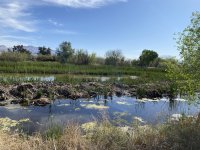
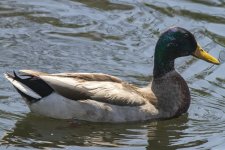
We loved this site so much we actually visited it twice at the start and end of our trip. Of course, the human-created wetlands and ponds had lots of mallards, including this drake.
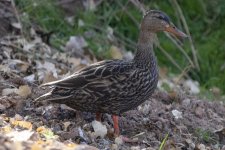
It was only when we hiked trails through the riparian zone along the San Pedro River east of Sierra Vista that we encountered very wary Mexican ducks. Based on genetic differences, the Mexican duck was elevated in 2020 from a mallard subspecies to full species status. Both the drake and hen Mexican ducks superficially resemble female mallards. A Mexican duck male lacks the iridescent green head of a mallard drake but has the same olive-green bill.
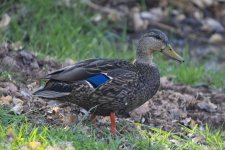
Hen Mexican ducks are very similar to hen mallards; both have dusky orange bills.
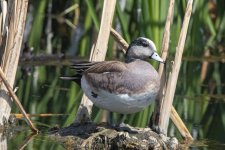
The Sweetwater Wetlands and other pond/lake habitats also had many other dabbling ducks (tribe Anatini), such as American wigeons,
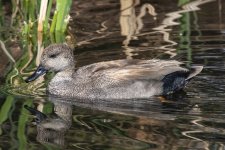
gadwalls like this drake,
and northern shovelers.
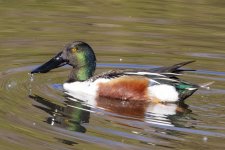
At Sweetwater, pairs were filtering microscopic food from the surface of the water.
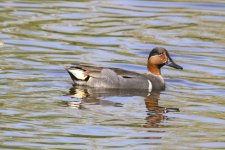
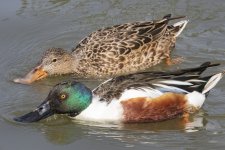 At Sweetwater, we saw all three North American teal species within a minute in the same pool. These included green-winged teals,
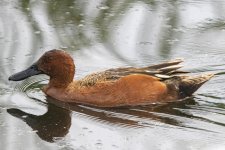
many cinnamon teals,
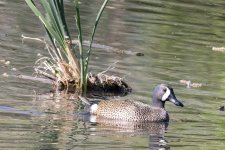
and a single pair of blue-winged teals, including this drake.
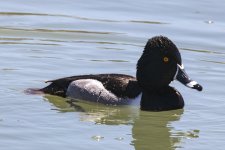
We also saw several species of diving ducks (tribe Aythyini), such as redheads (no pictures), ring-necked ducks,
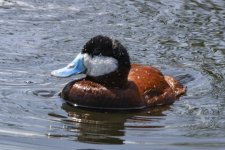
 and even a pair of ruddy ducks.
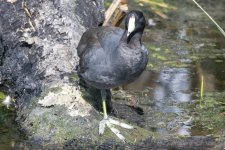
While not ducks, we also saw several members of the family Rallidae. We managed a quick view of the elusive sora as it wound its way through the reeds. At several pond/lake sites, we encountered American coots either feeding at the surface or diving for submerged aquatic vegetation.
At Sweetwater, we were fortunate to find a relative of the coot (a fancier version), the common gallinule.
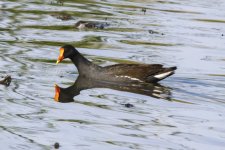
This species is more common in the eastern half of the U.S., but its range extends along the Gulf of Mexico, through the Southwest, and into Southern California. From the Southwest, it continues south through Mexico and Central America and the Atlantic coast of South America.
Finally, in this loose category, I will include the pied-billed grebe in the family Podicipedidae. The cute grebes that we encountered were in breeding coloration with a vertical black stripe on their bills.
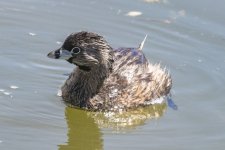
For such as small bird, they produce quite loud, haunting songs and calls.
Steve
Even though the Southern Arizona region has been in the grip of an extreme drought, the trip was very successful. As we relaxed in our hotel room after each day’s adventures, we would tote up a list of the fauna that we had encountered. While waiting for our flight home to SeaTac at the end of the trip, we created an impressive master list. Over the eight-days, we had identified 124 bird species, including several lifers for both of us. And we had great views of some species and witnessed some interesting behavior. And while the focus was birds, we also saw one amphibian, seven reptiles, and five mammals (including a new species for me, a bobcat).
As you might expect, I took a few pictures…. 3709 to be exact. It has taken a while to go through them all and to select the best of the best to share with you. I have tried to organize them into some rationale (?) order, primarily by their taxonomy or through their ecological role. This is likely to take a few posts…
Let’s start with the ducks (no geese interestingly) and other water birds. Southern Arizona might not strike you as a hotspot for ducks and other water birds. But the area is in a major flyway between the U.S. / Canada and Mexico / Central America and the mild winter weather encourages birds to overwinter wherever there is suitable habitat. At one of our favorite places, Sweetwater Wetlands Park (originally a groundwater recharge site converted into a rich, popular wetland reserve), we had great looks at ten duck species (and lots of other great birds). The park is an oasis in the middle of urbanized Tucson and the surrounding Sonoran desert.
We loved this site so much we actually visited it twice at the start and end of our trip. Of course, the human-created wetlands and ponds had lots of mallards, including this drake.
It was only when we hiked trails through the riparian zone along the San Pedro River east of Sierra Vista that we encountered very wary Mexican ducks. Based on genetic differences, the Mexican duck was elevated in 2020 from a mallard subspecies to full species status. Both the drake and hen Mexican ducks superficially resemble female mallards. A Mexican duck male lacks the iridescent green head of a mallard drake but has the same olive-green bill.
Hen Mexican ducks are very similar to hen mallards; both have dusky orange bills.
The Sweetwater Wetlands and other pond/lake habitats also had many other dabbling ducks (tribe Anatini), such as American wigeons,
gadwalls like this drake,
and northern shovelers.
At Sweetwater, pairs were filtering microscopic food from the surface of the water.
At Sweetwater, we saw all three North American teal species within a minute in the same pool. These included green-winged teals,many cinnamon teals,
and a single pair of blue-winged teals, including this drake.
We also saw several species of diving ducks (tribe Aythyini), such as redheads (no pictures), ring-necked ducks,
and even a pair of ruddy ducks.While not ducks, we also saw several members of the family Rallidae. We managed a quick view of the elusive sora as it wound its way through the reeds. At several pond/lake sites, we encountered American coots either feeding at the surface or diving for submerged aquatic vegetation.
At Sweetwater, we were fortunate to find a relative of the coot (a fancier version), the common gallinule.
This species is more common in the eastern half of the U.S., but its range extends along the Gulf of Mexico, through the Southwest, and into Southern California. From the Southwest, it continues south through Mexico and Central America and the Atlantic coast of South America.
Finally, in this loose category, I will include the pied-billed grebe in the family Podicipedidae. The cute grebes that we encountered were in breeding coloration with a vertical black stripe on their bills.
For such as small bird, they produce quite loud, haunting songs and calls.
Steve
Last edited:
Excellent, as usual.
Love the bright blue bill on the ruddies. Also enjoy their courtship display.
Thanks!
Love the bright blue bill on the ruddies. Also enjoy their courtship display.
Thanks!
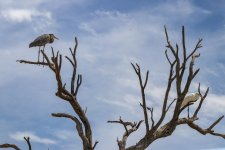
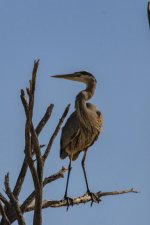
Arizona, late March 2025. Part 2 of Many: Herons (Ardeidae) and Shorebirds (Charadriiformes). Again, with limited aquatic habitats in Southern Arizona, we weren’t expecting to see many herons or shorebirds. But we encountered five heron species (4 at Sweetwater Regional Park): great blue herons,
great egrets,
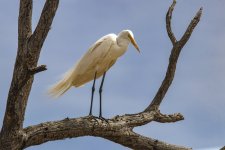
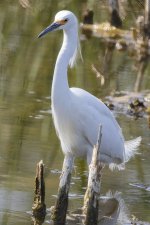
snowy egrets (with their distinctive yellow feet),
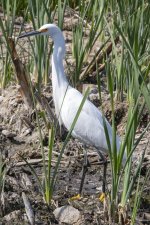
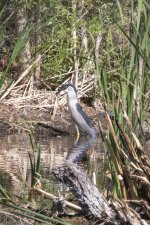
a black-crowned night heron (which is in the process of swallowing a massive bullfrog),
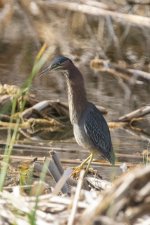
and a green heron.
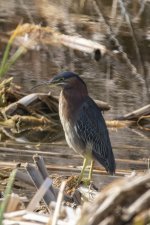
From this image, you can see just how much a green heron can extend its neck.
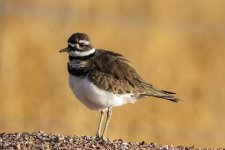
You wouldn’t expect to see many shorebirds, but we did encounter several species. The killdeer is a widespread shorebird. The plaintive “killdeer” call of the males is so distinctive that you will often know that they are in the area before you actually see them. This distinctive plover is a common inhabitant of golf courses, lawns, fields, parking lots, and athletic fields. They feed on invertebrates, such as earthworms, snails, insects, and crustaceans.
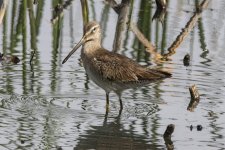
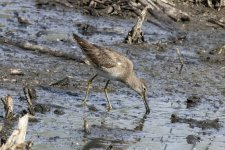
We also encountered several shorebirds at Sweetwater (see a theme here…). These included a single long-billed dowitcher,
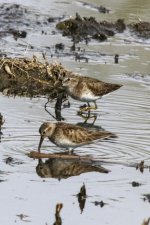
a small flock of least sandpipers,
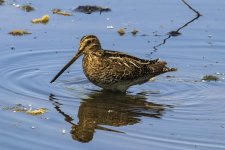
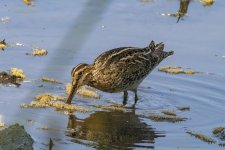
and several great looks at often-elusive Wilson’s snipes.
Steve
great egrets,
snowy egrets (with their distinctive yellow feet),
a black-crowned night heron (which is in the process of swallowing a massive bullfrog),
and a green heron.
From this image, you can see just how much a green heron can extend its neck.
You wouldn’t expect to see many shorebirds, but we did encounter several species. The killdeer is a widespread shorebird. The plaintive “killdeer” call of the males is so distinctive that you will often know that they are in the area before you actually see them. This distinctive plover is a common inhabitant of golf courses, lawns, fields, parking lots, and athletic fields. They feed on invertebrates, such as earthworms, snails, insects, and crustaceans.
We also encountered several shorebirds at Sweetwater (see a theme here…). These included a single long-billed dowitcher,
a small flock of least sandpipers,
and several great looks at often-elusive Wilson’s snipes.
Steve

Thanks! We are privileged to know you . . .Arizona, late March 2025.
Arizona, late March 2025. Part 3 of Many: This collection could be subtitled “War and Peace” or “Predators and Prey”, including the several types of “lions” and several types of “lambs”: doves (Columbidae) and quail / wild turkey. The first two species that I will present showed us similar “quid-pro-quo” or “See baby. I’ll be a good provider” activities. [While it is always tempting to interpret animal behavior in human terms, it is often a mistake to ascribe “motivations” of animals objectively.] Both of these encounters fall into the “It’s better to be lucky than be good” serendipity or “be in the right place at the right time”.
Early on our first visit to Sweetwater Wetlands Park, we turned a corner on a trail to find a male greater roadrunner only 20 feet away. We were careful not to spook him, but we needn’t have worried. He was far more interested in singing to attract a mate (and/or warn off other males). He jumped up onto a metal railing that surrounded one of the water control structures and delivered several series of its “coo-coo-coo” call. A great opportunity for pictures,
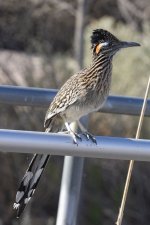
especially close-ups of his head (and this wasn’t the best roadrunner observation of the day even).
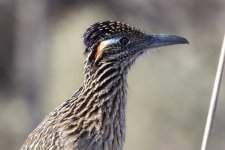
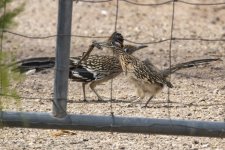
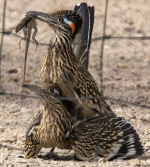
AnNear the end of our visit, we took a side trail that was off the beaten track; my hope was that we might find some wildlife that were avoiding the bustle along the more-popular paths. And we scored big-time. Just beyond a fence that surrounds a former recharge ponds, I spotted a pair of mating roadrunners (no idea if this was the same male that we had seen singing earlier). The male, on top of the crouching female, held a lizard in its bill while they copulated.
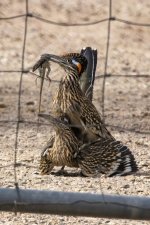
When they were finished, the male gave the lizard to the female who quickly consumed it.
We encountered a similar male-female interaction the next day at Aqua Caliente Regional Park, northeast of Tucson. A perennial warm spring emerges in the park and supports several ponds. This desert oasis was first inhabited by Native Americans over 5000 years ago. Later the water supported a ranch and orchards. Owners planted palms trees, eucalyptus trees, and native trees along the stream and ponds. We had stopped for a late lunch in the shade of the palm trees that line the spring and at the transition to more native trees. I had brought along my camera and binocs just in case.
As lunch was wrapping up I spotted out of the corner of my eye a hawk that landed on a branch of tree 30’ from our picnic table. A few seconds later, a second hawk landed on the same branch. These were a pair of Cooper’s hawks. The male had captured a ground squirrel and passed it to the female. He then popped up on her back and the pair began mating. When they were done, the male moved a short distance away
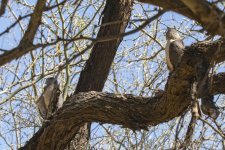
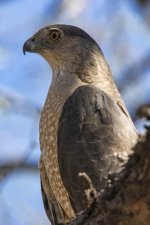
before flying off. The female then settled down to consume her lunch.
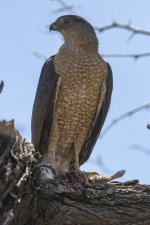
The next day, we stopped at Canoa Ranch Conservation Park. This site is one of the earliest land grants in Arizona along the Santa Cruz River. The park now includes a stream and 2.5-acre artificial lake. Willows dominate the riparian vegetation along the stream; they were just producing catkins when we visited. The catkins attracted many warblers and the water in the stream attracted flocks of sparrows.
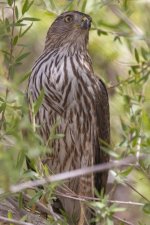
And where there is a ready supply of small birds, you will find predators like a juvenile sharp-shinned hawk. It blasted through an opening in the willow grove and landed on a shaded branch not far from the trail at eye level. We had great views while it rested.
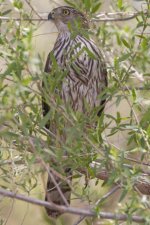
As we were about get into our car to leave the park, I noticed another photographer off on the far side of the parking lot intently photographing something. I scanned the area with my binocs and saw what had attracted him, a loggerhead shrike. It had perched at the top of a shrub. We quickly walked over and took some nice pictures after the other photographer was finished.
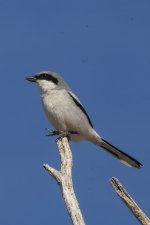
While shrikes are found in Eastern Washington, they are not commonly encountered west of the Cascade Mountains. I haven’t had a good look at a shrike in 20 years. These carnivorous songbirds feed on insects, lizards, small birds, and small mammals. They are notable for their behavior of impaling extra prey on thorns (or barbed wire) to eat later (“caching” the extra food).
We encountered soaring turkey vultures riding thermals at several sites. While hiking along the Juan Bautista de Anza Trail along the Santa Cruz River, we came across several turkey vultures that were waiting for the day’s thermals to intensify before they would fly out from the trees where they had roosted overnight.
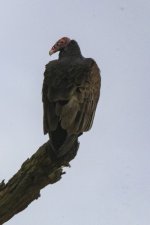
Turkey vultures are widespread across the U.S. in summer; in most of the U.S. (except the Southeast where they are found year-round), they migrate south in winter. But they live year-round in Central and South America.
We encountered a lone black vulture perched on a light pole at Patagonia Lake State Park.
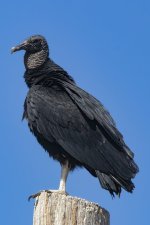
This species ranges along the central and eastern U.S., Central America, and most of South America. In the Western U.S., a small pocket of their range extends north into Southern Arizona.
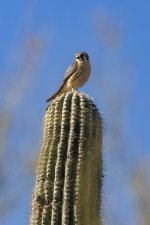
Finally, we encountered two falcon species during our visit: a merlin hunting the riparian corridor along the San Pedro River (no pictures) and a hungry kestrel surveying its breakfast options from the top of a tall saguaro cactus in East Saguaro National Park.
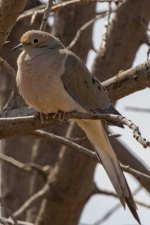
Southern Arizona has a rich diversity of dove species, not all of which we saw on this trip. We encountered them in truly wild spaces and concentrated at bird feeders. One of the most wide-spread species was the morning dove with its haunting “coo-oo-oo” song.
 \
\
Another frequent species that we often encountered was the white-winged dove.
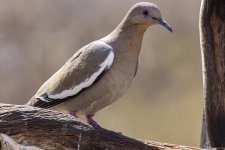
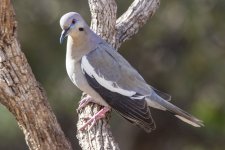
This species is found along the southern borders of the U.S. and extends south into Central America and Caribbean Islands. Males of this dove species also produce a series of “coo” sounds when singing.
An addition to the dove diversity of the U.S. is the Eurasian collared dove, a species that looks much like a washed-out mourning dove.
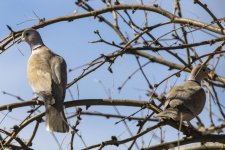
Escapees / releases from a pet shop in the Bahamas were a major initial gateway that enabled this species to spread across the U.S.
We encountered skittish coveys of Gambel’s quail scurrying through the brush several times in our trip.
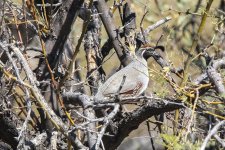
This desert quail is common in the Sonoran, Chihuahuan, and Mojave deserts and its range extends north into the Great Basin. Most of its diet consists of plant material, especially seeds, leaves, fruits, and grass blades. They also eat insects, especially in the spring and early summer.
We were surprised to encounter flocks of wild turkeys at several locations in the steep mountain canyons that connect the high mountains of Southern Arizona to the desert flatlands below.
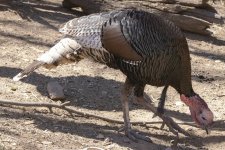
Seasonal creeks flow down these canyons. These creeks support tall riparian forests of oaks, pines, maples, and sycamores which shade the creeks and keep them cool.
Steve
Early on our first visit to Sweetwater Wetlands Park, we turned a corner on a trail to find a male greater roadrunner only 20 feet away. We were careful not to spook him, but we needn’t have worried. He was far more interested in singing to attract a mate (and/or warn off other males). He jumped up onto a metal railing that surrounded one of the water control structures and delivered several series of its “coo-coo-coo” call. A great opportunity for pictures,
especially close-ups of his head (and this wasn’t the best roadrunner observation of the day even).
AnNear the end of our visit, we took a side trail that was off the beaten track; my hope was that we might find some wildlife that were avoiding the bustle along the more-popular paths. And we scored big-time. Just beyond a fence that surrounds a former recharge ponds, I spotted a pair of mating roadrunners (no idea if this was the same male that we had seen singing earlier). The male, on top of the crouching female, held a lizard in its bill while they copulated.
When they were finished, the male gave the lizard to the female who quickly consumed it.
We encountered a similar male-female interaction the next day at Aqua Caliente Regional Park, northeast of Tucson. A perennial warm spring emerges in the park and supports several ponds. This desert oasis was first inhabited by Native Americans over 5000 years ago. Later the water supported a ranch and orchards. Owners planted palms trees, eucalyptus trees, and native trees along the stream and ponds. We had stopped for a late lunch in the shade of the palm trees that line the spring and at the transition to more native trees. I had brought along my camera and binocs just in case.
As lunch was wrapping up I spotted out of the corner of my eye a hawk that landed on a branch of tree 30’ from our picnic table. A few seconds later, a second hawk landed on the same branch. These were a pair of Cooper’s hawks. The male had captured a ground squirrel and passed it to the female. He then popped up on her back and the pair began mating. When they were done, the male moved a short distance away
before flying off. The female then settled down to consume her lunch.
The next day, we stopped at Canoa Ranch Conservation Park. This site is one of the earliest land grants in Arizona along the Santa Cruz River. The park now includes a stream and 2.5-acre artificial lake. Willows dominate the riparian vegetation along the stream; they were just producing catkins when we visited. The catkins attracted many warblers and the water in the stream attracted flocks of sparrows.
And where there is a ready supply of small birds, you will find predators like a juvenile sharp-shinned hawk. It blasted through an opening in the willow grove and landed on a shaded branch not far from the trail at eye level. We had great views while it rested.
As we were about get into our car to leave the park, I noticed another photographer off on the far side of the parking lot intently photographing something. I scanned the area with my binocs and saw what had attracted him, a loggerhead shrike. It had perched at the top of a shrub. We quickly walked over and took some nice pictures after the other photographer was finished.
While shrikes are found in Eastern Washington, they are not commonly encountered west of the Cascade Mountains. I haven’t had a good look at a shrike in 20 years. These carnivorous songbirds feed on insects, lizards, small birds, and small mammals. They are notable for their behavior of impaling extra prey on thorns (or barbed wire) to eat later (“caching” the extra food).
We encountered soaring turkey vultures riding thermals at several sites. While hiking along the Juan Bautista de Anza Trail along the Santa Cruz River, we came across several turkey vultures that were waiting for the day’s thermals to intensify before they would fly out from the trees where they had roosted overnight.
Turkey vultures are widespread across the U.S. in summer; in most of the U.S. (except the Southeast where they are found year-round), they migrate south in winter. But they live year-round in Central and South America.
We encountered a lone black vulture perched on a light pole at Patagonia Lake State Park.
This species ranges along the central and eastern U.S., Central America, and most of South America. In the Western U.S., a small pocket of their range extends north into Southern Arizona.
Finally, we encountered two falcon species during our visit: a merlin hunting the riparian corridor along the San Pedro River (no pictures) and a hungry kestrel surveying its breakfast options from the top of a tall saguaro cactus in East Saguaro National Park.
Southern Arizona has a rich diversity of dove species, not all of which we saw on this trip. We encountered them in truly wild spaces and concentrated at bird feeders. One of the most wide-spread species was the morning dove with its haunting “coo-oo-oo” song.
\Another frequent species that we often encountered was the white-winged dove.
This species is found along the southern borders of the U.S. and extends south into Central America and Caribbean Islands. Males of this dove species also produce a series of “coo” sounds when singing.
An addition to the dove diversity of the U.S. is the Eurasian collared dove, a species that looks much like a washed-out mourning dove.
Escapees / releases from a pet shop in the Bahamas were a major initial gateway that enabled this species to spread across the U.S.
We encountered skittish coveys of Gambel’s quail scurrying through the brush several times in our trip.
This desert quail is common in the Sonoran, Chihuahuan, and Mojave deserts and its range extends north into the Great Basin. Most of its diet consists of plant material, especially seeds, leaves, fruits, and grass blades. They also eat insects, especially in the spring and early summer.
We were surprised to encounter flocks of wild turkeys at several locations in the steep mountain canyons that connect the high mountains of Southern Arizona to the desert flatlands below.
Seasonal creeks flow down these canyons. These creeks support tall riparian forests of oaks, pines, maples, and sycamores which shade the creeks and keep them cool.
Steve
Arizona, late March 2025. Part 4 of Many: Birds with a sweet tooth. Southern Arizona is a mecca for hummingbirds. Some species spend the winter in the south and then migrate north when the weather warms to breed. Other species are at the northern end of their range in Mexico and Central America. We encountered many hummingbirds during our hikes, especially if there was water in the vicinity and therefore emerging insects for them to eat. But the best places to see hummingbirds were at sites that provided nectar feeders (and other food supplies). After a small “donation” you were allowed onto these private properties. They often provided chairs at a safe distance from the feeders, especially convenient for photographers (and retrospective identification…).
In the end, we saw nine different hummingbird species. I’m slowly getting better at identifying hummingbirds. Some species are quite distinctive. However, females can be especially problematic as the differences in their plumage are more subtle. But even the males can be a challenge because the colors of their gorgets (throat patch) flash different colors of iridescence depending on its angle to the light.
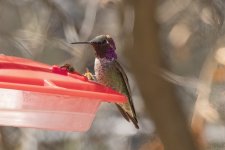
It was nice to see some familiar hummingbird species. While some Anna’s hummingbird overwinter in the PNW, most migrate south to places like Arizona in winter. They have returned to the PNW in the last few weeks and have started breeding (more later…). The males have red crowns and gorgets.
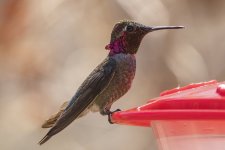
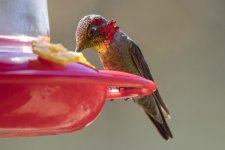
Female Anna’s hummingbirds are relatively easily to identify because they have a patch of iridescent feathers on otherwise white throats.
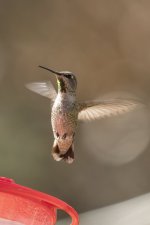
A second familiar (and easy to identify) species is the rufous hummingbird. As the name implies, the feathers on the males are a rusty orange. In the right light, the gorget is bright red.
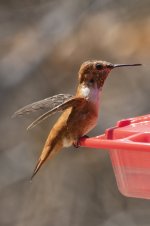
The females also have rufous feathers, albeit more muted.
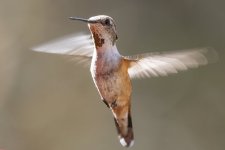
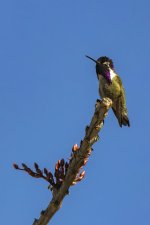
Male Costa’s hummingbirds are also relatively distinctive. The head and gorget feathers are red. Its gorget feathers flare out from the neck.
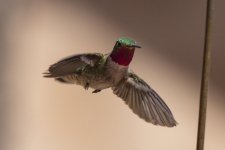
A male broad-tailed hummingbird has a green cap and sharp, bright red gorget. Unlike Costa’s hummingbird, the gorget feathers of the males do not flare out.
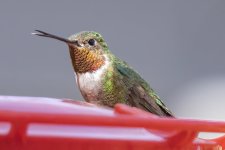
Females can be identified by the presence of scattered green throat feathers.
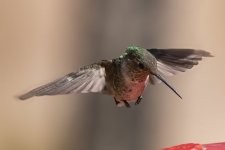
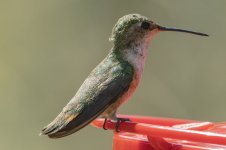
We only saw one calliope hummingbird. They winter in Southern Mexico and breed in the Cascades, Sierra Nevada range, and the Northern Rockies. This individual must have been in transit during its migration. While the light in my image does not show the color of the gorget, but when the light is right, the gorget feathers are bright red and fan out farther than any other species in the U.S.
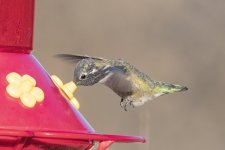
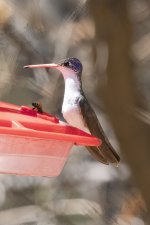
Male violet-crowned hummingbirds are easy to identify. They have a bright red bill and a vivid purple cap over a white throat and breast. This is primarily a Central American and Mexican species whose range extends into Southern Arizona.
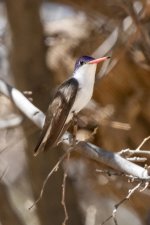
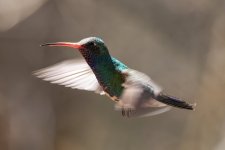
Broad-billed hummingbirds are a relatively easy species to identify. Like the violet-crowned hummingbirds, both male and female broad-billed hummingbirds have bright red bills. The throat and breast of the males are bright blue.
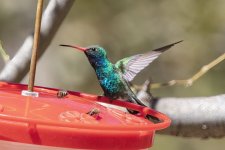
Females have less red on the bill and a white throat and belly. A gray band separates a white band above the eye from white feathers lower on the cheek.
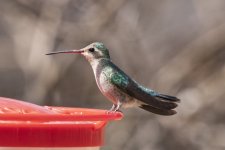
Male broad-billed hummingbirds are hyper-aggressive at feeders. They will chase off other hummingbirds that came in to use the feeder. Like the violet-crowned hummingbird, the core range of the broad-billed hummingbird is centered on the highlands of Mexico to the coast. The range extends north into Southern Arizona.
The final hummingbird species for which I have pictures (only missing black-chinned hummingbird) is Rivoli’s hummingbird. It is the second largest hummingbird at a whopping 0.25oz (slightly heavier than a quarter) vs 0.15oz (about the weight of a nickel) for an Anna’s hummingbird) found in the U.S. and you can certainly notice its larger size through the binocs and camera. Males have a purple crown and an iridescent cyan throat in the right light.
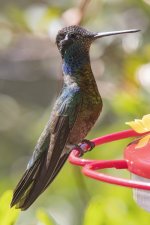
Females have green backs (like most other female hummingbirds) and a gray neck and breast.
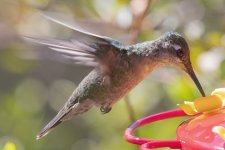
Rivoli’s hummingbird is another hummingbird species that barely makes it into the U.S. It breeds in the pine-oak forests found in the canyons of the Sky Island mountains of Southern Arizona. The heart of its range is the mountains of Mexico through Central America.
Steve
In the end, we saw nine different hummingbird species. I’m slowly getting better at identifying hummingbirds. Some species are quite distinctive. However, females can be especially problematic as the differences in their plumage are more subtle. But even the males can be a challenge because the colors of their gorgets (throat patch) flash different colors of iridescence depending on its angle to the light.
It was nice to see some familiar hummingbird species. While some Anna’s hummingbird overwinter in the PNW, most migrate south to places like Arizona in winter. They have returned to the PNW in the last few weeks and have started breeding (more later…). The males have red crowns and gorgets.
Female Anna’s hummingbirds are relatively easily to identify because they have a patch of iridescent feathers on otherwise white throats.
A second familiar (and easy to identify) species is the rufous hummingbird. As the name implies, the feathers on the males are a rusty orange. In the right light, the gorget is bright red.
The females also have rufous feathers, albeit more muted.
Male Costa’s hummingbirds are also relatively distinctive. The head and gorget feathers are red. Its gorget feathers flare out from the neck.
A male broad-tailed hummingbird has a green cap and sharp, bright red gorget. Unlike Costa’s hummingbird, the gorget feathers of the males do not flare out.
Females can be identified by the presence of scattered green throat feathers.
We only saw one calliope hummingbird. They winter in Southern Mexico and breed in the Cascades, Sierra Nevada range, and the Northern Rockies. This individual must have been in transit during its migration. While the light in my image does not show the color of the gorget, but when the light is right, the gorget feathers are bright red and fan out farther than any other species in the U.S.
Male violet-crowned hummingbirds are easy to identify. They have a bright red bill and a vivid purple cap over a white throat and breast. This is primarily a Central American and Mexican species whose range extends into Southern Arizona.
Broad-billed hummingbirds are a relatively easy species to identify. Like the violet-crowned hummingbirds, both male and female broad-billed hummingbirds have bright red bills. The throat and breast of the males are bright blue.
Females have less red on the bill and a white throat and belly. A gray band separates a white band above the eye from white feathers lower on the cheek.
Male broad-billed hummingbirds are hyper-aggressive at feeders. They will chase off other hummingbirds that came in to use the feeder. Like the violet-crowned hummingbird, the core range of the broad-billed hummingbird is centered on the highlands of Mexico to the coast. The range extends north into Southern Arizona.
The final hummingbird species for which I have pictures (only missing black-chinned hummingbird) is Rivoli’s hummingbird. It is the second largest hummingbird at a whopping 0.25oz (slightly heavier than a quarter) vs 0.15oz (about the weight of a nickel) for an Anna’s hummingbird) found in the U.S. and you can certainly notice its larger size through the binocs and camera. Males have a purple crown and an iridescent cyan throat in the right light.
Females have green backs (like most other female hummingbirds) and a gray neck and breast.
Rivoli’s hummingbird is another hummingbird species that barely makes it into the U.S. It breeds in the pine-oak forests found in the canyons of the Sky Island mountains of Southern Arizona. The heart of its range is the mountains of Mexico through Central America.
Steve

HummViewer Ultimate Feeder Mask | Unique Hummingbird Feeder
HummViewer Ultimate Feeder Mask offers big thrills to feed hummingbirds from a whole new perspective! Safe for birds, comfortable, unique feeder like no other
 www.thebirdhousechick.com

A few pics from today and a question.
There were two Loons going at each other this morning while I was fishing. Flapping their wings like crazy as well as charging and chasing each other. It was a lot of fun to watch. Is that mating or territorial behavior?
Thanks for your input.
SF

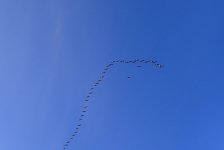
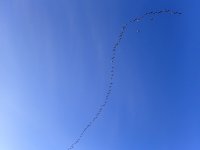

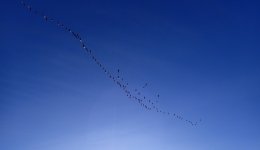
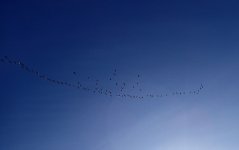
There were two Loons going at each other this morning while I was fishing. Flapping their wings like crazy as well as charging and chasing each other. It was a lot of fun to watch. Is that mating or territorial behavior?
Thanks for your input.
SF

Brian - I’m not at all versed on loon behavior but I did see several north bound flocks of white-fronted geese fly over yesterday. I’m guessing that’s what you saw as well.A few pics from today and a question.

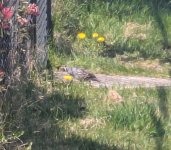
Hard to follow the photography on exhibit here but yesterday I saw something scurrying around in my front garden. By the time I had grabbed my phone he had moved to a neighbors yard and all I got was a blurry picture. This is first for me here on the OP. I have to wonder where he came from.

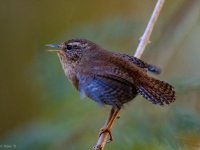
Arizona, late March 2025. Part 5 of Many: Warblers (Parulidae). Male New World warblers are among the most colorful birds in North America. There are 56 warbler species in the U.S. and Canada; another 60ish warbler species are found in Central and South America. Warblers are small (between 0.23oz = 1 quarter and 0.74oz = 3 quarters) songsters known for long migrations. Most warbler species are insectivores. They typically moving frenetically as they search for food, especially in the canopy of trees and shrubs.
One very abundant, widespread warbler species in U.S. is the yellow-rumped warbler (aka “butter-butt”). While some individuals manage to overwinter in the PNW, most migrate south in the winter and are now starting to return to the Pacific Northwest. Yellow-rumped warblers are divided into two subspecies (formerly considered separate species): the myrtle subspecies found primarily in the eastern U.S. and Canada and the Audubon’s warbler in the west. While both have yellow butts, a male myrtle warbler has a white throat patch.
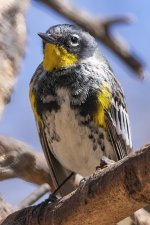
A male Audubon’s subspecies has a yellow throat patch and more white in the wings.
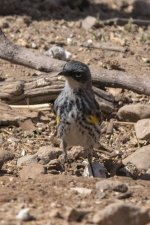
Where the two subspecies overlap, hybrids do occur. Compared to our 2023 visit, we saw far fewer yellow-rumped warblers this year, likely a reflection of this year’s drought conditions impacting their habitat in Southern Arizona. You can often find yellow-rumped warblers “hawking” insects from perches at the edge the canopy.
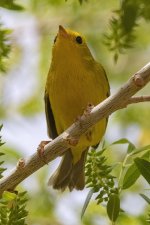
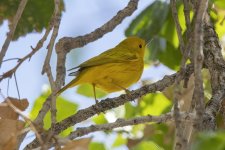
We heard male yellow warblers singing far more often than we saw them in the canopy. You know that a male is up there somewhere but picking them out can be a challenge. And when you do spot them in the canopy, they are in constant motion. The males are bright yellow with chestnut streaks on their breasts.
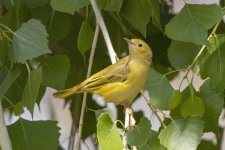
The colors of the female plumage are more understated and they lack the chestnut breast streaks.
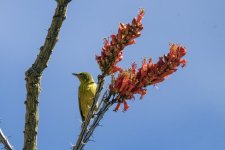
The plumage of orange-crowned warblers is more olive-yellow than that of a yellow warbler. In the right light and perspective, you might see a crown of orange feathers on the top of the head of male. Females are also more muted than males.
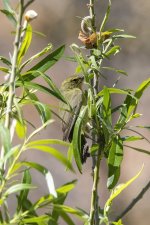
In winter and spring, they will sip nectar from hummingbird feeders or from flowers, like this female feeding on nectar from Ocotillo flowers in the western section of Saguaro National Park.
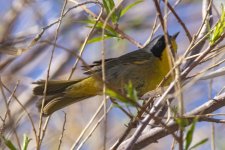
Common yellowthroat males look like bandits with a dark mask running across their eye. This species is a freshwater marsh specialist. They are adept at hiding among the cattails or marsh shrubs until a male pops into the open to sing.
We managed to see one of my favorite warblers, the black-throated gray. This warbler has black and white stripes on the faces and yellow spots between the bill and the eyes. Males have black streaks along the side of its breast.
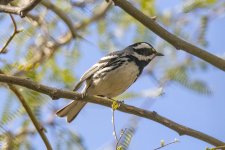
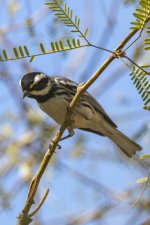
They seem to prefer to forage on the larger inner branches and trunks of trees (in contrast to yellow-rumped warblers that prefer the periphery).
The best location that we found for warblers (and other insectivorous birds) was Ramsey Canyon Preserve, a Nature Conservancy property west of Sierra Vista. We hiked from 4000’ to 6000’ along Ramsey Creek through a riparian forest of pines, oaks, junipers, maples, and sycamores. This location was a serendipitous find that I discovered using eBird’s “hotspots” feature.
We had great looks at another of my favorite Arizona warblers, the painted redstart. This large warbler has an overall black body with a wide white wing bar, white outer tail feathers, and a crimson breast.
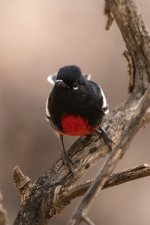
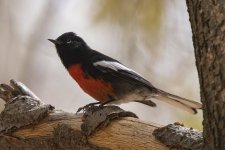
They are very active foragers, hunting on the ground and on the trunks of the trees along the trail. While searching, they often flash the white feathers on the tail and along their wings, perhaps to startle prey into moving. Populations in parts of Mexico and Central America are largely non-migratory, but other birds migrate into Southern Arizona and New Mexico in spring to breed.
During our hike, we heard other warbler species high in the canopy, but it was hard to see them clearly. That changed on our return trip when we encountered several other birders intensely scoping a copse of willows that had produced a profusion of catkins.
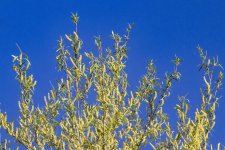
There were at least five warbler species searching the catkins and young leaves for insects. These included yellow warblers, orange-crowned warblers, Lucy’s warblers, Connecticut warblers, and Nashville warblers. They were joined by a flock of bushtits (more later). The Connecticut warbler (no pictures) was a surprise; this species overwinters in the Amazon Basin. Most individuals migrate back north via Florida to reach their breeding grounds but a few birds that breed in the Canadian prairies might shorten their flight by traveling through Arizona.
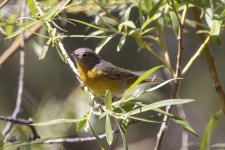
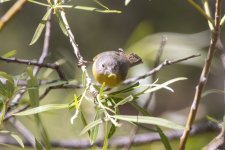
The Nashville warbler was a great find, an addition to my life list. These birds have a clear white eye ring, a gray head and neck, and a yellow throat and breast.
Steve
One very abundant, widespread warbler species in U.S. is the yellow-rumped warbler (aka “butter-butt”). While some individuals manage to overwinter in the PNW, most migrate south in the winter and are now starting to return to the Pacific Northwest. Yellow-rumped warblers are divided into two subspecies (formerly considered separate species): the myrtle subspecies found primarily in the eastern U.S. and Canada and the Audubon’s warbler in the west. While both have yellow butts, a male myrtle warbler has a white throat patch.
A male Audubon’s subspecies has a yellow throat patch and more white in the wings.
Where the two subspecies overlap, hybrids do occur. Compared to our 2023 visit, we saw far fewer yellow-rumped warblers this year, likely a reflection of this year’s drought conditions impacting their habitat in Southern Arizona. You can often find yellow-rumped warblers “hawking” insects from perches at the edge the canopy.
We heard male yellow warblers singing far more often than we saw them in the canopy. You know that a male is up there somewhere but picking them out can be a challenge. And when you do spot them in the canopy, they are in constant motion. The males are bright yellow with chestnut streaks on their breasts.
The colors of the female plumage are more understated and they lack the chestnut breast streaks.
The plumage of orange-crowned warblers is more olive-yellow than that of a yellow warbler. In the right light and perspective, you might see a crown of orange feathers on the top of the head of male. Females are also more muted than males.
In winter and spring, they will sip nectar from hummingbird feeders or from flowers, like this female feeding on nectar from Ocotillo flowers in the western section of Saguaro National Park.
Common yellowthroat males look like bandits with a dark mask running across their eye. This species is a freshwater marsh specialist. They are adept at hiding among the cattails or marsh shrubs until a male pops into the open to sing.
We managed to see one of my favorite warblers, the black-throated gray. This warbler has black and white stripes on the faces and yellow spots between the bill and the eyes. Males have black streaks along the side of its breast.
They seem to prefer to forage on the larger inner branches and trunks of trees (in contrast to yellow-rumped warblers that prefer the periphery).
The best location that we found for warblers (and other insectivorous birds) was Ramsey Canyon Preserve, a Nature Conservancy property west of Sierra Vista. We hiked from 4000’ to 6000’ along Ramsey Creek through a riparian forest of pines, oaks, junipers, maples, and sycamores. This location was a serendipitous find that I discovered using eBird’s “hotspots” feature.
We had great looks at another of my favorite Arizona warblers, the painted redstart. This large warbler has an overall black body with a wide white wing bar, white outer tail feathers, and a crimson breast.
They are very active foragers, hunting on the ground and on the trunks of the trees along the trail. While searching, they often flash the white feathers on the tail and along their wings, perhaps to startle prey into moving. Populations in parts of Mexico and Central America are largely non-migratory, but other birds migrate into Southern Arizona and New Mexico in spring to breed.
During our hike, we heard other warbler species high in the canopy, but it was hard to see them clearly. That changed on our return trip when we encountered several other birders intensely scoping a copse of willows that had produced a profusion of catkins.
There were at least five warbler species searching the catkins and young leaves for insects. These included yellow warblers, orange-crowned warblers, Lucy’s warblers, Connecticut warblers, and Nashville warblers. They were joined by a flock of bushtits (more later). The Connecticut warbler (no pictures) was a surprise; this species overwinters in the Amazon Basin. Most individuals migrate back north via Florida to reach their breeding grounds but a few birds that breed in the Canadian prairies might shorten their flight by traveling through Arizona.
The Nashville warbler was a great find, an addition to my life list. These birds have a clear white eye ring, a gray head and neck, and a yellow throat and breast.
Steve
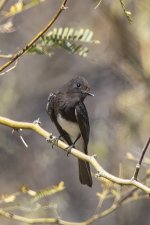
Arizona, late March 2025. Part 6 of Many: Mixed insectivores. We will start with the flycatchers (family Tyrannidae). We saw both large and small members of this family. Among the smaller flycatchers (size of a medium-size sparrow), we saw black phoebes at many sites, especially those sites with streams or ponds from which they could hawk emerging insects. The white breast of a black phoebe contrasts with the black plumage elsewhere.
We also encountered several Say’s phoebes. This species prefers drier locations than black phoebes.
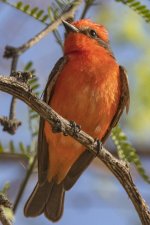
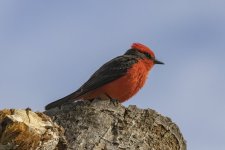
Flamboyant vermillion flycatchers are common in Southern Arizona and we saw them at several sites. The males are very distinctive with a bright red crest, neck, and breast contrasting with a dark gray back, tail, and wings.
Per usual, a female is more subdued with a gray crest and mantle, white throat, and peach breast.
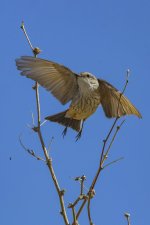
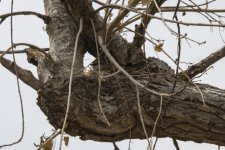
You will typically find them perched on an outside branch from which they can intercept passing insects. At Sweetwater Regional Park, we were fortunate to find a female on a nest.
We also saw two species of larger flycatchers: Cassin’s kingbird and Western kingbird. Each is larger than a sparrow but smaller than a robin. At Ron Morriss County Park, individuals of both species were hawking insects that were being blown off a freshwater march; we had a great opportunity to compare the two species. An adult Western kingbird has a light gray cap and mantle, a very light gray / white throat and breast, and a light yellow breast. They are also notable for the presence of white outer tail feathers.
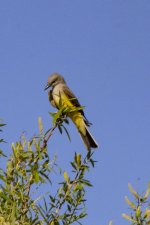
Western kingbirds breed across the Western U.S. through the western Canadian provinces. Cassin’s kingbirds are similar to Western kingbirds. Their head, mantle, and throat are much darker gray than a Western kingbird and contrast with their white throat. The yellow on the breast is more intense.
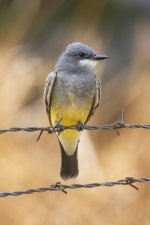
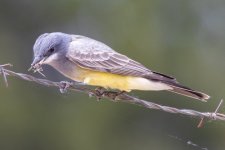
Cassin’s kingbird prefers drier habitats than a Western kingbird; this species ranges from Mexico into the Southwest U.S.
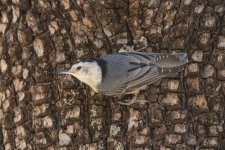
In more forested areas, we encountered a diverse collection of smaller insectivorous birds. These included white-breasted nuthatches,
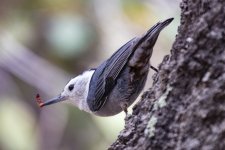
bridled titmice (a favorite of my wife),
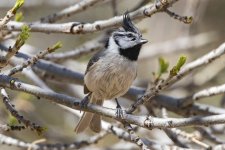
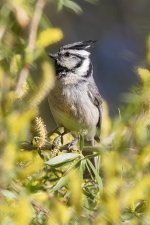
bushtits,
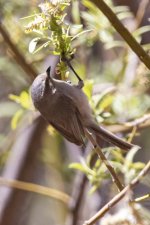
and ruby-crowned kinglets.
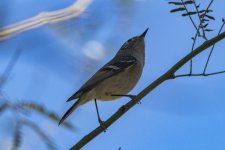
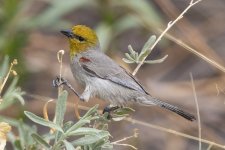
In more open areas dominated by shrubs, we encountered cute verdins,
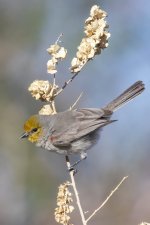
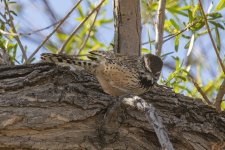
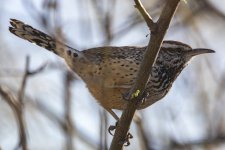
cactus wrens,
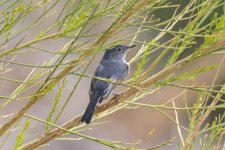
blue-gray gnatcatchers,
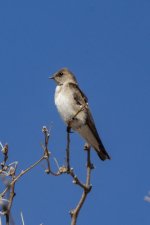
and several swallows, like this rough-winged swallow.
Steve
We also encountered several Say’s phoebes. This species prefers drier locations than black phoebes.
Flamboyant vermillion flycatchers are common in Southern Arizona and we saw them at several sites. The males are very distinctive with a bright red crest, neck, and breast contrasting with a dark gray back, tail, and wings.
Per usual, a female is more subdued with a gray crest and mantle, white throat, and peach breast.
You will typically find them perched on an outside branch from which they can intercept passing insects. At Sweetwater Regional Park, we were fortunate to find a female on a nest.
We also saw two species of larger flycatchers: Cassin’s kingbird and Western kingbird. Each is larger than a sparrow but smaller than a robin. At Ron Morriss County Park, individuals of both species were hawking insects that were being blown off a freshwater march; we had a great opportunity to compare the two species. An adult Western kingbird has a light gray cap and mantle, a very light gray / white throat and breast, and a light yellow breast. They are also notable for the presence of white outer tail feathers.
Western kingbirds breed across the Western U.S. through the western Canadian provinces. Cassin’s kingbirds are similar to Western kingbirds. Their head, mantle, and throat are much darker gray than a Western kingbird and contrast with their white throat. The yellow on the breast is more intense.
Cassin’s kingbird prefers drier habitats than a Western kingbird; this species ranges from Mexico into the Southwest U.S.
In more forested areas, we encountered a diverse collection of smaller insectivorous birds. These included white-breasted nuthatches,
bridled titmice (a favorite of my wife),
bushtits,
and ruby-crowned kinglets.
In more open areas dominated by shrubs, we encountered cute verdins,
cactus wrens,
blue-gray gnatcatchers,
and several swallows, like this rough-winged swallow.
Steve

What he said!

Bonefish Jack
Steelhead
I grew up in West Virginia, and have good memories of the spring warbler migration. Here in the PNW, we just don't have this. I can remember walking through an arboretum and hearing/seeing multiple dozens of warbler species. Merlin would have a data overload.Arizona, late March 2025. Part 5 of Many: Warblers (Parulidae). Male New World warblers are among the most colorful birds in North America. There are 56 warbler species in the U.S. and Canada; another 60ish warbler species are found in Central and South America. Warblers are small (between 0.23oz = 1 quarter and 0.74oz = 3 quarters) songsters known for long migrations. Most warbler species are insectivores. They typically moving frenetically as they search for food, especially in the canopy of trees and shrubs.
One very abundant, widespread warbler species in U.S. is the yellow-rumped warbler (aka “butter-butt”). While some individuals manage to overwinter in the PNW, most migrate south in the winter and are now starting to return to the Pacific Northwest. Yellow-rumped warblers are divided into two subspecies (formerly considered separate species): the myrtle subspecies found primarily in the eastern U.S. and Canada and the Audubon’s warbler in the west. While both have yellow butts, a male myrtle warbler has a white throat patch.
View attachment 150055
A male Audubon’s subspecies has a yellow throat patch and more white in the wings.
View attachment 150056
Where the two subspecies overlap, hybrids do occur. Compared to our 2023 visit, we saw far fewer yellow-rumped warblers this year, likely a reflection of this year’s drought conditions impacting their habitat in Southern Arizona. You can often find yellow-rumped warblers “hawking” insects from perches at the edge the canopy.
We heard male yellow warblers singing far more often than we saw them in the canopy. You know that a male is up there somewhere but picking them out can be a challenge. And when you do spot them in the canopy, they are in constant motion. The males are bright yellow with chestnut streaks on their breasts.
View attachment 150057
View attachment 150058
The colors of the female plumage are more understated and they lack the chestnut breast streaks.
View attachment 150059
The plumage of orange-crowned warblers is more olive-yellow than that of a yellow warbler. In the right light and perspective, you might see a crown of orange feathers on the top of the head of male. Females are also more muted than males.
View attachment 150060
In winter and spring, they will sip nectar from hummingbird feeders or from flowers, like this female feeding on nectar from Ocotillo flowers in the western section of Saguaro National Park.
View attachment 150061
Common yellowthroat males look like bandits with a dark mask running across their eye. This species is a freshwater marsh specialist. They are adept at hiding among the cattails or marsh shrubs until a male pops into the open to sing.
View attachment 150062
We managed to see one of my favorite warblers, the black-throated gray. This warbler has black and white stripes on the faces and yellow spots between the bill and the eyes. Males have black streaks along the side of its breast.
View attachment 150063
View attachment 150064
They seem to prefer to forage on the larger inner branches and trunks of trees (in contrast to yellow-rumped warblers that prefer the periphery).
The best location that we found for warblers (and other insectivorous birds) was Ramsey Canyon Preserve, a Nature Conservancy property west of Sierra Vista. We hiked from 4000’ to 6000’ along Ramsey Creek through a riparian forest of pines, oaks, junipers, maples, and sycamores. This location was a serendipitous find that I discovered using eBird’s “hotspots” feature.
We had great looks at another of my favorite Arizona warblers, the painted redstart. This large warbler has an overall black body with a wide white wing bar, white outer tail feathers, and a crimson breast.
View attachment 150065
View attachment 150066
They are very active foragers, hunting on the ground and on the trunks of the trees along the trail. While searching, they often flash the white feathers on the tail and along their wings, perhaps to startle prey into moving. Populations in parts of Mexico and Central America are largely non-migratory, but other birds migrate into Southern Arizona and New Mexico in spring to breed.
During our hike, we heard other warbler species high in the canopy, but it was hard to see them clearly. That changed on our return trip when we encountered several other birders intensely scoping a copse of willows that had produced a profusion of catkins.
View attachment 150067
There were at least five warbler species searching the catkins and young leaves for insects. These included yellow warblers, orange-crowned warblers, Lucy’s warblers, Connecticut warblers, and Nashville warblers. They were joined by a flock of bushtits (more later). The Connecticut warbler (no pictures) was a surprise; this species overwinters in the Amazon Basin. Most individuals migrate back north via Florida to reach their breeding grounds but a few birds that breed in the Canadian prairies might shorten their flight by traveling through Arizona.
The Nashville warbler was a great find, an addition to my life list. These birds have a clear white eye ring, a gray head and neck, and a yellow throat and breast.
View attachment 150068
View attachment 150069
Steve
I fully agree. Yes, we don't have the dramatic warbler migrations in the PNW. I lived for a year in south Chicago while I was a postdoc at the University of Chicago. In the spring, a friend and I went birding in Jackson Park along the shores of Lake Michigan and saw 23 warbler species one day and 25 species the next, with 1/3rd being new species on the second day. It was magical as the males were all in bright breeding plumage. Apparently, the birds would make a pitstop on the south side of the lake at hospitable sites like Jackson Park and fuel up for their next migration flight into Canada. I still have the species list that I made that day.I grew up in West Virginia, and have good memories of the spring warbler migration. Here in the PNW, we just don't have this. I can remember walking through an arboretum and hearing/seeing multiple dozens of warbler species. Merlin would have a data overload.
We do have pretty dramatic shorebird migrations.
Steve

So, Steve, about that coital and post coital lizard.... is that a common thing or just something the really successful males do?
"I mean he was ok looking and I know it was first date and all.... BUT.... the dude had a lizard......"
Jokes aside, this is an absolutely awesome capture!
"I mean he was ok looking and I know it was first date and all.... BUT.... the dude had a lizard......"
Jokes aside, this is an absolutely awesome capture!