
Navigation
Install the app
How to install the app on iOS
Follow along with the video below to see how to install our site as a web app on your home screen.
Note: This feature may not be available in some browsers.
More options
Style variation
You are using an out of date browser. It may not display this or other websites correctly.
You should upgrade or use an alternative browser.
You should upgrade or use an alternative browser.
Got any bird pics?
- Thread starter Wadin' Boot
- Start date

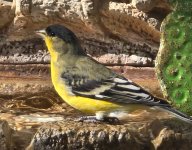

Cool, it looks like a male lesser goldfinch (Spinus psaltria).

Lesser goldfinch - Wikipedia

Gyrfalcon22
Legend
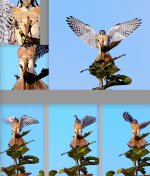
Backyard male A. Kestrel forgot to put grasshopper in his beak so he could use both landing gear. He dove straight down after he fumbled it. Not sure if he recovered it or not.

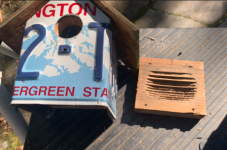
Cleaned my bird boxes and got them out of the weather for winter. Check out how the chickadees prepped the base of this house!
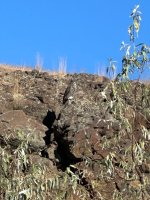

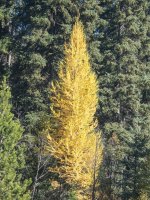
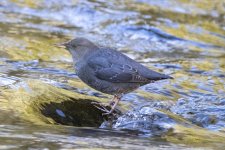
Encountering an American dipper on a fast-flowing river is always a delight. Last weekend, my wife and I went on a fall color loop in the Naches area. Love the golden colors of the larches.
We actually heard this song-bird singing around the corner from us on bend of the American River.
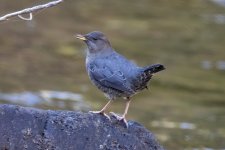
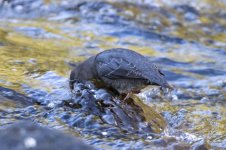
The dipper family is related to thrushes like the American robin. They are always found in and around fast-moving streams because they feed on aquatic insects. They have a cute behavior of bobbing their bodies periodically. They can actually duck their heads underwater to find prey or even swim underwater. This is aided by their solid bones (hollow in most birds) that reduce buoyancy (and add strength), nostrils that can be closed by flaps, powerful wing muscles that they can use for swimming underwater, high hemoglobin levels to support diving, and a large preen gland to waterproof their feathers. When I finally saw this bird, it was in feeding mode, ducking its head underwater to find insect larvae.
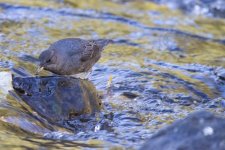
If successful, it would perch on an exposed boulder to consume its snack.
Steve
We actually heard this song-bird singing around the corner from us on bend of the American River.
The dipper family is related to thrushes like the American robin. They are always found in and around fast-moving streams because they feed on aquatic insects. They have a cute behavior of bobbing their bodies periodically. They can actually duck their heads underwater to find prey or even swim underwater. This is aided by their solid bones (hollow in most birds) that reduce buoyancy (and add strength), nostrils that can be closed by flaps, powerful wing muscles that they can use for swimming underwater, high hemoglobin levels to support diving, and a large preen gland to waterproof their feathers. When I finally saw this bird, it was in feeding mode, ducking its head underwater to find insect larvae.
If successful, it would perch on an exposed boulder to consume its snack.
Steve
Great shots, Cabezon! Love those little dippers! The river angler's little companion.
Speaking of their diet, one fall I watched a dipper dive repeatedly and surface with coho egg after coho egg. That bird must have felt like it won the gourmet dining lottery, as it gorged on such rich fare.
I was very surprised to see that dipper. It was in a tiny bypass channel beside my local urban stream. The side channel was human-constructed to allow returning coho (from a remnant run) to get around impassible falls. A few of them just stay in the side channel and spawn, instead of continuing upstream back into the mainstem river.
I've walked that stream for many years, and never saw a dipper; perhaps because of its very poor water quality. That brings up a question; Why did that dipper show up at this lucky time for it? Was it just chance wandering, or can these birds detect spawning salmon from a distance? I like to think it was the latter, since most wild animals have FAR superior senses than humans. The mysteries and surprises of nature keep me interested in this world.
Speaking of their diet, one fall I watched a dipper dive repeatedly and surface with coho egg after coho egg. That bird must have felt like it won the gourmet dining lottery, as it gorged on such rich fare.
I was very surprised to see that dipper. It was in a tiny bypass channel beside my local urban stream. The side channel was human-constructed to allow returning coho (from a remnant run) to get around impassible falls. A few of them just stay in the side channel and spawn, instead of continuing upstream back into the mainstem river.
I've walked that stream for many years, and never saw a dipper; perhaps because of its very poor water quality. That brings up a question; Why did that dipper show up at this lucky time for it? Was it just chance wandering, or can these birds detect spawning salmon from a distance? I like to think it was the latter, since most wild animals have FAR superior senses than humans. The mysteries and surprises of nature keep me interested in this world.
Interesting observation, Otter. As the dipper was feeding on coho eggs, it must have been fall. Dippers are known to include small fish and fish eggs in their diet, in addition to the aquatic insects that are the bulk of their food. It was probably scavenging salmon eggs that had been knocked outside the reeds by the spawning activity of other coho. Lowland dippers typically remain on their territories year-round, but individuals that breed at higher elevations often migrate to lower elevations in the winter (elevational migrants, like varied thrushes) to find ice-free water. They are relatively long-lived songbirds; according to All About Birds, the oldest known dipper was a minimum of 8-years-old when it was recaptured and released in a banding survey. It might have encountered this timely food bonanza in its migration.Great shots, Cabezon! Love those little dippers! The river angler's little companion.
Speaking of their diet, one fall I watched a dipper dive repeatedly and surface with coho egg after coho egg. That bird must have felt like it won the gourmet dining lottery, as it gorged on such rich fare.
I was very surprised to see that dipper. It was in a tiny bypass channel beside my local urban stream. The side channel was human-constructed to allow returning coho (from a remnant run) to get around impassible falls. A few of them just stay in the side channel and spawn, instead of continuing upstream back into the mainstem river.
I've walked that stream for many years, and never saw a dipper; perhaps because of its very poor water quality. That brings up a question; Why did that dipper show up at this lucky time for it? Was it just chance wandering, or can these birds detect spawning salmon from a distance? I like to think it was the latter, since most wild animals have FAR superior senses than humans. The mysteries and surprises of nature keep me interested in this world.
Steve
Love larches in the fall. Blewett Pass is a great drive this time of year.
Thanks for the great dipper pics and commentary .
Thanks for the great dipper pics and commentary .
Ridgefield National Wildlife Refuge, October 22, 2024, Part 1 of 2. “URGENT BREAKING NEWS ALERT. WARNING TO ALL FELLOW RODENTS. This is presented as a public service message to all members of the Rodentia. In spite of its name, Ridgefield National Wildlife “Refuge” is NOT a safe space for rodents. Last Tuesday, our field agent observed three of our rodent brethren murdered in warm blood (we are mammals after all…) in just a few hours. In an attempt to cover up their crimes, the perpetrators consumed their victims whole. It is believed that all three victims are voles, but definitive identification will require dental examination if/when the remains are recovered.
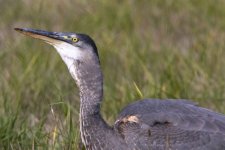
Perp #1 was a great blue heron by the entrance to the auto loop. As our agent drove by, he saw this vicious murderer staring intently in the dry grass.
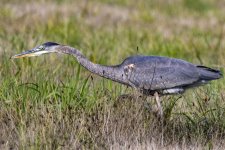
The heron speared one of our innocent brethren from the tall grass and lifted it screaming into the air.
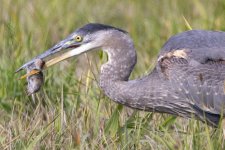
The great blue heron smashed the rodent on the ground several times before swallowing it whole.
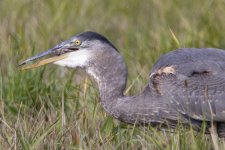
We have notified his significant other and their 23 offspring of his untimely demise...
Perp #2 was another great blue heron hunting along the top of a dike. As before, our observer noticed intense focus by the heron,
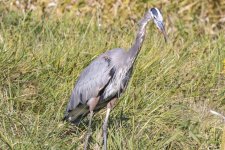
followed by a lightning-fast strike into the tall grass.
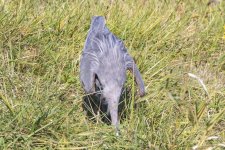
The heron lifted its speared victim,
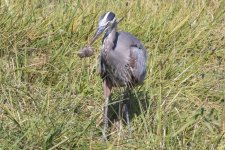
bashed it against the ground several times, repositioned the fellow rodent in its bill,
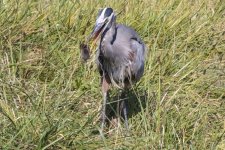
and swallowed it whole (note the lump in the heron’s throat).
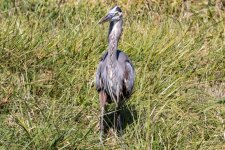
No further information on the victim is available at this time. [Also be wary of the great egrets in this “refuge”. They have also been implicated in the consumption of rodents in this “refuge”.]
Perp #3 was a coyote. This wily carnivore was prowling at the transition between the tall and short grasses in a meadow.
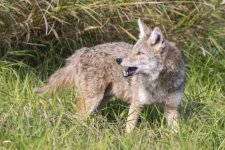
Suddenly, it leaped down on one of our brethren who was just going about its daily business.
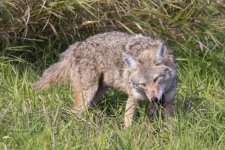
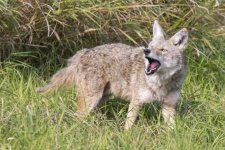
After a few chews, the coyote inhaled the poor victim. You can see a rodent foot extending from the murderer’s mouth in the next image.
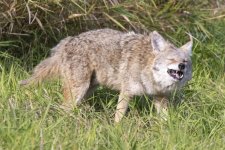
This was followed by a self-satisfied equivalent of lip-licking.
And these two species are not the only threats. Several red-tailed hawks, like this juvenile,
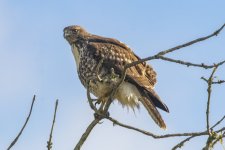
occupied perches overlooking our burrows. Be cautious.
Be especially cautious of the low, slow flights of Northern harriers, like this hen.
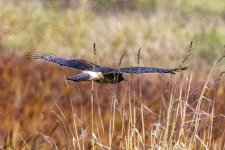
The disk of feathers around the head of a Northern harrier functions like a parabolic sound reflector to funnel your slightest scurrying sound to the hunting harrier’s ears during their flights. The facial feathers of owls perform a similar role.
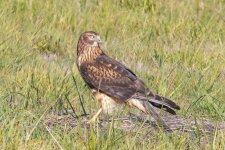
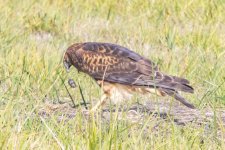
Confirmation that these Northern harriers are threats to us rodents was the pellet of fur and bones that this individual regurgitated from a previous meal.
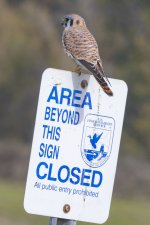
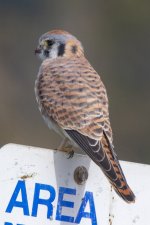
And don’t overlook the threat posed by this smallest American falcon, the kestrel. Do not let the cuteness give you a false sense of security. You need to be especially cautious around anything that might serve as a hunting perch (… insert classic American kestrel image on Ridgefield boundary sign…),
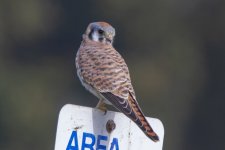
But also, these falcons are also adept at hovering over open fields. While their primary food at the moment may be the grasshoppers and the dragonflies of the season, the blood stains on this female’s bill is prima facieevidence that one of our brethren was on the menu not long before.
Anyone who may have any observations or information on this possible murder is urged to contact the nearest authorities.
Be vigilant; the life you save may be your own.” This ends the first part of this public service announcement.
Steve
Perp #1 was a great blue heron by the entrance to the auto loop. As our agent drove by, he saw this vicious murderer staring intently in the dry grass.
The heron speared one of our innocent brethren from the tall grass and lifted it screaming into the air.
The great blue heron smashed the rodent on the ground several times before swallowing it whole.
We have notified his significant other and their 23 offspring of his untimely demise...
Perp #2 was another great blue heron hunting along the top of a dike. As before, our observer noticed intense focus by the heron,
followed by a lightning-fast strike into the tall grass.
The heron lifted its speared victim,
bashed it against the ground several times, repositioned the fellow rodent in its bill,
and swallowed it whole (note the lump in the heron’s throat).
No further information on the victim is available at this time. [Also be wary of the great egrets in this “refuge”. They have also been implicated in the consumption of rodents in this “refuge”.]
Perp #3 was a coyote. This wily carnivore was prowling at the transition between the tall and short grasses in a meadow.
Suddenly, it leaped down on one of our brethren who was just going about its daily business.
After a few chews, the coyote inhaled the poor victim. You can see a rodent foot extending from the murderer’s mouth in the next image.
This was followed by a self-satisfied equivalent of lip-licking.
And these two species are not the only threats. Several red-tailed hawks, like this juvenile,
occupied perches overlooking our burrows. Be cautious.
Be especially cautious of the low, slow flights of Northern harriers, like this hen.
The disk of feathers around the head of a Northern harrier functions like a parabolic sound reflector to funnel your slightest scurrying sound to the hunting harrier’s ears during their flights. The facial feathers of owls perform a similar role.
Confirmation that these Northern harriers are threats to us rodents was the pellet of fur and bones that this individual regurgitated from a previous meal.
And don’t overlook the threat posed by this smallest American falcon, the kestrel. Do not let the cuteness give you a false sense of security. You need to be especially cautious around anything that might serve as a hunting perch (… insert classic American kestrel image on Ridgefield boundary sign…),
But also, these falcons are also adept at hovering over open fields. While their primary food at the moment may be the grasshoppers and the dragonflies of the season, the blood stains on this female’s bill is prima facieevidence that one of our brethren was on the menu not long before.
Anyone who may have any observations or information on this possible murder is urged to contact the nearest authorities.
Be vigilant; the life you save may be your own.” This ends the first part of this public service announcement.
Steve
Ridgefield National Wildlife Refuge, October 22, 2024, Part 2 of 2. Press Release from the “Rodent Protective Services”. As part of our continuing efforts to inform our rodent brethren of potential threats at Ridgefield National Wildlife Refuge, let’s identify residents of the refuge that are NOT threats or present only a minor risk.
First, the sandhill cranes have started to return to the refuge from their breeding grounds. While they superficially resemble enemy #1, great blue herons (and their great egret cousins), on the refuge, they typically root in the mud for tubers and for seeds (but don’t get too close as they are known to feed on rodents on occasion). This is a family group with two parents (with red crowns) and their colt who will remain with its parents until spring.
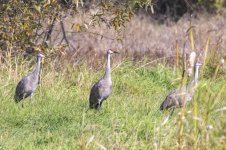
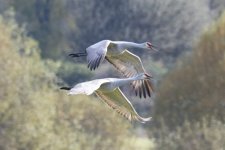
In flight, they also resemble herons and egrets, but they tend to produce loud bugling calls.
Another recent arrival to the refuge, cackling geese, are not a threat.
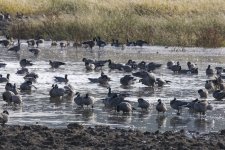
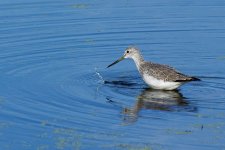
They will be grazing primarily on the new grass blades. If the flock suddenly, noisily bursts into flight, a bald eagle is likely in the vicinity. If you are a rabbit or squirrel, you might be need to be vigilant, but if you are a smaller rodent, you have little to worry about. Flocks of cackling tend to not react to the low, slow, weaving flights of Northern harriers. However, ducks (especially teal), killdeers
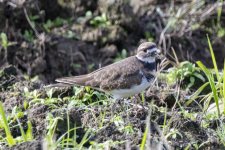
and flocks of American pipets
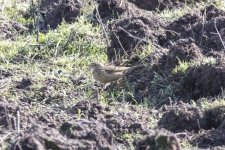
are very sensitive to the presence of Northern harriers. Their frantic avoidance flights and warning calls may alert you to potential danger.
At the refuge, you might see a scrub jay perched on the same boundary signs as you often find American kestrels.
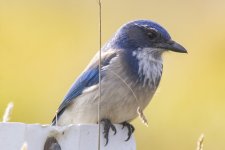
However, scrub jays are not really a threat to small mammals (but they are a threat to nestling birds though).
Finally, the pied-billed grebes
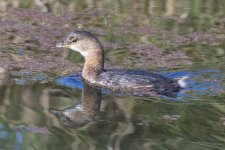
Or wood ducks slurping duckweed in the canals
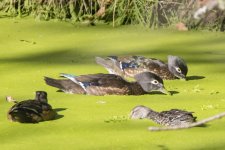
are not threats.
Steve
First, the sandhill cranes have started to return to the refuge from their breeding grounds. While they superficially resemble enemy #1, great blue herons (and their great egret cousins), on the refuge, they typically root in the mud for tubers and for seeds (but don’t get too close as they are known to feed on rodents on occasion). This is a family group with two parents (with red crowns) and their colt who will remain with its parents until spring.
In flight, they also resemble herons and egrets, but they tend to produce loud bugling calls.
Another recent arrival to the refuge, cackling geese, are not a threat.
They will be grazing primarily on the new grass blades. If the flock suddenly, noisily bursts into flight, a bald eagle is likely in the vicinity. If you are a rabbit or squirrel, you might be need to be vigilant, but if you are a smaller rodent, you have little to worry about. Flocks of cackling tend to not react to the low, slow, weaving flights of Northern harriers. However, ducks (especially teal), killdeers
and flocks of American pipets
are very sensitive to the presence of Northern harriers. Their frantic avoidance flights and warning calls may alert you to potential danger.
At the refuge, you might see a scrub jay perched on the same boundary signs as you often find American kestrels.
However, scrub jays are not really a threat to small mammals (but they are a threat to nestling birds though).
Finally, the pied-billed grebes
Or wood ducks slurping duckweed in the canals
are not threats.
Steve
Last edited:

Good info about elevation migration. I hadn't thought of that. This dipper was at about 50 metres of elevation, compared to much of this area being up to 1,000 m. or more.Interesting observation, Otter. As the dipper was feeding on coho eggs, it must have been fall. Dippers are known to include small fish and fish eggs in their diet, in addition to the aquatic insects that are the bulk of their food. It was probably scavenging salmon eggs that had been knocked outside the reeds by the spawning activity of other coho. Lowland dippers typically remain on their territories year-round, but individuals that breed at higher elevations often migrate to lower elevations in the winter (elevational migrants, like varied thrushes) to find ice-free water. They are relatively long-lived songbirds; according to All About Birds, the oldest known dipper was a minimum of 8-years-old when it was recaptured and released in a banding survey. It might have encountered this timely food bonanza in its migration.
Steve
For people missing the recent "interesting" posts about otters, I've often watched our local river otter family feeding on the coho. The coho don't stand a chance in this ditch-sized channel. I'm actually about to walk the river now, because it's that time of year.

Is this a downy woodpecker? Photographed in Gig Harbor today.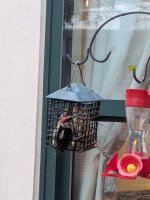
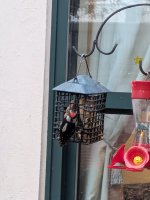
The most reliable character to separate downy versus hairy woodpeckers is by size. A hairy woodpecker is a smidge smaller than a robin while a downy is about the size of a song sparrow. A downy has a shortish bill for its size, while the hairy has a longer bill. A distinguishing mark that I just found out is that the outer tail feathers of a hairy woodpecker are pure white, while those of a downy woodpecker have black spots on the white feathers. In the first image, it appears that the bill is small, but the angle could be deceiving. So, if you have a feel for scale, you might be able to identify this bird with more confidence.Is this a downy woodpecker? Photographed in Gig Harbor today.View attachment 131550View attachment 131551
Steve
When I first saw it I thought it was about the size of a sparrow. The mesh part of that feeder is about 4-5 inches tall. Definitely closer in size to a junco, than a robin. I'm certainly not certain, but I'd lean downy.The most reliable character to separate downy versus hairy woodpeckers is by size. A hairy woodpecker is a smidge smaller than a robin while a downy is about the size of a song sparrow. A downy has a shortish bill for its size, while the hairy has a longer bill. A distinguishing mark that I just found out is that the outer tail feathers of a hairy woodpecker are pure white, while those of a downy woodpecker have black spots on the white feathers. In the first image, it appears that the bill is small, but the angle could be deceiving. So, if you have a feel for scale, you might be able to identify this bird with more confidence.
Steve

Bonefish Jack
Steelhead
Definitely a Downy … it’s the bill …
Gyrfalcon22
Legend
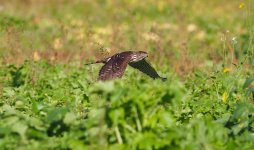
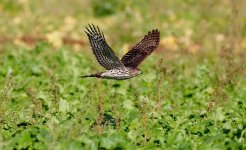
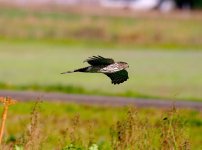
Steely-eyed Cooper's hawk readying a strafing run through a songbird thicket.
Last edited:

Almost acting more like a Northern harrier by hunting in more open habitat. I am more used to seeing Cooper's hawks stalking songbirds within forests. Whatever works, I guess.Steely-eyed Cooper's hawk readying a strafing run through a songbird thicket.
View attachment 131608
View attachment 131609
View attachment 131610
Has your golden eagle returned?
Steve