Dry Flies versus Wet Flies

Mike Cline

Life of the Party
Forum Supporter
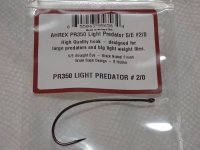
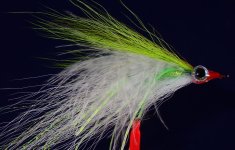
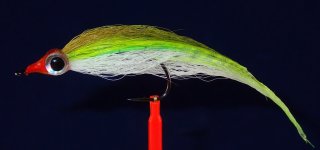
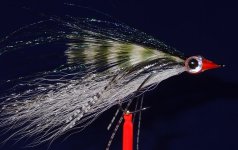
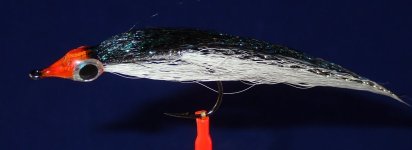
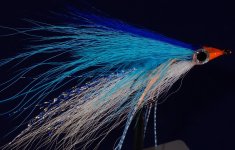
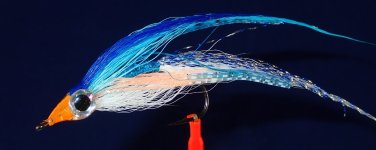
The post title may mislead but in reality, it is very important especially for larger flies, streamers and assorted warm, salt and cold water flies. We all tie very attractive flies that look marvelous in the vice or otherwise when photographed dry. But how do they look when they are wet? Although I don't have one of those swim tanks, I do occasionally checkout the appearance of new ties when wet. I recently found a pack of Ahrex Light Predator hooks (2/0) stuck away in a drawer and thought I use them for some "Dancing Deceivers" I'll take to Florida in a few weeks. Just for fun I thought I'd share dry flies versus wet flies.
PA300677.JPG
PA300682.JPGPA300687.JPG
PA300679.JPGPA300690.JPG
PA300683.JPGPA300686.JPG
 
Speaking from just my experience with my musky stuff, nothing really tells the story until it's actually swimming. Most of mine when dry don't look like much. When wet (and in the air) look much better to the human eye, but still not quite right. When actually swimming, THAT'S where I get the best idea of not just profile, but more importantly on how it swims (probably more important with musky stuff vs something like what you've got above where you're probably more after that specific profile). For me, even a bathtub test doesn't really tell me a whole lot that I didn't already know. anyway, now I'm just rambling....I like those that you've got up there, especially the top two!
 
@FinLuver — I will agree with you on that. In the water, flies do behave significantly differently than they look in a static, wet setting out of the water. I am fortunate enough to fish an inshore flats location very close to the open water of the Florida Gulf. On incoming tides, the water becomes exceptionally clear and brightly colored flies are usually very visible from a distance over dark grass or sandy potholes. Over the seasons, from the behavior I have observed, I’ve tried to incorporate specific ideas into my baitfish flies—especially the deceiver style.

Profile: Long wet bucktail for the tail and wings compresses nicely during the retrieve to achieve the approximate profile in the images above. The faster the retrieve, the more compression achieved, thus narrowing the profile. When the retrieve is slowed or stopped, the bucktail tends to flare somewhat widening the profile.

Color Contrasts: All the material used contributes to some extent to the basic color scheme of the fly—usually a light underbelly with increasingly darker top and barring or spotting somewhere in the middle. The middle section is easy to see when dry, but becomes somewhat subdued when wet.

Flash: Flash added to the tail and a bright braid body act like running lights on the fly giving it visibility at a greater distance than does the more matte colored materials do. I have found Crystal Flash to be the most durable and least impacted by hot temperatures. Variegated Crystal Flash—especially black/silver, blue/silver and blue/copper are essentially bright neon signs advertising the fly in clear water.

Movement: Although clearly the bucktail provides some movement to the fly in the water, the addition of a clump of marabou and/or vinyl legs under the forward bucktail wings really enhances the appearance of movement when the fly is both being stripped or static in the water. Using barred marabou and vinyl legs with flecks of flash and colors complementing the overall color scheme adds to the flies appearance in the water. What’s more important in my thinking is that the flies are UNWEIGHTED and fished on a long sink tip with a short—3-4’ stout leader. The fly line/leader gets the fly into the zone and the flies behavior is unencumbered by weight that impedes subtle movement.

 
Wet in the open air makes fly look different than one that is in the water wet. 😉
I think it's because of hydrogen bonding/surface tension, but this 100%. Those bucktail tapers that look so nice when wet but out of the water, they open up and breathe and look quite different in the water.
 
@FinLuver — I will agree with you on that. In the water, flies do behave significantly differently than they look in a static, wet setting out of the water. I am fortunate enough to fish an inshore flats location very close to the open water of the Florida Gulf. On incoming tides, the water becomes exceptionally clear and brightly colored flies are usually very visible from a distance over dark grass or sandy potholes. Over the seasons, from the behavior I have observed, I’ve tried to incorporate specific ideas into my baitfish flies—especially the deceiver style.

Profile: Long wet bucktail for the tail and wings compresses nicely during the retrieve to achieve the approximate profile in the images above. The faster the retrieve, the more compression achieved, thus narrowing the profile. When the retrieve is slowed or stopped, the bucktail tends to flare somewhat widening the profile.

Color Contrasts: All the material used contributes to some extent to the basic color scheme of the fly—usually a light underbelly with increasingly darker top and barring or spotting somewhere in the middle. The middle section is easy to see when dry, but becomes somewhat subdued when wet.

Flash: Flash added to the tail and a bright braid body act like running lights on the fly giving it visibility at a greater distance than does the more matte colored materials do. I have found Crystal Flash to be the most durable and least impacted by hot temperatures. Variegated Crystal Flash—especially black/silver, blue/silver and blue/copper are essentially bright neon signs advertising the fly in clear water.

Movement: Although clearly the bucktail provides some movement to the fly in the water, the addition of a clump of marabou and/or vinyl legs under the forward bucktail wings really enhances the appearance of movement when the fly is both being stripped or static in the water. Using barred marabou and vinyl legs with flecks of flash and colors complementing the overall color scheme adds to the flies appearance in the water. What’s more important in my thinking is that the flies are UNWEIGHTED and fished on a long sink tip with a short—3-4’ stout leader. The fly line/leader gets the fly into the zone and the flies behavior is unencumbered by weight that impedes subtle movement.
One thing you'll notice, maybe you already have, that bucktail from musky fool has such incredible movement by itself.....at least the A grade. I have some stuff that is only bucktail and it catches every bit as good as those I add feathers here and there. The movement is often just more subtle.
 
Last edited:
Back
Top