
Navigation
Install the app
How to install the app on iOS
Follow along with the video below to see how to install our site as a web app on your home screen.
Note: This feature may not be available in some browsers.
More options
Style variation
You are using an out of date browser. It may not display this or other websites correctly.
You should upgrade or use an alternative browser.
You should upgrade or use an alternative browser.
Butterflies and Moths
- Thread starter RRSmith
- Start date
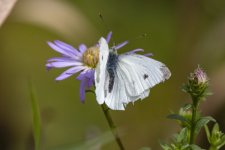
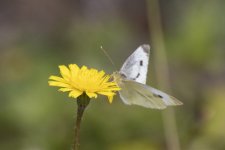

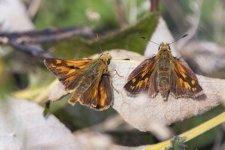
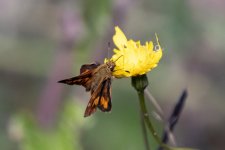
While at Bottle Beach State Park, my wife and I encountered several woodland skipper butterflies. They were sipping nectar and basking in the early afternoon sun.
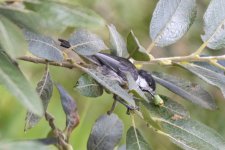
Just as we were about to reach the parking lot, we encountered a flock of black-capped chickadees. One found a fat caterpillar, possibly of a woodland skipper.
Steve
Just as we were about to reach the parking lot, we encountered a flock of black-capped chickadees. One found a fat caterpillar, possibly of a woodland skipper.
Steve
Umptanum Rd., May 24, 2025. Butterflies and other insects. While parched and brown for most of the year, the shrub-steppe habitat of the Manastash Ridge area explodes with color in the spring.
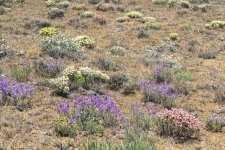
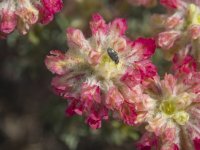
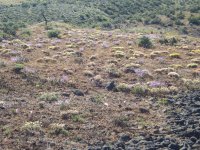 With this profusion of flowers, you would expect there to be an abundance of pollinators too. We did see a few bumblebees, but the most common pollinators were various micro-beetles, like these covering the flowers of this camas
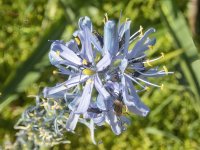
or on this buckwheat.
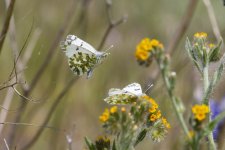
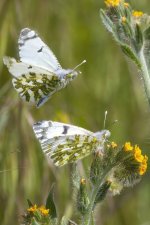
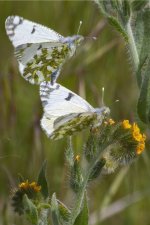
But there were also several species of butterflies fluttering around. These included desert marble butterflies. Males were patrolled territories that they defended from other males (tough for pictures). We spotted a butterfly sipping nectar from the flowers of a common fiddleneck, but stayed in this location for over a minute while another individual repeated flew near it. This might have been a female (alighted) and a territorial male (in flight).
 B01
B01
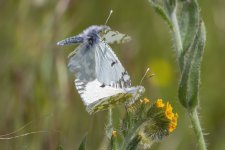
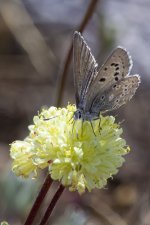
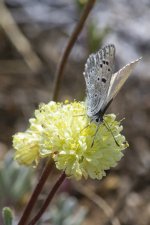
We also spotted a Boisduval’s blue sipping nectar from a buckwheat.
An ocher ringlet butterfly probed an aster flower.
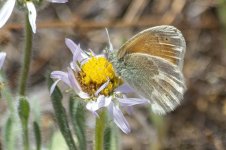
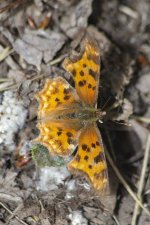
While butterflies are ectothermic, they will bask in the sun to increase their body temperature and facilitate flight. A hoary comma butterfly soaked up some sunlight,
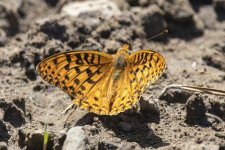
as did a fritillary butterfly.
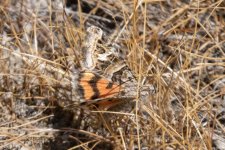
[The previous week, we encountered a Verrill’s underwing moth at Oak Creek Wildlife Area. The forewings are quite cryptic, allowing this moth to blend in with tree bark. But the underwings are bright orange. Entomologists have proposed that when this moth bursts into flight, the bright underwing startles a potential predator and aids the moth’s escape.
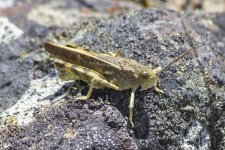
With so much greenery available, it was no surprise that we encountered many grasshoppers, including this red-winged grasshopper
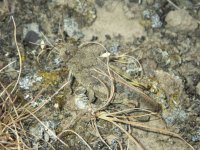
and this unknown yellowish grasshopper.
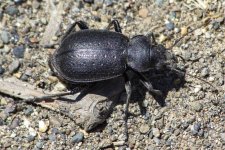
We also encountered this tank-like purple-rimmed carabus beetle
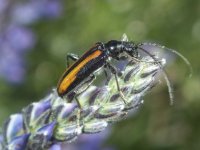
and a more-delicate orange-brown flower long-horned beetle (possibly Strangalepta abbreviata) on the top of a silky lupine.
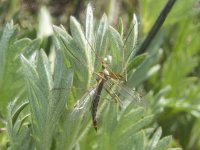
Finally, I was surprised at the number of crane flies on the vegetation.
Steve
With this profusion of flowers, you would expect there to be an abundance of pollinators too. We did see a few bumblebees, but the most common pollinators were various micro-beetles, like these covering the flowers of this camasor on this buckwheat.
But there were also several species of butterflies fluttering around. These included desert marble butterflies. Males were patrolled territories that they defended from other males (tough for pictures). We spotted a butterfly sipping nectar from the flowers of a common fiddleneck, but stayed in this location for over a minute while another individual repeated flew near it. This might have been a female (alighted) and a territorial male (in flight).
B01We also spotted a Boisduval’s blue sipping nectar from a buckwheat.
An ocher ringlet butterfly probed an aster flower.
While butterflies are ectothermic, they will bask in the sun to increase their body temperature and facilitate flight. A hoary comma butterfly soaked up some sunlight,
as did a fritillary butterfly.
[The previous week, we encountered a Verrill’s underwing moth at Oak Creek Wildlife Area. The forewings are quite cryptic, allowing this moth to blend in with tree bark. But the underwings are bright orange. Entomologists have proposed that when this moth bursts into flight, the bright underwing startles a potential predator and aids the moth’s escape.
With so much greenery available, it was no surprise that we encountered many grasshoppers, including this red-winged grasshopper
and this unknown yellowish grasshopper.
We also encountered this tank-like purple-rimmed carabus beetle
and a more-delicate orange-brown flower long-horned beetle (possibly Strangalepta abbreviata) on the top of a silky lupine.
Finally, I was surprised at the number of crane flies on the vegetation.
Steve

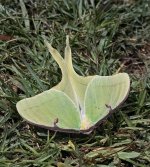
Luna moth photographed under the dawn patrol electric lamp at the central Florida boat ramp which likely had attracted it the night before. This individual wasn’t as big as some I remember from childhood but everything was bigger in memories from being a kid; that seems to be how things work. Nonetheless, as moths go, Luna moths are large and impressive. And, this one wasn’t beat up or eaten by bats.
Cell phone pic, watched them dance across the yard to me, and then away. Swallowtail 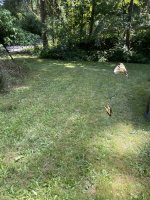
Hurricane Ridge, June 8, 2025. Butterflies Some thoughtful husbands would present their wives with a gorgeous bouquet of flowers to celebrate a 30th wedding anniversary. I decided to go one better and give my wife a mountain of flowers at Hurricane Ridge.
Glacier lily
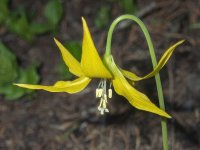
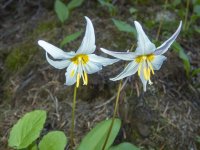
White avalanche lily
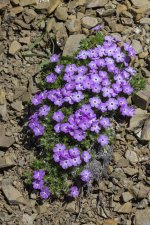
Spreading phlox
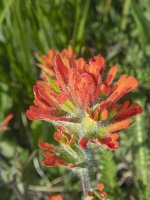
Harsh Indian paintbrush
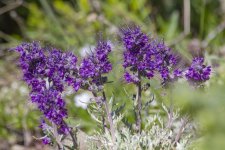
Silky Phacelia
Steve for the win!!!
With all the wildflowers present in the Hurricane Ridge area, it is no surprise that there were also lots of pollinators, such as micro-beetles, flies, bumblebees, and butterflies, as well. The most common butterfly that we saw was Edith’s checkerspot, like this individual on an American bistort flower cluster.
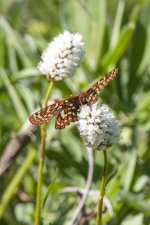
They were everywhere. They appeared to be especially fond of Olympic onion flowers.
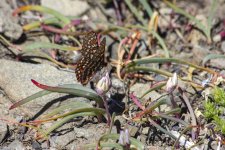 While some individuals were pristine, the trailing edges of the wings of many butterflies were quite tattered.
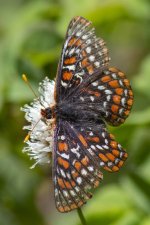
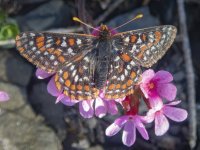
I also captured pictures of Boisduval’s blue that was resting on a white avalanche lily
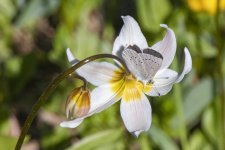
and a Sara’s orange-tip that was sipping nectar from an American bistort flower cluster.
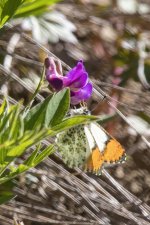
We saw swallowtails along the trail, but they never wanted to settle down for pictures, even after stalking one for several minutes as it flittered around its territory. There were also a few bumblebees pollinating the flowers in exchange for nectar and pollen, like this silky Phacelia.
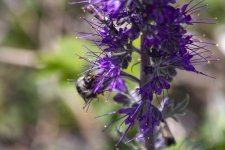
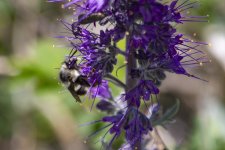
Steve
Glacier lily
White avalanche lily
Spreading phlox
Harsh Indian paintbrush
Silky Phacelia
Steve for the win!!!
With all the wildflowers present in the Hurricane Ridge area, it is no surprise that there were also lots of pollinators, such as micro-beetles, flies, bumblebees, and butterflies, as well. The most common butterfly that we saw was Edith’s checkerspot, like this individual on an American bistort flower cluster.
They were everywhere. They appeared to be especially fond of Olympic onion flowers.
While some individuals were pristine, the trailing edges of the wings of many butterflies were quite tattered.I also captured pictures of Boisduval’s blue that was resting on a white avalanche lily
and a Sara’s orange-tip that was sipping nectar from an American bistort flower cluster.
We saw swallowtails along the trail, but they never wanted to settle down for pictures, even after stalking one for several minutes as it flittered around its territory. There were also a few bumblebees pollinating the flowers in exchange for nectar and pollen, like this silky Phacelia.
Steve

Gyrfalcon22
Legend
Had an always mind-bending visit from a male polyphemus moth. I see one every other year it seems. Only adults for 4-7 days I read, I always hope to find one expired to collect and keep in a shadowbox frame as I could never take a life of such a beautiful creature !
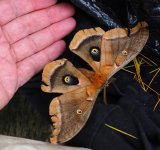
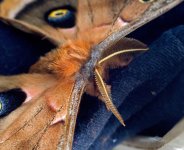
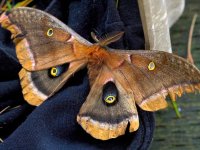
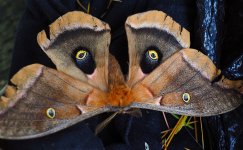
Last edited:
Gyrfalcon22
Legend
Jim, they really are shocking to see. This one is a tad smaller than some I have come across. I have never seen the larger females. What is interesting is that the eyes are not solid color/black. The eye spots ("windows") are transparent lenses that add more incredible intrigue to how the heck these things ever evolved !?I'd love to see one of those!
You can see the lenses here at this angle and background become clear.
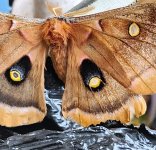
Last edited:

Steve your macro shots worked out really well , were you shooting in any specific mode/setting?Hurricane Ridge, June 8, 2025. Butterflies Some thoughtful husbands would present their wives with a gorgeous bouquet of flowers to celebrate a 30th wedding anniversary. I decided to go one better and give my wife a mountain of flowers at Hurricane Ridge.
Glacier lily
View attachment 157066
White avalanche lily
View attachment 157067
Spreading phlox
View attachment 157068
Harsh Indian paintbrush
View attachment 157069
Silky Phacelia
View attachment 157070
Steve for the win!!!
With all the wildflowers present in the Hurricane Ridge area, it is no surprise that there were also lots of pollinators, such as micro-beetles, flies, bumblebees, and butterflies, as well. The most common butterfly that we saw was Edith’s checkerspot, like this individual on an American bistort flower cluster.
View attachment 157071
They were everywhere. They appeared to be especially fond of Olympic onion flowers.
View attachment 157072While some individuals were pristine, the trailing edges of the wings of many butterflies were quite tattered.
View attachment 157073
View attachment 157074
I also captured pictures of Boisduval’s blue that was resting on a white avalanche lily
View attachment 157075
and a Sara’s orange-tip that was sipping nectar from an American bistort flower cluster.
View attachment 157076
We saw swallowtails along the trail, but they never wanted to settle down for pictures, even after stalking one for several minutes as it flittered around its territory. There were also a few bumblebees pollinating the flowers in exchange for nectar and pollen, like this silky Phacelia.
View attachment 157082
View attachment 157083
Steve
Hi WB, I carried six cameras with me that day [a friend has labeled me as a new superhero - "camera man"Steve your macro shots worked out really well , were you shooting in any specific mode/setting?
 ]...
]... 
I didn't use my GoPro 9 or my Ricoh Theta V 360 camera on that hike; they were just dead weight in my pack that day... I used four different cameras on that hike, three for taking pictures of butterflies and flowers (all visible in the shot above from Mima Mounds). Camera 1 = iPhone 11 for selfies and panoramas (and the Merlin app). Camera 2 = Canon 80D with a Sigma 150-600mm telephoto zoom lens. This heavy %*$&ard is my primary "wildlife" camera. But it has limits for shooting butterflies because its minimum focusing distance is about 10 feet. That isn't quite close enough for the amount of magnification that I want for butterflies and other insects. And I often have to back-up several steps to allow the lens to focus.
[Thought that worked out just fine in shooting a Common Aerial Yellowjacket nest that I encountered on a recent visit to Nisqually NWR. I wouldn't want to be much closer.]
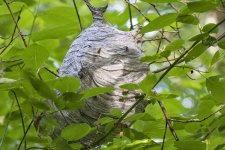
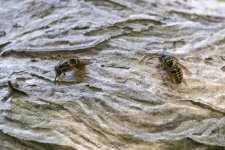
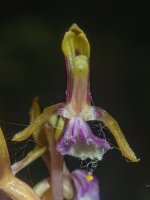
Camara 3 = Olympic TG5. Most of the flower closeups were taken with the macro setting of my Olympus TG5 camera, (which is also my main fishing camera = waterproof and shock-resistant). You can focus VERY close to even the tiniest flowers, like this tiny spotted coralroot orchid
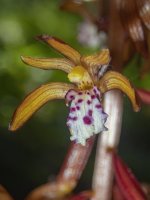
and this Pacific coralroot orchid off the McLane School Trail.
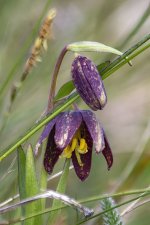
But this camera normally isn't best for butterflies (or other active insects) because the camera has to be close to the subject when really zoomed in. Sometimes, I will encounter a particularly obliging butterfly or bee that will tolerate such a close approach, but it is hit-or-miss. Camera 4 = Canon T3i with a Canon 70-300mm zoom lens. I purchased this lens several years ago as a "macro" lens, but I never did anything with it until my BIL gave me an old Canon T3i that he didn't need anymore to use as a second camera body (who cares about more weight...). This combination is proving to be my best option for shooting butterflies. This lens has a minimum focusing distance of 5 feet, a great distance for shooting butterflies (or pygmy short-horned lizards). I am still experimenting with this combination, but I have been very pleased with the results so far. For example, this spring, I was able to zoom in on this chocolate lily that was blooming on one of the mounds at Mima Mounds without having to leave the trail.
For both the Canon 80D + 150-600mm telephoto combo and the CanonT3i + 70-300mm zoom lens combo, I set the camera to use a single narrow spot at the very center of the field of view as the focus point. With all digital cameras, the key is to shoot, shoot, shoot. Even a blind squirrel will find a few nuts...
Steve

Your neck must get tired but you get fantastic results, Steve!
I bought a Cotton Carrier awhile back - when needed, I can carry 1 camera on my chest, another either in-hand or on a cross body harness & binocs on an extra Carrier holder on the other hip.
I bought a Cotton Carrier awhile back - when needed, I can carry 1 camera on my chest, another either in-hand or on a cross body harness & binocs on an extra Carrier holder on the other hip.
Ahh, I see, I was figuring you had one camera and were switching lenses etc, sounds like you kinda need a Sherpa/Caddy, preferably one who is mute and yet can mind read.
Alternatively a "Camera Reduction Surgery" should you develop chronic neck and back pain. Or really wide straps
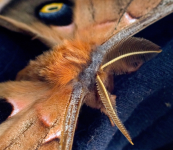
My eye is just not good enough to remotely see the detail in the field, and yet with a great picture it can look so much more interesting- so an example from Gyrfalcon's moth (independent of the varied eye) with the muppet-like hair above the radar-dished convex antennae
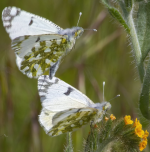
or your marble butterflies with the inverted colors on top and below the wings, or the trailing tasseled edge of the wing, or the poppy heads for antennae, let alone the hairs on the plant beside them or the lavender fuzz on the butterfly's head
So damn cool!
Alternatively a "Camera Reduction Surgery" should you develop chronic neck and back pain. Or really wide straps
My eye is just not good enough to remotely see the detail in the field, and yet with a great picture it can look so much more interesting- so an example from Gyrfalcon's moth (independent of the varied eye) with the muppet-like hair above the radar-dished convex antennae
or your marble butterflies with the inverted colors on top and below the wings, or the trailing tasseled edge of the wing, or the poppy heads for antennae, let alone the hairs on the plant beside them or the lavender fuzz on the butterfly's head
So damn cool!

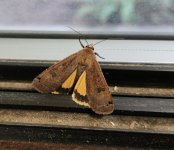
I was loading the dishwasher and this popped up in the window.
Gyrfalcon22
Legend
Moths are super crazy looking the closer you look for sure. Sort of a Rorschach test for bug lovers.
Some random moths over the years I've had the pleasure to come across.
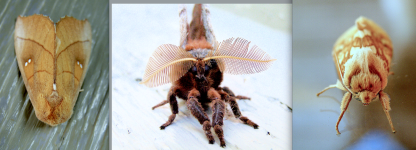
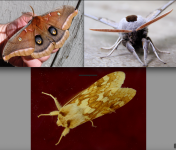
Some random moths over the years I've had the pleasure to come across.

wow. WOW. the moth with the eyes is incredible !! great pics.

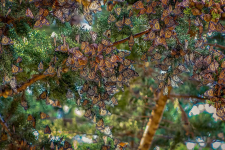
Landing

Feeding
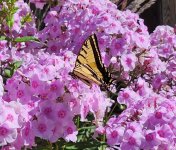
Feeding
Last edited:

Looks like a two tailed swallowtail!Landing