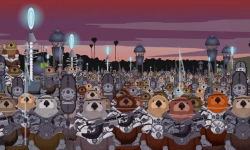
SFR Bremerton Otter Assault! (from Seattle Times)

Sorta fishing-related
Status
Not open for further replies.
A very well informed response nwbobber. But it is far more complicated than that. I know of what I speak. The starfish wasting disease was the worst marine epidemic in history, stretching from Alaska to Mexico. The Purple Urchins took over vast areas of Northern California, but the Red Urchins seemed to be hit by the same disease and their populations were decimated. The Green Urchins seemed to be unaffected. But the Otters have no interest in eating the Purple urchins that are in barrens with little or no roe. Any Sea Otter population will quickly eat anything other than these empty Purple Urchins such as any remaining abalone and any other shellfish until they are all gone. A parking lot.... that is what Sea Otters leave when they are done. Millions of dollars spent over decades have been used to hide this truth from Americans,,,I am just one voice that knows the truth.


I have seen too many videos of people harvesting and eating purple Urchins in California thatbare full of roe, then entire area covered in purple Urchins with zero kelp and very little else.
What else is missing, sea otters, they have lived for for centuries in harmony and are an important part of an entire eco system. Where man has screwed this up I'm sure there is issues but not the falt of sea otters.

Lets see the scientific documentation proving your statements?
 
I have seen too many videos of people harvesting and eating purple Urchins in California thatbare full of roe, then entire area covered in purple Urchins with zero kelp and very little else.
What else is missing, sea otters, they have lived for for centuries in harmony and are an important part of an entire eco system. Where man has screwed this up I'm sure there is issues but not the falt of sea otters.

Lets see the scientific documentation proving your statements?
Haven’t you been listening? Big Urchin has spent millions hiding the truth, and that includes stifling dozens of studies before they were published. I heard in a couple cases, they went to universities, threatened to take researchers’ lunch money, and gave them wedgies. Guess what? No otter papers. Hmmm…
 
Purple urchins are not being harvested for food, they never really have ever been to any great degree.. Red Sea urchins and Green Sea Urchins are what seafood buyers want. Purple Urchins are a force of nature. And they do decimate kelp beds and they can create large areas of "Urchin Barrens" where the kelp has no chance of establishment. Sea Otters are not the answer to this problem..they just are not. They will not eat those Purple Urchins because they have so little gonadal indices ( they are empty) The Otters, will however, eat every other damn living thing at the reef, until they are ALL gone. Parking lot.
 
A very well informed response nwbobber. But it is far more complicated than that. I know of what I speak. The starfish wasting disease was the worst marine epidemic in history, stretching from Alaska to Mexico. The Purple Urchins took over vast areas of Northern California, but the Red Urchins seemed to be hit by the same disease and their populations were decimated. The Green Urchins seemed to be unaffected. But the Otters have no interest in eating the Purple urchins that are in barrens with little or no roe. Any Sea Otter population will quickly eat anything other than these empty Purple Urchins such as any remaining abalone and any other shellfish until they are all gone. A parking lot.... that is what Sea Otters leave when they are done. Millions of dollars spent over decades have been used to hide this truth from Americans,,,I am just one voice that knows the truth.
More info on that story. https://www.sciencedaily.com/releases/2021/03/210308152458.htm
The nutritionally beneficial urchins, according to this article are in the remaining kelp forests, where the urchins can get enough to eat to produce the roe as you call it, gonads as they call it. So in effect the otters are preserving what's left of the kelp populations, while as you point out, they are ignoring the urchins outside of the kelp, who are starving and of no nutritional value to the otters. Still, it looks to me as if without the otters input in the ecosystem the kelp would be in worse shape than it is, and so much depends on these kelp forests, I'm kind of fond of letting them work their ecological role that worked for I don't know how long before us folks showed up to register our opinions on their worth.
 
There is no such thing as "Big Urchin" but I assure you that "Big Otter" is definitely a "thing". Millions of dollars are spent every year to keep this gravy train on track,, truth is not profitable, but lies are very profitable. I'm telling you, I know that every tom dick and harry with a science degree will dispute me (they are getting paid), but I am telling you that Sea Otters destroy every reef they find. Completely destroy it. As in eat every damn thing on that reef until it is a parking lot. Again I will say that even the ancient native Americans could clearly see this truth. They did not hunt the otters to extinction, but they kept the numbers down significantly, precisely because of the destructive nature they had on harvestable seafood.
 
Purple urchins are not being harvested for food, they never really have ever been to any great degree.. Red Sea urchins and Green Sea Urchins are what seafood buyers want. Purple Urchins are a force of nature. And they do decimate kelp beds and they can create large areas of "Urchin Barrens" where the kelp has no chance of establishment. Sea Otters are not the answer to this problem..they just are not. They will not eat those Purple Urchins because they have so little gonadal indices ( they are empty) The Otters, will however, eat every other damn living thing at the reef, until they are ALL gone. Parking lot.


You make no sense, how in the hell can they reproduce if they have no gonads?

Every YouTube video I've seen they are full of roe and being eaten by the creator and friends.
 
In natural ecosystems, if a predator diminishes its food source overly then it's population suffers starvation and loss of numbers until the system begins to correct itself. I'm sure the scenario you describe is somewhat true, but making a villain out of a species that was here doing it's thing, in relative harmony with the other ecological goings on in it's native habitat, is a mistake. Humankind can try to manage such things and to some extent because of our own impact on the ecosystem we need to, but history show us screwing it up as much as we get things right.
Perhaps some population management would be wise, I don't deny that. The marine mammals act certainly makes effective management nearly impossible. Humans tend to react to things rather than consider what they know and act accordingly, and that's where laws like this come from. Maybe even a stupid law will give us enough time to learn what we should have learned before enacting a law, and at some point we will not renew the MMA, and will move on to a management strategy that relies on science, even if it flies in the face of long held beliefs.
To my knowledge the sun stars are not back doing their job yet and may not be soon or ever. What would be left, if the kelp was, in effect, gone? At least having some stands waiting to repopulate the coast gives hope for the future.
 
I don't want to make Sea Otters out to be villains. They lived in harmony with native Americans that kept them controlled for centuries. Russian fur traders came close to wiping them out. An oil spill put them in the spotlight and cemented them into the lore of eco activism. That launched a huge campaign that promised huge profits to "Save the Sea Otter". They were never in any danger of extinction, because of the huge population of the same species in Alaska, yet they became the cute, cuddly cash cow for charlatans to use for huge profits. That "cash cow" is still paying out millions every single year. Now, a guy like me is just one voice. All I can say is that these creatures can be,will be, and are always a very destructive entity on any reef. To what degree that is... can be debated, but their destructive nature should not be dismissed. IMHO
 

Otters are removing all our female inner tubers from Montana rivers.

 
...They were never in any danger of extinction, because of the huge population of the same species in Alaska...
Huge?

By several estimates, AK has fewer than 80K sea otters and one of the only places the population is growing is here in SE AK. The Southwestern stocks have largely been in decline since the 1990's.
 
I don't want to make Sea Otters out to be villains. They lived in harmony with native Americans that kept them controlled for centuries. Russian fur traders came close to wiping them out. An oil spill put them in the spotlight and cemented them into the lore of eco activism. That launched a huge campaign that promised huge profits to "Save the Sea Otter". They were never in any danger of extinction, because of the huge population of the same species in Alaska, yet they became the cute, cuddly cash cow for charlatans to use for huge profits. That "cash cow" is still paying out millions every single year. Now, a guy like me is just one voice. All I can say is that these creatures can be,will be, and are always a very destructive entity on any reef. To what degree that is... can be debated, but their destructive nature should not be dismissed. IMHO
The California population of sea otters was down to an estimate of ~50 in 1938. Oregon's last sea otter was estimated to have been killed in 1906. World wide sea otter populations were estimated to be 1,000 to 2,000 in 1910 after plummeting from around 200k in the 1700s. All of those seem to point to populations having been at a quite HIGH risk of extinction. I'm amazed that in the early 1900s there was enough wherewithal to offer sea otters some sort of protection.
 
34a742bde48aa2e2963e6dd017bbac3d.jpg
 
This discussion sort of reminds me of my uncle's opinion regarding trout predation by Osprey at Flathead Lake. In the 1930's through the early 1960's he owned a fishing lodge outside of Polson Montana, and was absolutely convinced that Osprey were decimating the trout population and thereby destroying the resource his business depended upon.

So the dingbat shot every Osprey he possibly could....and no rational discussion could change his conviction about the matter, despite the fact that his customer catch rate was consistently phenomenal (as you might imagine during that era).

The same thoughts (remnants of once official government policy) remain entrenched in much of the hunting community regarding the role of predators in wildlife management.

Long after he sold his 700 acres along Flathead the massive Cutthroat and Bull trout population did indeed collapse...not from Osprey predation, but instead from the introduction of Lake Trout.
 
Last edited:
Where/how can I get into some of this sea otter action, sounds like quite the boondoggle.

Cheers
 

Examination of the Causes of Decline in Sea Otter Populations

The decline in sea otter populations is attributed to various interconnected factors. Nevertheless, all are directly or indirectly related to human interactions.

  • Predation and Natural Threats: In some areas — like southwest Alaska — predation by orcas and sharks has significantly affected sea otter numbers. Some studies have shown that changing predator dynamics — often linked to food scarcity elsewhere — are thought to have led to increased predation pressure on sea otters.
  • Environmental Pollution: Chronic oil spills, urban runoff carrying persistent organic pollutants (POPs) like PCBs and DDT, and other forms of pollution continue to pose significant threats. These pollutants can weaken the otters’ immune systems, leading to higher mortality rates. Oil spills can also have long-lasting effects on sea otter populations, affecting their reproductive success and survival rates.
  • Disease: The rise in diseases — such as toxoplasmosis, Sarcocystis neurona infections, and phocine distemper virus — has been linked to both environmental factors and increased contact with domestic animals. Many of these diseases arise from fecal material in animals — possums, cats, etc. — that sea otters are susceptible to as the filter feeders (like clams) that the otters eat don’t eliminate the parasites.
  • Climate Change: The impact of climate change extends beyond temperature shifts. Ocean acidification, storm frequency, and changes in prey distribution significantly disrupt sea otter habitats.
  • Human Interference: Coastal development, marine traffic, and fishing activities have led to habitat loss and direct threats through boat strikes and, at times, entanglement in fishing gear.
Point to be made: Otter effect on ecosystems is barely visible in comparison to human glut! If I were an Otter and had to go through the above I would bite and scratch the hell out of those beings that threatened my very existence!
 
Status
Not open for further replies.
Back
Top