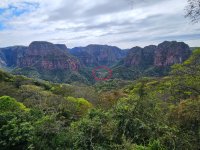
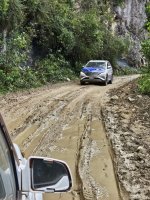
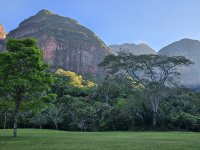
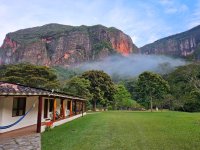
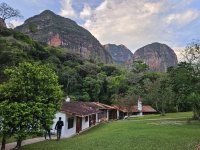
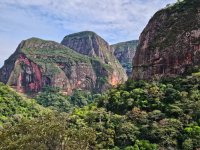
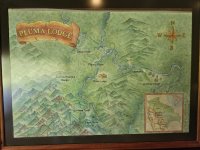
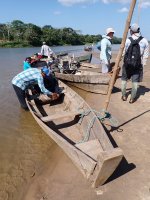
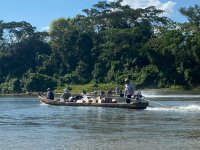
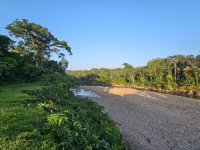
There are 5 main beats (non heli program) plus a 6th that is a longer walk before the fishing starts. Most end up repeating a beat instead of making the jungle hike. The two beats below the lodge are fished from the motorized canoes. The one directly above the lodge is mostly walking with a non-motorized canoe to get you through the longer pools and then float back to the lodge. The upper 2 are accessed by running/pushing these little motorcycle trucks through jungle roads - another adventure.
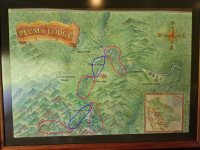
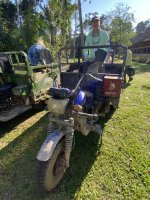
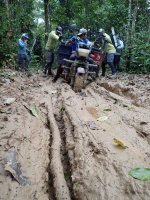
From there you walk the upper Pluma and have a canoe for the Itirisama River beat.
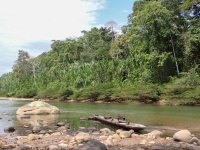
If you fish beat 6 – the upper Iti – you walk 45 minutes through the jungle before you start fishing.
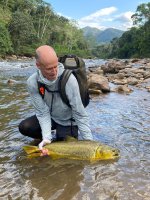
Day 1 for Jim and I was the Itirisama River. I got my first fish blind casting near a log in the Pluma just below the mouth of the Itirisama. This may have been the smallest fish of the trip!
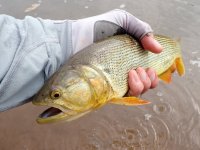
The next one was also blind casting in the confluence pool. It was a typical fish – maybe 5 pounds – by far the most frequently encountered size.
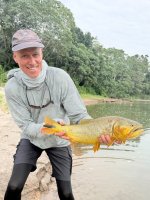
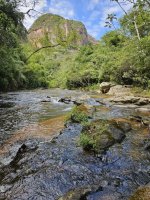
After turning up the Iti we did a lot more hunting. The river is clearer than the Pluma which is clearer than the Secure. None of them are as clear as a PNW trout stream, but the fish hunt in such shallow water there is a lot of sight fishing. Sometimes you can see wakes moving through a pool from 50+ yards away. The feeding frenzies are VERY easy to spot. You would think a bright yellow fish laid up in a foot of water would be easy to see. They are not. I was frustrated one day and asked the guide what he looks for. The key is the tail. The yellow tail does stand out when you have a profile view. However, a fish that is sitting in calm shallow water facing away from you is very difficult to see in my opinion – add riffled water and I have no idea how the guides and locals see them. I think I had an easier time with bonefish on Christmas Island. Here is a picture of a fish swimming away after being released - easiest thing to see is the yellow fins.
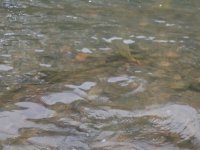
Back to fishing day 1. My best shot at a pacu came in some pocket water below a riffle around lunch time. Looking back, this first shot was by far my best opportunity. Most of the pacu we saw were in the slow pools.
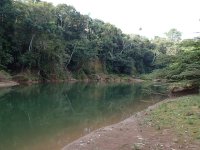
In those areas it seemed like they were always on the other side of the river about 90 feet away and I can’t quite get it out that far much less hit a target that far out. These two fish were in easy range and feeding. The fruit/nut patterns are no longer allowed. Most of the time we fished small streamers or big terrestrials. You are supposed to hit them on the head to try to get a reaction eat. My best shot landed a couple feet above a fish. The big green hopper like thing floated right to it and I swear the fish gave it a kiss before refusing. One other time I only had my dorado rod and got a couple fish to follow but they wouldn’t eat the bigger streamer. Pacu are tough.
I lost track, but would guess I hooked a dozen dorado on day 1 and maybe landed 6 or 7. I hooked 4 in the last 15 minutes in this section of river. The last cast of the day to the pocket behind the big light colored rock about 1/3 of the way in from the right
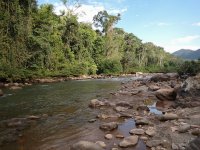
resulted in my 2nd biggest fish of the trip – approaching 30 inches and maybe 15 pounds.
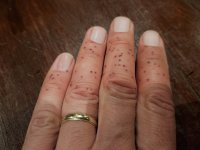
Most of us took malaria meds, but the "sand flies" were the only bighting insects I noticed. The only thing I noticed was the little blood blister type bite marks. Thankfully they didn't hurt or itch!
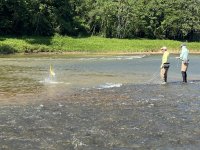
I thought the first day numbers were outstanding until we fished the Secure the next day. The Secure typically involves a lot of blind casting runs while standing in fairly heavy current. The farther you can cast the better. Having a huge loop of line stuck in the current results in many false casts to get the fly out there – at least for me. I have never come close to making that many false casts in a single day – especially with big flies on an 8wt. My right forearm was sore for a couple days after. However, Jim and I got extremely lucky and ran into two sets of fish actively feeding in shallow water. It wasn’t a constant feeding frenzy, but if you landed a fly near where the fish were holding/feeding, you were likely to get an eat on the first strip. I couldn’t keep track of how many fish we hooked – maybe approaching 20 each. No monsters, just a bunch of 3 to 8 pound fish. Some pics of my first fish of the day from Jim and some GoPro footage from the 2nd frenzy. By the time I thought to turn on the camera the frenzy was over, but the fish were still holding in the same area and very willing to eat. I planned to film a lot with the GoPro. However, as is usually the case you can't fish well and photograph well at the same time. I wasn't filming when the best action happened.
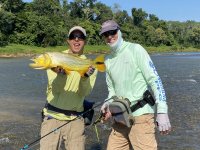
Day 3 was the lower Pluma – the beat between the Secure and the lodge. There was a big weather change – temp dropped 25 degrees, wind and a bit of rain mid-morning.
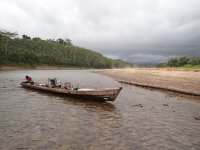
The guides thought it might get the fish really fired up, but the morning was tough. We got into some feeding fish in the afternoon, but this was probably the least memorable fishing day for us. One other group was further up and caught some pacu while it was raining fairly hard. I only one hero shot for the day of a slightly bigger than average fish.
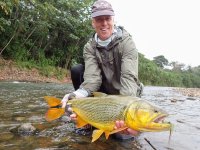
I do think these things have the coolest gill plate of any fish I have ever caught - looks like face armor!