Beautiful, but closed river

skyriver

Legend
Forum Supporter
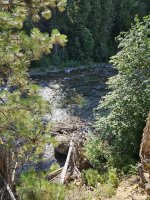
These are pics of the Chiwawa river on the private property of the rental house we were at this weekend. Some very gorgeous water. I didn't bring a rod since I knew the Chiwawa has been closed forever and a day.
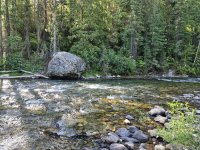
20250720_090111.jpg

20250720_090422.jpg

20250720_090342.jpg

I think it got closed way back in the day because of steelhead, but I assume it's closed these days because of spring chinook. Anyone know the real story?

I know spring chinook make things complicated and I support protecting them. Is it crazy to think a C&R season for trout from July 1-September 30 with selective regs is completely safe to salmon & steelhead?

Based on a study by Mosey & Murphy in 2000, the redd densities are highest between the confluences of Big Meadow and Phelps creeks. Same study says peak spawning occurs near the end of August. So I understand that complicates things.

This water is below Big Meadow and not too far from the confluence with the Wenatchee. It's not too far upriver from the Chiwawa Ponds Hatchery.

I've seen the escapement numbers. 100-250 fish per YEAR. It's been that way for many years now. So, I guess I'm asking the question of people that probably know more than me about these things... why are we keeping streams like this closed to trout fishing year after year when the current path is not improving anything for the salmon? Will there be salmon rivers like these that are just off limits to trout fishing forever? This seems like the direction we're headed. And frankly, it seems like a copout.

The weekend was great, despite not fishing. :)
 
These are pics of the Chiwawa river on the private property of the rental house we were at this weekend. Some very gorgeous water. I didn't bring a rod since I knew the Chiwawa has been closed forever and a day.
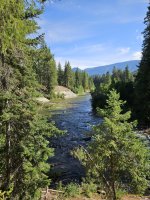
View attachment 160894

View attachment 160895

View attachment 160896

I think it got closed way back in the day because of steelhead, but I assume it's closed these days because of spring chinook. Anyone know the real story?

I know spring chinook make things complicated and I support protecting them. Is it crazy to think a C&R season for trout from July 1-September 30 with selective regs is completely safe to salmon & steelhead?

Based on a study by Mosey & Murphy in 2000, the redd densities are highest between the confluences of Big Meadow and Phelps creeks. Same study says peak spawning occurs near the end of August. So I understand that complicates things.

This water is below Big Meadow and not too far from the confluence with the Wenatchee. It's not too far upriver from the Chiwawa Ponds Hatchery.

I've seen the escapement numbers. 100-250 fish per YEAR. It's been that way for many years now. So, I guess I'm asking the question of people that probably know more than me about these things... why are we keeping streams like this closed to trout fishing year after year when the current path is not improving anything for the salmon? Will there be salmon rivers like these that are just off limits to trout fishing forever? This seems like the direction we're headed. And frankly, it seems like a copout.

The weekend was great, despite not fishing. :)
I had noticed a couple years ago it was closed. Surprised me as I had fished it several times in the early 90’s. Beautiful little river though never caught much of anything.
 
A lot of those rivers over there are also closed to protect bull trout, Nason Creek for instance below the falls. Chiwawa River has a healthy population of bull trout over there though so must be steelhead or chinook. I looked at a place to buy a few years ago on Nason Creek which gets extremely low during summer and was surprised that they allowed the homeowner to draw water from the creek and divert it to his personal pond. Seems ridiculous they would allow that while trying to bring back certain fisheries.
 
Growing up family friends had a cabin on the chiwawa, about a mile from the confluence with the met. I've watched cutts rise from their deck for hours, and once upon a time stuck a few with corn kernels. Beautiful creek in beautiful country.
 
A lot of those rivers over there are also closed to protect bull trout, Nason Creek for instance below the falls. Chiwawa River has a healthy population of bull trout over there though so must be steelhead or chinook. I looked at a place to buy a few years ago on Nason Creek which gets extremely low during summer and was surprised that they allowed the homeowner to draw water from the creek and divert it to his personal pond. Seems ridiculous they would allow that while trying to bring back certain fisheries.
Unfortunately, Chelan county has a long history of questionable practices.
 
These are pics of the Chiwawa river on the private property of the rental house we were at this weekend. Some very gorgeous water. I didn't bring a rod since I knew the Chiwawa has been closed forever and a day.

View attachment 160894

View attachment 160895

View attachment 160896

I think it got closed way back in the day because of steelhead, but I assume it's closed these days because of spring chinook. Anyone know the real story?

I know spring chinook make things complicated and I support protecting them. Is it crazy to think a C&R season for trout from July 1-September 30 with selective regs is completely safe to salmon & steelhead?

Based on a study by Mosey & Murphy in 2000, the redd densities are highest between the confluences of Big Meadow and Phelps creeks. Same study says peak spawning occurs near the end of August. So I understand that complicates things.

This water is below Big Meadow and not too far from the confluence with the Wenatchee. It's not too far upriver from the Chiwawa Ponds Hatchery.

I've seen the escapement numbers. 100-250 fish per YEAR. It's been that way for many years now. So, I guess I'm asking the question of people that probably know more than me about these things... why are we keeping streams like this closed to trout fishing year after year when the current path is not improving anything for the salmon? Will there be salmon rivers like these that are just off limits to trout fishing forever? This seems like the direction we're headed. And frankly, it seems like a copout.

The weekend was great, despite not fishing. :)
I’ve become cynical about how and why WDFW closes rivers, particularly its aversion to allowing C&R fisheries. I’ve come to the point of considering fishing there rivers with the hook barbs cut off at the bend as a form of civil disobedience.
 
WDFW is only one ofmany players in place for these creeks and rivers being closed. Looking for @Smalma, @Salmo_g, @BDD for some follow up.

I believe bull trout are the purview of USF&WS.

For a few years I participated in some discussions (not as a member) with a committee on Nason Creek and construction of an over-winter acclamation facility for juvenile spring Chinook. Tribes, USFWS, WDFW, NOAA,WDNR….were among the policy people. Chelan County? Permits for construction but I don’t remember them participating in the policy of fish management.
 
WDFW is only one ofmany players in place for these creeks and rivers being closed. Looking for @Smalma, @Salmo_g, @BDD for some follow up.

I believe bull trout are the purview of USF&WS.

For a few years I participated in some discussions (not as a member) with a committee on Nason Creek and construction of an over-winter acclamation facility for juvenile spring Chinook. Tribes, USFWS, WDFW, NOAA,WDNR….were among the policy people. Chelan County? Permits for construction but I don’t remember them participating in the policy of fish management.
Thanks Pat. Yeah, Chelan County was in reference to the water rights that Jerad mentioned. The water allotments to land owners is probably the most important part of river, therefore fish, management.

For example, the John Day river comes to mind. The meter at McDonald Ferry gets down to 80 cfs in September & October before they stop drawing on Oct 10th or 15th. The steelhead sit down below Tumwater falls just waiting for the water to hit 250 cfs. Is Oct 15th their natural or historical timing to cross the falls? Maybe, but probably not. It's probably why so many go right past the John Day all the way into Idaho and then come back down to enter. I'm guessing if there was 250+ on Sept 15th they would cross then and we'd have way less "overshoot".
We will never know unless the water rights are changed. Good luck doing that. I grew up on a farm. I'm pro land owners, but there is room for improvement all across the West.
The counties & water districts have way more influence on our fish than us casting barbless flies or lures.
 
USFWS is the federal agency that has the responsibility for bull trout (decent numbers found in the Chiwana) which was ESA listed in the late 1990s (1998?). That listing is likely the reason for the change in fishing regulations in the 1990s.

Would often see WSFWS bios at issues potentially affecting bull trout. That staff was always limited and recently has become more so.

Curt
 
USFWS is the federal agency that has the responsibility for bull trout (decent numbers found in the Chiwana) which was ESA listed in the late 1990s (1998?). That listing is likely the reason for the change in fishing regulations in the 1990s.

Would often see WSFWS bios at issues potentially affecting bull trout. That staff was always limited and recently has become more so.

Curt
Thanks Curt. Would the Bull Trout ESA listing be the basis for the WDFW to close the river entirely? If so, why do other states such as Montana still allow fishing on rivers having ESA listed bull trout (e.g. the Blackfoot)?
 
Chris-
I don't see the situation in Montana much different than what we see in Washington. Generally speaking, both states have limited exceptions to the regulation of bull trout closed waters/illegal to target them.

Here in Washington, there a few waters where fish for bull trout is illegal, for example the Skagit. At least in Washington when the bull trout were ESA listed USFWS approved some limited exception based on the State's ability to demonstrate doing so would meet conservation standards and not jeopardize those populations that received those exceptions.

Curt
 
I think the
Chris-
I don't see the situation in Montana much different than what we see in Washington. Generally speaking, both states have limited exceptions to the regulation of bull trout closed waters/illegal to target them.

Here in Washington, there a few waters where fish for bull trout is illegal, for example the Skagit. At least in Washington when the bull trout were ESA listed USFWS approved some limited exception based on the State's ability to demonstrate doing so would meet conservation standards and not jeopardize those populations that received those exceptions.

Curt
The distinction I see in Washington vs Montana is that the rivers in montana are open to fishing, illegal to target bull trout. In Washington that's closed waters baby.
 
Since Buzzy brought me up, here's my take on this topic. When there are three listed species in the area, it's challenging to get fisheries opened unless unless you have fishing rights. Recreational angling is a privilege. That said, WDFW did open up a recreational sockeye fishery in Lake Wenatchee under selective gear rules even with three ESA-listed species so there are situations where it can be done. I have seen at least two photos of sockeye stringers with bull trout in the mix that apparently the angler(s) didn't recognize and were killed anyway.

Last time I looked, the river in question was open but only after a long drive on a gravel, dusty, rough road and then a significant hike from there to get to the open water. If time and money were no consideration, I probably would have fished it by now but with limited free time because of life in general, that trip has not been high enough on my priority list to try. Maybe someday, assuming the regulations don't change.

Speaking of permitting, our group has purchased two parcels with homes built in the floodplain. Not sure how those building permits were obtained (I had to fight tooth and nail for a boat cover that was approved then rescinded after being built and had to be torn down at my expense). It was thought more prudent to purchase the land, remove the homes, and re-connect side channel habitat for salmon restoration. Other land acquisitions that have been purchased for restoration purposes comes with water rights, which are taken out of irrigation withdrawal and put back into the watershed. Who would have thought fish need water?

If there is a will, a way can usually be found, created, or bought.
 
Last edited:
Thanks Curt. Would the Bull Trout ESA listing be the basis for the WDFW to close the river entirely? If so, why do other states such as Montana still allow fishing on rivers having ESA listed bull trout (e.g. the Blackfoot)?
In Montana, MFWP advocates for recreational angling. In Washington, WDFW doesn't. I've posted many times that WDFW is not an advocate for recreational fishing. I think many of you believe me, but there seem to be a few holdouts who continue to think that WDFW is on our side.

With few exceptions, CNR trout fishing would cause no measurable harm to the health of ESA listed Chinook, steelhead, or bull trout populations. WDFW acts as though closing waters to recreational fishing equals management success, . . . whether the ESA listed populations improve or not. And mostly they don't improve, but that has nothing to do with recreational fishing.
 
In Montana, MFWP advocates for recreational angling. In Washington, WDFW doesn't. I've posted many times that WDFW is not an advocate for recreational fishing. I think many of you believe me, but there seem to be a few holdouts who continue to think that WDFW is on our side.

With few exceptions, CNR trout fishing would cause no measurable harm to the health of ESA listed Chinook, steelhead, or bull trout populations. WDFW acts as though closing waters to recreational fishing equals management success, . . . whether the ESA listed populations improve or not. And mostly they don't improve, but that has nothing to do with recreational fishing.
Possibly more true about MFWP due to the tourism influx to fish such rivers and the economic benefits that the state government realizes and thus pushes for?
 
Possibly more true about MFWP due to the tourism influx to fish such rivers and the economic benefits that the state government realizes and thus pushes for?
I'll cut WDFW some slack. The big difference is that MFWP is not beholden to commercial salmon interests or treaty Indian fisheries. The Washington Department of Salmon does what it does in large part because that's what it was set up to do around 1935, manage and pander to commercial fishing. Running what is likely the world's largest system of salmon hatcheries, WDFW continues doing it because that is what they have always done, even if it doesn't make economic sense to the people who pay for that program.
 
Back
Top