
Puget Sound salmon habitat restored with tribes leading the way | HeraldNet.com
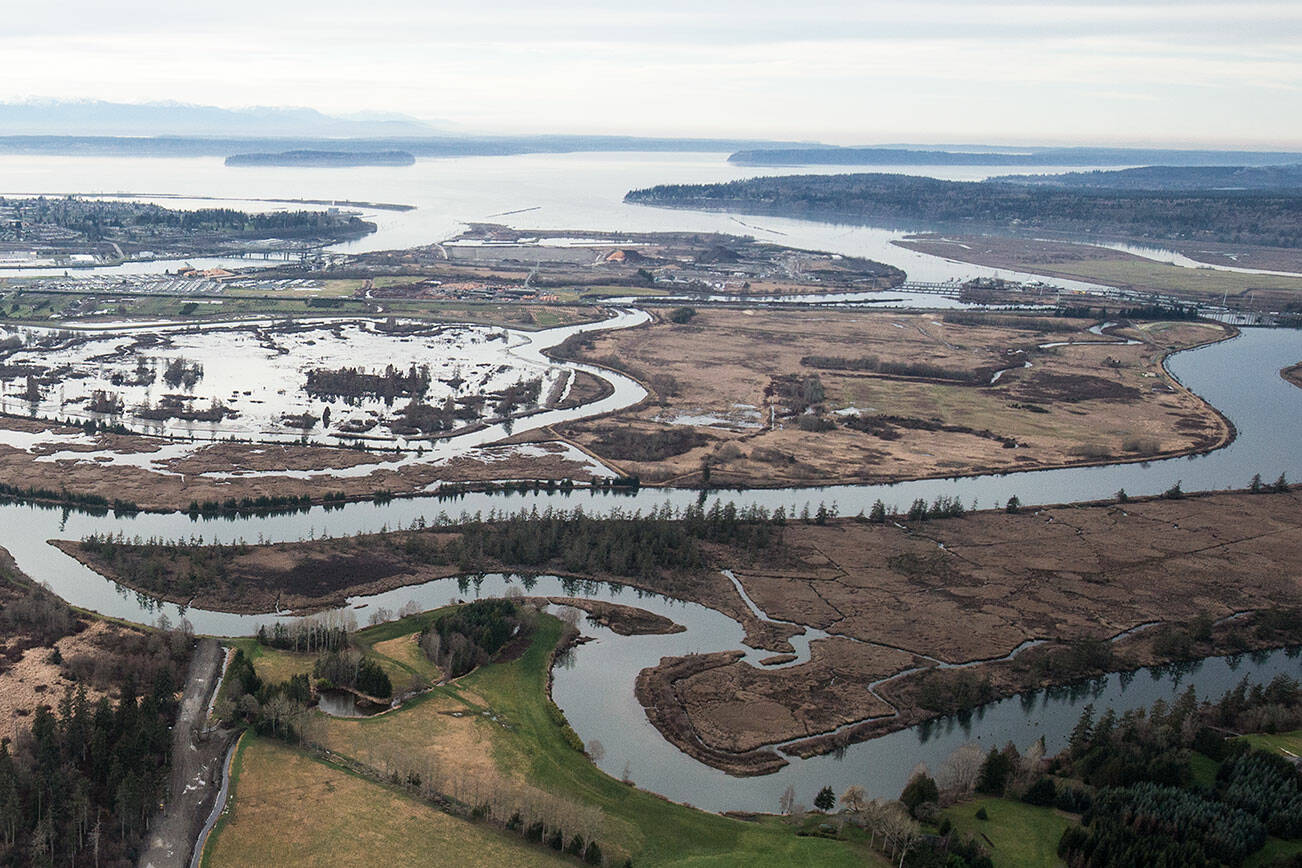
At 353 acres, the Port of Everett’s Blue Heron Slough restoration project is among the largest along the Puget Sound.
 www.heraldnet.com

Follow along with the video below to see how to install our site as a web app on your home screen.
Note: This feature may not be available in some browsers.
www.heraldnet.com

What? I thought WDFW did it? I mean they are charged with managing fish right?This is a great place to do restoration work, but it is interesting how they call it a restoration project, but it is a lot more complicated than that. This "restoration project" is a mitigation bank. That means that a bunch of wetland and fish nerds have worked hard to figure out how much "environmental lift" the project provides, so that the "credits" for that environmental lift can be sold as part of permitting future impacts. And at this particular site, some credits are already claimed by the Port of Everett for impacts they did long ago, but only recently got called out on. https://www.justice.gov/opa/pr/unit...-and-tulalip-tribes-announce-major-settlement
And people wonder why progress on salmon recovery seems so elusive. Well, there are a lot of reasons and one is that new impacts continue to outpace restoration benefits.

I’m with you, Boot. I am super glad these levees are being breached, too. The reason why there was nothing really going on in these particular former ag fields is because they were purchased specifically for restoration/mitigation a ways back. There might be some obstacles to doing this on the lower Duwamish.I for one am super looking forward to this, the Snohomish delta could be a roadmap for a lot of the urban deltas that are riprapped in their last 3-4 miles. Bird and Cutt fishing around the delta was better post 2015's Marysville project. There is really nothing going on behind those levies they intend to pull out, why not breach them? Hopefully they will put a lot of deadwood and snags up in there too....

I’m with you, Boot. I am super glad these levees are being breached, too. The reason why there was nothing really going on in these particular former ag fields is because they were purchased specifically for restoration/mitigation a ways back. There might be some obstacles to doing this on the lower Duwamish.
Subsidence is a bitch.I have worked on several levee/dike setback projects on the lower Skagit and these fields usually have salinity problems. i think all these types of fields would still be farmed if they were profitable.

Curt I find it surprising to hear the survival rate has remained relatively constant for PS chinook. In your escapement numbers I would think the 2016-2020 totals show effects from the blob and generally negative ocean conditions for salmon. With how much smaller the average PS Chinook has gotten, even reaching the 3600 chinook threshold will be significantly less productive spawning wise than they were in the 90s, even with better spawning/rearing habitat. I wonder if this is the feedback loop we are stuck in, managing for counts of fish instead of egg mass in the gravel.The ultimate test of these restoration projects is how the Chinook population respond. The literature tells us that almost immediately the juvenile chinook find and use this newly available habitats. With the blue heron slough project since the ESA listing of Puget Sound Chinook the amount estuary habitat has doubled since the listing. During that same time the total exploitation rate of all the fisheries has declined and the marine survival of Puget Sound Chinook has remained relatively constant.
Yet somehow with better estuary habitats, lower fishing rates and constant marine survivals the average Skykomish/Snoqualmie NOR escapements have fallen from 3,599 in the 1997 to 2001 period to 2,888 in the 2016 to 2020 period. Could it be that the basin's Chinook are being limited by factors other than fishing, marine survival or total available estuarian habitat?
Curt
