An enlightening experience

After getting all the way up to my spot and having my brand new rod break I decided to do some underwater scouting. I threw on my mask and snorkel and floated all my usual fishing spots. My reaction was.... you've gotta be kidding me. There were 10x more fish than I imagined. The most surprising thing was how little they cared about me. I've read and watched a lot of videos about how skittish trout are. They must just mean shadows? I could have kicked them without them caring. I played around making noise and moving and they did not care whatsoever.

If there are that many fish there why are they so hard to catch? I've been doing ok lately, but I based that on assuming there were only a couple fish in each spot. On a recent trip to northern idaho I had the best fishing experience of my life. I caught 6 keeper trout one after another. After the 6th fish my fly came apart. No matter what other fly I tried they would all refuse it at the surface. I had similar sizes, similar colors, etc. But nothing that was the exact same combo of colors. Are they really that picky? Or was something else going on? Should I be sitting on one hole and trying 5-10 different flies?
 
Is this experience I had with the same trout suddenly refusing similar flies something you guys have experienced? I thought as long as it was pretty close they wouldn't care. But it sure seemed like they were that incredibly picky. Fish and fish came up and veered off at the last second with every other fly but the exact one they liked.
 
  • Like
Reactions: Zak
Is this experience I had with the same trout suddenly refusing similar flies something you guys have experienced? I thought as long as it was pretty close they wouldn't care. But it sure seemed like they were that incredibly picky. Fish and fish came up and veered off at the last second with every other fly but the exact one they liked.
All the damn time. Bluegill too, which is truly shameful.
 
@Wilderness Medic --
There are no real answers to your questions, other than fish more, and keep trying stuff. But--props to you for donning mask and snorkel and doing this research! It's cool under there, isn't it? And yeah, enlightening, perhaps disillusioning when you see how many fish we aren't catching.
Very cool and I wish I had done it sooner. I've done a lot of river diving looking for gold in California where I did all my previous fishing with nearly zero luck. It was rare to see a rainbow so I figured that's just how few of them there were everywhere if they weren't biting.
 
Is this experience I had with the same trout suddenly refusing similar flies something you guys have experienced? I thought as long as it was pretty close they wouldn't care. But it sure seemed like they were that incredibly picky. Fish and fish came up and veered off at the last second with every other fly but the exact one they liked.
It's hard to say what was happening. If you were releasing them, maybe you had already caught those fish and so they couldn't resist a closer look at a possible food item, but they weren't going to bite the pokey thing again. If they were different fish, there can sometimes be subtle size or shape or "how high floating is the fly?" features that we don't discern as important but the fish may be keying on. But yeah, sometimes that happens. The fish will take look after look at the flies but not take. I usually go find some other fish that will hopefully bite. If they're that active, that's usually a good sign that you can find some biters somewhere.
 
It's hard to say what was happening. If you were releasing them, maybe you had already caught those fish and so they couldn't resist a closer look at a possible food item, but they weren't going to bite the pokey thing again. If they were different fish, there can sometimes be subtle size or shape or "how high floating is the fly?" features that we don't discern as important but the fish may be keying on. But yeah, sometimes that happens. The fish will take look after look at the flies but not take. I usually go find some other fish that will hopefully bite. If they're that active, that's usually a good sign that you can find some biters somewhere.
Well that certainly explains my lack of success in years prior with a "take this bug or nothing" approach. Haha
 
I really like this answer Matt. The more I fish, the more certain I am I don't know shit really.
Anyone who tells you they have a really solid understanding of what fish are doing and why they are doing it is full of it. This includes people who have spend their careers studying fish. We think we know a little, and then we find more exceptions.
 
If I were experiencing multiple refusals as you describe the first thing I’d do is reduce my tippet size. I also like to use furled leaders with a long tippet.
That said, I recall a well known flyfisher telling about a time he and a friend worked a section of stream where one was fishing nymphs and the other was in the water with a camera. The number of takes of the nymph that went undetected by the angler was incredible. These were not novices.
 
Tippet size may/can make a difference. But I find that when a fish comes up and then refuses I go one size smaller on the fly. That has saved me many times...
 
If I were experiencing multiple refusals as you describe the first thing I’d do is reduce my tippet size. I also like to use furled leaders with a long tippet.
That said, I recall a well known flyfisher telling about a time he and a friend worked a section of stream where one was fishing nymphs and the other was in the water with a camera. The number of takes of the nymph that went undetected by the angler was incredible. These were not novices.
I'll definitely give that a try next time. But FWIW the only thing that changed was the fly and maybe an inch or two of the same tippet tying on the new one.

I had something that looked like a royal coachman with red and green that they loved. Oddly enough, looked like no bugs around. After that was destroyed I tried a red royal coachman, and another similar size and shaped fly with green. Also tried various hoppers BWO and everything else I had. But nothing that looked like the first with both red and green.
 
Expect two dozen different answers to this! 😁
😏
Well that certainly explains my lack of success in years prior with a "take this bug or nothing" approach. Haha
So here's a twist for you. I've been fly fishing since 1976 but I have used Tenkara rods exclusively in mid sized rivers to small creeks since April 2017 because I virtually always catch fish. When I store my rods I remove the lines and keep them on small spools. I keep the last fly used on the lines to secure the lines to the spools.

Since T-rods are short and compact when collapsed and so easy to rig up and collapse with the lines on them, most often I carry 2; sometimes 3 rods in my pack for their reach in open water or tight quarters, and whether their action works well-best for casting & setting the hook near the surface with wet and dry flies, or weighted nymphs at depth. They're also about 20% of the the cost of a western rod, reel & line of an equivalent quality.

I'm not a "one fly guy" like some Tenkara anglers will swear to, but I keep records of all my trips and there is a specific attractor wet fly pattern that has fooled hundreds of fish in that time, and more recently a specific attractor beadhead nymph pattern that over has caught fish on every trip I've used it. When I approach a stream to fish, I'm mainly observing the reach I need, structure, and depth to determine which rod to use. Both out of laziness, and practical reality I virtually never (have to) sample or observe hatches. However I'm not blind to a swarm of PMDs, Green Drakes, Caddis, or Hoppers(!). I virtually always tie on the line that's the length I use for a specific rod (length) with the last fly that was used on that line, which is probably going to be one of those two patterns. I fish with it, and catch fish.

I think the success I see has more to do with
  • the attractor fly design - hook, & materials
  • techniques to create subtle enticing, movement that is accentuated by the fly design & materials (that I really cannot duplicate with a western rod & fly line laying on the water)
  • superior strike detection from a high rod tip and a light, tight, highly visible (indicator) line, with only the tippet in the water.
 
😏

So here's a twist for you. I've been fly fishing since 1976 but I have used Tenkara rods exclusively in mid sized rivers to small creeks since April 2017 because I virtually always catch fish. When I store my rods I remove the lines and keep them on small spools. I keep the last fly used on the lines to secure the lines to the spools.

Since T-rods are short and compact when collapsed and so easy to rig up and collapse with the lines on them, most often I carry 2; sometimes 3 rods in my pack for their reach in open water or tight quarters, and whether their action works well-best for casting & setting the hook near the surface with wet and dry flies, or weighted nymphs at depth. They're also about 20% of the the cost of a western rod, reel & line of an equivalent quality.

I'm not a "one fly guy" like some Tenkara anglers will swear to, but I keep records of all my trips and there is a specific attractor wet fly pattern that has fooled hundreds of fish in that time, and more recently a specific attractor beadhead nymph pattern that over has caught fish on every trip I've used it. When I approach a stream to fish, I'm mainly observing the reach I need, structure, and depth to determine which rod to use. Both out of laziness, and practical reality I virtually never (have to) sample or observe hatches. However I'm not blind to a swarm of PMDs, Green Drakes, Caddis, or Hoppers(!). I virtually always tie on the line that's the length I use for a specific rod (length) with the last fly that was used on that line, which is probably going to be one of those two patterns. I fish with it, and catch fish.

I think the success I see has more to do with
  • the attractor fly design - hook, & materials
  • techniques to create subtle enticing, movement that is accentuated by the fly design & materials (that I really cannot duplicate with a western rod & fly line laying on the water)
  • superior strike detection from a high rod tip and a light, tight, highly visible (indicator) line, with only the tippet in the water.
I read all that because I thought you were going to tell us the Magic Fly! Imagine my disappointment! :LOL:
 
I read all that because I thought you were going to tell us the Magic Fly! Imagine my disappointment! :LOL:
I got a fly I'm certain will catch every fish. Then I run a mop through and find more. Then I run a craw through and find more. And some ate a muddled dry, and some a soft hackle. WTF?, go figure.
 
Last edited:
I read all that because I thought you were going to tell us the Magic Fly! Imagine my disappointment! :LOL:
2021 Oct 06_0036.JPG
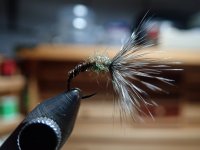
Takayama Pheasant Tail Kebari wet fly. I will vary the hackle from a variegated Grizz rooster & hen, or Partridge depending on structure; (free flowing or pocket water) and the movement or non-movement (anchor, hold in a hydraulic cushion or eddy) I want from the fly.
Tenkara Ninja Emoji 2.jpg
 
Is this experience I had with the same trout suddenly refusing similar flies something you guys have experienced? I thought as long as it was pretty close they wouldn't care. But it sure seemed like they were that incredibly picky. Fish and fish came up and veered off at the last second with every other fly but the exact one they liked.
Yes. Often. At least for me, it leads to superstitious behaviour.
 
Back
Top