
Navigation
Install the app
How to install the app on iOS
Follow along with the video below to see how to install our site as a web app on your home screen.
Note: This feature may not be available in some browsers.
More options
Style variation
You are using an out of date browser. It may not display this or other websites correctly.
You should upgrade or use an alternative browser.
You should upgrade or use an alternative browser.
a non-political climate change thread
- Thread starter SurfnFish
- Start date
- Status
- Not open for further replies.

I'll never understand the whataboutisms as a reason for not doing shit. Thankfully, not everyone thinks that way.
This statement was made in one of the previous posts. It is indicative of what a lot of people think about the impact of climate change. If we don’t DO SOMETHING NOW we are doomed.
I didn't say a single thing about "being doomed"....nor was that the intent of that statement.

ifsteve
Steelhead
As a retired chem eng who was our companies energy manager the last 5 years of my career I will offer a thought based on first hand experience.
Whenever looking at a scientific review (and the subject doesn't matter just in this case we are talking climate change) make sure to dig into where the funding came from to pay for the research behind the review. It is very easy to formulate your research and subsequent results to give credence to the position one wants to take.
For example, lets say the Department of Energy is funding your research. I can guarantee you that the research is not going to say that climate change isn't a significant issue. They will paint a bad picture and guess what the result is? More funding to do more research. Like wise if the funding is provided by say Exxon Oil don't expect to see a result saying climate change is bad and man caused.
Whenever looking at a scientific review (and the subject doesn't matter just in this case we are talking climate change) make sure to dig into where the funding came from to pay for the research behind the review. It is very easy to formulate your research and subsequent results to give credence to the position one wants to take.
For example, lets say the Department of Energy is funding your research. I can guarantee you that the research is not going to say that climate change isn't a significant issue. They will paint a bad picture and guess what the result is? More funding to do more research. Like wise if the funding is provided by say Exxon Oil don't expect to see a result saying climate change is bad and man caused.

Indeed, you didn't. That's why it is not directly attributed but instead an example statement merely symbolizing how as you said "not everyone thinks that way." BTW, what was your intent?I didn't say a single thing about "being doomed"....nor was that the intent of that statement.

Flymph
Life of the Party

Europe's drought could be the worst in 500 years, warns researcher
"Just to give you an idea the 2018 drought was so extreme that, looking back at least the last 500 years, there were no other events similar to the drought of 2018, but this year I think it is really worse than 2018." #EuropeNews
 www.euronews.com
2022 subtract 500 years = 1522 which is well before 1534. I don't know much about the "uronews" outfit as to their political leanings and would hope they are somewhere in the middle. I do know there are climate skeptics out there that appeal to climate change deniers. Climate Skeptics tend to be politically motivated and/or extraction industry motivated. Most of their theories have been heavily scrutinized and quite often debunked.
As for unintended consequences of lowering carbon emissions; "The best laid plans of mice and men". Nevertheless it is still an obligation to try as we owe it to future generations!

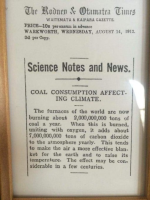

The unintended consequences argument for not trying to lower carbon emissions is in my view a bit of a canard, we know what the atmosphere was like before dumping all the carbon into the atmosphere. What if we had made the same argument (some did) about all the sulphur dioxide we had pumped into the atmosphere - perhaps some folks on here are too young to remember, or never saw the the results, but acid rain was a real thing, destroyed millions of acres of forests in Appalachia, killed rivers and streams. There were forces that resisted the clean air and water acts, using many of the arguments we hear today (too expensive, jobs will be lost, etc). Today, many of the forests, lakes and streams have recovered, especially in the north east (west Virginia, eastern Kentucky still suffer) because we made many of the changes needed, but still more needs to be done.
The harm of doing nothing is too high. What is the harm in cleaning up our backyard ("unintended consequences" doesn't cut it, could use that for any and everything).
cheers
The harm of doing nothing is too high. What is the harm in cleaning up our backyard ("unintended consequences" doesn't cut it, could use that for any and everything).
cheers

Many of those type of arguments are part of the 'flood the zone with garbage' approach .
It's just bullshit thrown at the wall by liars and other paid shills to attempt to confuse the issue, and see what will stick.
Conspiracy and disinfo sites like WUWT are well known as garbage disseminators, unworthy of serious discussion. Engaging with folks who cite from places like that is a waste of time.
It's just bullshit thrown at the wall by liars and other paid shills to attempt to confuse the issue, and see what will stick.
Conspiracy and disinfo sites like WUWT are well known as garbage disseminators, unworthy of serious discussion. Engaging with folks who cite from places like that is a waste of time.
My intent was exactly what I said. Nothing more, nothing less. Don't try to infer anything more that isn't there. The only thing that is doomed is this thread.Indeed, you didn't. That's why it is not directly attributed but instead an example statement merely symbolizing how as you said "not everyone thinks that way." BTW, what was your intent?
Flymph
Life of the Party
West VA and Kentucky still suffer - hmmmmm!The unintended consequences argument for not trying to lower carbon emissions is in my view a bit of a canard, we know what the atmosphere was like before dumping all the carbon into the atmosphere. What if we had made the same argument (some did) about all the sulphur dioxide we had pumped into the atmosphere - perhaps some folks on here are too young to remember, or never saw the the results, but acid rain was a real thing, destroyed millions of acres of forests in Appalachia, killed rivers and streams. There were forces that resisted the clean air and water acts, using many of the arguments we hear today (too expensive, jobs will be lost, etc). Today, many of the forests, lakes and streams have recovered, especially in the north east (west Virginia, eastern Kentucky still suffer) because we made many of the changes needed, but still more needs to be done.
The harm of doing nothing is too high. What is the harm in cleaning up our backyard ("unintended consequences" doesn't cut it, could use that for any and everything).
cheers
Doing nothing is not an option and is not what concerns me. Its doing something that might have unintended consequences without a thorough and honest vetting of what those consequences might be. If there is that vetting and agreement on the consequences, then its appropriate to move forward. However, the “Cobra Effect” is real.The harm of doing nothing is too high. What is the harm in cleaning up our backyard ("unintended consequences" doesn't cut it, could use that for any and everything).
cheers
Fly Tying Tips & Tricks | J. Stockard Blog Updates
Explore Thoughts on the Fly, your go-to for fly patterns, tying tips, reviews, and entertaining fishing tales from J. Stockard's blog.
 blog.jsflyfishing.com
The introduction of blackberries into Australia to fight soil erosion was a logical solution, recommended by reputable, educated scientists. It only took a few decades for the Australians to figure out it was a huge mistake.
Blackberry The Problem | Victorian Blackberry Taskforce
European Blackberry, Rubus fruticosus, was first introduced into Australia in the 1830s. Similar to the introduction of many pests into Australia, it origins can be traced back to the cultural needs of the earlier settlers, with plantings occurring in Sydney gardens to produce hedgerows, and to...
vicblackberrytaskforce.com.au
Flymph
Life of the Party
Mike: I would be interested to hear what you might consider an unintended consequence to the environment should we significantly lower carbon emissions.Doing nothing is not an option and is not what concerns me. Its doing something that might have unintended consequences without a thorough and honest vetting of what those consequences might be. If there is that vetting and agreement on the consequences, then its appropriate to move forward. However, the “Cobra Effect” is real.
Fly Tying Tips & Tricks | J. Stockard Blog Updates
Explore Thoughts on the Fly, your go-to for fly patterns, tying tips, reviews, and entertaining fishing tales from J. Stockard's blog.
The introduction of blackberries into Australia to fight soil erosion was a logical solution, recommended by reputable, educated scientists. It only took a few decades for the Australians to figure out it was a huge mistake.
Blackberry The Problem | Victorian Blackberry Taskforce
European Blackberry, Rubus fruticosus, was first introduced into Australia in the 1830s. Similar to the introduction of many pests into Australia, it origins can be traced back to the cultural needs of the earlier settlers, with plantings occurring in Sydney gardens to produce hedgerows, and to...vicblackberrytaskforce.com.au

Dustin Chromers
Legend
The unintended consequences argument for not trying to lower carbon emissions is in my view a bit of a canard, we know what the atmosphere was like before dumping all the carbon into the atmosphere. What if we had made the same argument (some did) about all the sulphur dioxide we had pumped into the atmosphere - perhaps some folks on here are too young to remember, or never saw the the results, but acid rain was a real thing, destroyed millions of acres of forests in Appalachia, killed rivers and streams. There were forces that resisted the clean air and water acts, using many of the arguments we hear today (too expensive, jobs will be lost, etc). Today, many of the forests, lakes and streams have recovered, especially in the north east (west Virginia, eastern Kentucky still suffer) because we made many of the changes needed, but still more needs to be done.
The harm of doing nothing is too high. What is the harm in cleaning up our backyard ("unintended consequences" doesn't cut it, could use that for any and everything).
cheers
I agree but effective solutions should be vetted. Personally I see California outlawing two stroke motors, gas mowers and weed eaters as nothing more than a feel good measure. These are items that are minimally used and low fuel consuming. It's effectively a useless measure. Spare me the "you gotta start somewhere" clause. Yes you do have to start somewhere. That somewhere should be in a place of high efficacy that mitigates impact to working class people. The government can't even fund it's schools in my state with lottery, weed money, and DNR timber let alone the host of other taxes that were promised for said purpose. Yes, climate change is real and happening. Yes, cleaning up pollution should be everyone's priority. Yes, taking stewardship of the planet is responsible and ethical. Yes, it's all of our jobs to do so in the ways we can. No, I don't see any legislation proposed or passed as having any measurable effect on whatever preferred timeline or tipping point. No, I don't see how punishing the working class or guilt tripping anyone will help at all especially when those doing the tripping are likely living further from the earth with little to no knowledge of what they speak as they are higher emitters than those they condemn.
Written by a guy who's
 off grid with clean renewable power. Been here for a while before it was cool and sheikh. I've heard enough lecturing by people who don't have a clue what stewardship or living with minimal impacts is like. Also notice I don't really ever lecture others or want to force them to live in my chosen manner. We are not in this together. We never have been and that's just a reality. So forgive me for rejecting the basis that I somehow need to practice some form of austerity because Bellevue Becky and her green goof troop need validation and a villain. Bellevue Becky couldn't hack it and neither can most who cry about others and their impact.
Climate change, real. Most solutions, scams. We're all gonna die. That's how this ends.
I agree but effective solutions should be vetted. Personally I see California outlawing two stroke motors, gas mowers and weed eaters as nothing more than a feel good measure. These are items that are minimally used and low fuel consuming. It's effectively a useless measure. Spare me the "you gotta start somewhere" clause. Yes you do have to start somewhere. That somewhere should be in a place of high efficacy that mitigates impact to working class people. The government can't even fund it's schools in my state with lottery, weed money, and DNR timber let alone the host of other taxes that were promised for said purpose. Yes, climate change is real and happening. Yes, cleaning up pollution should be everyone's priority. Yes, taking stewardship of the planet is responsible and ethical. Yes, it's all of our jobs to do so in the ways we can. No, I don't see any legislation proposed or passed as having any measurable effect on whatever preferred timeline or tipping point. No, I don't see how punishing the working class or guilt tripping anyone will help at all especially when those doing the tripping are likely living further from the earth with little to no knowledge of what they speak as they are higher emitters than those they condemn.
Written by a guy who's
Climate change, real. Most solutions, scams. We're all gonna die. That's how this ends.
Thanks for the rant, very helpful! Who here exactly was guilt tripping you into anything or lecturing you about anything, perhaps I missed it?
Cheers

SSPey
loco alto!
This is not the early days before opions were set.
Today, belief is truth.
There is no fence here. It's been gone for a while.
Anybody really think a mind will be changed with "facts?"
Extreme opinions that are shaped by tribalism are often closed to facts, but those extremes (which tend to have the loudest mouths and fewest facts) are not the vast middle.
Likewise, many people don’t think much of it, and can certainly be influenced by facts when presented them.
Finally, people who are ok with evidence-based thinking and policies are always amenable to facts. For example, the stereotypical tree huggers who’d cry when a single tree was cut down, or the loggers who thought that clearcutting was the only way … both eventually convinced that thinning of some second-growth forests is a good thing for both environmental stewardship and resource extraction.
Portraying people as unswayable by facts simply plays into the hands of the myopic worldview of those dumb asses
An excellent question. First, a goal to reduce carbon emissions to some agreed upon level is a legitimate goal as there is sufficient evidence that doing so will mitigate a warming climate. And, it is measurable. There is however an unknown aspect of such a goal. If the agreed upon level of carbon emissions is too low to cause unforeseen climatic consequences, then well we don’t know.Mike: I would be interested to hear what you might consider an unintended consequence to the environment should we significantly lower carbon emissions.
What’s more potentially consequential, is not the actual reduction in carbon emissions, but the tactics used to do so. This is really an open ended question as the options (implementable to the outlandish, from the known to the unknown) used to actually reduce emissions are somewhat limitless. The real question is what consequences are acceptable to actually achieve the carbon emission goal. Is the destruction of viable industries and economies acceptable? Is a drastic change in human lifestyle acceptable? Is totalitarian government acceptable? Is actual damage to ecosystems acceptable?
An outlandish solution would be to enter a global treaty that bans all human activity that generates carbon emissions and gives governments waivers to employ civil, paramilitary and military enforcement forces exceptions from the ban to enforce the ban. Might be a few unintended consequences with that approach.
An implementable solution might be the transition to so called renewables that have no or an acceptable lifecycle carbon footprint (have to make an honest assessment about this, as hiding actual lifecycle carbon footprint impacts doesn’t help you reach the goal). Its unknown what the global consequences of this might be, but evidence in Australia suggests such a transition is not as easy as one might think. We already know that any scalable implementation of solar to wind energy is going to have significant long-term impacts on the environment.
Back to your question. I can see no foreseen consequences to actually reducing carbon emissions on a global scale. That said, the actual solutions that are and may be implemented, I suspect are a mine field of unintended consequences. As a lifelong investigator and strategy/tactics consultant, when folks with vested interests whether personal or corporate start trashing sources as unreliable and false, discounting legitimate data, unintended consequences are not far off.
Jim in Anacortes
Life of the Party
10,000 years ago the ocean level was 300 feet lower then where it is today. The people living along the coasts of Southern California at that time were doing just fine.
Flymph
Life of the Party
The only environmental consequence I have seen you illustrate is "We already know that any scalable implementation of solar to wind energy is going to have significant long-term impacts on the environment." This point is well taken and concerning. Thanks for clarifying.An excellent question. First, a goal to reduce carbon emissions to some agreed upon level is a legitimate goal as there is sufficient evidence that doing so will mitigate a warming climate. And, it is measurable. There is however an unknown aspect of such a goal. If the agreed upon level of carbon emissions is too low to cause unforeseen climatic consequences, then well we don’t know.
What’s more potentially consequential, is not the actual reduction in carbon emissions, but the tactics used to do so. This is really an open ended question as the options (implementable to the outlandish, from the known to the unknown) used to actually reduce emissions are somewhat limitless. The real question is what consequences are acceptable to actually achieve the carbon emission goal. Is the destruction of viable industries and economies acceptable? Is a drastic change in human lifestyle acceptable? Is totalitarian government acceptable? Is actual damage to ecosystems acceptable?
An outlandish solution would be to enter a global treaty that bans all human activity that generates carbon emissions and gives governments waivers to employ civil, paramilitary and military enforcement forces exceptions from the ban to enforce the ban. Might be a few unintended consequences with that approach.
An implementable solution might be the transition to so called renewables that have no or an acceptable lifecycle carbon footprint (have to make an honest assessment about this, as hiding actual lifecycle carbon footprint impacts doesn’t help you reach the goal). Its unknown what the global consequences of this might be, but evidence in Australia suggests such a transition is not as easy as one might think. We already know that any scalable implementation of solar to wind energy is going to have significant long-term impacts on the environment.
Back to your question. I can see no foreseen consequences to actually reducing carbon emissions on a global scale. That said, the actual solutions that are and may be implemented, I suspect are a mine field of unintended consequences. As a lifelong investigator and strategy/tactics consultant, when folks with vested interests whether personal or corporate start trashing sources as unreliable and false, discounting legitimate data, unintended consequences are not far off.
Our present dilemma of Climate Change is/was a "foreseen" consequence which makes it even more intolerable! Big oil and coal knew these consequences. Not only did they know beforehand but they covered up their mess and now spend millions to sponsor Climate Skeptics to stir up confusion and animosity.
Last edited:
Jim in Anacortes
Life of the Party
Our national debt is now at a place where (essentially) $92,000 dollars is owed by every man woman and child in the U.S.......That's a lot of debt to hang on a newborn baby. We could multiply that debt 10 times over and still likely not make any measurable difference in the Earth's climate. I hear people ask "What kind of world will we be leaving our children?" Well, the answer seems to be a world where our children will be crushed financially, largely due to the idiotic spending of our wealth in the guise of "changing the weather". If things like poverty and mayhem engulf our nation then "climate change" will be even lower on the list of concerns for Americans.....even if it does get really, really serious.
A
Anonymous member 148
Guest
So your saying we should all start learning Chinese Mandarin? I better learn to sew, maybe I can become Forman in the chi-com work camps.Our national debt is now at a place where (essentially) $92,000 dollars is owed by every man woman and child in the U.S.......That's a lot of debt to hang on a newborn baby. We could multiply that debt 10 times over and still likely not make any measurable difference in the Earth's climate. I hear people ask "What kind of world will we be leaving our children?" Well, the answer seems to be a world where our children will be crushed financially, largely due to the idiotic spending of our wealth in the guise of "changing the weather". If things like poverty and mayhem engulf our nation then "climate change" will be even lower on the list of concerns for Americans.....even if it does get really, really serious.
I think it's a funny dichotomy that the left is all omg think of the children if we don't do something about climate change. Whereas the most suffering of our children will come from a weak USA and global spread of chinese communism, UN approved.
- Status
- Not open for further replies.